

Before the Covid-19 pandemic, though separated by the sea, Belgium and the UK enjoyed a heyday in connectivity. Transport routes by land, air and sea made travel accessible and affordable for travellers from both countries. Half a decade later, the two nations have never been so far apart.
Across the board, direct connectivity has been slashed. No direct passenger sea route now exists between the UK and Belgium, and rail services have disappeared. Low-cost flights to cities across the UK have been cut, with more set to vanish this year, and just a few companies now dominate the travel market across the English Channel and the North Sea.
This decline has resulted in longer travel times for British passengers, accompanied by an increase in consumer complaints. Cross-border working between Belgium and the UK, already crushed by Brexit, has all but collapsed in the face of the declining transport links.
Many passengers must now travel great distances across the UK to reach the few transport hubs with direct connections to Belgium, as opposed to accessing local stations or airports servicing the lowlands country.
Kent loses European gateways
One notable example is the 2020 closure of Ashford International station and Ebbsfleet International station in Kent, formerly the two closest stations to Belgium. The closure of these has reduced Eurostar connections to just one station with connections to European destinations.
Many commuters even purchased properties in the areas surrounding these stations, but now face journey times to Brussels that have ballooned from around 90 minutes to 4.5 hours, according to a report entitled “Returning international rail services to Kent.”
Not only does the report decry increased commute times for British travellers to Belgium, but it also decries a slump in tourism from the continent across Kent, famed for its temperate climate and seaside attractions.
“With Ashford and Ebbsfleet stations positioned as gateways to Europe, Kent saw a significant number of international visitors, particularly from France, Belgium and the Netherlands,” the report explained. Trains now speed through the closed stations, stopping only at London St.Pancras station.
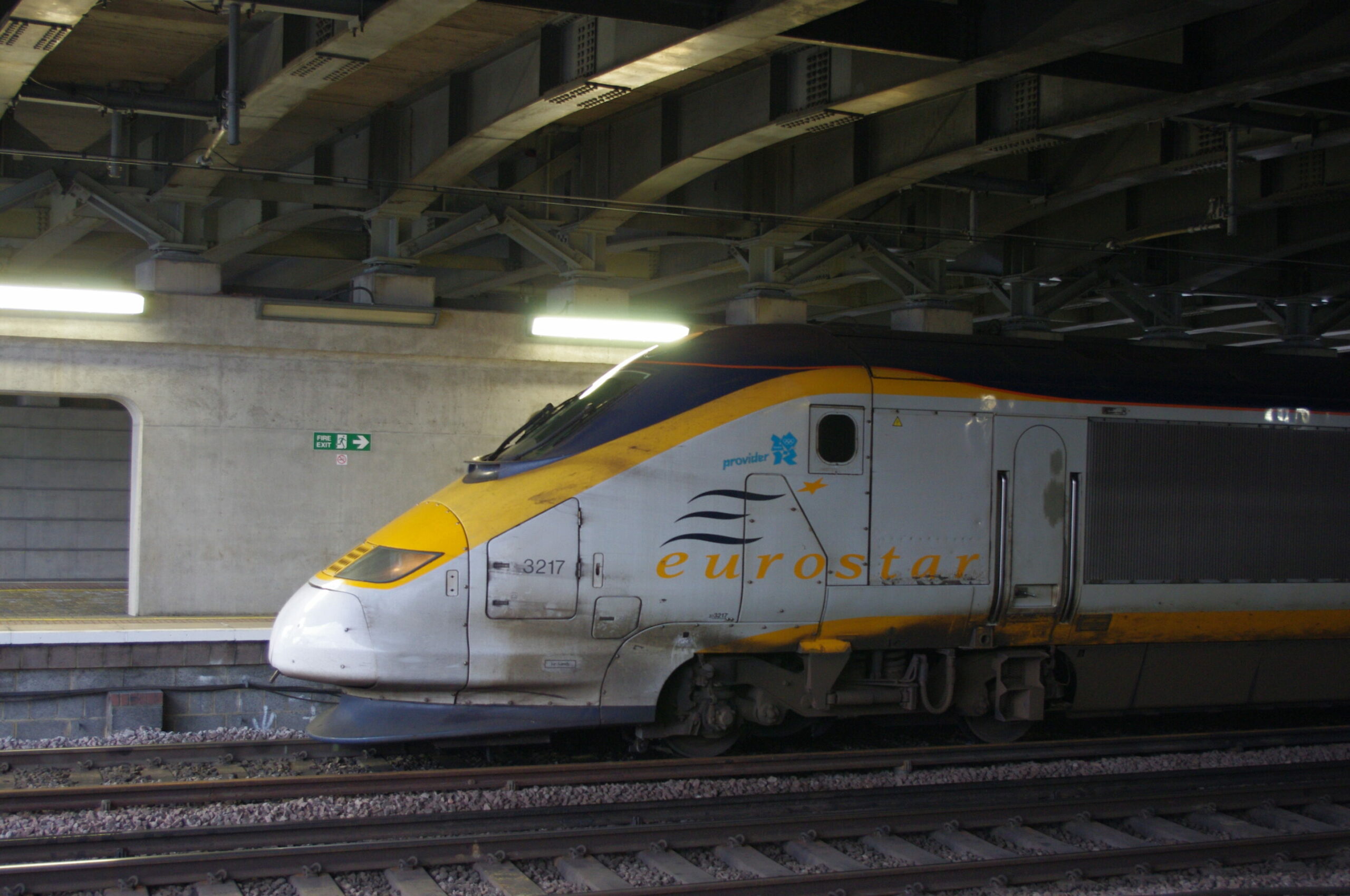
A Eurostar service passes through Ashford International station in 2011. In 2020, the station closed due to pressure from the COVID-19 pandemic. Credit: Joshua Brown/Wikimedia Commons
“Prior to service suspension, the Kent tourism industry benefited from a steady influx of European tourists who travelled directly via Eurostar. Without these services, local businesses– including hotels, restaurants and cultural sites— report reduced visitor numbers.” Ashford Borough Council believes that the closure of the stations impacted 30,000 jobs, or around €870 million of lost gross added value to the national economy.
In a comment to The Brussels Times, Eurostar stated that the decision to close the two British international railway connections was motivated by decreased passenger numbers and mounting costs.
“In 2019, only 4% of our total passengers used Ashford or Ebbsfleet, compared to 11 million overall. Even at peak times, Ashford’s frequency remained quite low, averaging just 50 passengers per 900-seat train, compared to over 2,000 passengers who come through St. Pancras every hour. Over 10 years to 2019, passenger growth at St. Pancras International increased by 20%, while Ashford and Ebbsfleet saw 0% growth.”
Under Eurostar’s current plans, the stations will remain closed throughout this year, with a review scheduled for 2026. Local groups have reacted angrily and are applying pressure on Eurostar and the British government to restore connectivity to their region.
Local Ashford Borough Council is notably leading the charge, launching a petition in 2024 to reopen the two Kent stations. This petition has since received over 65,000 signatures from residents. British Prime Minister Kier Starmer voiced support in January for the two stations, but no government policy has yet been implemented to bring about this change.
"Closer trade and improved ties with our closest neighbours, and support from our government for the campaign, has meant it is far more likely that we will see international services return to Ashford and Ebbsfleet," Ashford MP Sojan Joseph told The Brussels Times. "Restoring international rail would make it easier, quicker and more efficient for local business to trade with Belgium and the rest of mainland Europe."
The politician said he is continuing to raise the issue in the UK parliament, and has received positive indications from the government about the desire to reopen the station. He acknowledges, however, that the decision is ultimately commercial.
Eurostar states that it is engaged with local stakeholders, including Ashford Borough Council, Kent County Council, and the Kent and Medway Economic Partnership. It cautions that reopening these stations would require significant investments into new eGates and border resources.
Fewer trains, fuller carriages
The closure of the two Kent stations is not the only decline in transport that passengers have decried. Since the COVID-19 pandemic, the number of rail services going through the Channel Tunnel between Brussels and London has significantly reduced.
From regular services every 30 minutes during peak years in 2018-2019, the pandemic saw services slashed to around nine trains per day on the Brussels-London route. As one of the last viable transport routes between the two countries, and passenger ridership rebounding, Eurostar services are increasingly crowded.
Eurostar reports that, in the first seven months of this year, passenger volumes on the London-Brussels route have increased by 4% compared to 2019. In 2024, Eurostar is expected to welcome an additional 250,000 passengers compared to 2023. That amounts to a year-on-year increase of around 33%.
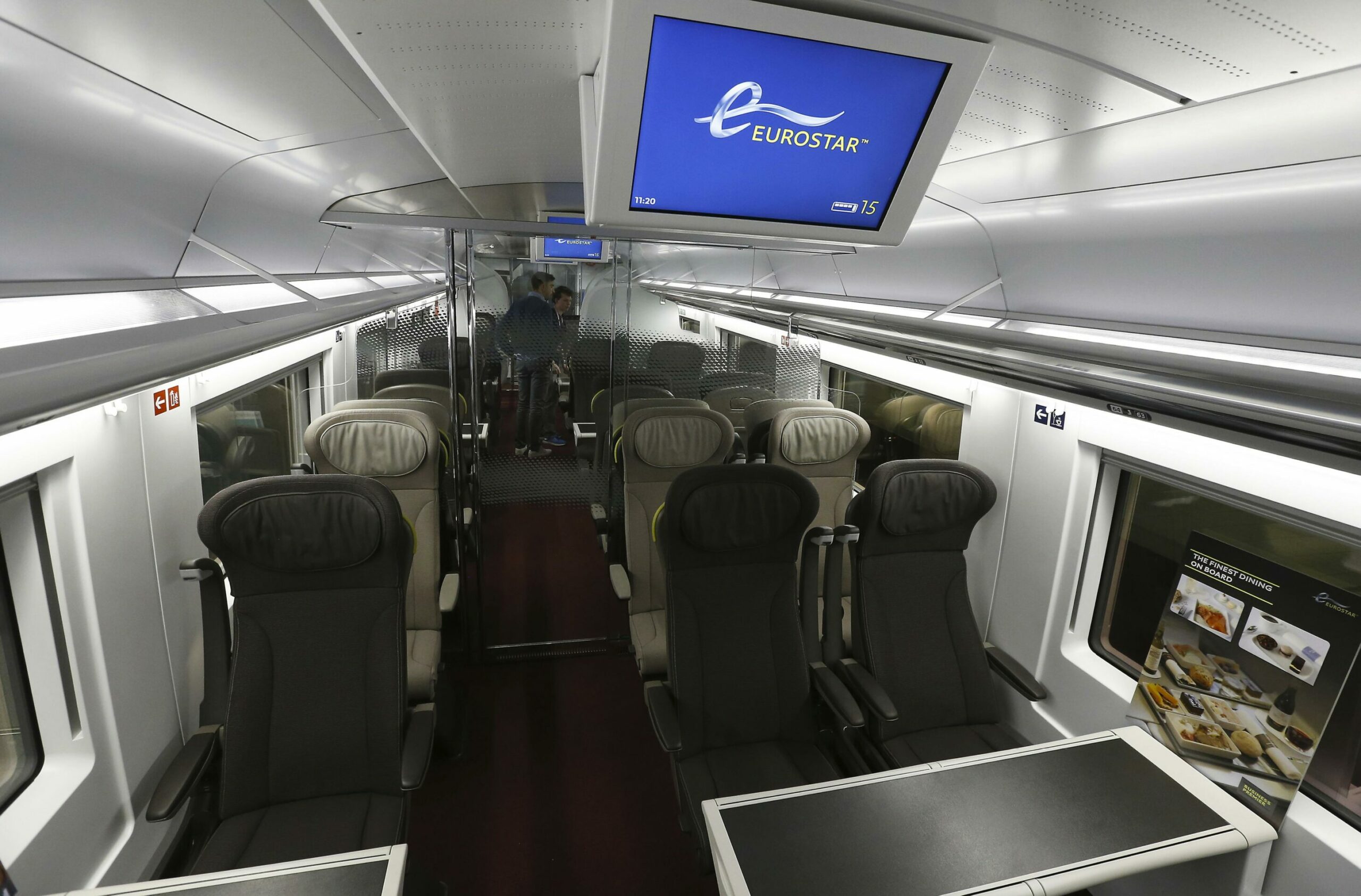
Eurostar train numbers have been slow to recover since the COVID-19 pandemic, when passengers dropped by 95% in 2020. Credit: Belga/ Nicolas Maeterlinck
Despite this, it did not agree that capacity had declined as compared to previous years. Before COVID, the company said it ran up to 10 trains per day to and from Brussels, but “never more than an average of one departure or arrival per hour.” Currently, it runs nine trains per day with higher capacity. The company plans to add another train to the route from September.
“We will thus have more capacity on the Brussels-London route as compared to pre-COVID, and we see no decline,” the company assured.
Eurostar said it is also working to help facilitate connections between London and cities in the North of the UK through the controversial HS2 project, which has faced indefinite delays. In Europe, it stated that over 100 French stations are accessible with a connection in either Brussels-South, Paris-Nord, or Lille.
While Eurostar assures it can handle the quantity of passengers, travellers report that they are increasingly deterred from using the service due to the rapidly increasing prices. According to Euractiv, passengers now frequently opt for flights between the two countries due to the high cost, with some passengers reporting that they spend over €350 for a return trip on the train.
High prices push travellers to the skies
There too, travellers are venting their grievances. Direct air connections are in sharp decline. No low-cost flights now exist linking Belgian cities to any London airport. After sporadic coverage, Ryanair scrapped its only Belgium to London route in 2022.
In a comment to The Brussels Times, Ryanair cited exorbitant taxes, strong union pressure, and environmental restrictions as reasons for the closure of its Zaventem base for flights to the UK and elsewhere. Furthermore, for flights to London from Belgian airports, the airline believes that it is “simply more efficient for passengers to travel by rail.” Given the high Eurostar prices, this lack of air connectivity remains disappointing for regular travellers.
Other routes between Belgian cities, or those in nearby countries, have also vanished, leaving British customers stranded. LuxAir’s London City Airport flight from Antwerp Airport, which is facing closure due to high costs and poor usage, was officially cancelled in June 2024.
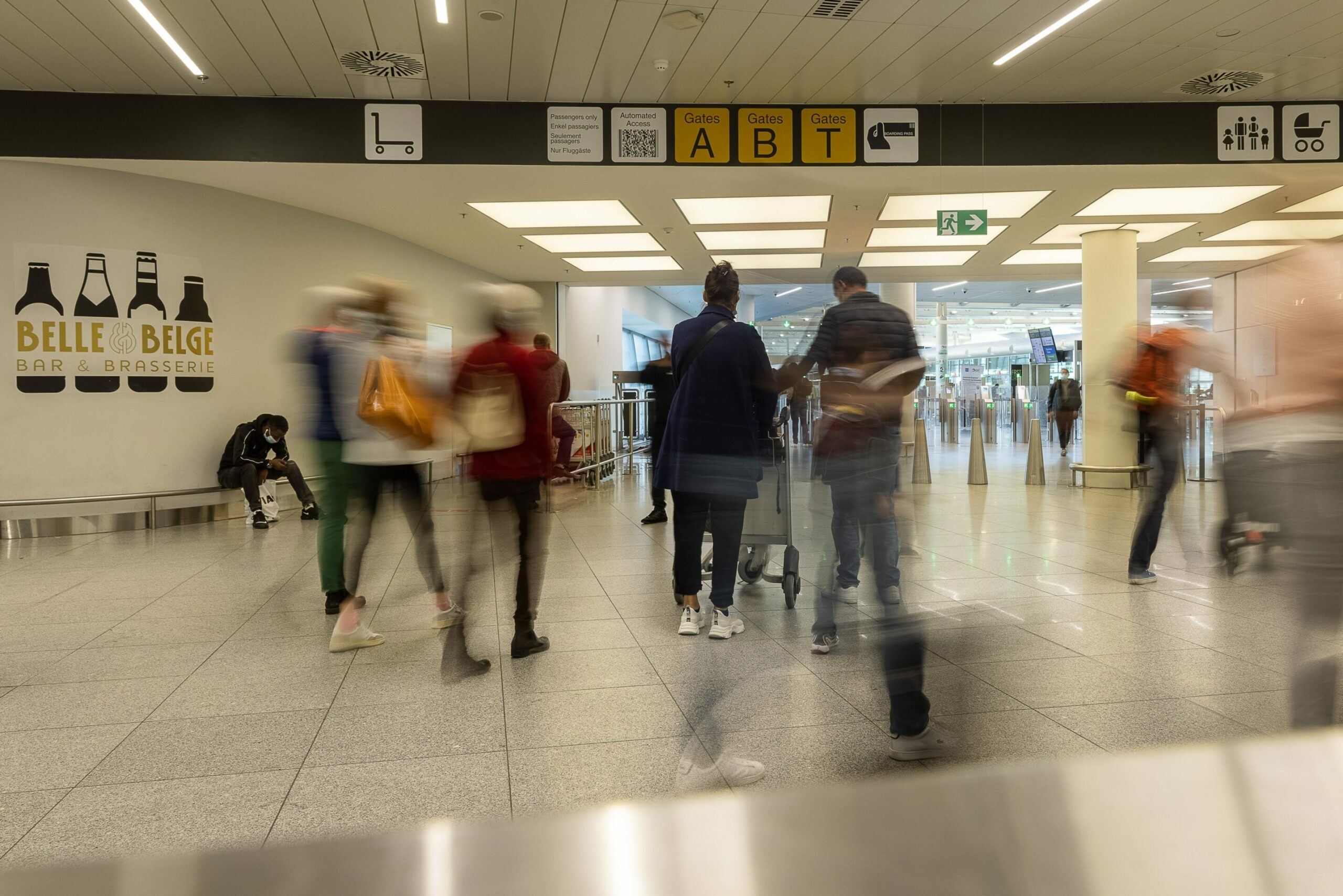
Brussels Airlines and British Airways have capitalised on high Eurostar ticket costs as the last two airlines to operate on the Brussels-London route. Credit: Belga/ James Arthur Gekiere
According to the company, this decision was “driven by the need to optimise resource allocation and improve overall operation efficiency.” It says that many Belgian passengers now cross the border to take its flights from Luxembourg City. Maastricht, an accessible airport for Walloon travellers, has also stopped low-cost flights, with Ryanair denouncing “excessive cost increases.”
The only two airlines currently operating routes between Belgium and London are flag carriers Brussels Airlines and British Airways. Priced competitively to compete with high Eurostar prices, with single tickets available for around €55 to €160, these connections are not without their issues.
Both airlines serve London Heathrow Airport. Travellers from Brussels Airport must factor the price of an airport train ticket (€11.20) as well as the rail fare from Heathrow Airport. The most convenient and direct route from the airport to central London, the Heathrow Express, costs around €29 for a standard single. All costs considered, the round-trip flight tickets to the UK can quickly add up to be as expensive, or more, than a Eurostar journey.
Air, sea routes vanish across the board
Outside of London, direct flights are also on the decline. Brussels Airlines announced that it would shed its service to Birmingham airport from October 2025, ending direct connectivity to the UK’s second-largest city. The company said that it would prioritise its London and Manchester routes, which are “important markets where passengers connect in Brussels onto our vast sub-Saharan African network.”
To access low-cost airfare from Belgium to the UK, passengers are limited to a select number of destinations. Ryanair now offers flights to just Manchester, Edinburgh and Glasgow. The company did not provide statistics about how many Belgian passengers used Manchester airport to access areas underserved by its network in the south of the country.
With its low-cost flights to British airports based at Charleroi (Brussels South) airport, passengers must also factor in the cost of reaching the distant airport. Flibco, which holds a monopoly on coach transport at the site, has repeatedly raised its prices, with a return ticket now costing €33.80 per person.
With the prospects for direct flights and train connectivity looking bleak, ferries appear to be a logical solution to bridge the physical gap between the two neighbouring countries. However, following the COVID-19 pandemic, the sector has been severely impacted. No direct sea routes exist between the countries.
Illustration shows P&O ferries in Zeebrugge harbour, Thursday 17 March 2022. The company suspended its traffic during the pandemic and announced a cut of 800 jobs. Credit: Belga/ Kurt Desplenter
In 2020, citing pandemic travel restrictions, P&O Ferries closed its overnight Hull-Zeebrugge passenger ferry route. The company told The Brussels Times that the service was closed due to “financial viability”, with no plans to resume the service currently on the table. Passengers wishing to access Belgium by sea must instead land at Calais or Dunkerque in France, or through the Dutch port of Rotterdam.
Despite a theoretical travel time of 3.5 to 4.5 hours, no ferry service exists between southern English ports and Flemish passenger terminals. There are equally no feasible plans for extending roll-on-roll-off rail traffic for vehicles from Belgium via the Channel Tunnel.
Will competition bring lower fares?
With rail prices rising, flights disappearing, and naval services dead and buried, an oligopoly is quickly forming on Belgium-UK travel. Its dominant players: Brussels Airlines, British Airways, and most importantly, Eurostar. New measures to break its dominance and increase connectivity between the two countries may yet be on the horizon.
The Office of Rail and Road (ORR), a government department responsible for the economic safety regulation, has issued a favourable opinion on allowing private companies to use Eurostar’s infrastructure across the English Channel. Richard Branson’s Virgin announced plans in March to raise €812 million to create a competing passenger line to Eurostar by 2029.
The ORR concluded at the end of March that Eurostar’s Temple Mills depot in the UK would be capable of hosting other Eurostar-style trains, contrary to claims made by Eurostar, paving the way for a potential decision to allow competition from different providers on the continental route. Other competitors, such as the new British player Gemini, are also looking to enter the market.

New British competitors are pushing aggressively to enter the intercontinental rail market. Credit: Belga/ Jonas Roosens
Eurostar told The Brussels Times that it “welcomed the development of rail service in Europe” but stated that it has already been operating in a “competitive environment for years”, notably competing with airlines, ferries, and bus services. “We still have a common challenge with our future rail competitors: to convince more travellers to choose the train.”
Related News
- 10 more Belgium travel hacks
- Eurostar from Brussels to London stuck for four hours
- How the EU could solve international rail woes
- Ryanair scraps paper boarding passes as digital-only rule takes effect today
The partly Belgian-owned rail company says that it will play a role as a “leader” in the international rail market, with plans to invest in up to 50 new trains across the market. Eurostar maintains that its UK depot is “effectively almost full today” and would require further investment to increase capacity.
“We believe the conversation now needs to move beyond the inadequate space within the existing depot to look at the bigger picture,” the company said in a statement. “Eurostar is willing to invest once again in new maintenance capacity in many other areas… Other operators should consider investing in the system as well.”
Whether more competition on the Eurostar route will effectively increase affordable travel options for travellers between Belgium and the UK remains to be seen. Brussels Airlines says it is requesting improved high-speed rail connections to Brussels Airport to promote the intramodality of travel.
Eurostar evokes the “complementary nature of air and rail” and plans to expand its network to help organise connections “to the open hubs of the Eurostar network”.
The rail company states that it aims to establish open hubs for air, providing connections between its network and domestic networks, thereby making “more destinations accessible by train” for a “new, low-carbon travel solution.”
