
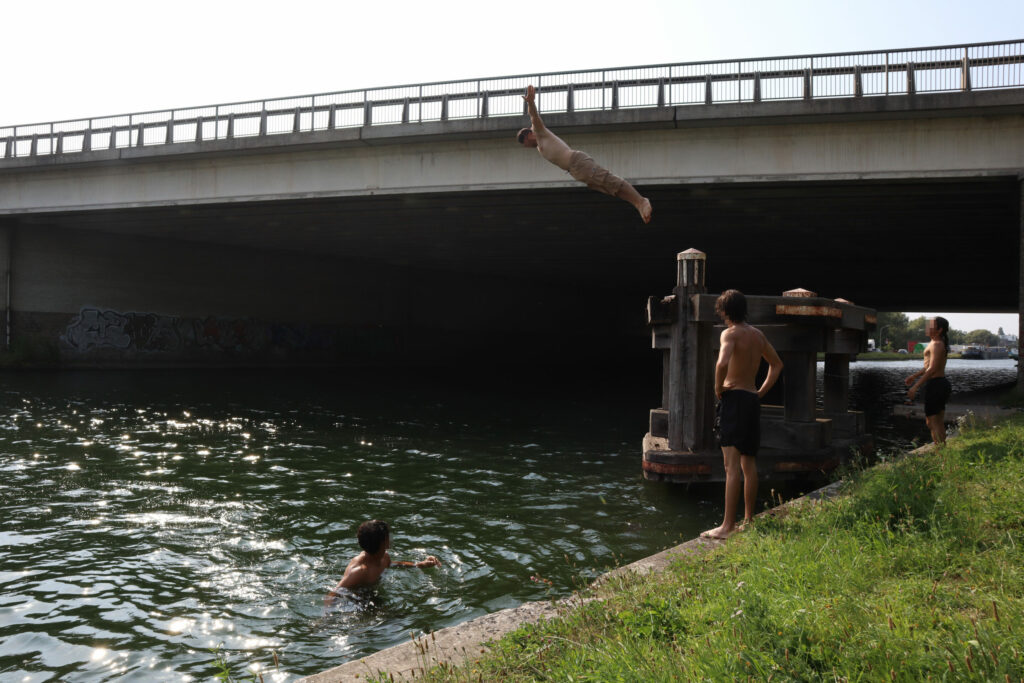
As heatwaves returned to Belgium this August, so did the urge for people to cool off in water. In the canal of Mechelen for example, crowds of youth plunge into the water with little care. As soon as the temperature rises, an almost unstopable tradition pulls locals to sunbathe, swim, kayak and enjoy themselves.
There is one problem, though: canal swimming is illegal in Belgium. But despite this, it happens all over the country. What draws Belgians so much towards diving into murky urban waters?
Dangerous and illegal (or is it?)
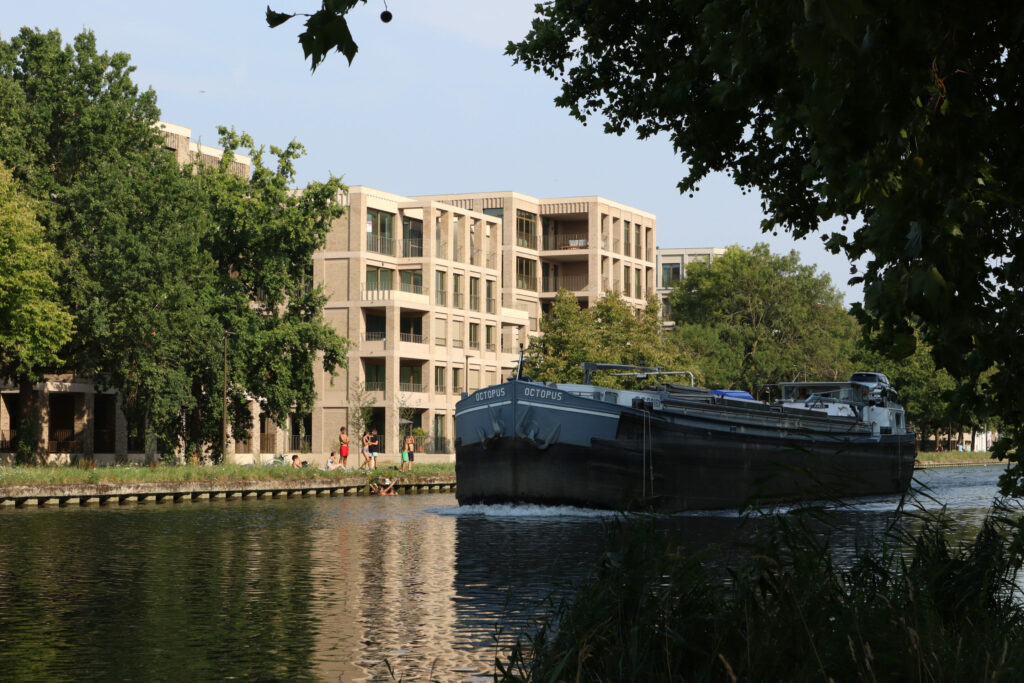
Young swimmers waiting for a cargo ship to pass in Mechelen's Vaartdijk. Credit: Kosmos Khoroshavin / The Brussels Times
Unless explicitly allowed, swimming in outdoor water bodies is prohibited. Those who break the rules risk municipal fines of up to €350, according to VRT.
While there are rumors of local authorities looking the other way recently, regular reports suggest the police are going as far as to raid popular swimming spots. Even remote ponds and quarries are no longer safe from patrols, as officers have been known to bike down dirt roads just to hand out a ticket.
It might seem like an overreaction, but unofficial swimming spots are risky. Urban canals carry heavy ship traffic; their propellers creating suction and currents. Steep stone walls line both sides, with few ladders or exits in sight.
Cold shocks and undercurrents may cause drownings without lifeguards on duty, while unchecked water quality can hide deadly pathogens. The news during summer months is filled with reports of deaths related to swimming in prohibited waters.
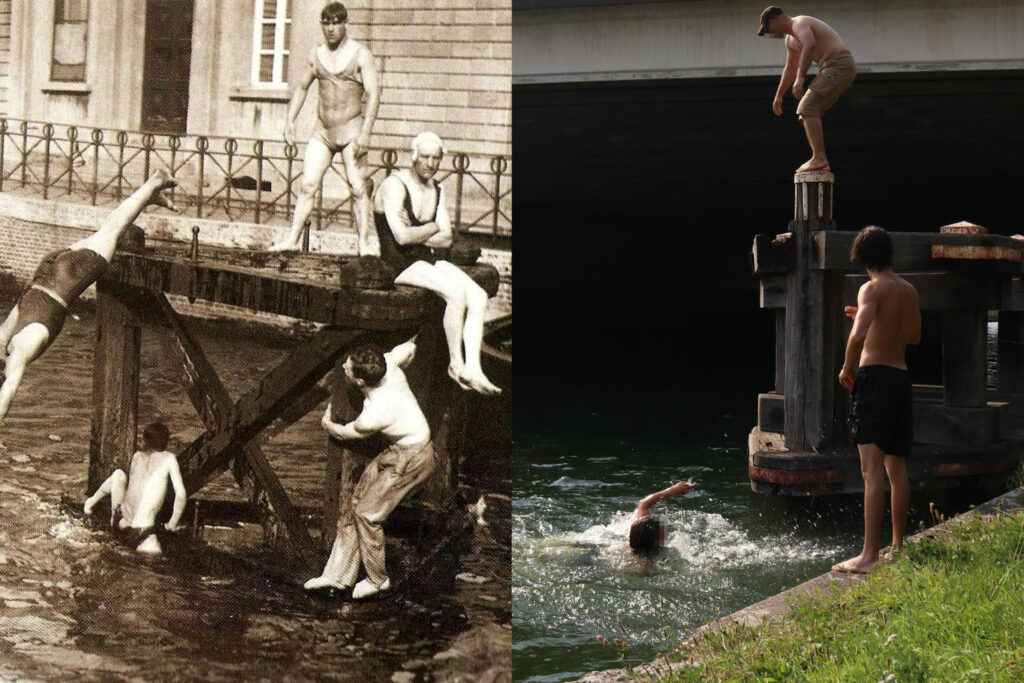
Collage comparing Belgian canal swimmers in 1935 and 2025. Credit: Pool is Cool / Kosmos Khoroshavin / The Brussels Times
Frankly, these dangers don’t discourage many. Across the country, swimmers flock to waterways during heatwaves: from Brussels-Charleroi to Leuven-Dijle, Campine, Albert Canal or any of the 54 Belgian waterways.
Why? Talking to people reveals that canal swimming is both a tradition and a simple reality of the lack of open-air swimming spaces.
Back in Mechelen, we meet a group of four young men leaping from a wooden structure under a bridge, at the same spot popular with small children on other days.
“We’re just having fun,” one says smiling. “We wouldn’t change the canal for anything else, even if we could.”
Another group, this time from Brussels, tells a different story. They travelled over 20 km just to swim here. They miss FLOW, the only outdoor swimming pool in Brussels, which has since closed.
Now, Mechelen feels like their only option. One man recalls swimming as a scout in his childhood, laughing as he says: “If swimming here means occasionally dealing with diarrhea, I’m fine with that.”
If you can’t beat them, join them

Credit: Kosmos Khoroshavin / The Brussels Times
The case for opening canals for swimming is only growing stronger. Across Europe, cities from Copenhagen to Paris have cleaned up waterways and turned them into public swimming zones.
Even closer to home, Antwerp (Bonapartedok), Mechelen (Keerdok) and Bruges (de Coupure) now host seasonal swimming, where thousands safely dive into rivers and docks with only minimal infrastructure.
Three NGOs — Pool is Cool (organisers of FLOW, BOZAR open air and many similar projects), Waterland and City to Ocean — are jointly pushing for legal canal swimming with a particular focus on Brussels. They publish live water-quality updates, draft proposals, and mobilise public support.
Pool is Cool’s Big jump events happening at the same day all around Belgium called on participants to jump into canals to reclaim them. These tactics echo the cycling and pedestrian activists who worked to take back big city streets. This time, the goal is water though.
However, these events had to be toned down due to high penalties for the organisers, reaching €1000 in 2018. But even then they found a way to continue demonstrations, like the 2025 Big jump party near the canal in Anderlecht which didn't involve actual jumping.
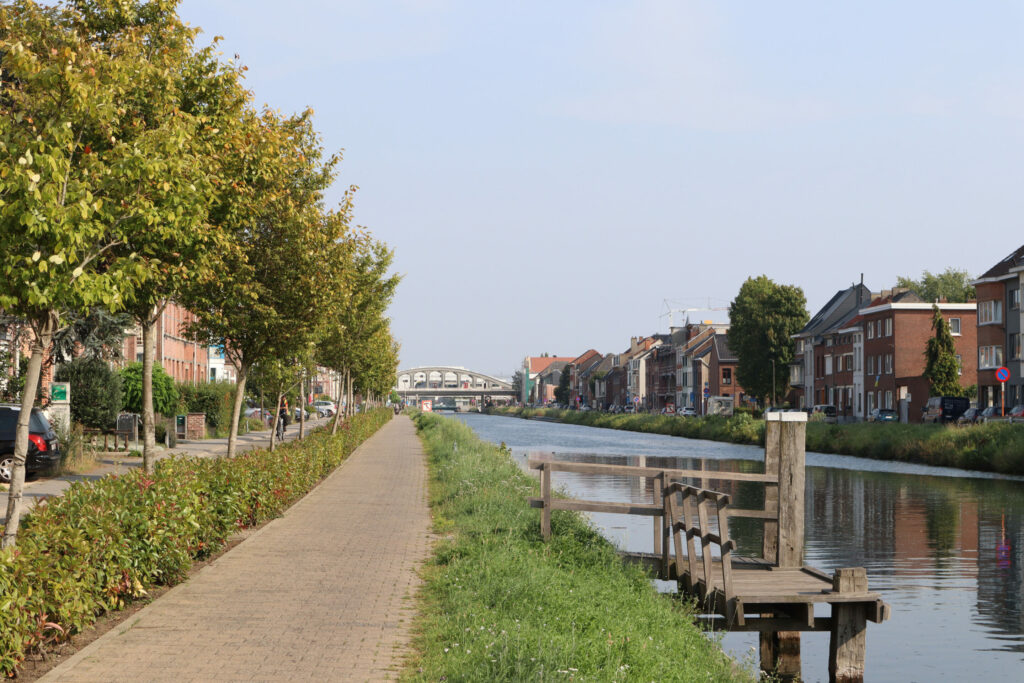
Mechelen's vaartdijk, as part of the Leuven-Dijle canal. Credit: Kosmos Khoroshavin / The Brussels Times
Brussels still has no official outdoor swimming site. And yet the canal, the city’s largest water body, is in many places clean enough to swim in. A recent citizen science project — involving 5,000 volunteers testing rivers and canals — found that 43% of waterways in Flanders and Brussels met swimming standards with urban water bodies doing particularly well.
In Brussels itself, several samples, including near Tour & Taxis, showed excellent results. A grand pool project there as part of the Brussels canal was recently scrapped due to financing issues.
Campaigners point out that not every stretch of the Brussels canal is equal. The southern part of it in Anderlecht, where sewage overflows are rare and shipping traffic is lighter, has repeatedly tested fit for swimming. Many people participate in illegal swimming there already in the La Roue neighbourhood.
NGOs argue it could host a simple 50-metre swimming zone with pontoons, ladders and lifeguards, at a fraction of the cost of the floating pools once proposed. Currently though, canal managers from the Port of Brussels seem opposed to the idea.
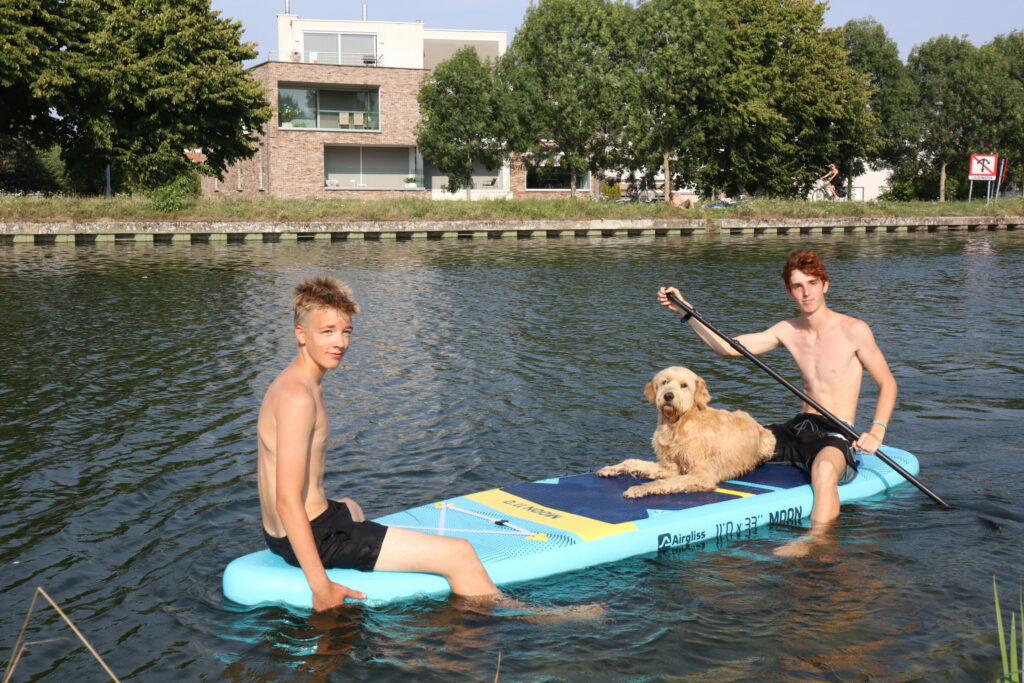
Two boys paddle boarding with the dog of Ken Van Halle, local who borrowed it to them. Kayaking, paddle boarding and similar activities which don't involve swimming are allowed in Vaartdijk. Fishing is allowed as well, but a license is needed. Credit: Kosmos Khoroshavin / The Brussels Times
Back on the banks of the Mechelen canal, two men sunbathe with cold beers and a bag of chips. One of them, Ken VanHalle, a local, explains why he loves it here.
“It’s chill, perfect for hot days,” he says. “Fish swim here, plants grow, the water is clear and doesn’t smell at all. It’s safe.” He admits that algae can sometimes be an issue but insists locals know how to keep swimming safe and preserve the communal feeling. As if to prove his point, he nods toward two young boys paddling past on a borrowed board, his dog sitting happily on top.
What worries him is not the swimming itself but what would happen if the place became official. “It’s close to the station. If it gets formalised, I can imagine crowds from Brussels coming here and ruining it,” he says with a smile, before asking me, half-seriously, “not to write about it too much.”
Canal swimming is already happening, beloved by locals, yet still denied any official recognition. If campaigners succeed, there could soon be many more people like VanHalle – and in Brussels too - enjoying Belgian canals as an accessible legal pleasure, not as an illicit one.
Related News
- Brussels urged to speed up construction of public open-air swimming pool
- Where to swim in nature in Belgium
- Brussels' only outdoor pool closure must serve as 'wake-up call' for authorities
- Costa del Belgium: The country's best beach resorts for a hot day
- Over 100 student flats in the pipeline as Ninove Gate inquiry begins
- Concerns over young people's swimming skills: Where can you learn in Brussels?
