
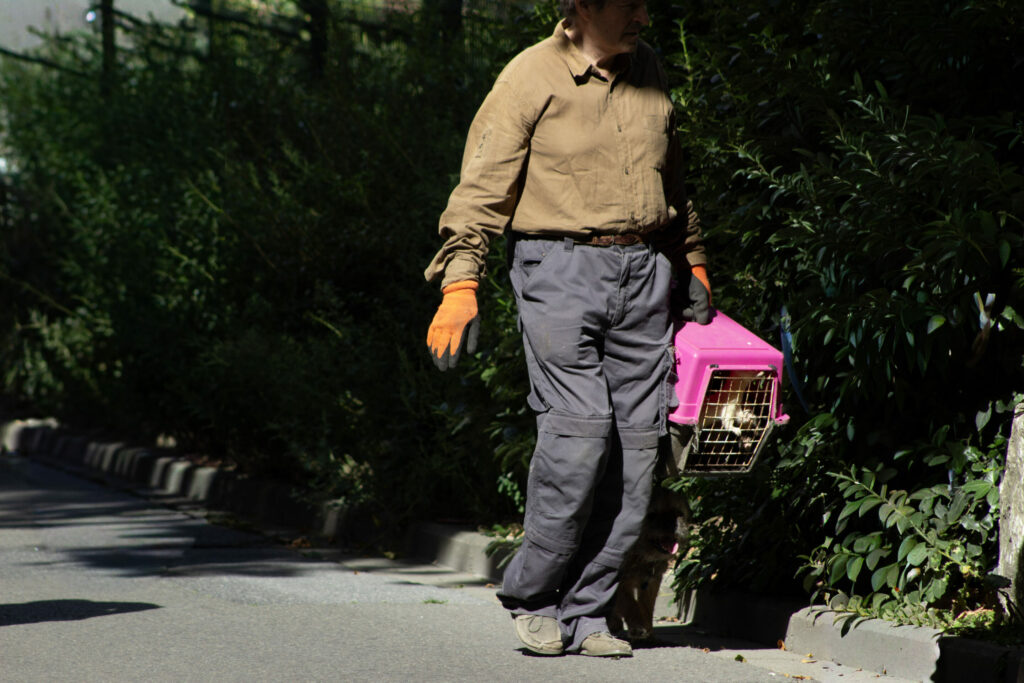
Armed with a leash, a dog, and two ferrets, Brussels' most unusual pest control tackles the capital's most persistent residents: Rats.
The Brussels Times met with Jean de Marcken, a fellow countryman, a rat connoisseur, and an excellent storyteller. He has been assisting the Etterbeek municipality with managing the rat population for over a decade. We first sat down with him as he recounted the story of the brown rat. Intrigued by his personality, we decided to accompany him on his next patrol.
For murophobics, we would have preferred not to talk about or imagine a rat. Instant goosebumps guaranteed, but De Marcken impressed us; his storytelling enchanted us, and it felt like watching one of Sir David Attenborough's nature documentary episodes.
He does not look or sound like a man who has made a career out of chasing vermin. Trained as a biologist, he entered the pest control business two decades ago when a researcher from the VUB asked for help in catching rats to study the spread of hantaviruses back in 2015. Around the same time, someone handed him a ferret. Where most communes were still shovelling out sachets of poison to residents, de Marcken thought of a different idea.
Ferrets, he realised, could do what traps and toxins never could: slip inside burrows with their flexible bodies, reveal the hidden architecture of a colony, and catch rats with precision. In nature, ferrets are natural predators of rats. The fascinating thing is that they hunt them not only for food, but also for unknown reasons, as ferrets chase and kill rats as some type of sport.
Since then, he has become Etterbeek’s leading rat catcher, a man who arrives with a terrier and a brace of ferrets, relying on their instincts and their centuries-old predator-prey relationship.
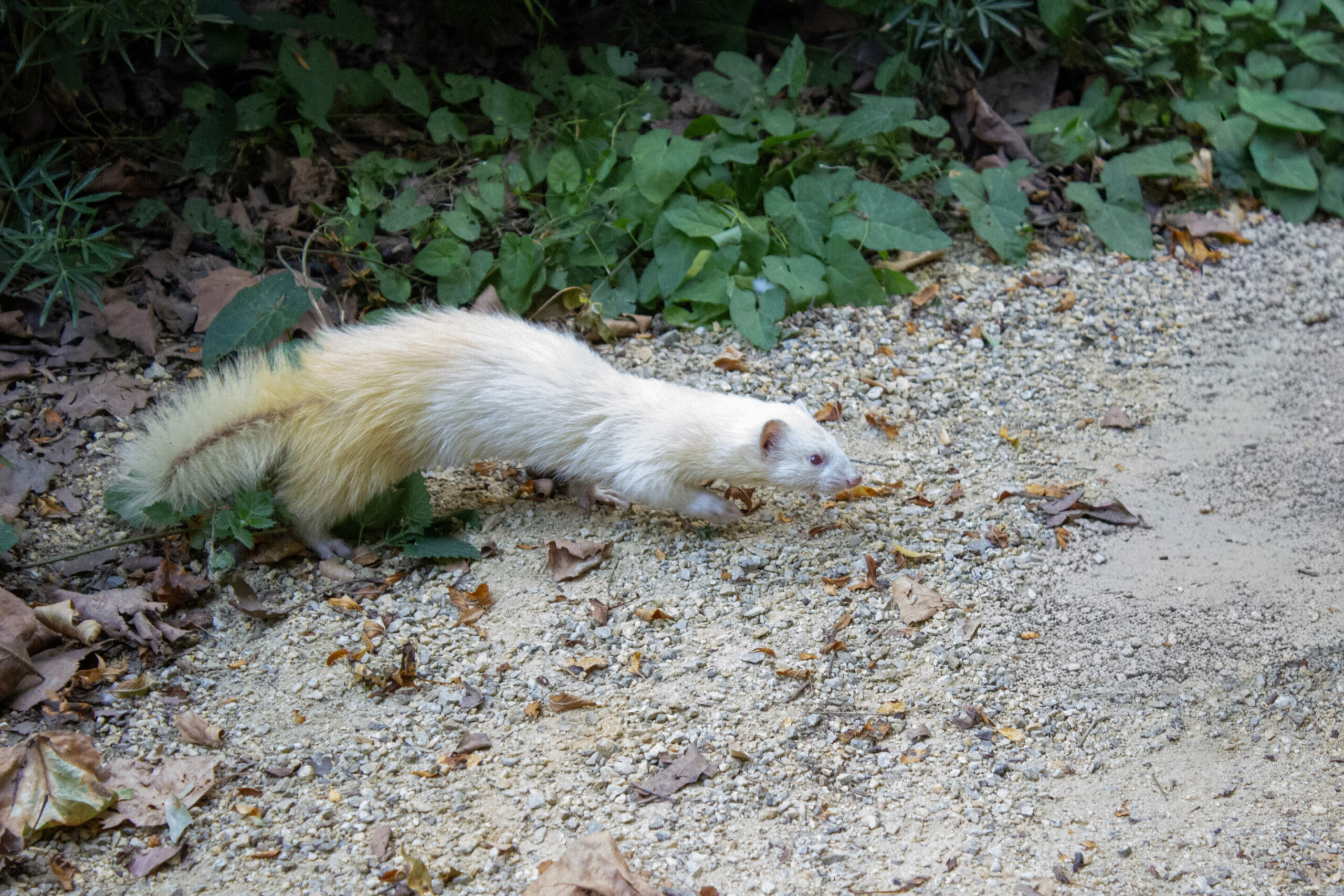
Ferrets, De Marcken realised, could do what traps and toxins never could: slip inside burrows, reveal the hidden architecture of a colony, and catch rats with precision. Credit: Ingrid Morales.
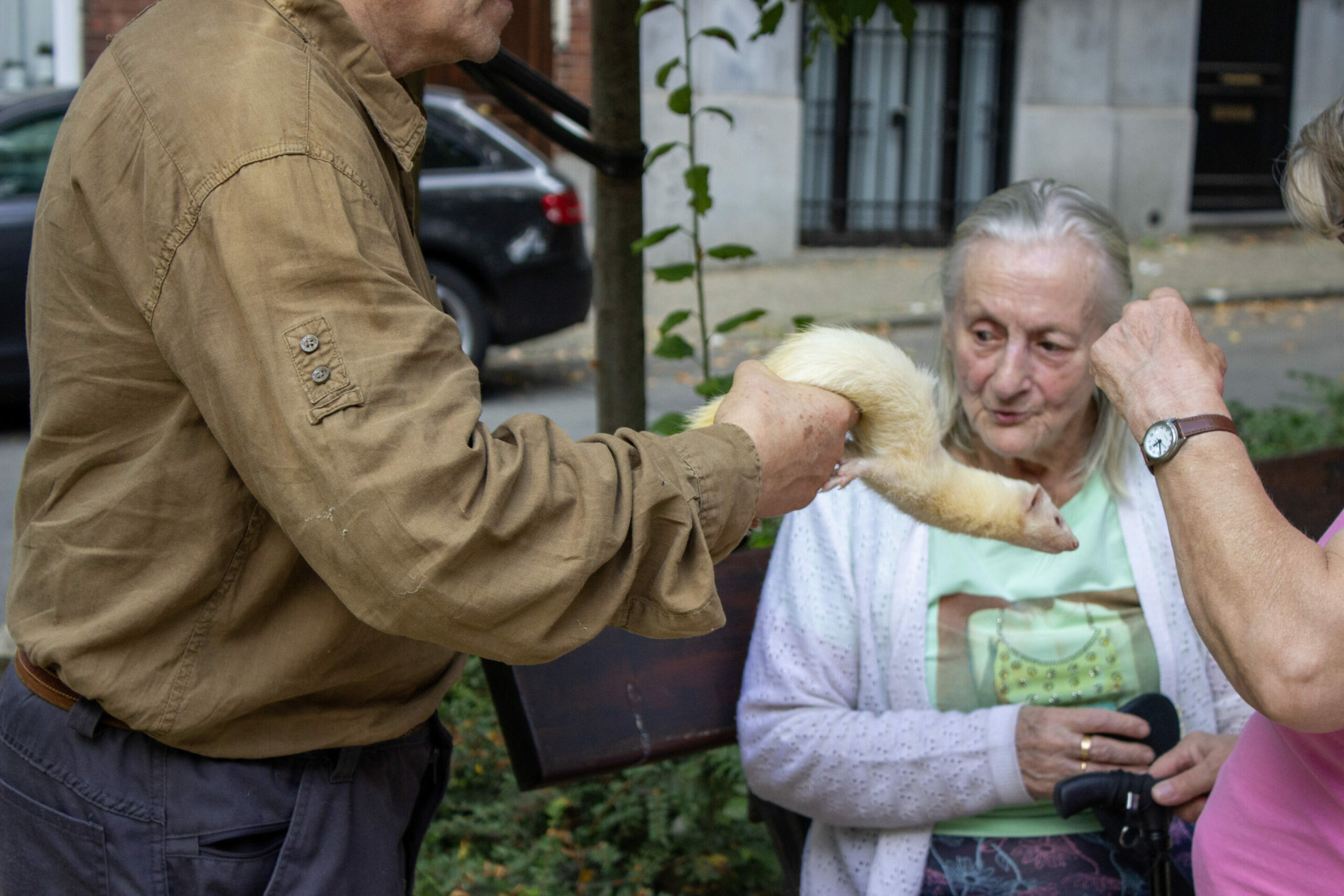
Locals greet him from their balconies and car windows, quickly telling him how many rats they have seen, how big they were, and where they are hiding. Credit: Ingrid Morales.
The brown rat
Rats, much like dogs, are our constant companions. They are not as beloved or visible, but these creatures have adapted perfectly to human urban life, to the point of becoming an invasive species in some parts of the world.
The species we see in the streets, says De Marcken, is not the one 'responsible' for the bubonic plague pandemic that struck Europe from 1346 to 1353. That was the Rattus rattus, a long-time relative known as the black rat that travelled from Asia. The genus Rattus, specifically the brown rat, is European and has successfully displaced its cousin from urban life.
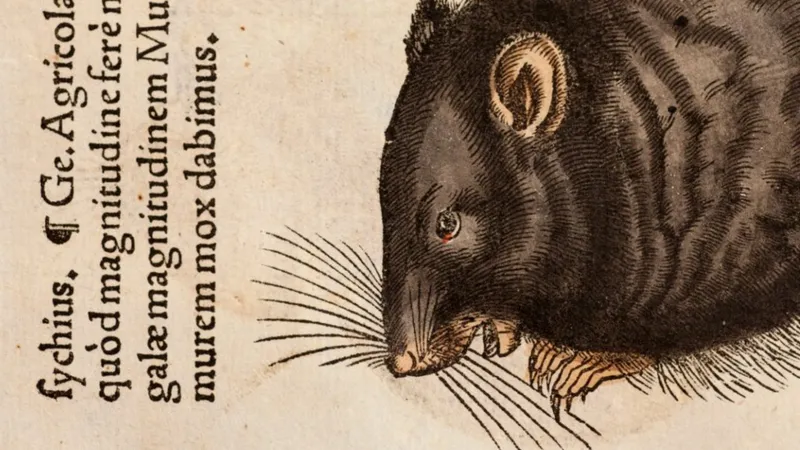
Rattus rattus, also known as the black rat, is an Asian species that is supposedly responsible for the bubonic plague that struck Europe in the 14th century. Credit: Science Photo Library, BBC.
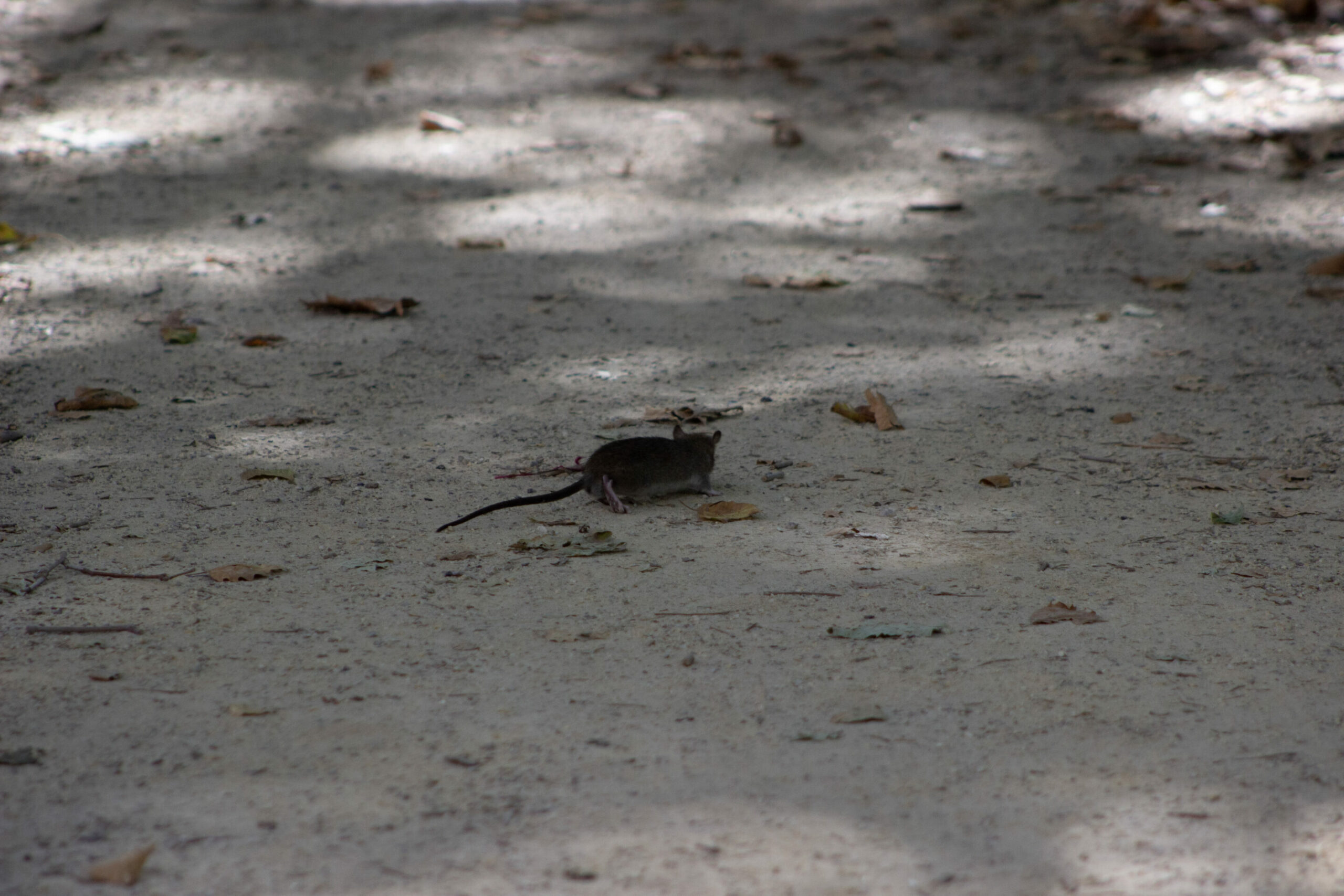
A brown rat in Jean Glineur's gardens. Credit: Ingrid Morales.
"Go 10 kilometres away from here, go a bit further, into the middle of the Ardennes forests, or even, you don’t need to go that far, into the middle of the Sonian Forest, and I challenge you to find a brown rat. They are very well adapted to us, not to the outside," says De Marcken.
The brown rat, he added, succeeds in the city because we provide them with the chance to do so. De Marcken identifies three fundamental factors that contribute to rat proliferation: food, shelter, and the capacity to reproduce. If you cut one of these resources, he says, the equation for rat multiplication becomes null.
A rat’s whiskers are more sensitive than our fingertips, and they use them to touch and feel objects just like we use our hands. Rats have sharp eyes that move independently and can watch for predators directly overhead. They also sense when a predator has recently passed nearby, and can communicate it to their 'peers'. They live in sewers, cellars, basements, bushes, restaurants, trash bins, parks, you name it. Although they share our environment and are among us, rats are nocturnal creatures and usually stay undercover when humans are most active, which sounds slightly unsettling.
De Marcken's storytelling was captivating. So we followed him on his next hunting mission.
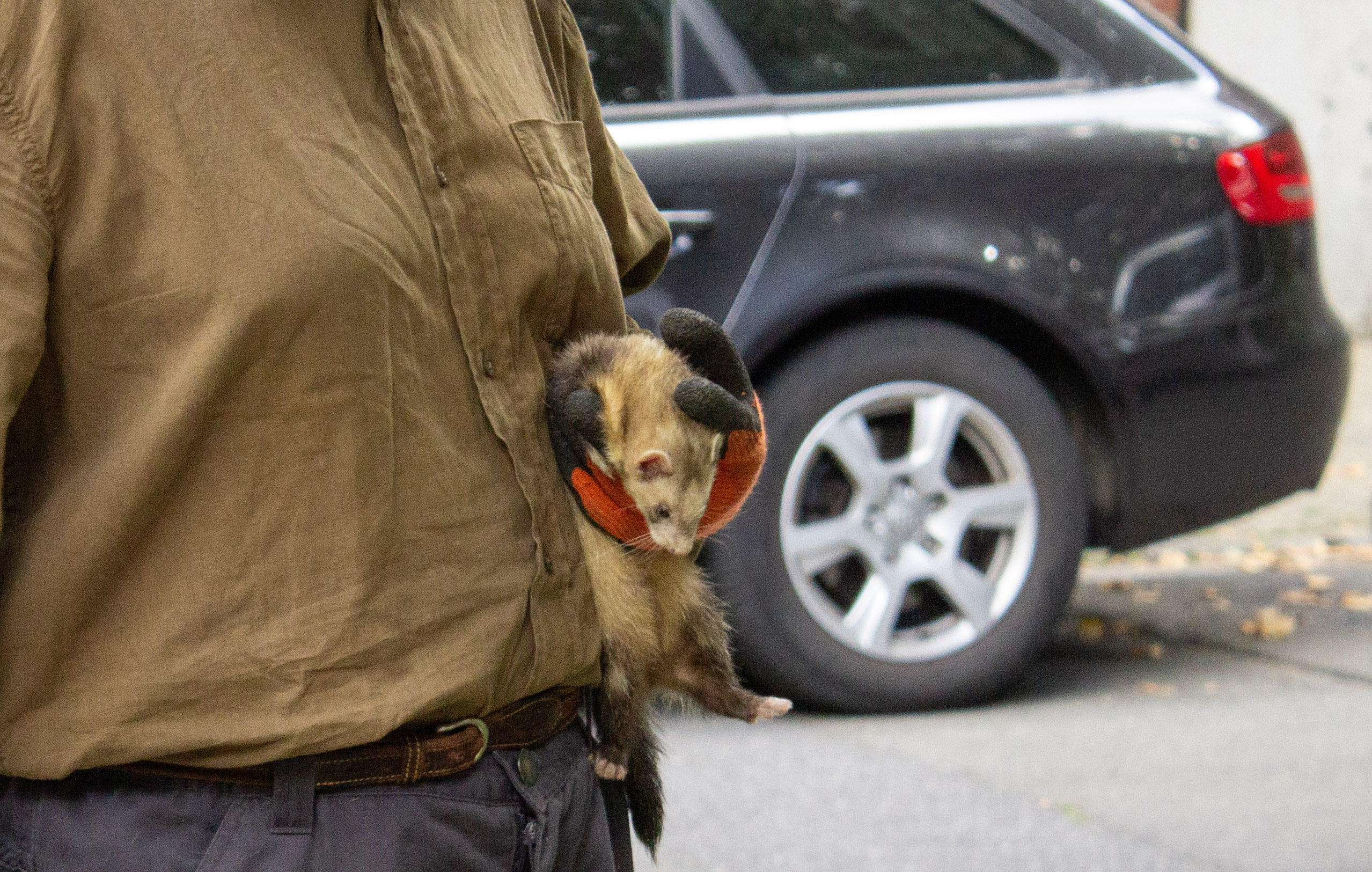
Armed with a leash, a dog, and a ferret, Brussels’ pied piper tackles the city’s most persistent residents. Credit: Ingrid Morales
Patrol day
On a sunny Thursday morning, De Marcken and the municipality's communication officer welcomed us to the Jean Glineur gardens in Etterbeek to watch a live rat-catching operation. As soon as De Marcken arrives with his ferrets and his small four-legged helper Théo, locals living nearby greet him from their balconies and car windows, quickly telling him how many rats they have seen, how big they were, and where they are hiding.
"Théo!" he shouted, and that signals the start of the show.
Jean de Marcken points out a rat making a run for it to his dog. Without hesitation, the border terrier dashes off like mad, chases the rodent under a bush, circles a tree, but doesn't catch anything.
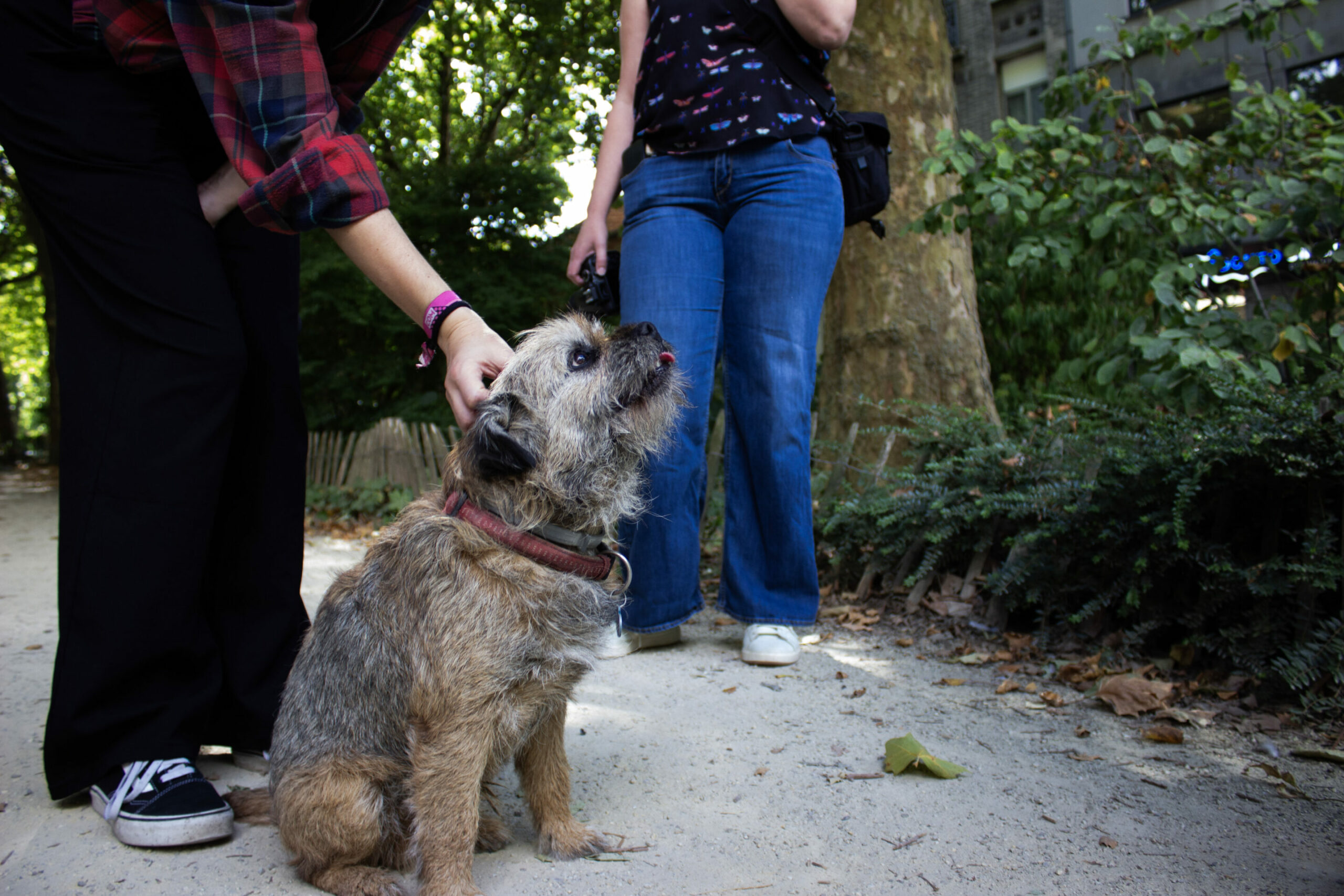
Théo, the four-legged helper. Credit: Ingrid Morales.
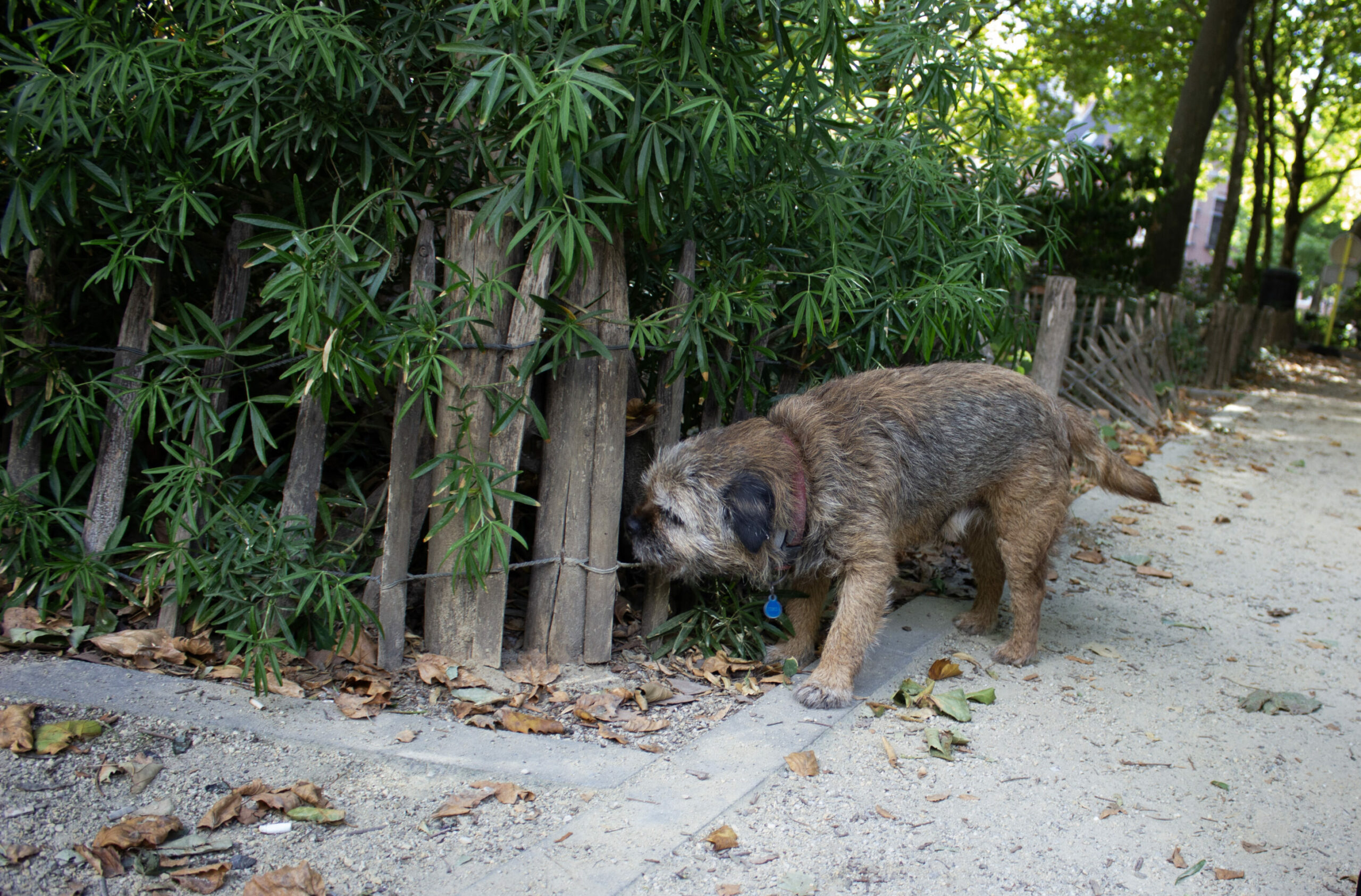
Théo is on his mission. Credit: Ingrid Morales.
Théo came back, wagging his tail, waiting for the following order. He takes the mission very seriously and is alert. The real stars, though, remain the ferrets.
As the Jean Glineur gardens are located in the middle of an uphill stretch of road, De Marcken restarted at the bottom and worked his way up. First, he re-ordered the dog to search through the low bushes.
"He is very good at finding the rat holes, and he alerts me when he finds one. Then, I send the ferrets in there," he said. "They then run through the tunnels. Either they catch the rats and kill them, or they chase them out."
Once the ferrets caught the scent of a rat, they let out high-pitched screams to signal the beginning of a frenzied attack, and we lost track of them in the dense undergrowth. A cacophony of raucous sounds and tree leaves flying followed.
Once the job is done, the ferrets return voluntarily. "They are not trying to escape or wander around. Once they are done hunting, they just come back to me." He adds.
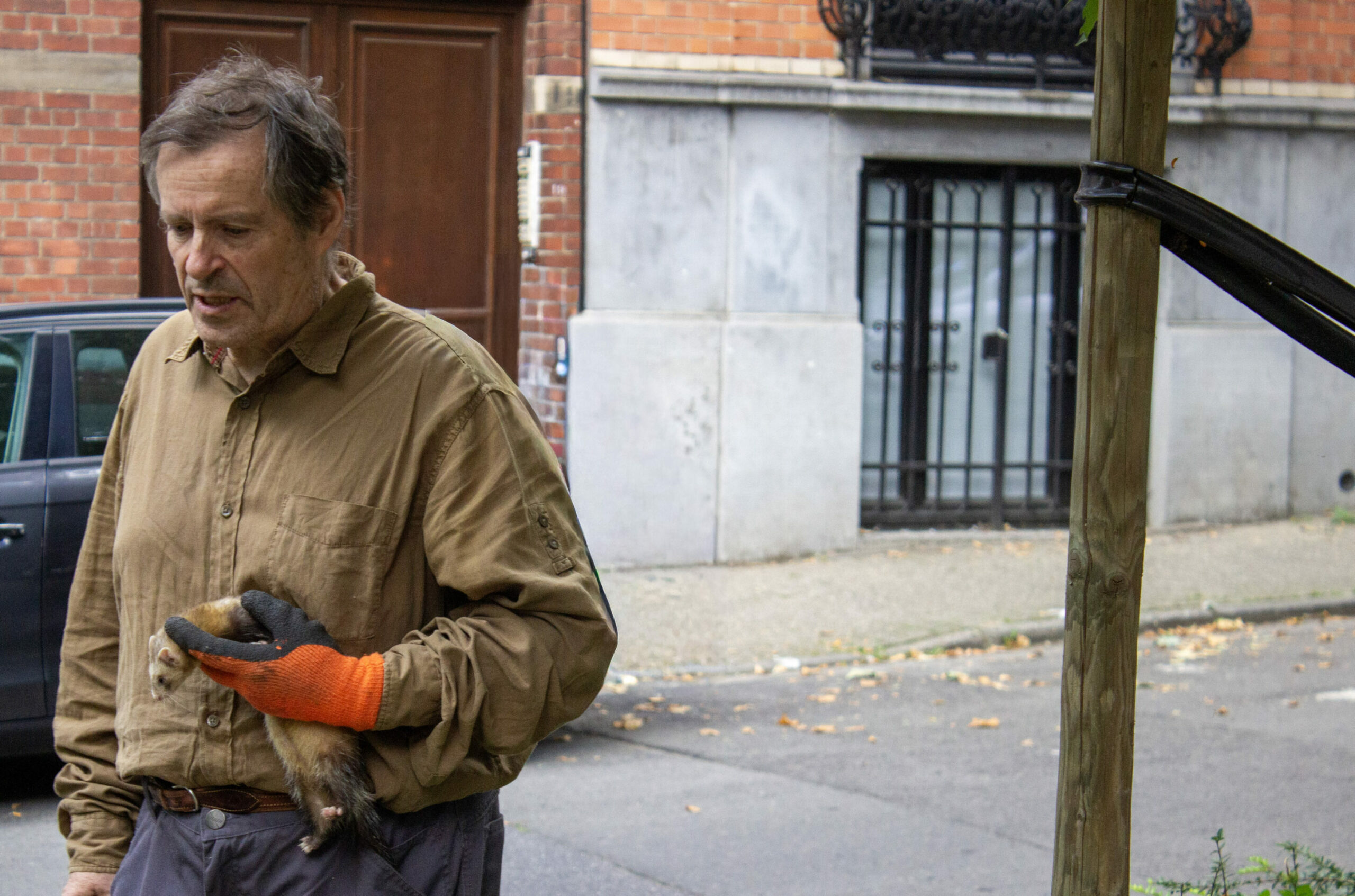
Armed with a leash, a dog, and two ferrets, Brussels’ pied piper tackles the city’s most persistent residents. Credit: Ingrid Morales
While making his way uphill, De Marcken explained to us that ferrets are the most effective way of catching rats because rats dread ferrets and cannot stand their smell. Also, no poison or traps that accidentally harm or kill residents' pets are necessary. "The ferret method is target-oriented. Plus, the people love them. Although they need to be cautious, these animals are quite ferocious and can be unpredictable"
After an hour of hunting, we have seen plenty of rats, but none have been caught. "They know you are here with a camera, they are just trying to make me look bad in the press," he jokes.
As the operation was about to finish, De Marcken pointed out that even if no rats were caught today, this method was an ongoing process: now, the ferrets knew where the holes were and where the rats scurried off to. "So we know where to start next time," he smiled.
And that next time might be in the city of Brussels. Following the steps of Etterbeek, the municipality's newly established "rat task force" is set to deploy ferrets in 2026 as a solution to the growing rat problem in certain areas. Foyer Laekenois and Logement Bruxellois already use ferrets to flush out rodents from hidden burrows in social housing, and the method has proven successful.
Related News
- Brussels city set to hire ferrets to catch rats
- Locals in Brussels commune concerned about recent dog thefts
- Limburg investigators recover over €1 million hidden by criminals
- Coronavirus: still no evidence your pet can infect you
- Hundreds of animals blessed for Saint-Hubert at Saint-Aubain cathedral in Namur
