
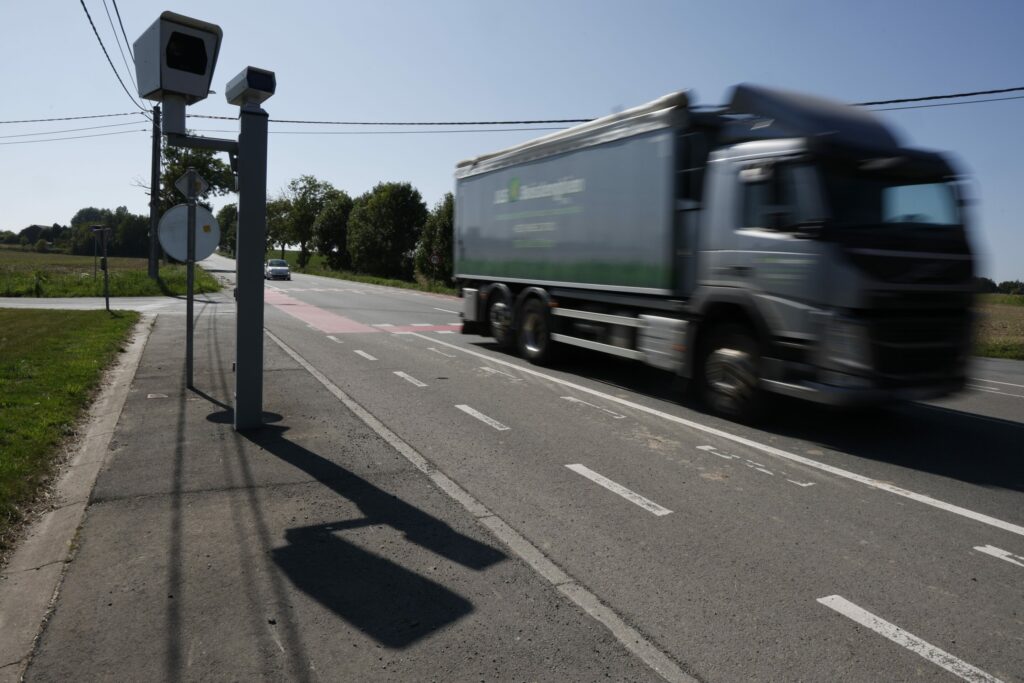
Last year, police in Belgium recorded the highest number of traffic offences ever, with minor speeding violations increasing exponentially in recent years.
Federal and local police registered over 9.2 million road offences in 2024, an increase of 10.7% compared to the year before, the highest figure ever recorded. This surge is almost entirely down to speeding, according to the latest police data.
In total, drivers were caught exceeding the speed limit 7.6 million times, nearly 13% more often than in 2023, and double the figure from 2018. Minor speeding offences (no more than 10 km/h over the limit, after correction) have risen, accounting for nearly three-quarters of all fines.
Flemish motorists remain the most frequently caught speeders. Last year, speed cameras in Flanders recorded 70,000 offences per 100,000 inhabitants, 60% more than in Brussels and twice as many as in Wallonia.
Wallonia, however, saw the most significant deterioration, with offences up to 48% between 2022 and 2024.
Other offences
Other types of road offences evolved less dramatically, though some changes are worth noting. Fewer drivers were caught using their phones at the wheel or failing to wear seatbelts. However, more motorists were fined for ignoring red lights.
Drug-driving offences rose slightly, while drink-driving remained stable, with over 46,000 offences still recorded in 2024. Road safety institute Vias has repeatedly warned that driving under the influence remains a persistent problem, with Belgium performing poorly compared to its neighbours.

Better technology
The significant increase in speeding violations can be attributed to the more frequent and effective checks, thanks to the adoption of advanced technology.
In recent years, substantial investments have been made in average-speed cameras and mobile cameras. These technological advancements have significantly improved the detection of speeding offences, with nearly half of all speeding violations in 2024 being detected using these technologies, according to figures from the Federal Public Service (SPF) Justice.
The number of federal police average-speed cameras increased from 430 to 502 between the end of 2023 and 2024, further enhancing the enforcement of road safety regulations.
The over-representation of minor speeding offences is linked to the abolition of the additional tolerance margin in 2021. Previously, judicial districts sometimes applied extra thresholds to limit the number of cases.
Today, only the technical correction remains in place: 6 km/h for lower speeds and 6% for speeds above 100 km/h.
This technical tolerance, however, can create frustration. A motorist who flashed at 37 km/h in a 30 km/h zone will receive a fine for 31 km/h.
The removal of the extra tolerance margin was designed to reduce the administrative burden for police and the courts, thanks to automated processing of offences.
The establishment of a dedicated road safety prosecutor’s office in 2021, at the request of public prosecutors, also allows fines to be handled uniformly across the country.
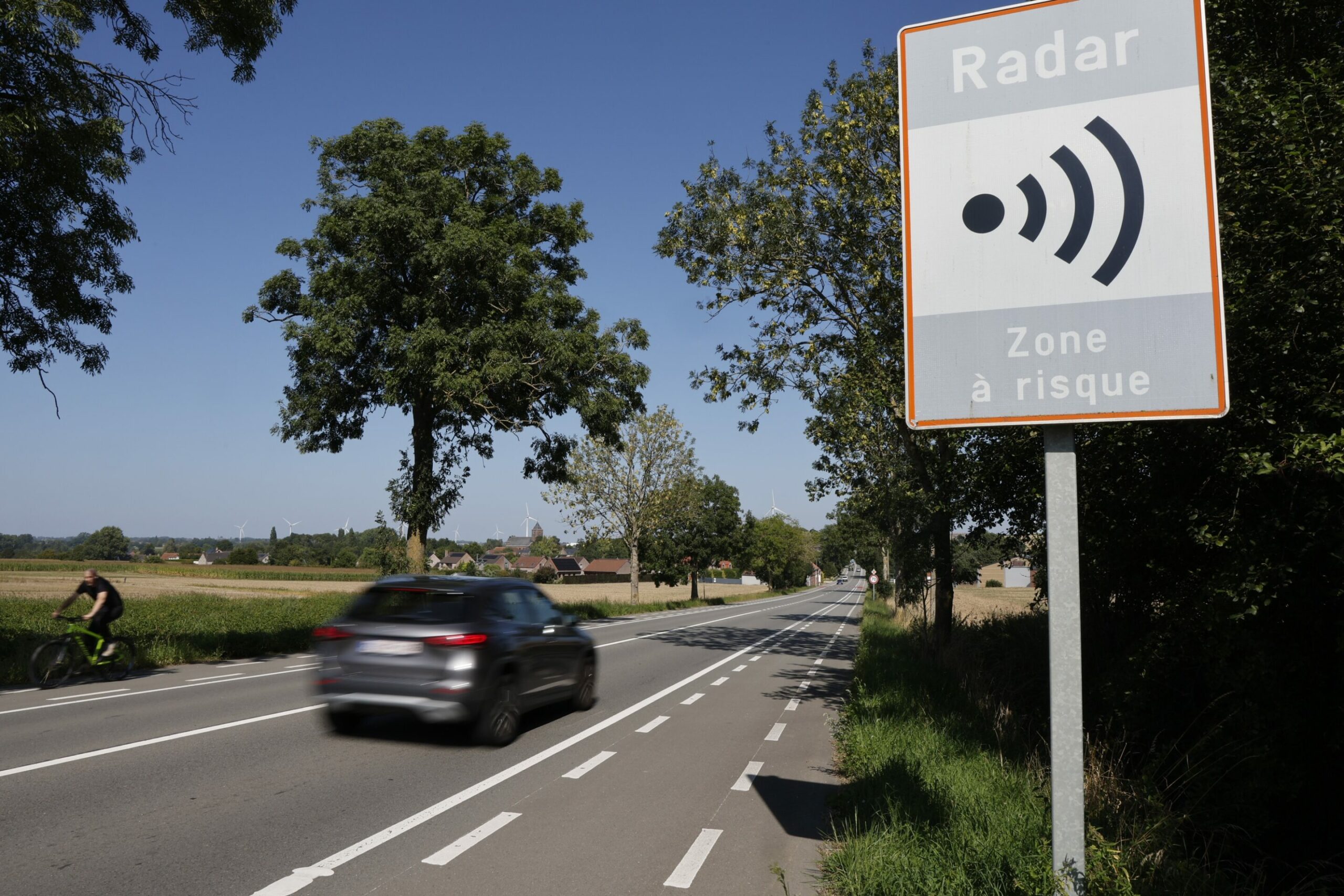
Stricter enforcement has led to a significant reduction in road casualties, according to Vias. Credit : Belga.
Fewer road deaths
Stricter enforcement has led to a significant reduction in road casualties, according to Vias.
The number of road deaths fell to 470 in 2024, the lowest figure ever recorded. This encouraging trend towards fewer road deaths instils a sense of relief and optimism in the audience, reinforcing the effectiveness of the measures taken to improve road safety. The long-term goal of zero deaths by 2050 seems more achievable than ever.
At present, police judges have no oversight of fines issued by municipalities for minor speeding offences under 20 km/h. That means drivers who rack up many minor infractions often get away with it.
To address the issue of repeat offenders, the government has included the creation of a national recidivism database in the government agreement.
This measure will allow authorities to identify and punish repeat offenders more effectively by linking municipal fines with those registered by the police.
