
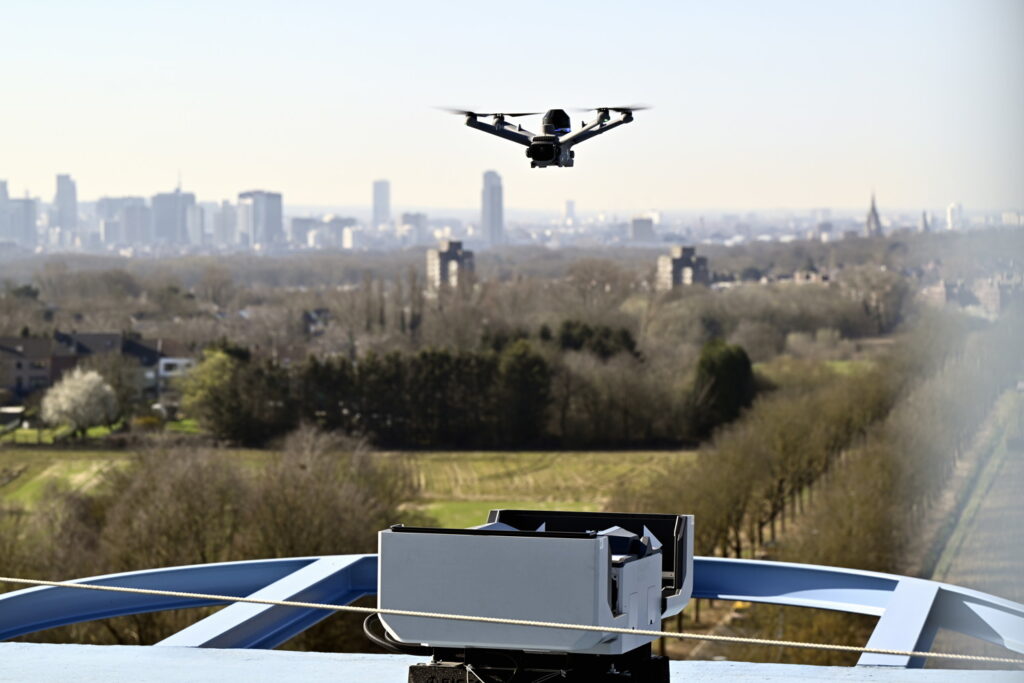
More than 31,000 drone flights were detected in sensitive areas of Belgian airspace, such as airports or military areas, last year. Of those, nine in ten were unauthorised, according to air traffic controller Skeyes. But what are the rules for drones in Belgium?
After a number of suspicious drones have been spotted in several European countries in recent weeks, Denmark – which had to shut down its airports due to drone sightings several times – banned civil drone flights nationwide on Monday.
In Belgium, SkeyDrone (a subsidiary of air traffic controller Skeyes) is responsible for detecting drones in sensitive areas, such as airports or military areas. The agency recorded 31,000 drone flights last year, of which 90% were unauthorised, L'Echo reports.
The number of drones is increasing significantly: in 2024, Skeyes registered nearly 21,000 permit applications for flights around the airports of Brussels, Charleroi, Liège, Antwerp, Ostend, and Kortrijk, or in military zones – 40% more than two years ago. However, not all permits result in an actual flight, for example, due to weather conditions.
An average of 30 drones per day were spotted around Brussels Airport, the largest controlled area.
First things first: What is a drone exactly?
A drone is an unmanned, flying aircraft. The official name is an Unmanned Aerial Vehicle (UAV). Their size does not matter, but the absence of a pilot (or other crew members) on board is: a drone is controlled remotely.
While drones can be very small, they can be as large as a passenger plane. The Belgian army, for example, purchased drones with dimensions comparable to those of a Boeing 737.
However, a drone can carry passengers. Some countries already have air taxis that do this. During the Paris Olympics last summer, France even planned to transport people with a drone, but those plans were cancelled at the last minute.
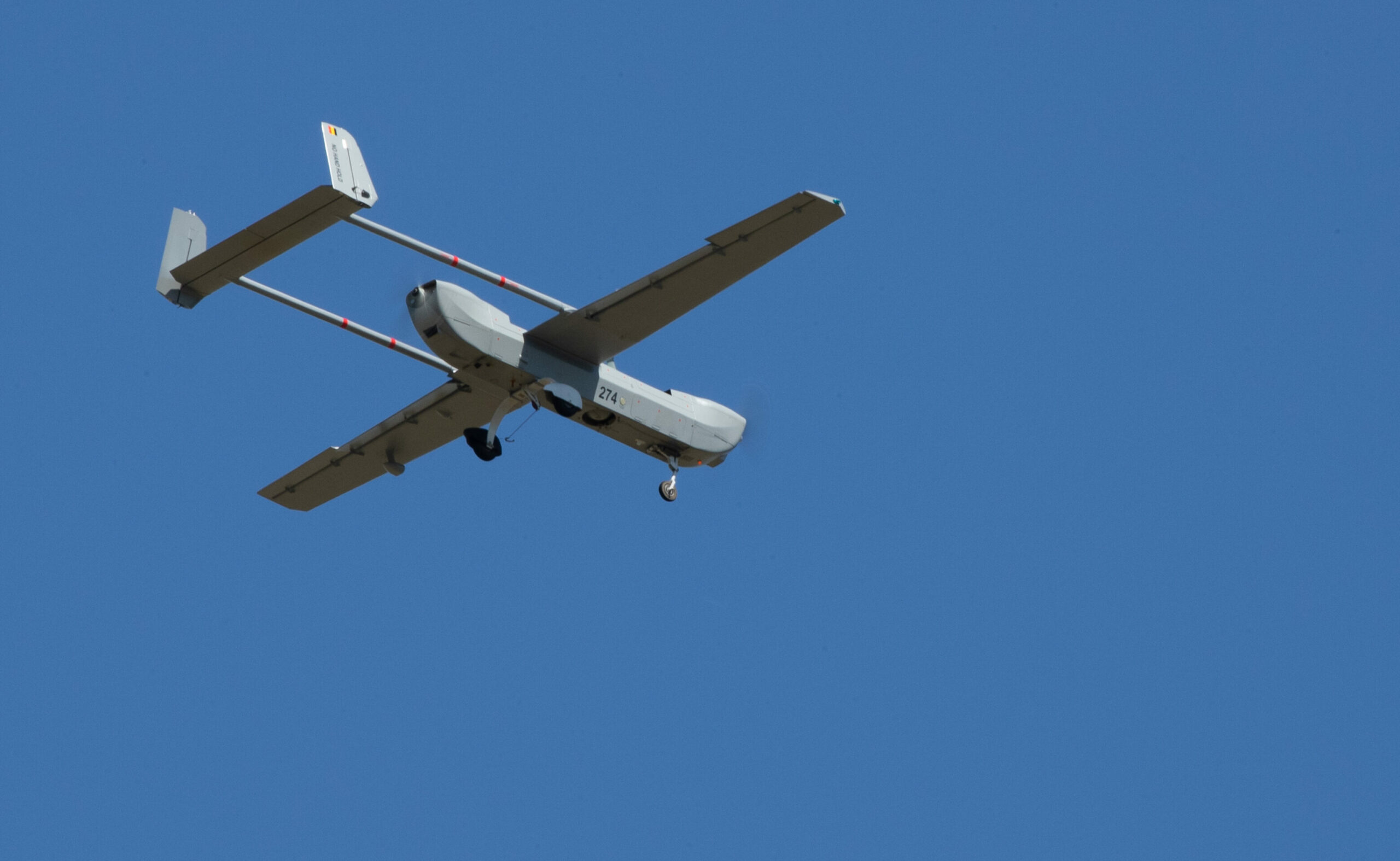
Illustrative image. Credit: Belga
Who can have one and what are the rules?
While almost anyone is allowed to buy and use a drone, the rules for using them depend on exactly what you plan to do and where you want to fly. For most drones, there is also a minimum age of 14.
"There is no distinction between recreational and professional use. The era of toy drones is truly over. Legally, all drones are the same," Kurt Verwilligen, spokesperson for Skeyes, told The Brussels Times.
In principle, people can fly any drone weighing less than 25 kg up to 120 meters high, provided the drone remains within the pilot's field of vision at all times in Belgium. However, that does not mean anyone can just buy a drone and start using it immediately.
In addition to other people's privacy, there are many other things to consider.
How do you register?
In most cases, it is mandatory to first register as a user (or "operator") of a drone. About 99% of drones sold today have an onboard camera.
"As soon as your drone has a camera or weighs more than 250 grams, you have to register it," Verwilligen said, who stressed that this is an either-or situation. "Drones with a camera must be registered, regardless of weight. Drones of 250 grams and over must be registered, regardless of whether they have a camera."
The operator must register their drone (for free) with the Federal Public Service Mobility and Transport. They will receive a registration number that they must affix to their UAV device. "But many people do not know this and skip this step."
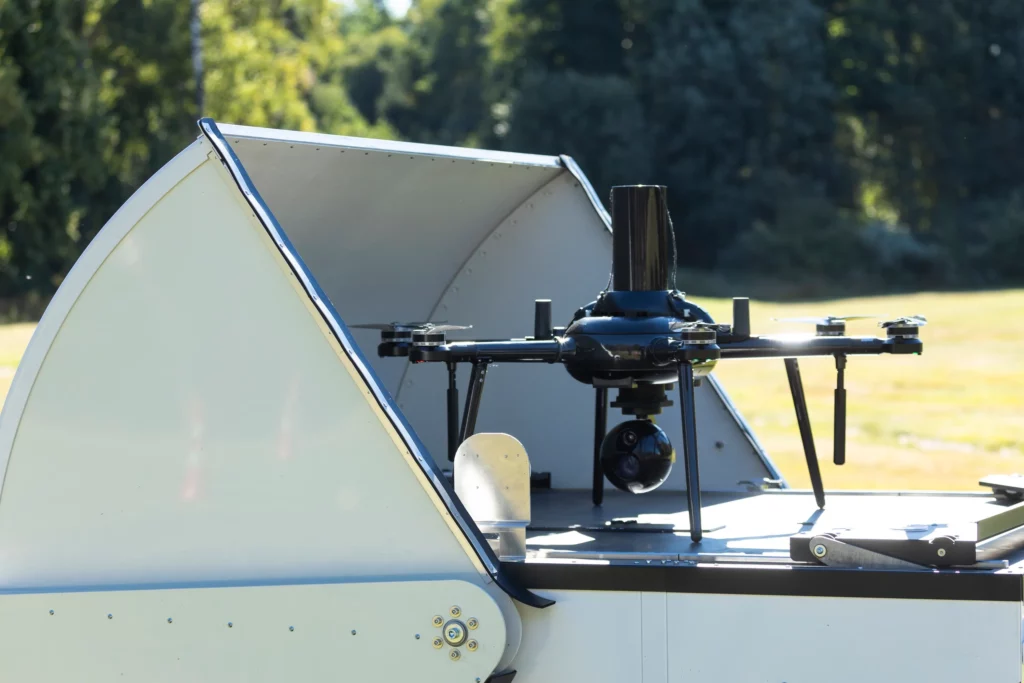
Drone. Credit: CityMesh
Importantly, it is prohibited to endanger the safety of other airspace users and people on the ground with your drone. "You must also ensure that your drone is insured to cover any potential bodily injury or property damage. This must happen before you submit a registration application."
For smaller drones, some family insurance policies already cover (recreational) drone flights.
Do you need a licence?
There are three categories for drone operators.
Currently, the vast majority of people flying drones in Belgium fall into the OPEN category. This means they pose a low risk, but that does not mean they do not need to adhere to any rules.
The requirements are determined by the drone's takeoff weight, but also depend on how close the operator wants to fly above other people. Flying above a crowd (for example, at a festival) is prohibited in the OPEN category. Operators may first need to take an online theoretical exam or complete drone pilot training. In some cases, they will also need to present a proficiency certificate.
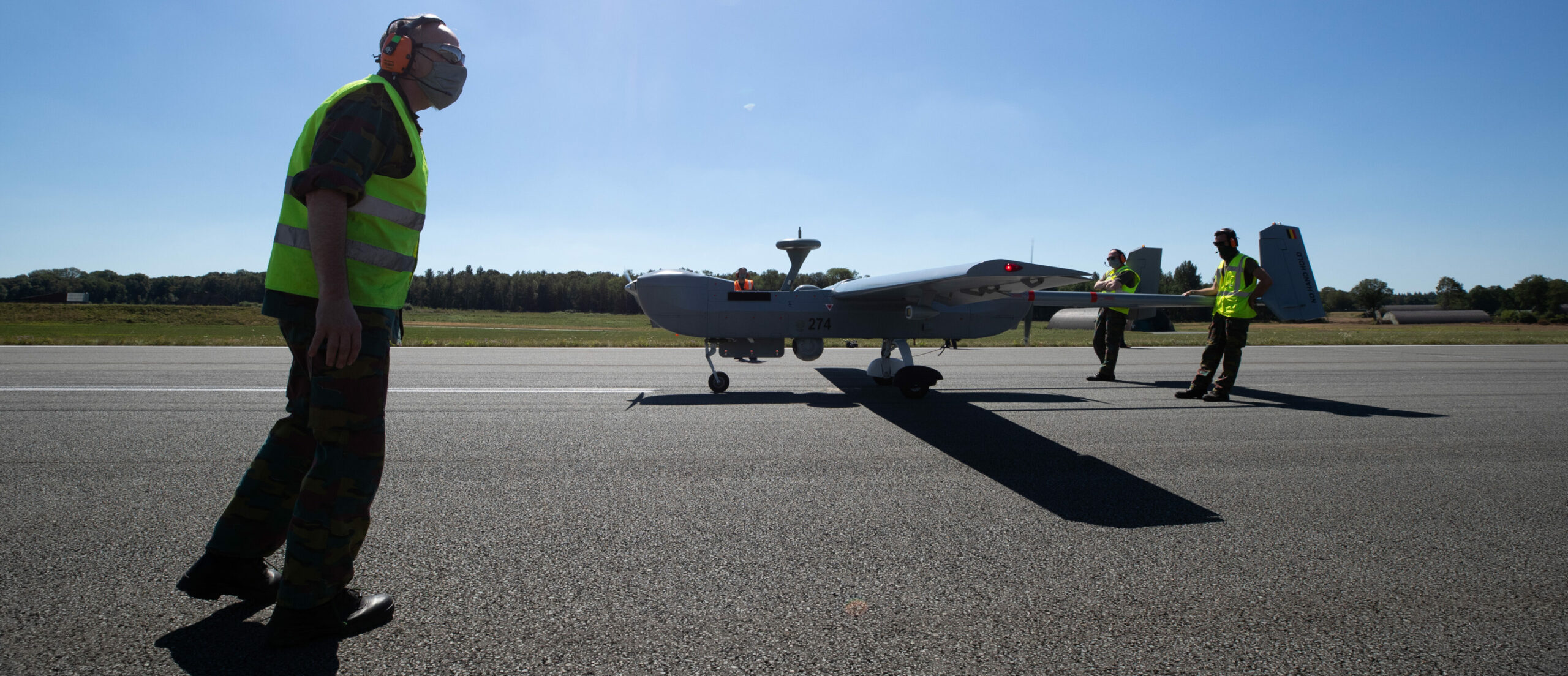
Belgian army drone. Credit: Belga/Benoit Doppagne
For more risky flights, there is a SPECIFIC category. An example of this is flights conducted outside the operator's field of vision. For flights within this category, operators must always obtain a permit first. They must apply for this permit from the Directorate-General for Civil Aviation.
Lastly, the CERTIFIED category is intended for flights with the same risk potential as manned aircraft. For example, when a company wants to use air taxis to transport passengers. However, the rollout of this category is still a long way off in Belgium.
Can you fly your drone anywhere?
On paper, there is no place in Belgium where drones are not allowed to fly – not even near or over Brussels Airport. "However, the closer you get to the airport, the stricter the permit requirements become, of course. But a no-drone zone has not actually been established."
In practice, these permits are only reserved for specific professional operations. Private individuals are very unlikely to be permitted to fly their drone near Brussels Airport. The entire area is a geozone.
"Geozones are areas with additional rules regarding who and what is allowed to fly there. Think of the Port of Antwerp, or areas near nuclear power plants. The Agency for Nature and Forests has even established a geozone over some nature reserves. To fly in such a geozone, you must obtain prior permission."
You can check the different geozones on the Drone Guide platform.
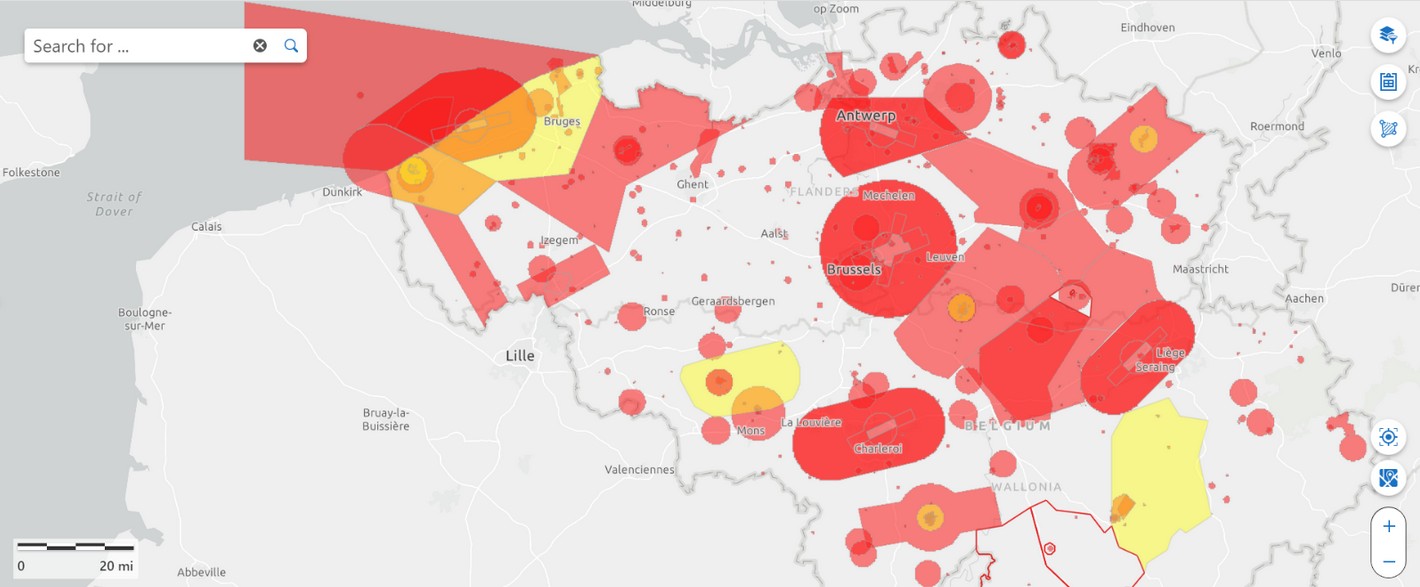
Credit: DroneGuide
What if you violate the law?
The larger and heavier the drone, the stricter and more important the requirements for flying it become. Through the registration number affixed on the UAV, the authorities can find the owner if the drone gets lost and is found somewhere.
"If the drone was in violation of the rules, the owner can then also be reported to the police," Verwilligen said. Currently, there are no stipulations about how certain violations should be penalised in the Ministerial Decree. This is being worked on.
Up until now, violations have been recorded based on other laws, such as privacy. "Fines have gone up to €8,000 and the seizure of the drone, depending on the offence," Verwilligen said.
