
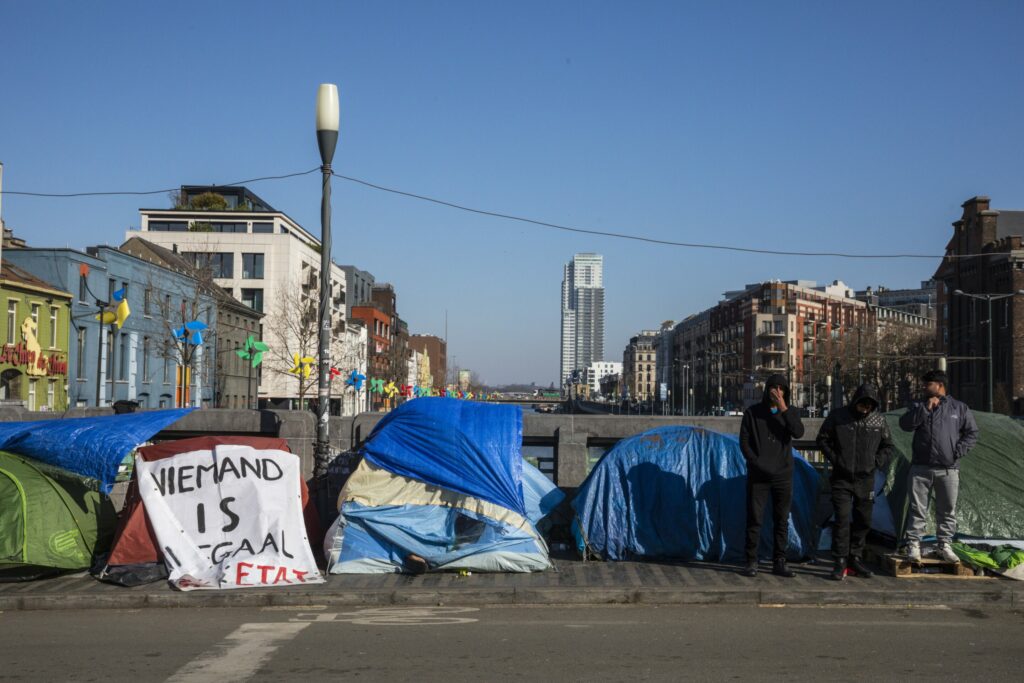
Four families who are sleeping on the streets of Brussels are suing Federal Asylum and Migration Minister Anneleen Van Bossuyt (N-VA) for violating Belgian law by systematically refusing to provide shelter to asylum seekers who already get protection elsewhere.
The families have all applied for asylum in Belgium, and are invoking a criminal offence to file a complaint, namely inhuman or degrading treatment, or at least culpable failure to assist persons in danger, their lawyers said in a statement sent to The Brussels Times.
"Through a deliberate, planned and explicit action, the minister is voluntarily subjecting people to inhuman or at least degrading treatment, in violation of Belgium's international obligations," reads the statement. "Through her actions, she is forcing these families to live on the streets, in total poverty, without shelter or food."
Additionally, the families also cite "an arbitrary act" by the minister, and stressed that "this is also punishable by law." They added that "the minister's office has explicitly instructed Fedasil not to enforce enforceable court decisions."
Forced to sleep rough
These families are among those who have been sleeping on the streets since 4 August, as a result of the new legislation that was passed in June and came into effect two months ago.
The legislation entailed a series of restrictive migration measures, including one that "automatically considers inadmissible" asylum applications from people who have applied for asylum in another European country, whether they were accepted or refused. Applications will only be examined based on new elements.
"The consequence is that since 4 August, families with young children and babies have been forced to sleep on the streets – despite their vulnerability and in flagrant violation of the interests of these children," they said.
The Brussels Labour Court has already ruled several times that Fedasil, the federal agency for the reception of asylum seekers, failed to take into account the specific circumstances of the asylum seekers concerned and that it had only taken a stereotypical, non-individualised decision.
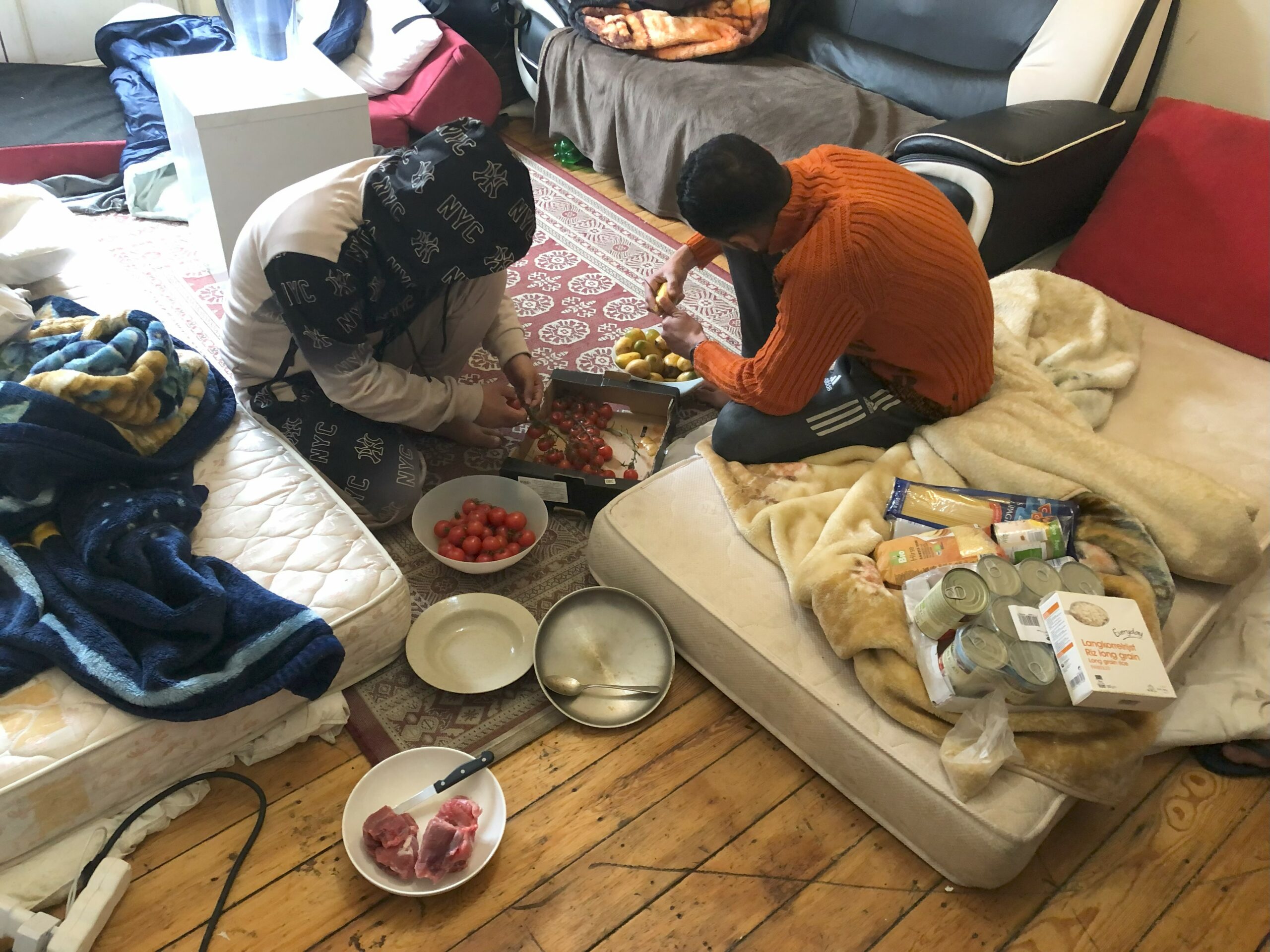
Illustration image of young asylum seekers living in a squad preparing a meal. Credit: The Brussels Times
For this reason, the Labour Court ordered Fedasil to provide shelter to the families concerned. However, Fedasil has so far refused to implement these decisions, despite the fact that they are enforceable (and must therefore be implemented even in the event of an appeal) and are accompanied by penalty payments.
The families' lawyers were informed by Fedasil of this failure to comply with the court order. They were also told that "at the request of the Minister for Asylum and Migration to Fedasil, the agency cannot, however, invite your clients to be readmitted to the reception network on this basis alone."
Van Bossuyt, meanwhile, stated in the press that she was "not prepared to pay the penalties," even though these had been imposed by the court in the event of non-compliance with these court decisions.
One of the families was supposed to have their interviews with the Immigration Department in December this year. Since the news of the court case, however, the interview has been moved up to this Friday, Oriane Todts, their lawyer, told The Brussels Times.
Preventing 'asylum shopping'?
Last July, several new laws were passed that changed the rules governing the reception of asylum seekers, making it possible, under certain conditions, to refuse reception to persons who already enjoy protection in another EU Member State. However, these laws still stipulate that each case must be assessed individually, taking into account the specific vulnerability and interests of the child.
Contrary to these laws, however, Van Bossuyt instructed Fedasil, the federal agency for the reception of asylum seekers, to systematically refuse reception to several persons who enjoy protection in another Member State, often Greece.
This measure should prevent "asylum shopping," which is a term that describes an asylum seeker transiting from one EU Member State where they may have already asked for asylum to another Member State.
Critics have described the term as "problematic," because they say it implies that claiming asylum is a voluntary choice based on complete awareness of how the system works.
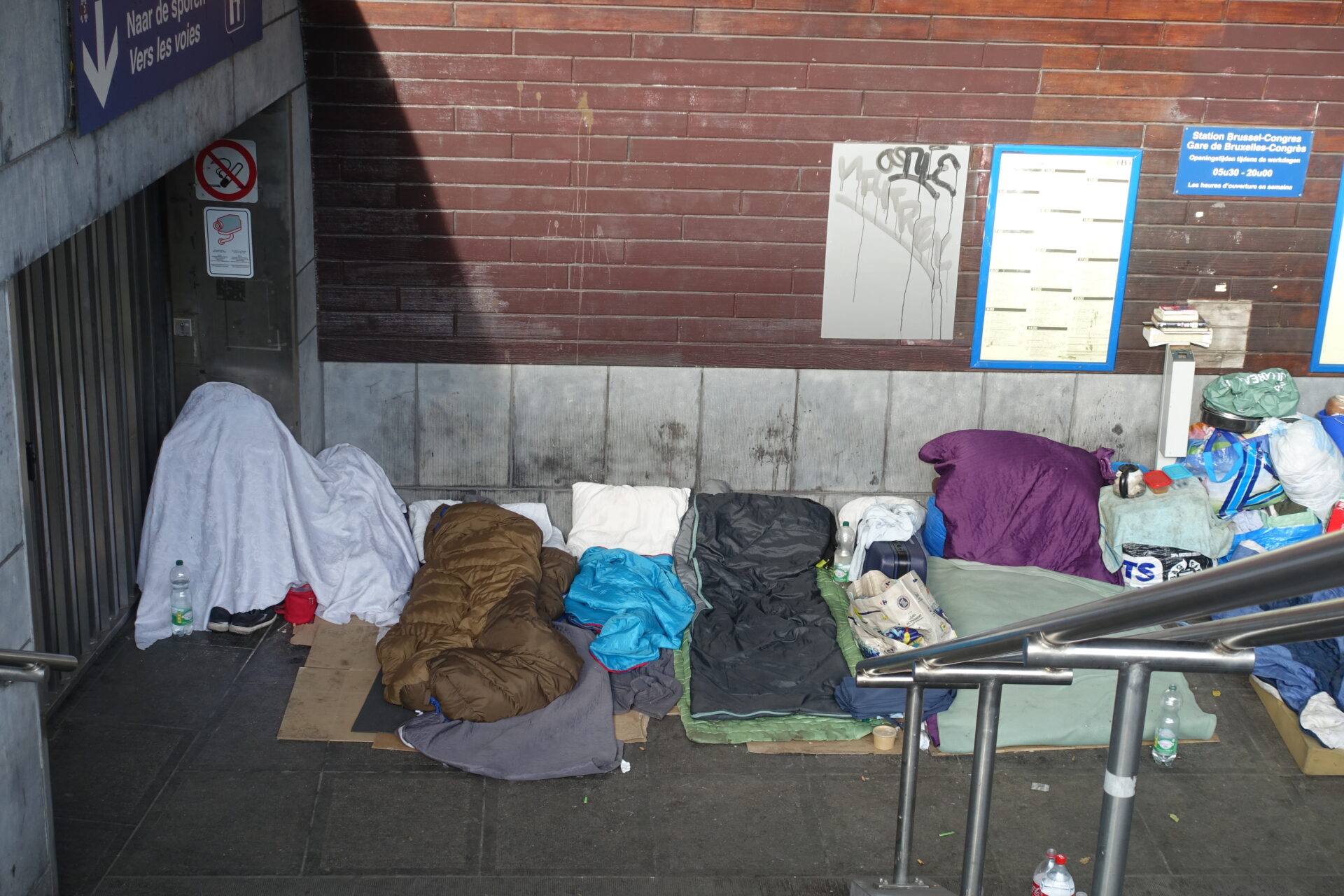
Asylum seekers' shelter near the Immigration Services building. Credit: Lauren Walker
In practice, however, it often concerns people who received a quick positive decision in Greece but have no access to work, housing, or education there – pushing them to continue their journey.
It assumes that asylum seekers then voluntarily choose the best regime possible, "like they would go to a restaurant and choose a meal on the menu," Thomas Willekens, policy adviser at the Flemish refugee organisation Vluchtelingenwerk Vlaanderen, told The Brussels Times right after the stricter rules came into effect.
However, he stressed, that completely denies the reality on the ground, namely that asylum seekers are not perfectly informed about systems in the EU and that they often do not voluntarily choose where they end up in the first place. "They therefore go to a place where there is family or diaspora present."
The families have filed a criminal complaint with the Attorney General against Minister Van Bossuyt and against X for these offences. Now, it is up to the Attorney General to investigate this complaint and assess whether the various elements of the aforementioned offences have been met.
The Brussels Times has reached out to the office of Migration and Asylum Minister Anneleen Van Bossuyt (N-VA) for comment, but at time of publication had not received a reply.
