
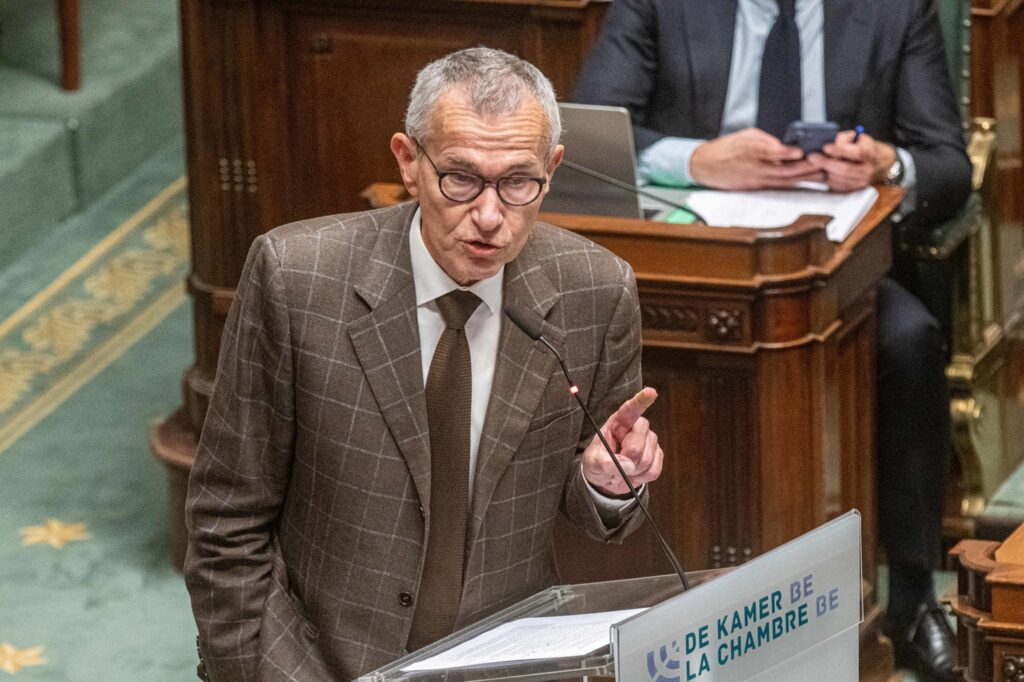
The Belgian National Institute for Health and Disability Insurance (Inami) failed to agree on a healthcare budget proposal on Monday, prompting the Federal Government to take over discussions.
The healthcare committee, comprising representatives of mutual insurance funds, care providers, and healthcare institutions, could not reach a consensus on a proposal.
The plan was rejected by the largest doctors’ union, ABSyM, as well as dentists and some hospitals. With a vote of eleven against to nine in favour on the side of healthcare providers, the proposal fell short of the required majority, and a second vote was not possible.
ABSyM expressed concerns that the proposed budget cuts were excessive for medical practitioners. Federal Health Minister Frank Vandenbroucke had requested €907 million in savings by 2026, including €150 million from medical services.
One suggestion on the table was to increase the patient co-payment — the amount paid out-of-pocket by patients, excluding additional fees — from €4 to €5 starting in 2027. While mutual insurance funds supported this measure, ABSyM opposed it.
"ABSyM cannot accept the latest proposal put forward by the mutualities," said Dr Patrick Emonts, president of the union. "It lacks sufficient guarantees because, on several occasions, medium-term promises have not been honoured." The union also advocated indexing the co-payment, which has remained unchanged for over 20 years.
The health and social care federation Unessa also voted against the proposal, warning that it placed undue financial strain on hospitals.
"The current draft shifts the bulk of the burden to hospitals without concrete measures to alleviate their expenses. As it stands, it jeopardises jobs, the appeal of healthcare professions, and access to care," said the organisation.
Unessa called for immediate economic neutrality, proposing measures to offset hospital costs concurrently with imposed savings.
"You cannot reduce hospital revenues while allowing recurrent and fixed costs to remain unchanged — or even rise," said Philippe Devos, Unessa’s director-general. "Without economic neutrality, the only remaining options are layoffs or increasing additional fees for private rooms, which we seek to avoid."
The Christian Mutuality also criticised the deadlock, calling the budget proposal the result of a thorough and diligent process.
"The healthcare providers who voted against the proposal are choosing to entrust their fate to politicians instead of the consultation model," said Elise Derroitte, the mutuality’s vice-president. "Patients will bear the consequences."
The Federal Government must now present its own budget proposal to the General Council on 21 October.
