
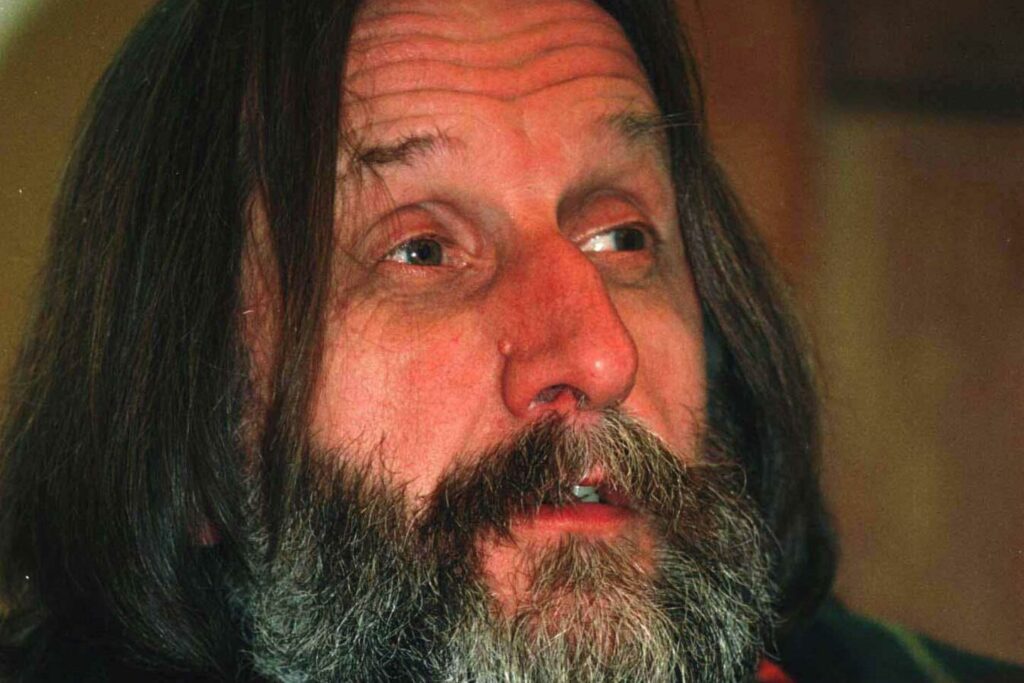
Father Germain Dufour was once a venerated priest in Liège, but when he died in 2023, he took dark secrets to his grave.
According to a report by Nicolas Taiana in the Belgian magazine Médor, at least 13 men claim to have suffered sexual assault at the hands of the priest. Many of the alleged victims were undocumented migrants or former residents of his homeless shelter, Espace Fraternel ('Brotherly Space').
Who was Germain Dufour?
Born in 1943 in the rural village of Baugnies in the Hainaut, Dufour was raised in a devout farming family. Inspired by Saint Francis of Assisi, he joined the Franciscan order and later embraced the movement of prêtres-ouvriers (worker-priests) who lived and laboured among the poor.
In 1970, he moved to the working-class district of Pierreuse in Liège, where he founded Espace Fraternel. This community housing project welcomed society's outcasts, including homeless men, asylum seekers, and individuals battling addiction.
He lived as a friar, barefoot in his sandals, mainly wearing a simple brown robe - an emblem of the Capuchin order. He often participated in the city's street clean-up.
He was the epitome of Christian self-sacrifice in Liège, much like the French priest Abbé Pierre and the Capuchin order, which is known for blending ora et labora - prayer and work.
Dufour gave a nuptial blessing to a same-sex couple in defiance of his hierarchy and was notorious for 'defending the marginalised'. "He was everywhere, protests, shelters, council meetings," one source told The Brussels Times.
In 1988, Dufour officially entered politics with the Green Party (Écolo) and was elected to the Senate.
Some admirers said that Dufour donated his salary to Espace Fraternel, keeping only what he needed to live.
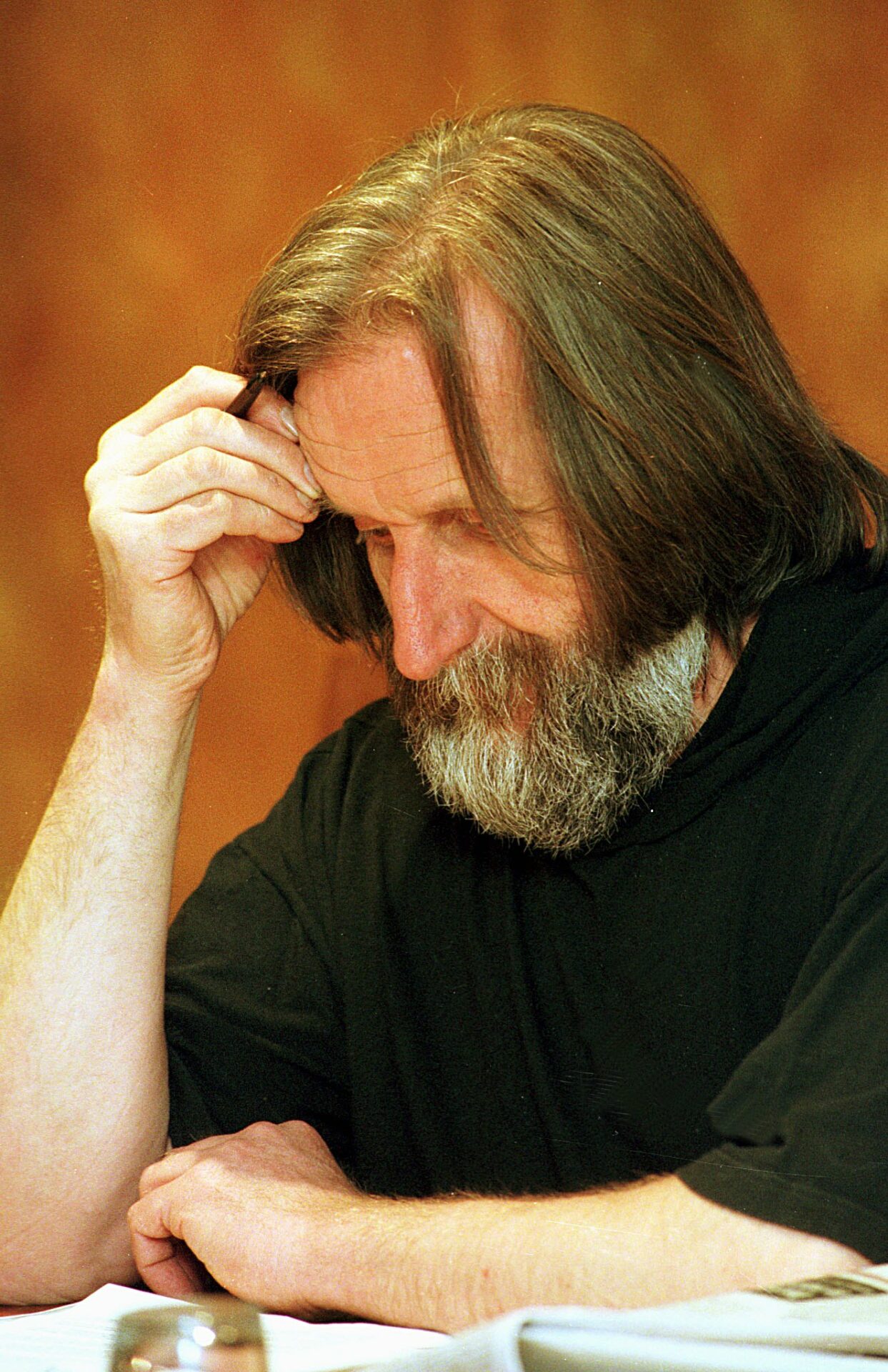
Dufour at a council meeting. Credit: Belga.
Inside Espace Fraternel, things looked significantly less rosy. The shelter was housed in a decaying former school building and operated with few formal rules, oversight or proper hygiene. Rooms had no locks, and some had no doors.
Residents - mostly undocumented male migrants - depended on Dufour for a roof and the residency documents he provided, which were essential for applying for medical aid or legal status. This overwhelming reliance on Dufour, it is claimed, allowed him to exert dominion and coercion over the men who stayed in the shelter.
An open secret
Point d'Appui, a Liège NGO that helps undocumented migrants, began hearing disturbing accounts about the goings-on at Espace Fraternal in 2014.
"For many years, these were merely rumours circulating within the Liège associative sector, followed by insinuations from beneficiaries of our association," said Annick Deswijsen, the NGO's coordinator, to The Brussels Times.
A series of articles about Dufour published in the Belgian press in the autumn of 2018 prompted a number of men to contact Point d'Appui with their own allegations about the priest's behaviour.
Despite the media coverage, Dufour reportedly continued to prey on vulnerable young men. According to Deswijsen, Dufour manipulated his alleged victims using social isolation, psychological pressure and blackmail, as well as threatening them with physical violence perpetrated by men close to him.
Point d'Appui claim to have informed the Liège Public Prosecutor by sending a two letters - one in 2018 and another in October 2020. The initial letter sent by Point d'Appui, which The Brussels Times has seen, mentioned allegations that dated back to 2013.
The first letter said: "We have been assisting a Tunisian man in an irregular residence situation, born in 1974, who suffers from drug addiction. While undergoing treatment, he was looking for a place to rest. For the purposes of the regularisation procedure, his reference address was listed at Mr Dufour's home.
"Two or three years ago, he told us that he could not sleep at Mr Dufour’s home, that 'it was beyond what he was capable of doing, that he was not capable of doing that in exchange for accommodation'. He added that we certainly understood what he meant, without needing to elaborate further."
By early 2023, the prosecutor was reportedly preparing to send Dufour to trial, but when he died of cancer in March of that year, the case was closed, as Belgian law dictates.
"When he died, it was like we died with him", said an alleged victim to Médor.
Related News
- Flemish nursery teacher jailed for 12 years for raping multiple young boys
- Belgium wants to send foreign prisoners to the Balkans to tackle overcrowding
- Brussels is a cautionary tale for cities like New York, says Oxford philosopher
- Brussels creates 285 extra shelter places for homeless families amid worsening crisis
