
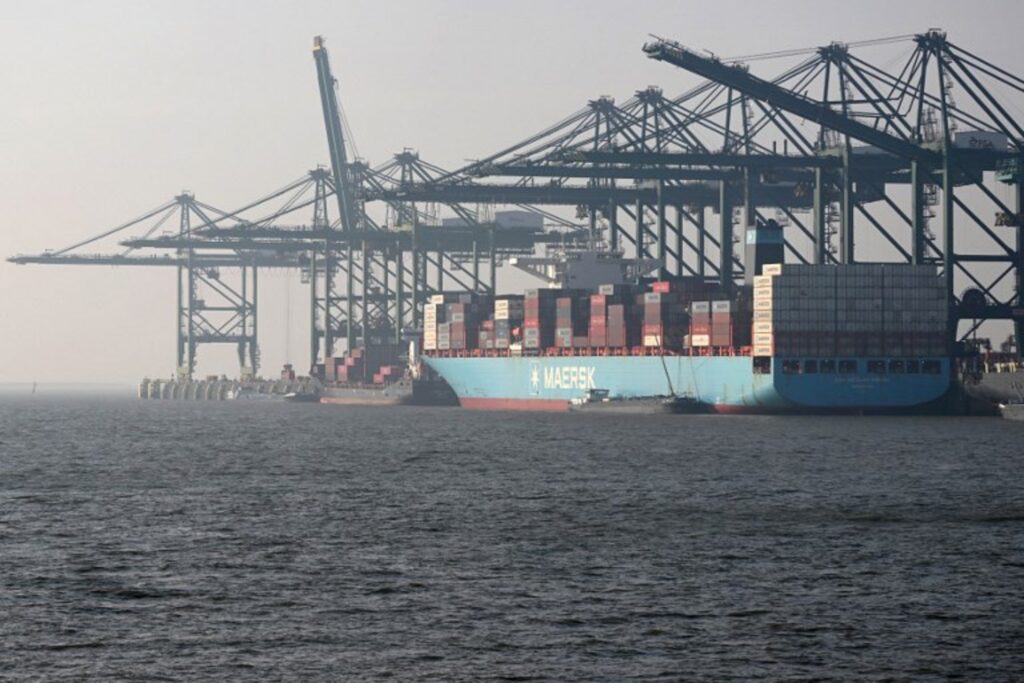
Shipping in and out of the ports of Antwerp, Zeebrugge, and Ghent remains disrupted, with over 100 ships stranded on Saturday morning due to an ongoing pilots’ strike.
The strike, launched last Sunday, has been organised by the Professional Pilots’ Association (BvL).
The dispute began after pilots and the federal government reached a tentative agreement on pensions a few months ago. However, both sides now disagree on its interpretation.
“Everything was fine until last week,” stated the BvL. “But suddenly, it became clear that the agreement wouldn’t be honoured, and no budget was allocated for our pensions.”
Pilots argue that they are being singled out, compared to other professions in the maritime sector. They claim their pensions, which currently stand at €2,400, could drop to €1,900 due to an absence of adjustments for inflation.
Another sticking point is the unequal treatment of the second-pillar pension scheme for pilots, which they say is not aligned with other salary-based systems in non-maritime sectors.
“There’s already a shortage of workers in our sector,” said Francis Baetens, chair of the BvL. “Many Flemish candidates are opting for the Dutch pilot service, which offers higher salaries, better pensions, and a mandatory retirement age of 60. Meanwhile, the Flemish government is subsidising Dutch pilots serving ships in Flemish ports.”
Baetens further explained that a framework agreement was reached on 2 June with ministers Annick De Ridder and Jan Jambon. “After four months of collaboration with Minister De Ridder’s office, the government unexpectedly refused on 30 September to finalise the necessary preparations. This negligence directly violates our earlier agreement.”
Since 5 October, the three pilot associations (AvK, BvL, and OVL) and three unions (ACOD, ACV, and VSOA) have jointly carried out work-to-rule actions, causing significant delays at the ports.
“We are open to suspending our actions if the Flemish and federal governments are willing to honour the 2 June agreement and allocate the required budgets,” Baetens concluded.
