
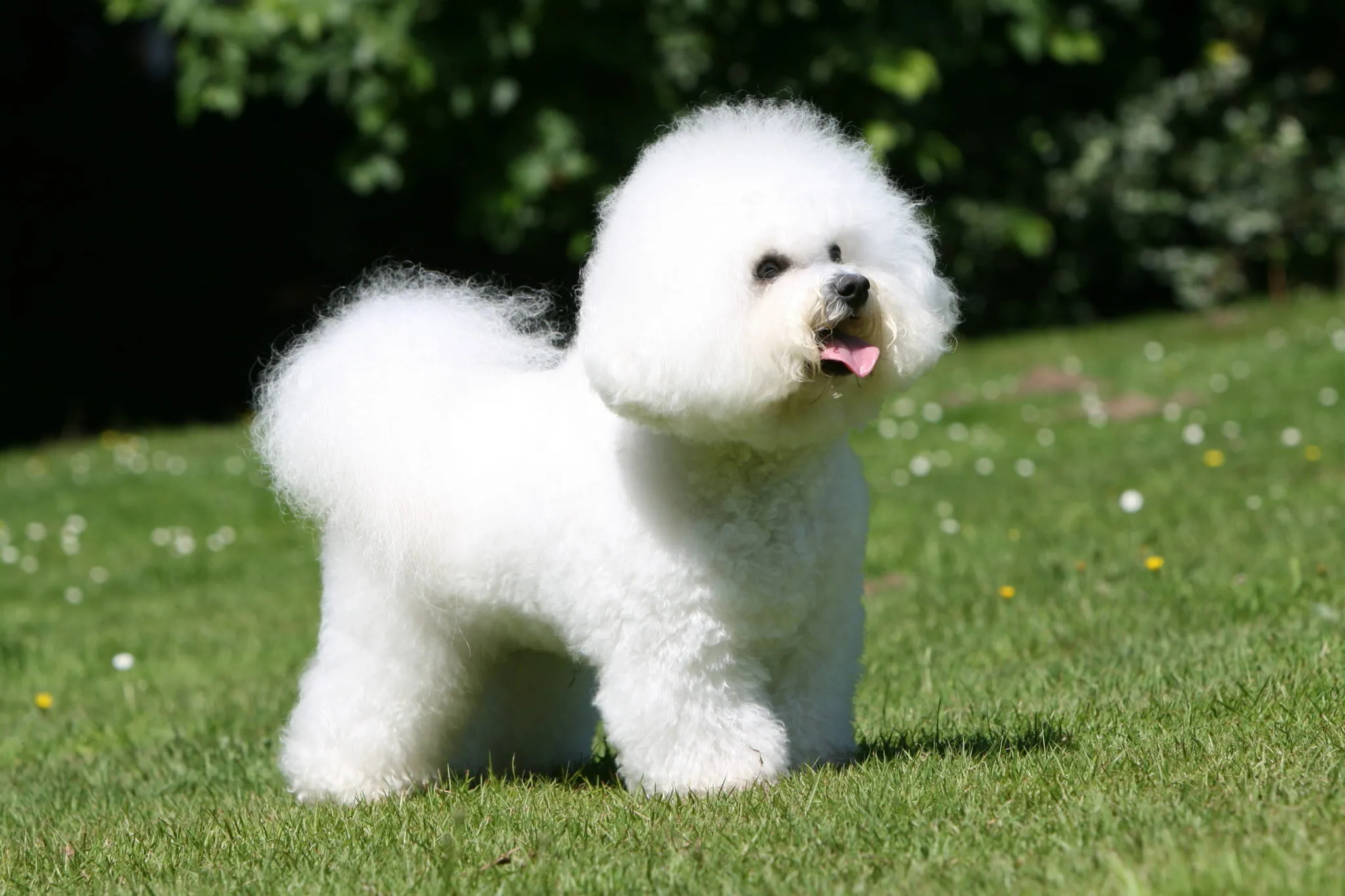
Think of a walking cloud with button eyes and you’re halfway to picturing the bichon frisé.
This little toy breed, with its famously snow-white curls, has been padding through Europe’s salons since the 14th century. The court of French King Louis XIV adored them, parading their bichons in dainty baskets; centuries later, Barbra Streisand proudly posed with hers, cementing the breed’s Hollywood status.
Their name comes from an old French word for small dog (biche, related to the English word bitch), while frisé is short for à poil frisé, or curly coat.
The first pedigree dogs were registered in Belgium in 1926. Rita Douwen, a breeder of bichons, from Onze-Lieve-Vrouw-Waver, a Flemish village near Mechelen, explains that the breed was given the name “bichon à poil frisé” in 1976, having been recognised as a Franco-Belgian breed to thank the Gallic breeders who helped their Belgian counterparts during the Second World War by taking the animals to the south of France for safekeeping.
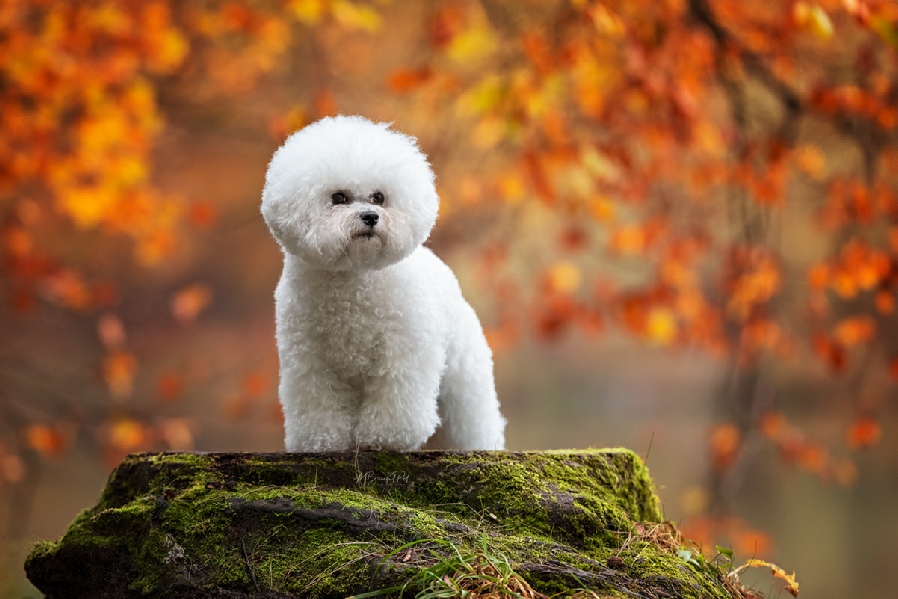
Bichon frisé
Douwen, who has had bichons since the 1990s, puts their popularity down to their adorable features and gentle personalities. A bichon is like a “white fluffy living teddy bear,” she says, while their “cheerful and playful character makes a lot of people stop to talk to you when you walk by.”
Douwen explains that their gentle personalities make them suitable as therapy dogs. “They love to be cuddle dogs in retirement homes”, she says. They are also very agile and intelligent which makes them easy to train, which is why they have been popular in circuses for generations.
At the same time, they are fiercely loyal and defend their owners and their families aggressively, even if their diminutive size is unlikely to deter burglars and other assailants.
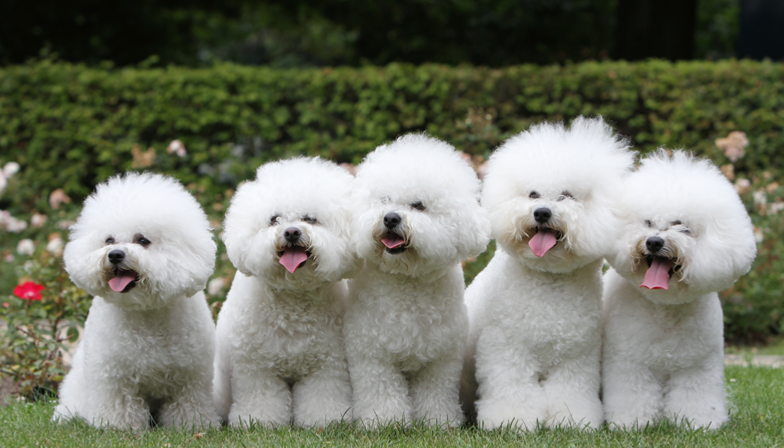
A row of Bichon frisés
Another advantage is that they don’t shed their fluffy white coats, making them suitable for people with allergies. But like all breeds, their coats need attention to keep in pristine condition. When young, they need brushing every day but once an adult, every two or three days is enough. Douwen says they need a bath every two weeks and a professional trim every six or seven weeks.
Douwen says that people often hesitate over whether to choose a miniature poodle or a bichon as the two are similar in size (between 23 and 28 centimetres in height). But, as an owner of ten bichons, she says she hasn’t regretted a moment with her dogs since falling in love with them over three decades ago.
