
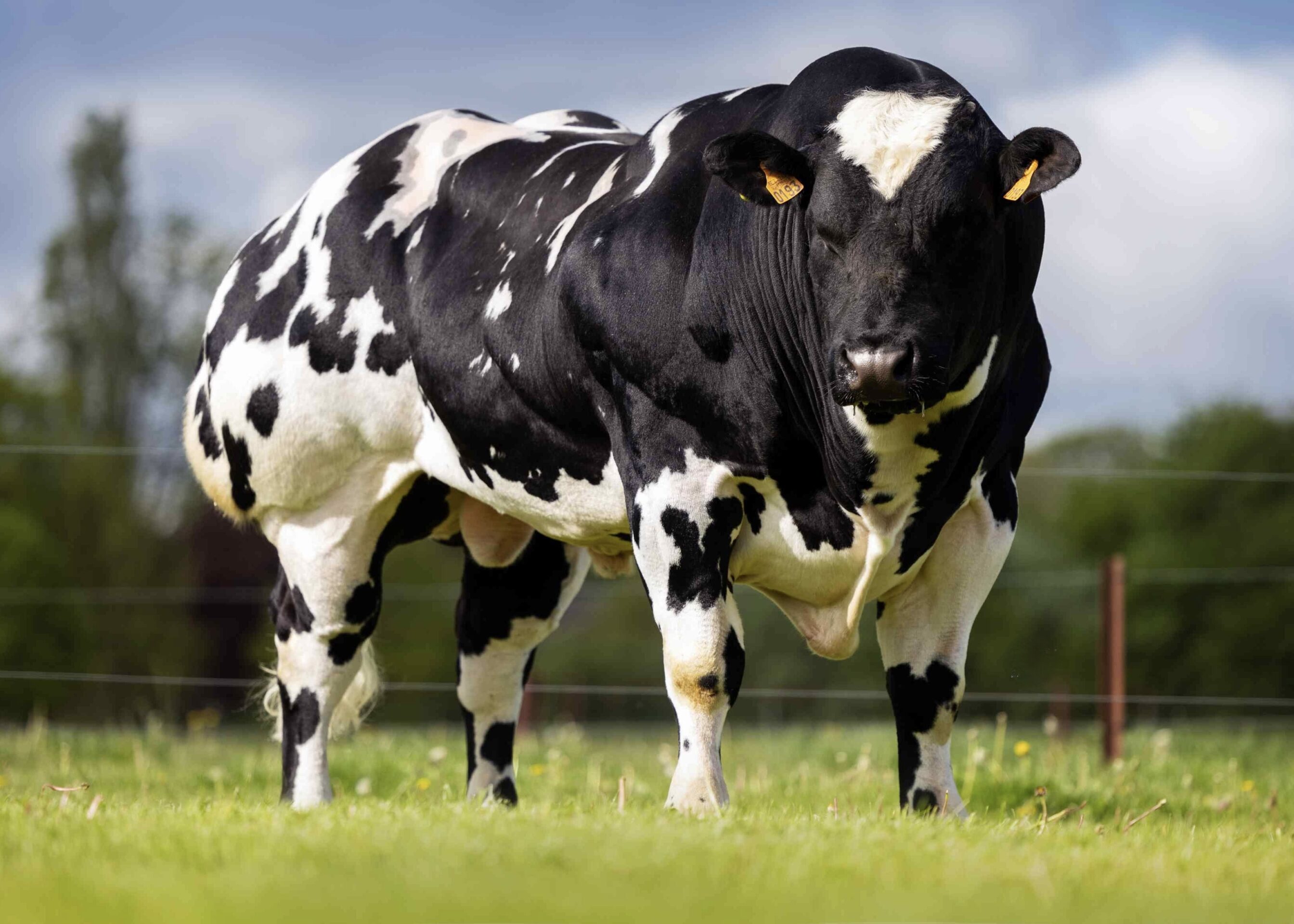
The Flemish call them ‘dikbil’, which literally means fat buttocks.
It’s hardly the most charming name but you can see why. The Belgian Blue has a massive, muscular rear and an equally humongous body, albeit with a relatively small head in comparison.
An adult bull typically weighs around 1,200kg – that’s heavier than a Fiat 500 and double that of a grand piano. The adult female is a big beast too, often reaching 900kg.
The breed is prized for its tender meat and, for research purposes, I visited the Brasserie Brouwershof in Haacht to try their speciality Belgian Blue steak, best eaten ‘saignant’ (medium rare, anything more is a crime). It was excellent, as was the accompanying Tongerlo blond from the brewery opposite. Other beers are available (see recipe below).
Before going further, apologies to any veggies who might be offended by what follows. The Belgian Blue is a wondrous sight in the field but there’s no getting away from the fact that it is primarily bred for the plate.
So why are they so enormous, and are they all really blue?
Their thick coats actually come in a variety of colours, including solid white, solid blue and, frequently, a mottled white-blue pattern, which is why, in more polite Flemish circles, they are known as Belgisch Witblauw and as Blanc-Bleu Belge, or BB for short, by Francophones. The Belgian Blue can also have a black and white or completely black coat.
Amazing breed
The breed originated in central and upper Belgium in the 19th century, from crossing local breeds with Durham Shorthorn cattle from Britain. But the muscle-bound version of the animal we see today only began to take off about 70 years ago.
I spoke to Pierre Mallieu, former secretary general of the ‘BB Herd Book’, a register for breeders to track lineage and maintain standards, to discover how the big Blue became the Dwayne Johnson of the bovine world.
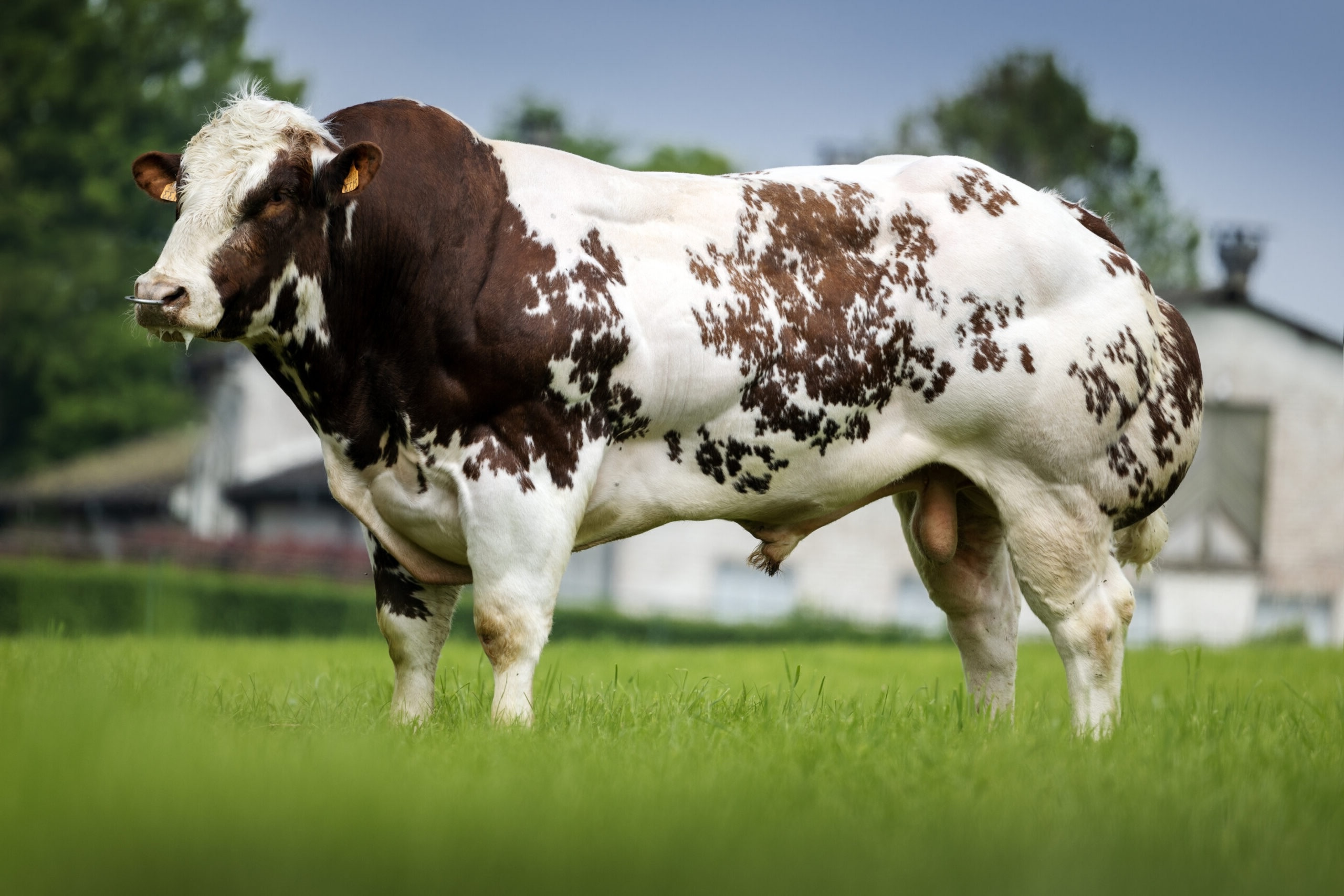
Size matters. A Belgian Blue cow
“It’s a very special breed and has proved an amazing success,” he says.
“The breed we know today was developed by farmers when there was a lack of beef meat in Belgium after the Second World War. They increased the quality and quantity of the herd through genetic improvements.”
In layman’s terms, the farms used a form of natural selection, mating their biggest, baddest bulls with similarly well-developed cows to produce bigger and better calves. With each generation, thanks also in part to a natural mutation in the myostatin gene which gives the Blue its characteristic double-muscled look, the breed became even larger and heavier.
“The aim was simply to produce more meat and respond to market needs. The breed wasn’t developed in labs,” adds Mallieu.
In 1948 a royal decree led to the creation of artificial insemination centres to boost livestock quality. A high-performance bull, the magnificently named Gédéon du Vieux Château de Maurenne, was the Big Daddy of the breed from the late 1950s.
Artificial aid
Today, many farmers use AI (that’s artificial insemination rather than intelligence) to maintain their herds. AI has several advantages compared with natural breeding: a high success rate, reduced risk of disease and sire selection based on genetic potential and profitability. A ‘straw’ of frozen Belgian Blue semen costs €15-25.
Proper training is essential to do the necessary.
Briefly, the farmer – or certified technician – dons a shoulder-length soft plastic sleeve on their favoured arm and gently inserts an insemination gun – it looks like a large hypodermic needle – via the cow’s rectal passage and cervix before injecting up to 0.5ml of thawed-out semen in the uterus. For those who want to know more, there are videos online. They are not for the faint-hearted.
Female Belgian Blues reach puberty earlier than other beef breeds. Their average age at first calving is 29-30 months and the gestation period is typically up to 286 days – slightly longer than a human mum. Male calves take a tad longer to arrive and weigh 47kg on average at birth, while females typically tip the scales at around 44kg.
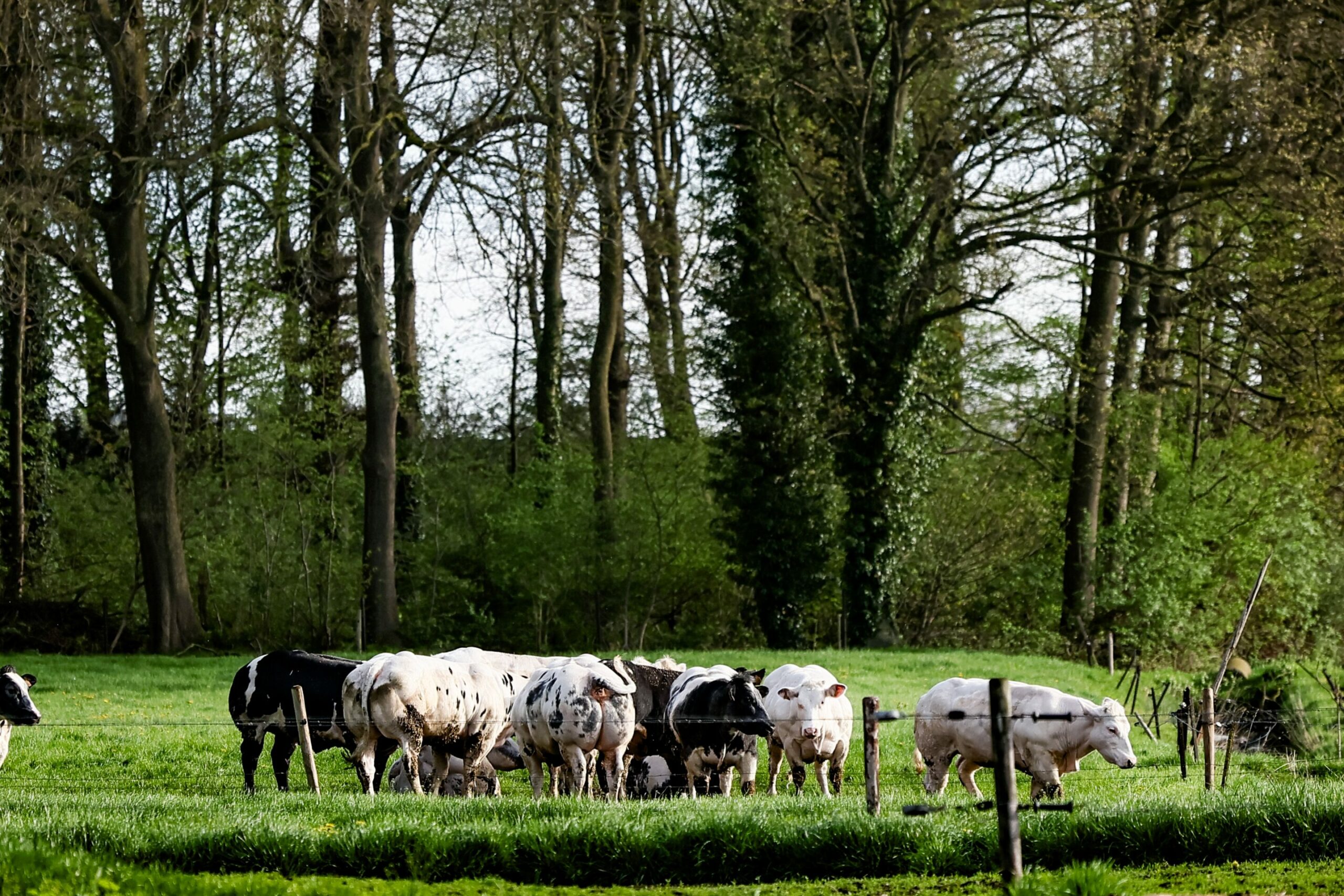
Cows pictured at the 'Laruelle' beef cattle farm in Faimes on Monday 08 April 2024. Credit: Belga
Heifers, as young females are known, are fed intensively until their first calving. Their muscle mass often results in challenging births; calves are commonly born by caesarean section.
“It is more expensive to keep a Belgian Blue than standard cattle, especially during the early growing months,” continues Mallieu. “While they eat grass during the summer months, in the winter they are in barns and are fed silage [compacted grass and fodder], hay and cereal.”
Emissions
The breed is known for its growth efficiency – the so-called ‘feed conversion ratio’. A Belgian Blue typically consumes only 4.5kg of feed to gain 1kg of weight, compared with 6-7kg for other cattle. It also has a lower carbon footprint. A study cited by Flemish farming association Boerenbond estimates the Belgian Blue produces greenhouse gas emissions (primarily through belching rather than farting) of 21kg of CO2 per kg of meat, compared with around 28kg for other breeds.
In the 1970s, the breed was split into two distinct types: those bred solely for meat and others intended for combined milk and meat production, known as ‘dual purpose’ herds.
The females can produce up to 6,000 litres of milk annually. They are culled when their milk production declines or when they are no longer suitable for breeding.
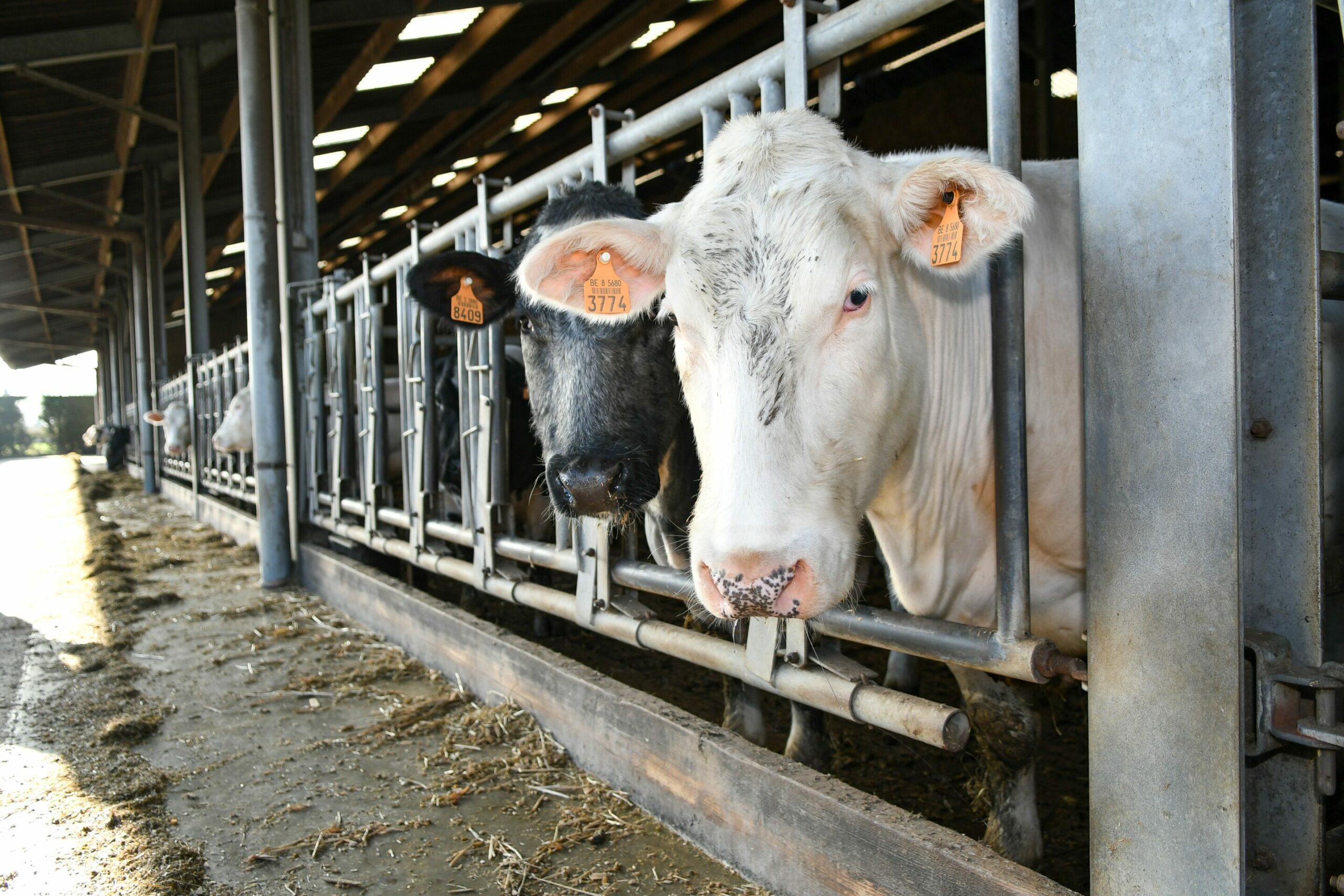
Belgian white-blue cows pictured during a visit to the Fooz Awans cattle farm in Awans, Sunday 26 January 2020. At the farm the 'Belgian Blue' beef cattle are bred. Credit: Belga
There are around 2,000 Belgian Blue breeders in Belgium, with around three-fifths of the herd in Wallonia and two-fifths in the Flemish part of the country. The highest numbers are concentrated in the provinces of Luxembourg, Hainaut and Western Flanders.
The official BB Herd Book contains the records of 90,000 cows and 2,500 bulls, although actual total numbers are nearer 500,000 because most livestock are not registered.
“The figures are decreasing overall because many young farmers are quitting,” says Mallieu, whose role as secretary general required impartiality and meant he was prevented from keeping cattle himself, so he grows apples for cider instead. “A few less rules would help,” he ventures.
Beauty contest
A non-profit national association called Belgisch witblauw fokkers also supports the promotion and evolution of the breed. (Fokkers, no wisecracks please, is the Flemish word for breeders).
The Belgian Blue is regularly shown in competition at agricultural shows. Specialist websites list a busy calendar of ‘concours’ in Wallonia (blanc-bleu-belge.com) and similar events in Flanders (veeteeltvlees.nl), as well as describing the desired physical attributes in a Belgian Blue beauty contest. These include a thick neck, well-muscled shoulder, plump hindquarters and well-detached tail. “The legs need to be strong enough to bear the weight with ease,” states Mallieu.
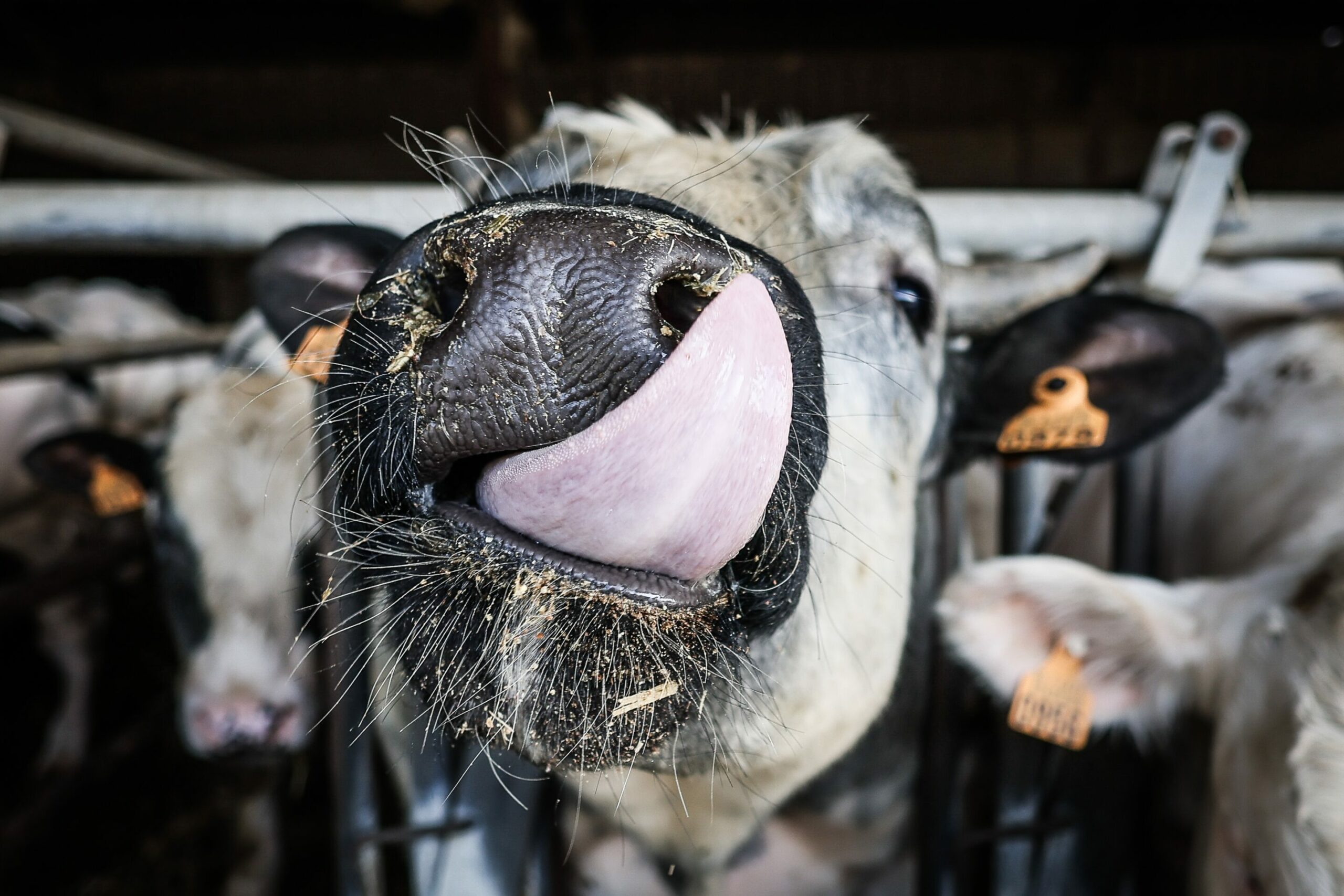
Cows pictured at the 'Laruelle' farm in Faimes on Monday 08 April 2024. Credit: Belga
The animals need to enjoy all this while they can for it is, alas, a rather short life for most.
“Bulls are normally fattened until they’re around two years old. Females are kept longer for reproduction and milk production,” adds Millieu.
Most farmers sell their livestock via cattle dealers before they are sent to abattoirs.
Prices fluctuate but according to analysts Coevia, a live, fattened bull was fetching between €5.5 and €7 per kg at the time of writing, or around €9.5 per kg at slaughter weight. Fattened cows cost slightly less, while the price of calves is around €1,300.
Profitability
The Belgian Blue’s meat attracts a premium because of its yield and quality. In the brutal-sounding terminology of the trade, according to Mallieu it boasts a “killing-out percentage of 70%,” significantly higher than other breeds. The percentage refers to the proportion of an animal's live weight that is the saleable carcass after slaughter. It is a key factor in determining profitability for the farmers.
The Blue also boasts a higher proportion of so-called noble cuts from the top and hindquarters, as well as, surprisingly perhaps, less cholesterol than skinless chicken. “The meat is tender because of its small muscle fibres. The bulls produce the leanest meat. The meat from cows is more marbled because it contains more fat,” explains Mallieu.
Changing eating habits, however, are a concern for the farming community.
According to Statbel, the Belgian statistical office, meat consumption is falling. The quantity available on the market indicates that the average Belgian ate just shy of 80kg of meat in 2023, a 1.5% decrease from 2022. However, bovine meat consumption has remained relatively stable compared with pork, lamb, horse, poultry, rabbit and game.
The Belgian Blue isn’t just big in Belgium. It was introduced in the US in the 1970s and is now found worldwide and often cross-bred.
But for Belgian breeders, the native variety are, in the words of one farmer I spoke to, “the best of the best” and a source of “immense national pride”.
This scribe, for one, has absolutely no beef with that.
Bonus: Generation game
One of the leading breeders in the country is Gert De Coninck who has around 130 cattle at his farm in Wolvertem, near Meise.
The third generation in his family to raise the Belgian Blue, the 57-year-old took over the concern in 1992. His wife Kaat, 55, and children Louis, 26, Nette, 21, and Seppe, 19, are also all closely involved in the operation at Van de Breehoeve farm.
Gert does not work with any other breeds of cattle. “The Belgian Blue is and remains our first love,” he says. “We focus on breeding and sales rather than meat production. Our main goal is to breed an animal that is as close to its ideal as possible.”
The De Conincks are successful at this, judging from the regular podium finishes their finest specimens achieve at agricultural shows. The cattle are carefully shaved before such contests to highlight their meat and muscle quality.
As with many medium-scale farmers, the family has to combine running the business with other jobs. Gert and Seppe work as sales reps for BBCI (Belgian Blue Cattle International), a world-renowned bull stud and artificial insemination centre headquartered near Mons. Kaat is a trained nurse and teaches healthcare in secondary schools, Louis is a vet specialising in cows, while Nette is studying law in Ghent.
But for all the challenges, he still relishes the work. “If you do something with a lot of passion and love, there's nothing not to enjoy,” he says.
