
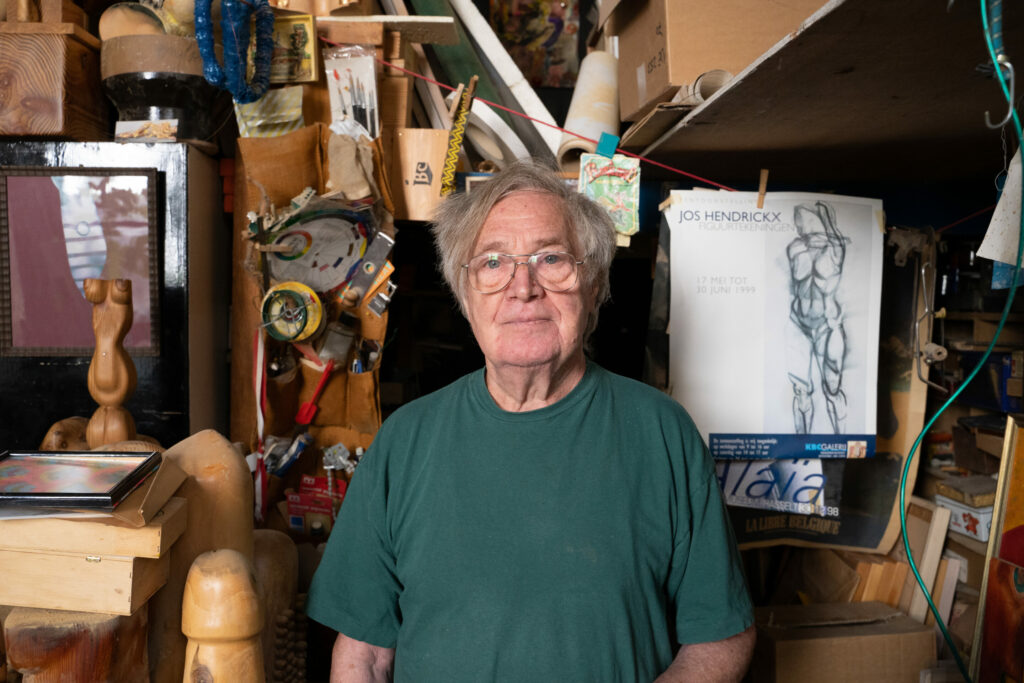
Artists of the Ercola collective are set to leave a historic building complex on Wolstraat in Antwerp after more than 50 years of residence.
This ends a long-running battle over the future of the former Godshuis Somers - a former almshouse dating back to the 17th century. Within three months, 25 artists must find an alternative space for their workshops.
Located in Antwerp’s historic centre, a seven-minute walk from the Royal Academy of Fine Arts, Wolstraat has long been a well-known artistic hub.
In the middle of the historic street, behind the white neoclassical façade of the former almshouse, the Godshuis Somers complex unfolds into a maze of time-worn corridors, with crumbling walls, water-stained ceilings and creaky wooden stairs leading to the workshops.
The City of Antwerp received the complex through a will, with the condition that it would retain a ‘charitable function’ in perpetuity. The city recognises it as a protected monument and part of Antwerp’s architectural heritage.
Yet, if not for the artists living and working there for more than half a century, the interior would exude a bitter sense of abandonment.
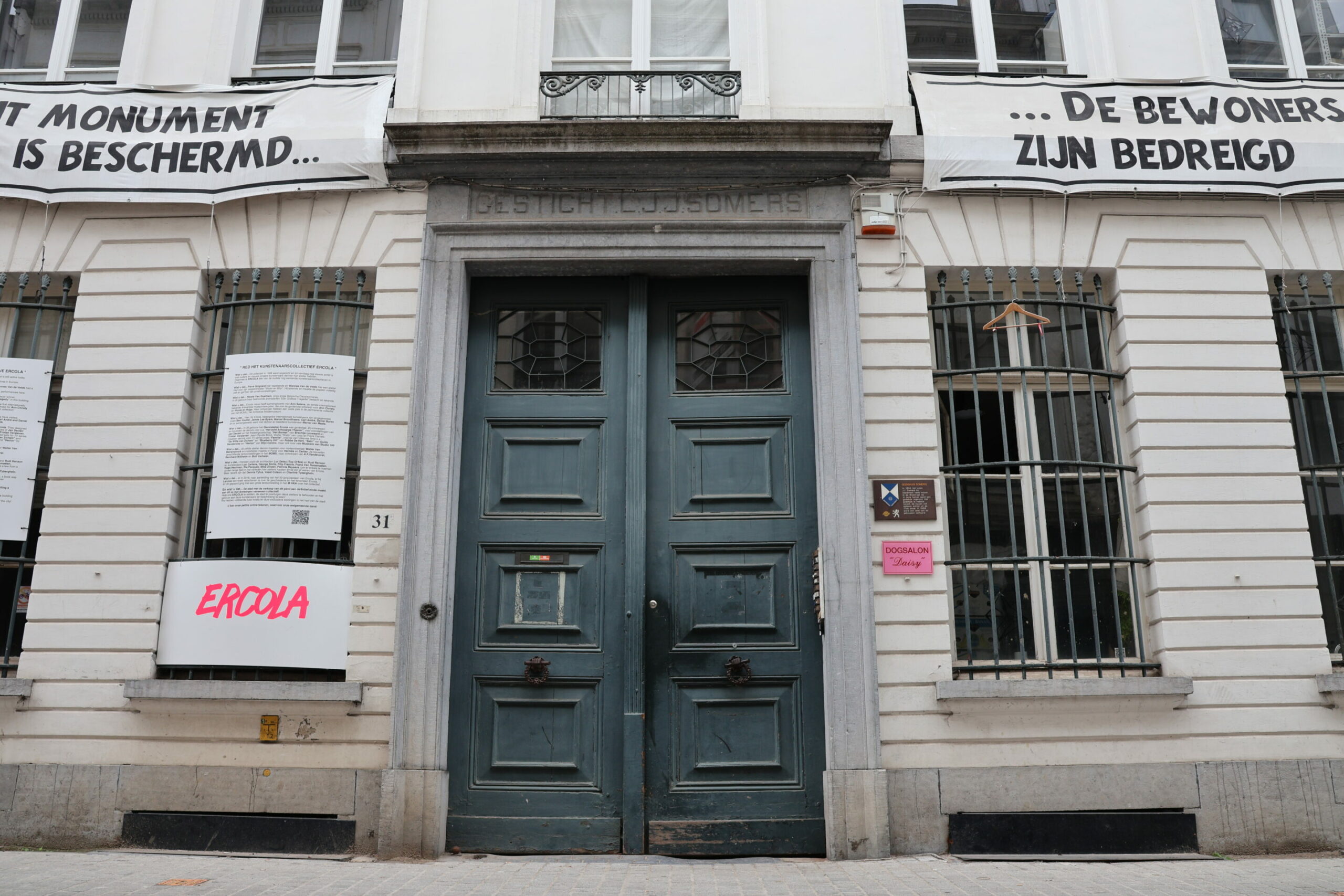
Credit: The exterior of the building. Credit: The Brussels Times/Eva Hilinski
What is Ercola?
The Experimental Research Centre of Liberal Arts (ERCOLA) is an Antwerp-based artists’ collective and non-profit organisation founded in 1971, whose history is inseparable from the former Godshuis Somers.
The collective has occupied the historical complex at 31 Wolstraat since 1972, offering affordable workshop spaces to fellow artists. Some of the oldest members, including founding members Jean-Claude Block, 83, and Jean-Claude Buytaert, 81, have spent their entire professional lives living and working there.
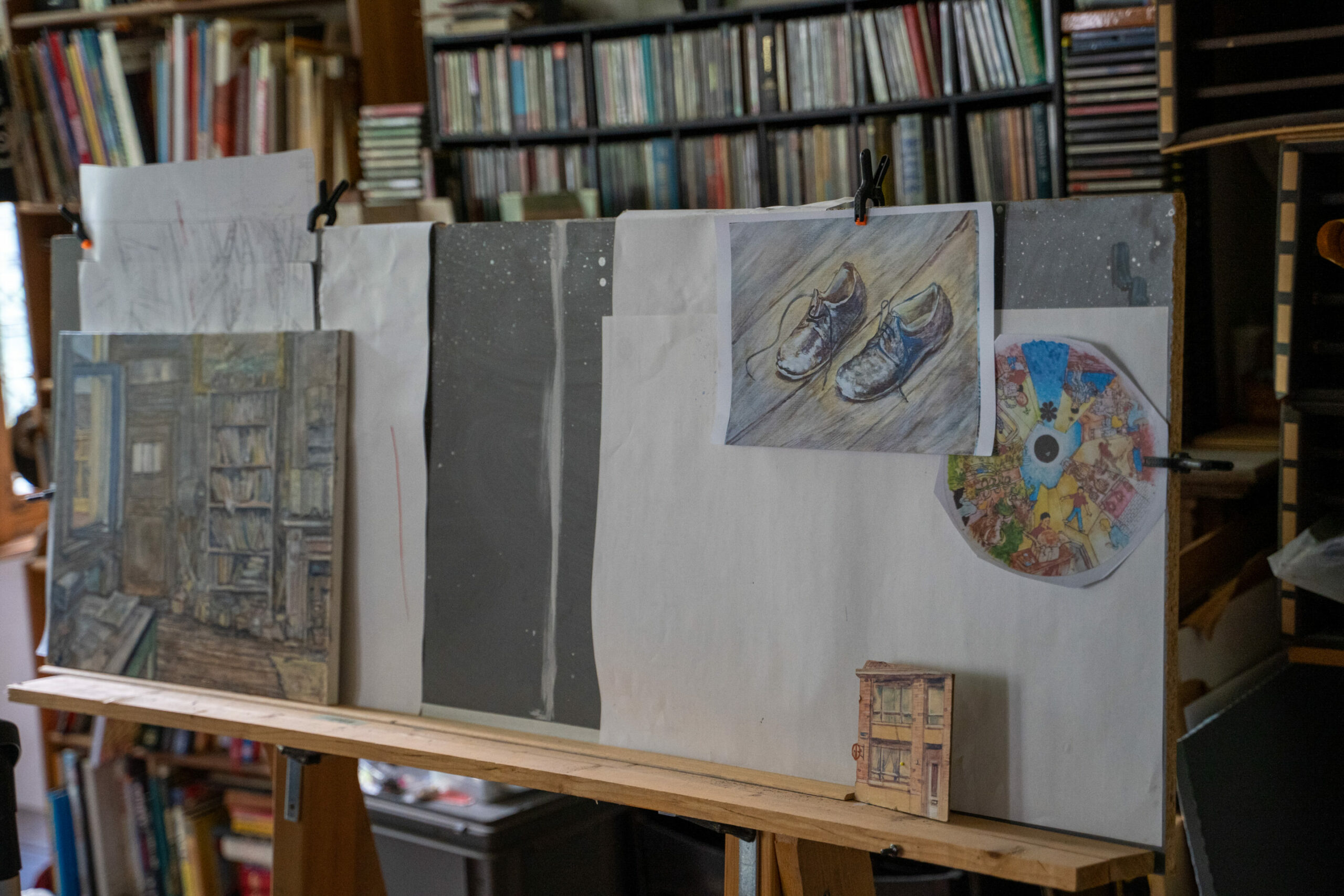
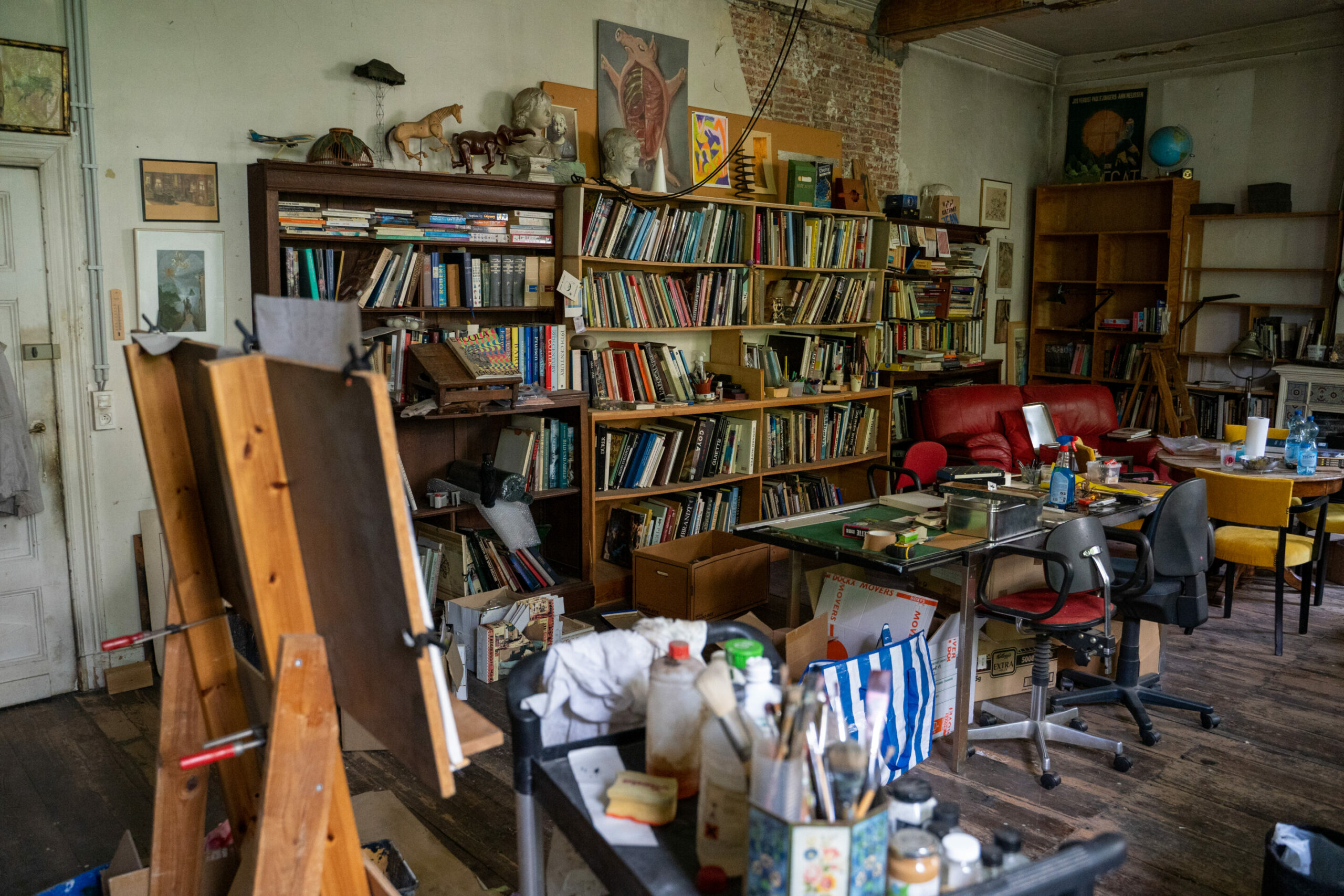
Recent artworks of Jean-Claude Block, a Belgian comic artist and set designer, at his atelier studio at Wolstraat. Credit: The Brussels Times/Vicente Torre Hovelson
Living and working in Godshuis Somers, so conveniently embedded in Antwerp’s artistic landscape, enabled Ercola to become an essential thread in the city’s cultural fabric.
Renovation plans and legal dispute
The city has considered renovation since the mid-1990s. The Public Centre for Social Welfare (OCMW) assisted in maintaining the property, but “not always,” said Block, a co-founder and a long-time president of Ercola who lived at Wolstraat for 53 years.
Problems continued to accumulate, and Ercola had to invest significant resources to keep the building in a liveable condition. “There have been updates to the building from OCMW, such as updated gas lines, but for the most part, it fell to Ercola to maintain the building, as little help was given by the city, especially in recent years,” said Jazi Blue Charbit, the president of Ercola.
The Brussels Times contacted OCMW for comment, but did not receive a response.
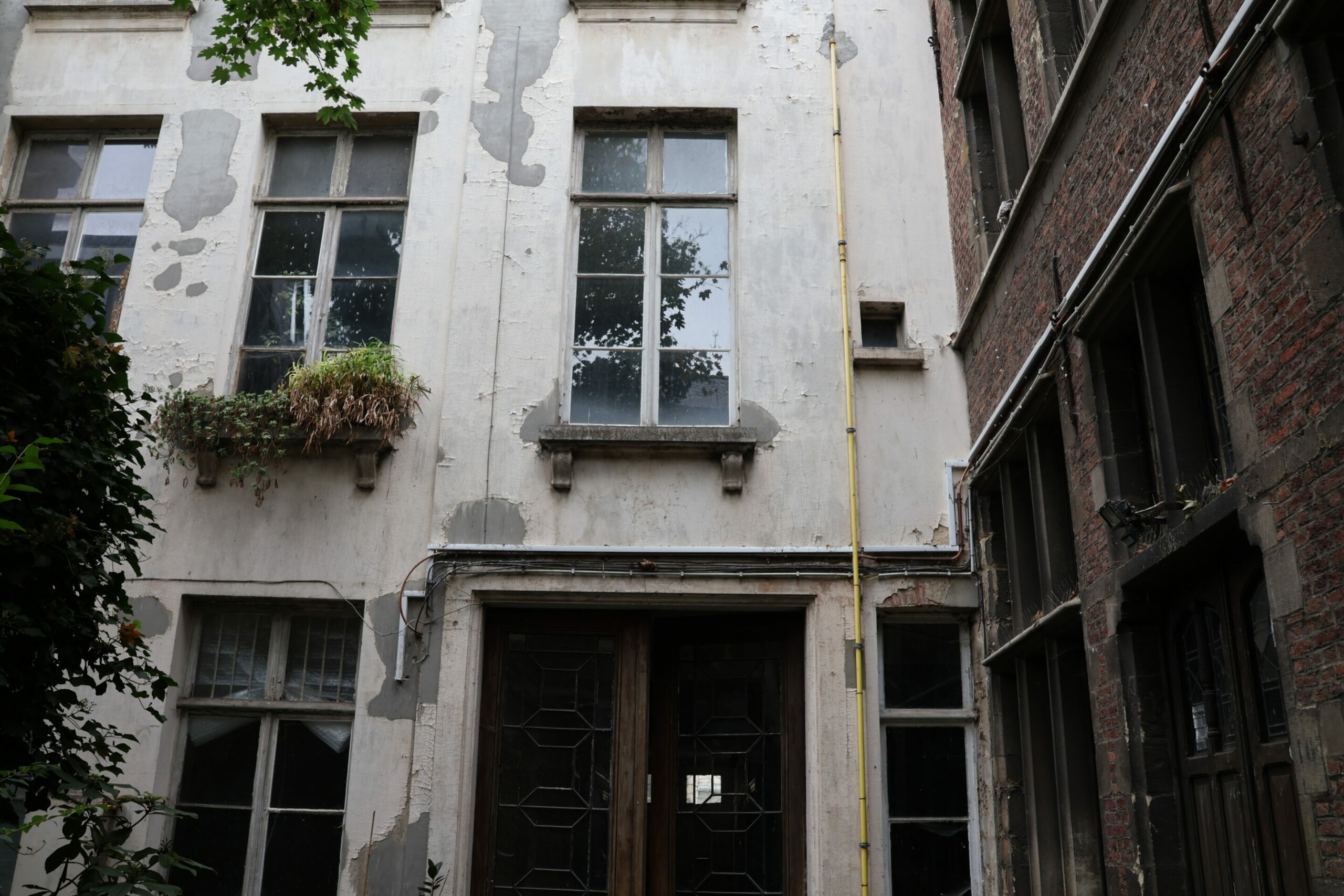
The inner facade of the building complex. Credit: The Brussels Times/Eva Hilinski
After OCMW transferred management of the property to the city’s real estate agency AG Vespa in late 2018, a legal dispute began over Ercola’s lease. The final contract, signed in October 2019, was valid until 30 September 2022.
Ercola requested advance notice of any plans to stop the rent, said lawyer Karel Veuchelen, who has represented the collective since 2019. When no notice came in, Ercola assumed the lease had been automatically renewed under residential housing rules. AG Vespa, however, argued that standard lease law applied, meaning the contract expired on 30 September 2022 without the need for a formal notice.
The dispute went on, and Ercola continued to pay rent. AG Vespa then set a new eviction deadline of 31 July 2024. When Ercola refused to vacate, city services inspected the residential sections of the building and declared them uninhabitable. Eventually, AG Vespa and the OCMW brought the case to the local court.
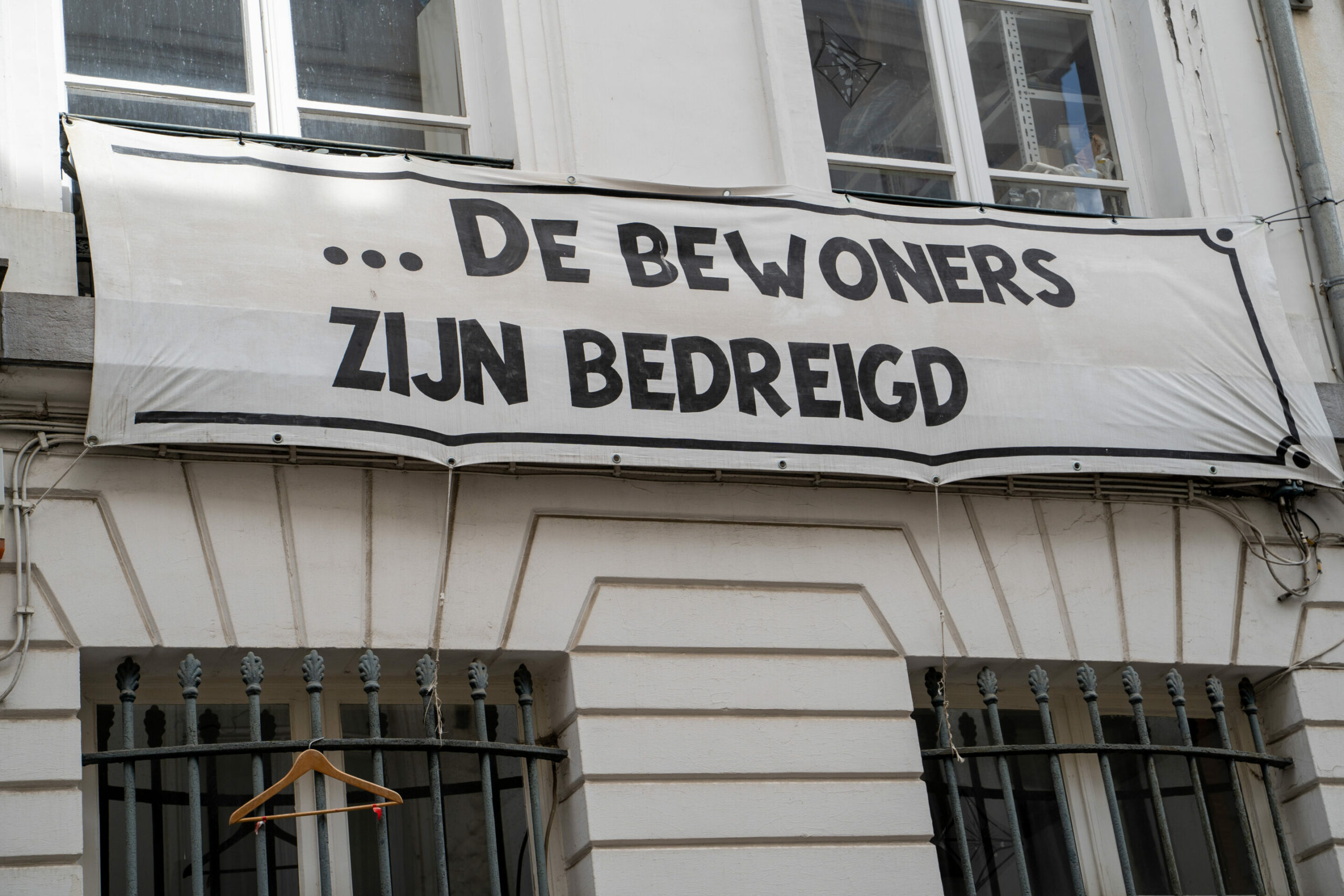
The sign on the building's central facade that reads "The residents have been threatened." The RED ERCOLA petition was launched in late 2024, calling against the collective's eviction, gathering 1,572 signatures. Credit: The Brussels Times/Vicente Torre Hovelson
According to AG Vespa, safety concerns were the main reason for eviction. “The building is in poor condition, and OCMW doesn't have enough resources to renovate it themselves, according to legal requirements. The building has been declared uninhabitable and no longer safe. Ercola has been aware since 2023 that the lease is expiring for this reason,” AG Vespa told The Brussels Times.
In December 2022, the city decided to sell the building on the commercial market. At the time, the estimated cost of renovation was at least €8 million.
Eviction, after all
A court ruling issued in late July this year made the eviction certain.
Block and Buytaert, who were still living at Ercola at the time, slowly began packing their belongings. Both have found accommodation, though not new workshops. About his small workshop, stuffed with years of artwork and memories, Buytaert could only say a sorrowful “forget it.”
Now retired, Block spoke of the court decision with a measured acceptance. “It’s more a question of where all those artists have to go. Even when the eviction was almost certain, new artists kept coming in. There is a need for such places- that’s been proven,” he said.
In October, Ercola finally received a formal eviction notice. The 25 artists of the collective must leave the former Godshuis Somers before January.
At present, the Museum of Contemporary Art in Antwerp (M HKA) has taken in most of the collective’s archives.
 Ercola remains hopeful that with the help of local politicians, it can stay at least until the building is sold, although in comments to The Brussels Times, AG Vespa firmly rejected this idea.
“That is a risk. We have to look for something else, eventually. But if we find a new place now and move, only for the city to later welcome us back, it will be too late. Moving out will be difficult enough as it is,” Charbit told The Brussels Times.
What will happen to the Godshuis Somers?
The building will be sold on the commercial market. AG Vespa also confirmed to The Brussels Times that they have no intention of investing in renovation.
The judge, having visited the building, partly upheld Ercola’s counterclaim and agreed that the OCMW and AG Vespa had failed to maintain the property in a condition suitable for leasing, at least since 1995, awarding Ercola compensation.
Atelier of Jean-Claude Block. Credit: The Brussels Times / Vicente Torre Hovelson
The court acknowledged that the property had been “bequeathed to the second claimant (OCMW), under the condition that the immovable property must serve a charitable destination for eternity”. However, it ultimately ruled that the question of whether a sale would violate the testamentary condition could only be determined once the sale had happened.
AG Vespa said that conditions attached to the sale are currently being investigated: “We had our lawyer review the will; the clause regarding the mandatory social function has expired," a spokesperson said.
“It will be disappointing if they turn the place into another luxury hotel,” said one Ercola member.
