
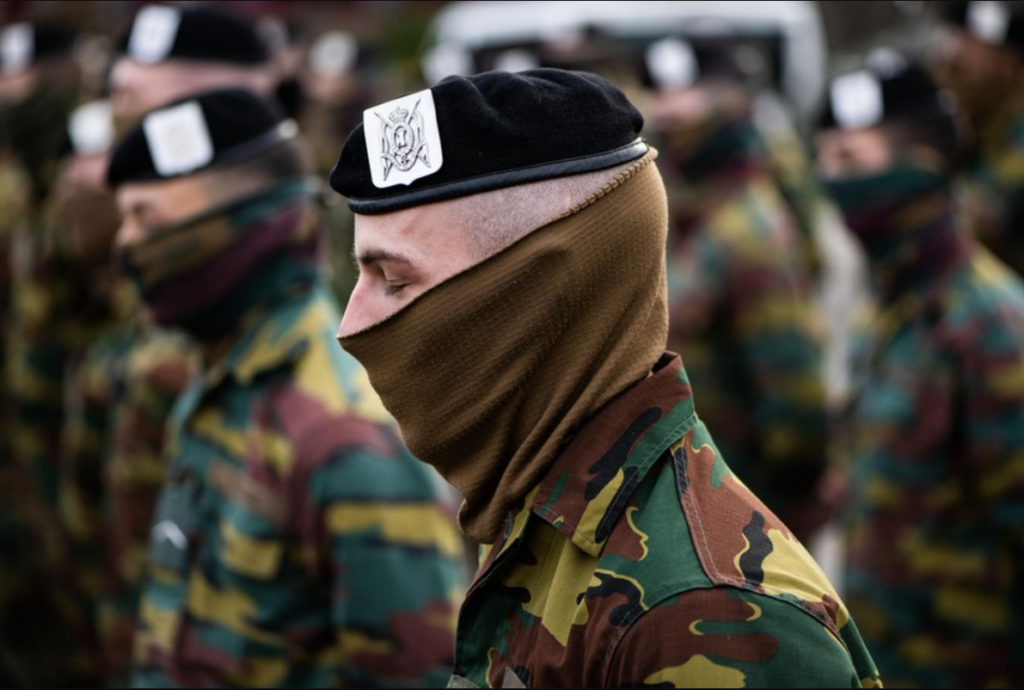
Armistice Day is observed every year on 11 November to commemorate the moment when the armistice was signed, bringing an end to the First World War after four years of hostilities.
In Belgium, a country that was gravely affected by the Great War, remembering the sacrifice of soldiers who died in that conflict is a solemn national duty. But Armistice Day can also be a time to remember the sacrifices made by soldiers in more recent conflicts.
After years of feeling undervalued by society, "modern” veterans who served in conflict zones in the 1990s and 2000s are calling for help. Belgium’s veterans have long been promised recognition for their service, but many say that, once the uniforms come off, so does society’s memory of them.
'Recognition shouldn’t stop at a medal'
Albert Tibor, who served in UNPROFOR (a peacekeeping force established in 1992 to help resolve the Yugoslavian crisis) and NATO missions in the Balkans between 1993 and 1999, is now European vice-president of the Association Internationale des Soldats de la Paix (International Association of Peacekeepers). He proudly carries his Belgian veteran card, but calls it “an empty card”.
“The veteran status was created by Royal Decree in 1992–93,” he explains. “We’re now in 2025, and most of the 25,000 Belgian veterans who have that card have received nothing else. No benefits, no medical support, nothing concrete. It’s not normal.”
His demands are simple: medical follow-up, psychological support, free or discounted public transport, and a day of national recognition. “In Norway, Sweden, or Poland, veterans and their families are invited every year to gatherings, to take care of their well-being,” says Tibor. “Here, nothing. Not even a train ticket. We’re forgotten.”
Tibor adds: “I don’t want to be mean, but at the end of the day, for the government, it costs less to give flowers to a dead soldier’s grave than to treat him or pay for his medication all year round.”
Philippe Trautes, a 38-year army veteran who served in Rwanda, Kosovo, ex-Yugoslavia, Afghanistan and Lebanon, agrees. He believes material help is needed: “Any former fighter should at least benefit from a reduction in rent, advantages like public transport. Every veteran should have it.”
Veterans or anciens combattants?
Both Trautes and Tibor reject the term veteran. “For me, what could change is instead of recognising us as veterans, to recognise us as former fighters,” says Trautes. “Because 'veteran' simply says that we are an old man who served in the army.”
He prefers the French title ancien combattant (former soldier) “because we might have a modern war now, but we are still on the same field of mission that they were in back in those days”.
Tibor agrees: “Before 1960, they were called former soldiers. After 1960, veterans. But we went to real war zones, Yugoslavia, Rwanda, Afghanistan, people died there. We deserve that same recognition.”
The distinction isn’t only symbolic. Recognition systems differ across Europe. In France, for example, months spent in overseas missions count double toward veterans’ pensions, a rule that doesn’t exist in Belgium.
Belgian veterans currently receive a reparation pension if their health was affected by service, as well as a small annual allowance for those officially recognised. But the number of eligible beneficiaries is falling sharply every year as older veterans pass away.
Governments change, but nothing changes for them
Both men insist that the issue transcends politics. “Whatever the government, it’s always the same,” says Tibor. “We’ve had ministers who said things were moving, but years later there’s still no result. The war in Ukraine came, and suddenly there’s money for defence, but not for veterans.”
Despite the frustration, both men remain determined to keep their comrades’ memory alive. “I lost three comrades on the spot,” says Tibor. “I swore to myself that when I’m retired, I’ll keep their memory. I keep hope that something will still move.”
Trautes sums it up: “Without veterans, we have nothing. We built this army, we went abroad for Belgium, and yet, in our own country, we are invisible.” He pauses, before adding: “Recognition isn’t a medal. It’s the state looking you in the eye and saying: We haven’t forgotten you.”
