
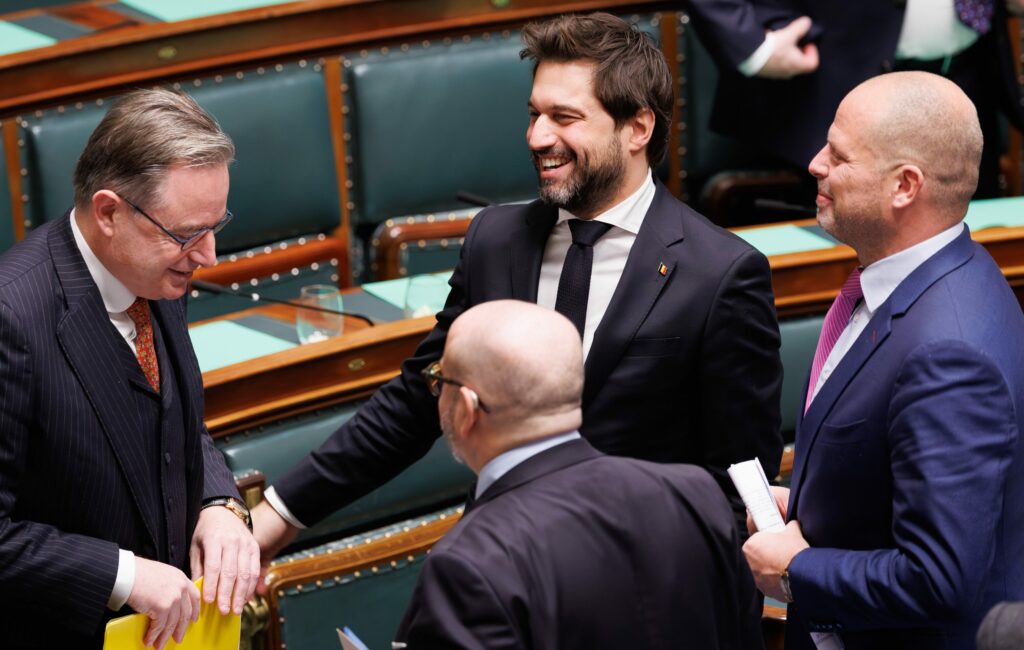
Belgian Prime Minister Bart De Wever defended the budgetary choices of the Arizona coalition during his general policy speech on Wednesday, stating that tough decisions are necessary.
A month and a half late, but with an agreement on the multi-year budget in hand, the Prime Minister went to Parliament on Wednesday for the traditional State of the Union address. And during those 20 minutes, the Prime Minister emphasised how difficult the task was.
He argued that ignoring financial challenges for too long inevitably leads to budgets requiring substantial efforts, making policymakers vulnerable but leaving them with no alternative.
Known for his love of Latin quotations, De Wever this time referenced Greek mythology to illustrate the government’s approach.
He spoke of the crossroads of Heracles, where the Greek hero had to choose between two paths—one represented by Cakia, the goddess of vice, and the other by Arête, the goddess of virtue.
According to the myth, Heracles wisely chose the difficult path of Arête, eventually earning his place among the Olympian gods.
De Wever concluded that while Belgium has not yet achieved its version of Olympus, the government has displayed the courage to take the virtuous but challenging path.
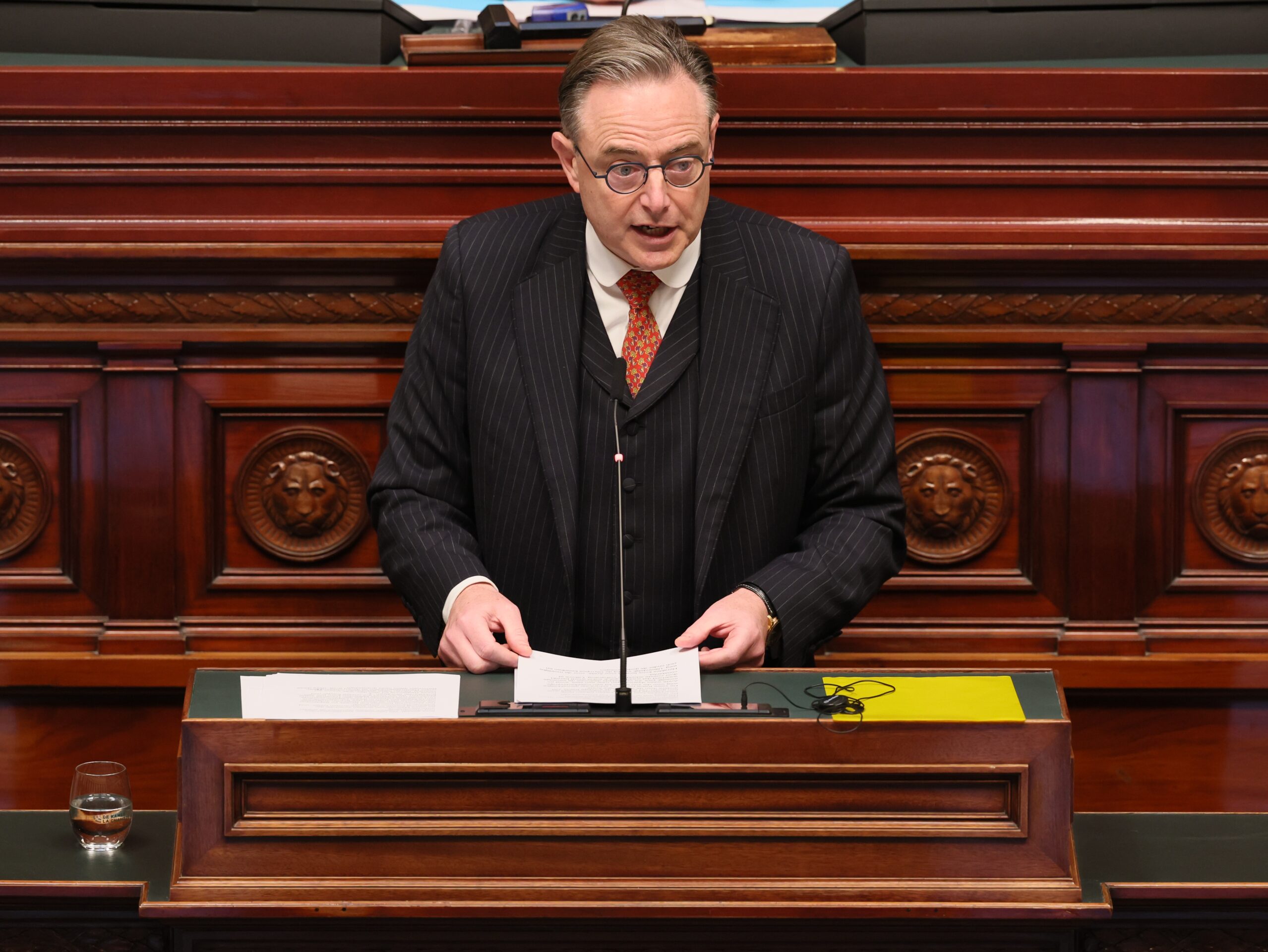
Prime Minister Bart De Wever delivers his political declaration at a plenary session of the chamber at the federal parliament, in Brussels, Wednesday 26 November 2025. Credit: Belga
Extra €1,000 claims
Prime Minister Bart De Wever claimed on Wednesday that by 2030, workers in Belgium can expect an average net increase of around €1,000 annually,
Though he did not elaborate on the specific measures, he highlighted that encouraging employment is a key priority for his government, achieved through both labour market reforms and a tax overhaul,
According to the budget agreement reached on Monday, the tax reform will be initiated earlier than planned, starting in 2026 with adjustments to the minimum wage, where gross pay will equal net pay.
In 2028, another part of the reform will take effect, a year ahead of schedule, while the final phase is postponed until 2030, after the next elections set for 2029.
"I dare say that we are facing an even greater challenge today’ than in the 1990s, he said. Economic growth is sluggish, we cannot count on a peace dividend and demographic realities are working against us," De Wever summarised.
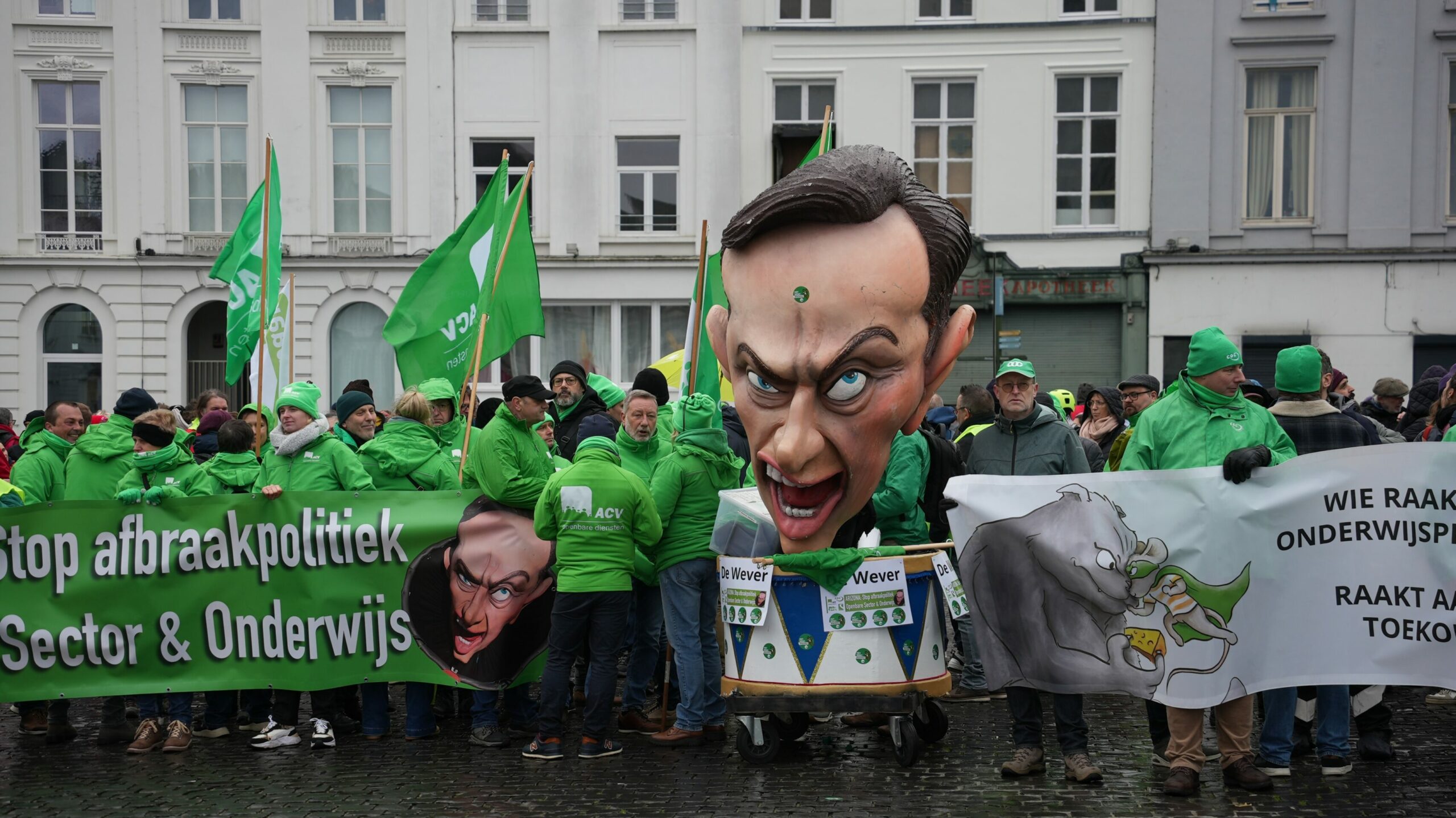
A giant figure of Bart De Wever pictured during during the national strike to denounce the consequences of federal government measures, in Gent, on Tuesday 25 November 2025. Credit: Belga
In February, the Monitoring Committee calculated that, if policy remains unchanged, the federal deficit would increase to 6% of GDP by 2029, or around €43 billion.
On top of that, an additional €4 billion euro is needed for defence in order to meet NATO standards, under pressure from the US.
"Almost half of that amount consists of interest charges – this is the price we are paying for irresponsible procrastination in the past," it said. "That is why we have now drawn up a budget immediately covering the period up to 2029. No more procrastination."
The head of government believes that this exercise will enable his team to avoid the European penalty bench and send a powerful signal to the international markets.
According to him, this will result in total additional structural savings of more than €9 billion by 2029. Over the entire legislative period, this exercise will reduce the debt accumulation by an additional €17 billion. Together with the €15 billion already saved, this amounts to a reduction of €32 billion, he calculated.
However, De Wever emphasised that the task is far from complete. "This is not the end. It is not even the beginning of the end. But it is perhaps the end of the beginning," he added, quoting Winston Churchill
On Thursday, the House will start the debate on the statement, and on Friday at the earliest – 48 hours after the state of the union speech – Parliament can vote on its confidence in the government.
