
Prime Minister Bart De Wever’s speech in parliament on Wednesday failed to convince the left-wing opposition.
A month and a half late, but with an agreement on the multi-year budget in hand, the Prime Minister went to Parliament on Wednesday for the traditional State of the Union address. He quoted Greek mythology and Winston Churchill to justify his austerity plans.
In response, left-wing parties the Socialist Party (PS), Workers’ Party of Belgium (PTB-PVDA), and Ecolo-Groen, argued that alternative policies are possible.
They also accused the government of lying about workers seeing the promised €500 increase from the Arizona coalition's budget plans.
Pierre-Yves Dermagne, PS group leader, stated, "95% of the budgetary effort will be borne by the middle class, which is an entirely unfair distribution. Far from getting the €500 increase, many workers will lose €500 instead."
The Socialists reject the inevitability of the government’s measures aimed at meeting EU budget requirements.
Dermagne highlighted prior government approaches under former Prime Minister Elio Di Rupo that involved taxing multinational companies and fighting fraud to ensure equitable sharing of the burden.
One measure in the budget agreement caps indexation to a €4,000 gross salary, which Sofie Merckx of PTB criticised as impacting 40% of employees, calling it a "theft of the index."
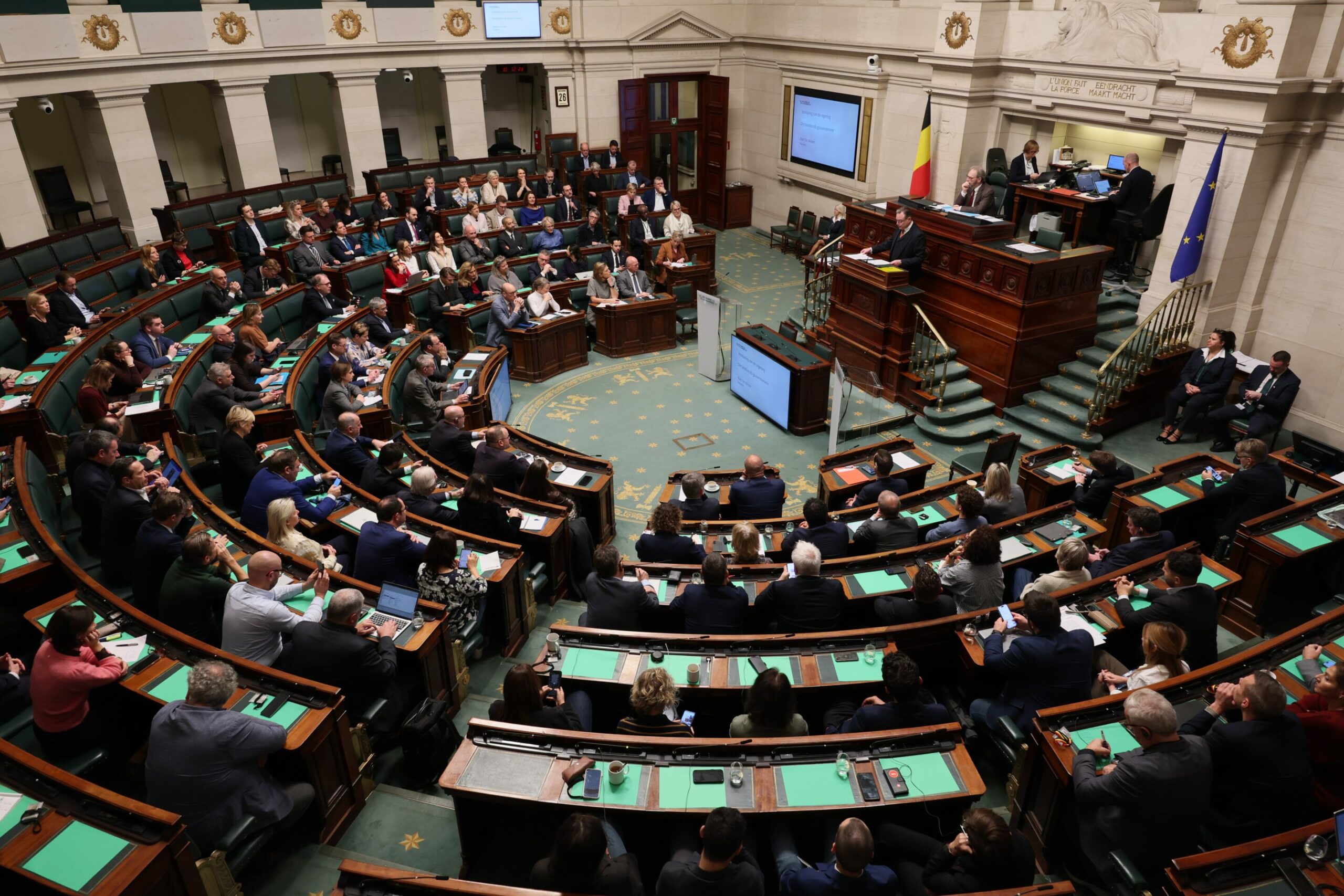
Prime Minister Bart De Wever delivers his political declaration at a plenary session of the chamber at the federal parliament, in Brussels, Wednesday 26 November 2025. Credit: Belga / Benoit Doppagne
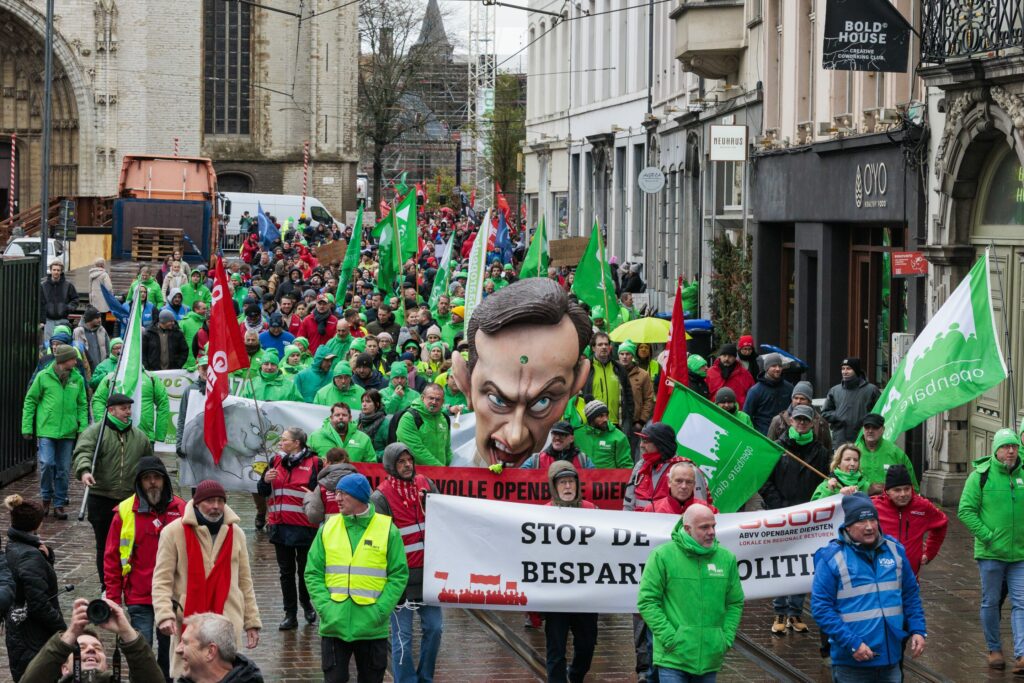
Merckx also noted that the announcement coincided with unions’ third day of action protesting government policies. "This government should have listened to the anger of workers demonstrating today," she said, adding that many expected a €500 increase but would never see it.
Sarah Schlitz, Ecolo-Groen MP, denounced the measures as punitive, saying they target the middle class and families, while insisting, "There are alternative policies that don’t punish them."
Ecolo expressed concerns over efforts to push sick individuals back into the workforce, saying such steps are violent and ineffective. Schlitz argued that addressing root causes and focusing on prevention would yield better outcomes than cutting healthcare budgets.
Meanwhile, the government defended its budget measures. David Clarinval, deputy MR leader, stressed the need to balance the budget while implementing major reforms.
Clarinval stated that the overall government reforms target an 80% reduction in expenses, although their impact will take time. To bridge the gap, new taxes had to be introduced, which he described as "the least painful possible."
He emphasised business-focused measures, including a €1 billion cut in social contributions, energy regulations, and a €3 billion plan aimed at boosting SME competitiveness.
Following the agreement, Prime Minister Bart De Wever (N-VA) said on Monday: "I am going to be very honest: everyone is going to feel this in their wallet. There is no denying it."
