
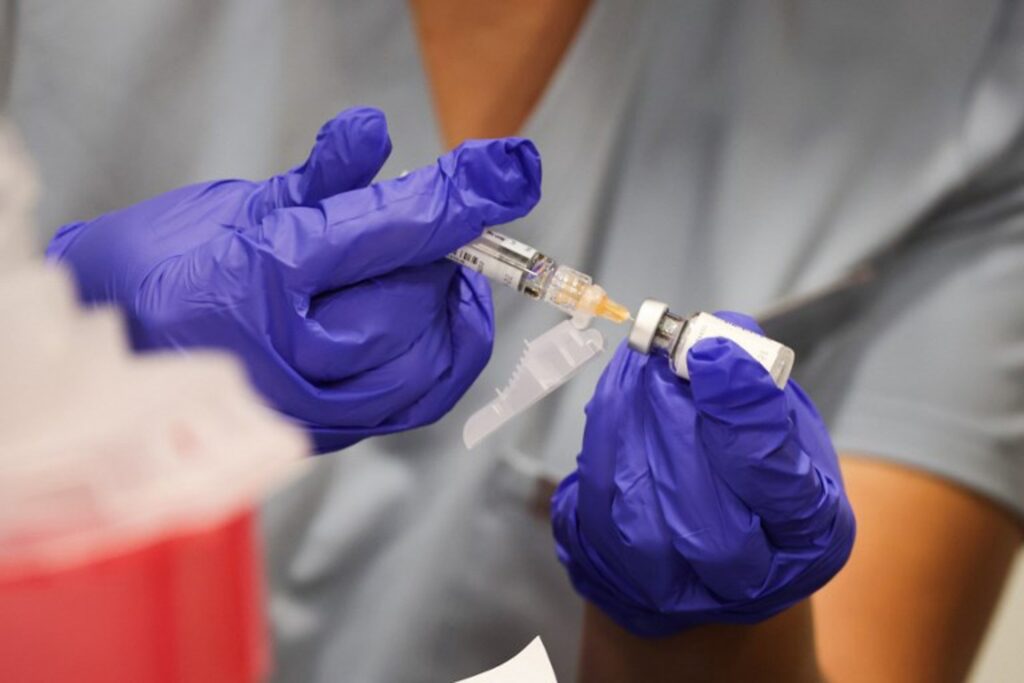
On Friday, the World Health Organization (WHO) warned of dozens of measles outbreaks, some of them fatal, in Europe and elsewhere in the world.
The WHO has seen the number of infections rise and fears that the pace at which the disease is currently being combated is too slow.
Last year, approximately 11 million people worldwide were infected with measles. That is 800,000 more than before the coronavirus crisis in 2019.
According to the WHO, it is the most contagious virus in the world. The organisation counted outbreaks in 59 different countries. The infection ultimately proved fatal for 95,000 people.
Young children in Africa are particularly susceptible to the disease, but there are also occasional deaths in Europe and the US.
Although global vaccination coverage has increased significantly over the past 25 years, the WHO still considers the pace too slow.
In 2024, 84% of the world's population received a first dose and 76% a second. However, according to the health organisation, 95% of the population must be fully vaccinated to eradicate the disease.
One of the reasons for the slow progress is misinformation spread via the internet. In addition, the WHO notes that budgets for vaccination campaigns have been reduced.
There have also been measles outbreaks in Belgium this year, particularly in Antwerp and Limburg. Unvaccinated young children were particularly affected. In total, the Sciensano health institute has already counted 379 cases this year.
In 2024, there were 526 cases in Belgium. Brussels was particularly affected, with an incidence rate about 10 times higher than in other regions. 118 people were hospitalised.
Measles infection usually leads to fever and rash. In our country, the disease is not usually fatal, but it does carry a risk of meningitis and pneumonia, which can have fatal consequences. The last recorded death from measles in Belgium dates back to 2011.
