
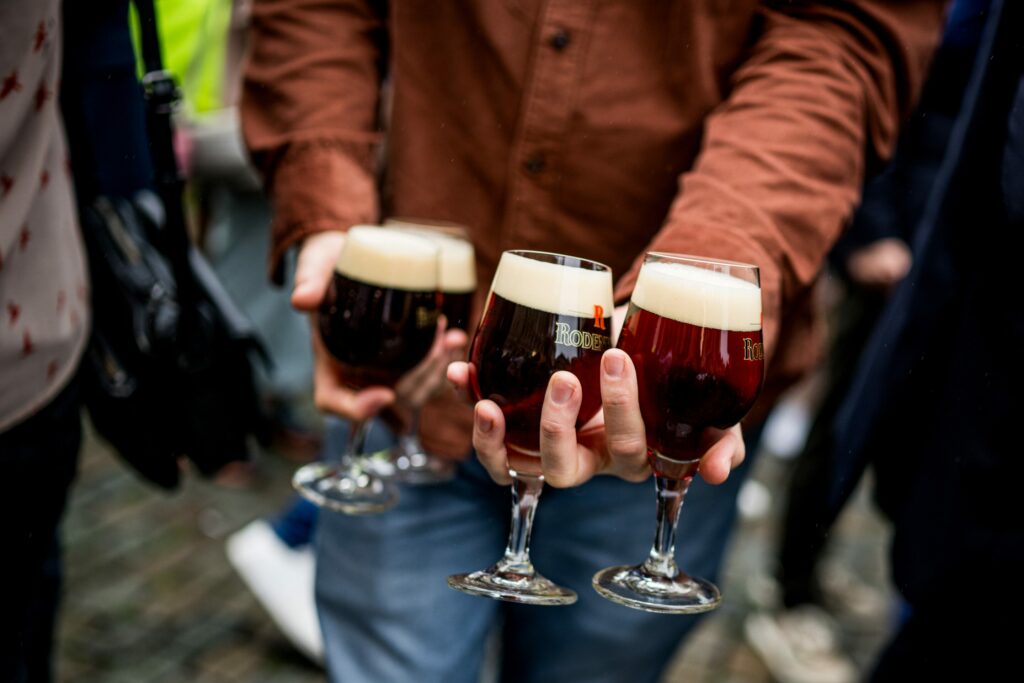
Belgium finds itself just below the average in terms of alcohol consumption among OECD members, partners and accession candidate countries, according to the organisation’s Health at a Glance 2025 report.
Figures showed that individuals aged 15 and over in the organisation's member and candidate states drank an average of 8.5 litres of pure alcohol per year, with Belgium registering an average of 7.8 litres annually per person. The study is mainly based on country data from 2023.
The OECD's biggest drinkers
Over a third of OECD countries drink over 10 litres per year on average. The highest figures were in candidate country Romania, at 12.5 litres, followed by Portugal, Latvia, and Austria. The lowest were recorded in Indonesia, with 0.1 litres per capita, while the average for Turkey was 1.7 litres.
According to the report, Belgium, along with Lithuania, reported the largest decline in alcohol consumption among its member states between 2013 and 2023. From 10 litres per year, Belgians reduced their annual consumption by over 2.3 litres in the space of a decade.
Teenage drinking
In its analysis of teenage drinking, the OECD's report also analyses statistics from the WHO's latest HBSC (Health Behaviour in School-aged Children) study. Figures show that around 45% of Belgian 15-year-olds indicated that they had drunk alcohol at least once in the 30 days before the study, a figure slightly higher than the OECD average.
The outlier in this metric is Denmark, where the rate of drinking among 15-year-olds reaches nearly 70%, while Iceland is at around 12%.
Nearly half of Belgian 15-year-olds reported having consumed alcohol in the month leading up to the survey. Denmark, Italy, and Germany, meanwhile, recorded the highest figures in this statistic with over 55% for all three countries. Around 15% of Belgian 13-year-olds drink at least once a month, while that same statistic concerns roughly 5% of 11-year-olds.
While Belgium's figures in the HBSC study are split between the Dutch and French-speaking populations, there is little discrepancy between the two language communities in terms of drinking rates among 15-year-olds. In both cases, nearly a quarter reported having been drunk at least twice. However, almost 10% of French-speaking 13-year-olds indicated that they had been drunk at least twice, a figure more than three times higher than for their Dutch-speaking peers.
The OECD cites Belgium's Alcohol Action Plan as an example of initiatives which can curb teenage drinking. Noting the plan's "holistic approach", the report highlights the country's "regulatory measures such as banning alcohol sales through vending machines, strengthening prevention activities and improving access to alcohol-related treatment and care."
Binge-drinking and regular consumption
Belgium is also worse than average in its binge-drinking habits, with 30% of those aged 15 and over reporting at least one instance of “heavy episodic drinking” per month. The highest monthly rates of binge drinking were reported by Greece, Ireland, and Sweden, all above the 40% mark, while Iceland and Portugal were at the other end of the chart with around 7%.
One in ten Belgians drink alcohol every day, according to Eurostat's figures from 2019, which also showed that the country’s consumption was above the EU average. Over half of the country drinks every week, two-thirds at least once a month, while nearly four in five Belgians have consumed alcohol in the last 12 months.
In the 2019 statistics, Portugal leads the continent in daily drinking rates (at one in five), ahead of Spain, Italy, Bulgaria, Croatia, and then Belgium. The lowest figures in this metric came in the Baltic states, as less than 1% of Lithuanians reporting drinking every day, followed by Latvia and Estonia.
