
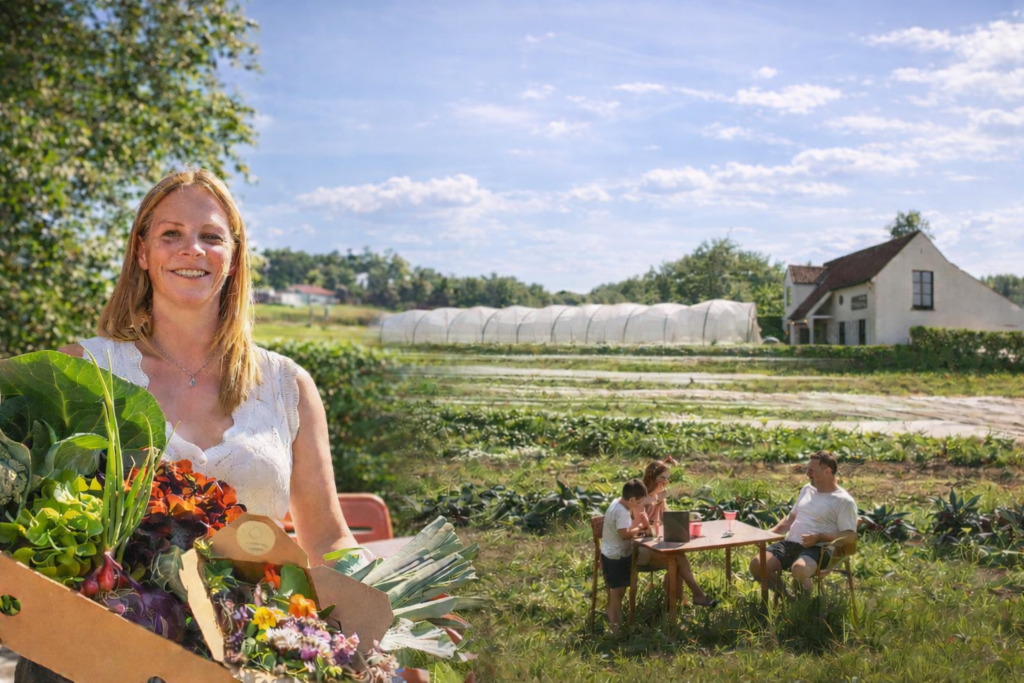
Twenty minutes from Bruges, Ilse Van Acker is pulling kale from the same soil her restaurant guests will taste that evening. The concept is simple: everything served at 't Verschil comes from the farm surrounding it.
Van Acker and her husband Tom Cloet started their restaurant 17 years ago with a commitment to seasonal, local cooking. During the pandemic, they bought adjacent land to grow their own produce. What began with herbs has evolved into full vegetable self-sufficiency.
"We are already almost two years self-sustainable for the vegetables," Van Acker says. "For the meats, we have a farmer from Zwevezele, about ten minutes from here. The eggs are from 20 minutes away."
The couple's approach is part of a broader local food movement gaining ground in Belgium. In Flanders alone, 84 community-supported agriculture farms now serve more than 20,000 consumers who buy seasonal produce directly from growers, according to CSA Netwerk Vlaanderen.
At 't Verschil, this philosophy extends beyond sourcing to preparation. "We use everything from the plants," Van Acker explains. "The leaves we use to make an oil. The stem we use. We don't throw anything away." The same applies to meat: nose-to-tail.
The menu changes daily depending on what the land provides. Van Acker grows only what thrives in West Flemish soil, avoiding imports like sweet potato in favour of rutabaga. She uses no pesticides and gives her plants no additional water. "I want to give them the best taste," she says. "I do not want to grow the biggest cauliflower. I want to grow the best cauliflower."
Van Acker argues that buying direct from farmers keeps prices comparable to supermarkets. "The farmers get the money and not all the other people," she says.
Related News
- EU introduces first-ever law to protect soil health
- Flemish agriculture had a relatively good year, says Boerenbond
The restaurant also runs programmes for local schools, where children learn to make soup from cauliflower leaves rather than the florets. Parents, Van Acker says, often return surprised at what can be done with parts they would normally discard.
For those wanting to try at home, both offer practical advice. "Under 200 square feet, you can grow food for your own family," Van Acker suggests. "Don't put flowers that are not edible. Don't put grass. Put something you can eat."
Cloet's guidance is simpler still: "Start with growing your own food in your garden and don't do much with it. Just put some love in it. Keep it simple.
