
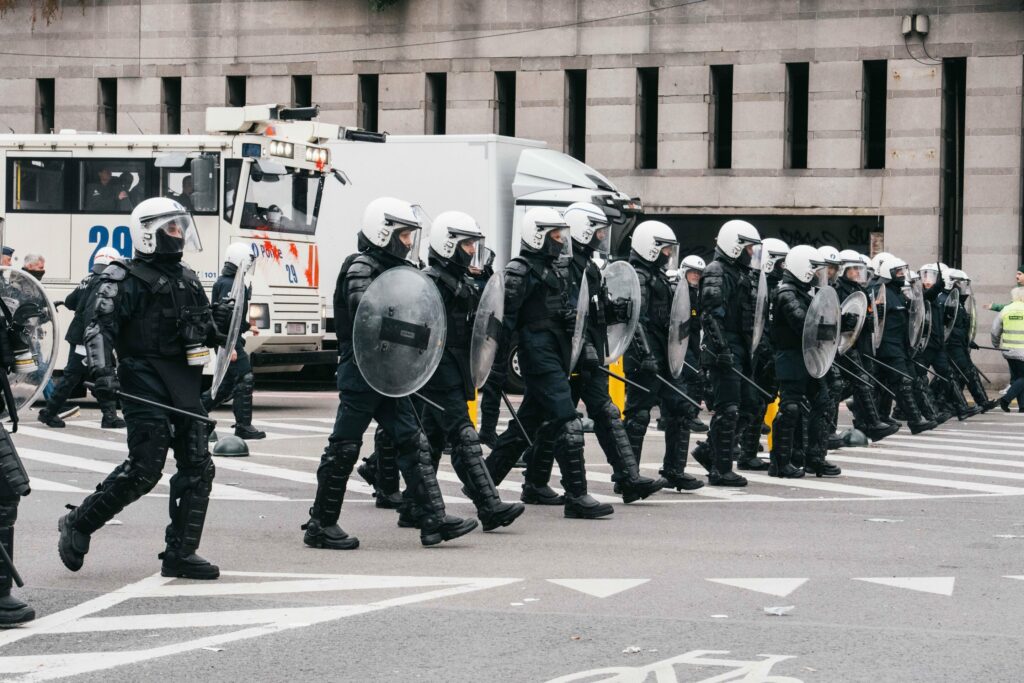
Online "accelerationist" subculture – a group that wants to provoke a racial civil war to accelerate the perceived decline of society – is the greatest violent threat from right-wing extremists in Belgium, according to a warning issued by the State Security Service's annual report.
In 2025, right-wing extremism in Belgium consisted mainly of three structural ideological components: so-called accelerationism (also called "Siege Culture"), the identitarian movement and neo-Nazism – all with a wide range of sub-movements.
Not all of these sub-movements call for violence; often, they revolve around spreading or living out their ideology, according to the report. Accelerationists, however, do pose a violent threat.
The accelerationist subculture consists of numerous chat groups, which also include Belgians, according to the report. Aiming to speed up what they perceive as the decline of society, accelerationists want to start a racial civil war.
"They believe they can do this by carrying out attacks on minorities," State Security said. "They distribute various manuals, glorify right-wing extremist terrorists as role models and try to incite people to carry out attacks."
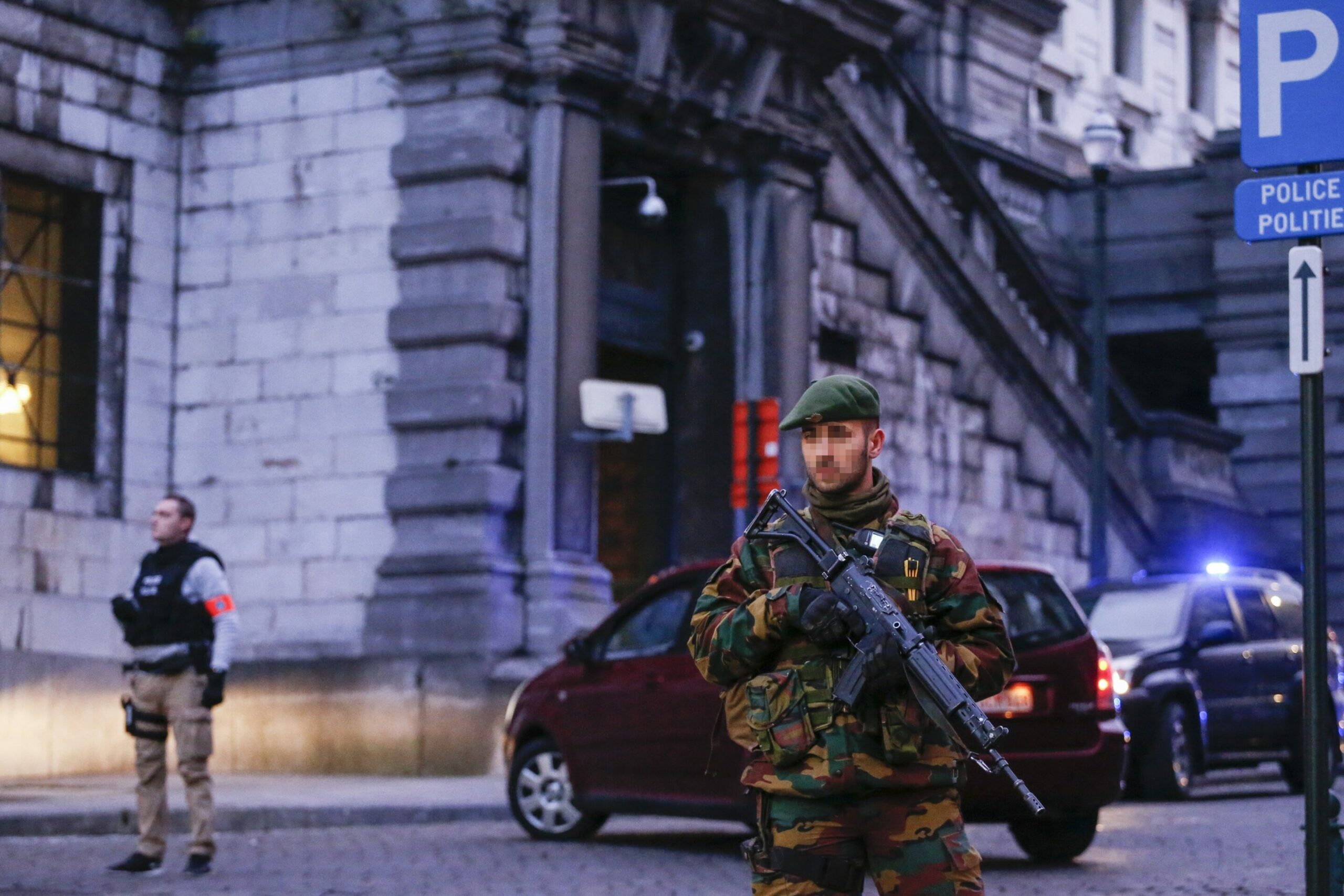
Illustration image of police and military personnel guarding the Palais de Midi. Credit: Belga/Thierry Roge
However, most people involved in these networks have "neither the concrete intention nor the capacity" to actually carry out attacks, the report said. Instead, they limit themselves to seeking connection in expressing their shared feelings of hatred.
Still, the State Security Service has established that "in a limited number of cases," both the intention and the capacity to carry out attacks were indeed present.
Therefore, they assess that a terrorist attack inspired by accelerationism is possible in the "near to medium term" (six months to five years).
According to the report, they are paying particular attention to this environment and strive to inform their national and international security partners in good time, "so that possible terrorist intentions can be disrupted."
"In any case, it remains a challenge to distinguish between real intentions and empty rhetoric."
Survival of the fittest?
In the long term, the State Security Service stressed that these right-wing extremist movements undermine confidence in democratic institutions and processes and provide fertile ground for further radicalisation.
This, the report argues, is due to geopolitical developments – where international law, the international order and the established balance of power are increasingly being undermined by the "survival of the fittest." A certain intensification of the social debate and the glorification, by some, of the figure of the omniscient and omnipotent leader also play a part.
With regard to left-wing extremism, State Security noted that they attracted public attention through violent actions last year – including riots during demonstrations, acts of resistance against the police and intimidation of political opponents during anti-fascist counter-demonstrations.
While the report said that these actions and the legitimisation of the use of violence are "a constant focus of attention," it added that the majority of far-left activists are mainly engaged in the non-violent dissemination of their message.
They stressed that a threat of a terrorist attack from this milieu is "unlikely."
