
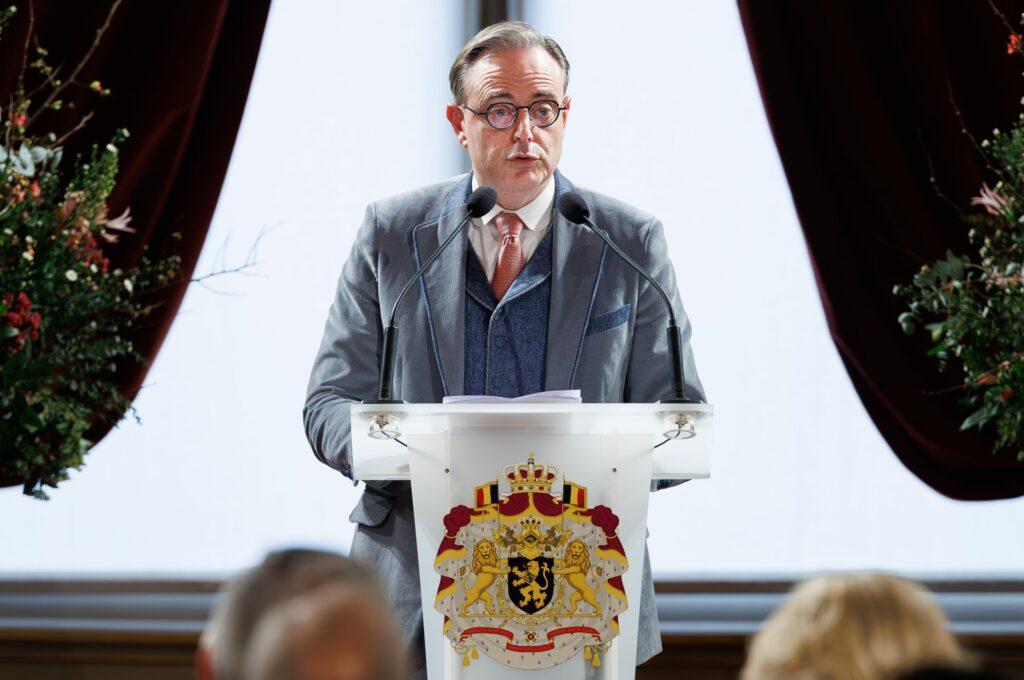
From tackling budgetary issues to dealing with Donald Trump and a furore over Russia's frozen assets, it's been quite a year for Belgium and Bart De Wever (N-VA), the country's once-reluctant prime minister.
At the start of February last year, the current Federal 'Arizona' Government was sworn in, led by Flemish nationalist De Wever. Even taking into account Belgium's reputation for sometimes absurd political decisions, the move raised eyebrows across the country, especially in the French-speaking parts.
But what a difference a year makes. Despite harsh socioeconomic measures – such as pension and labour reforms that will hit everyone in their wallets – a poll by HLN shows that Flemish people have "a lot of" faith in De Wever, and his popularity also continues to rise in Wallonia.
Most of this is due to the points he scored on the European stage – despite his previous Euroscepticism. From his opposition to the EU deployment of frozen Russian billions in Euroclear's Belgian accounts to how he criticised US President Donald Trump during his New Year's speech, Belgians have seemingly embraced De Wever as the "protector of the nation" – an irony that has likely not escaped his notice.
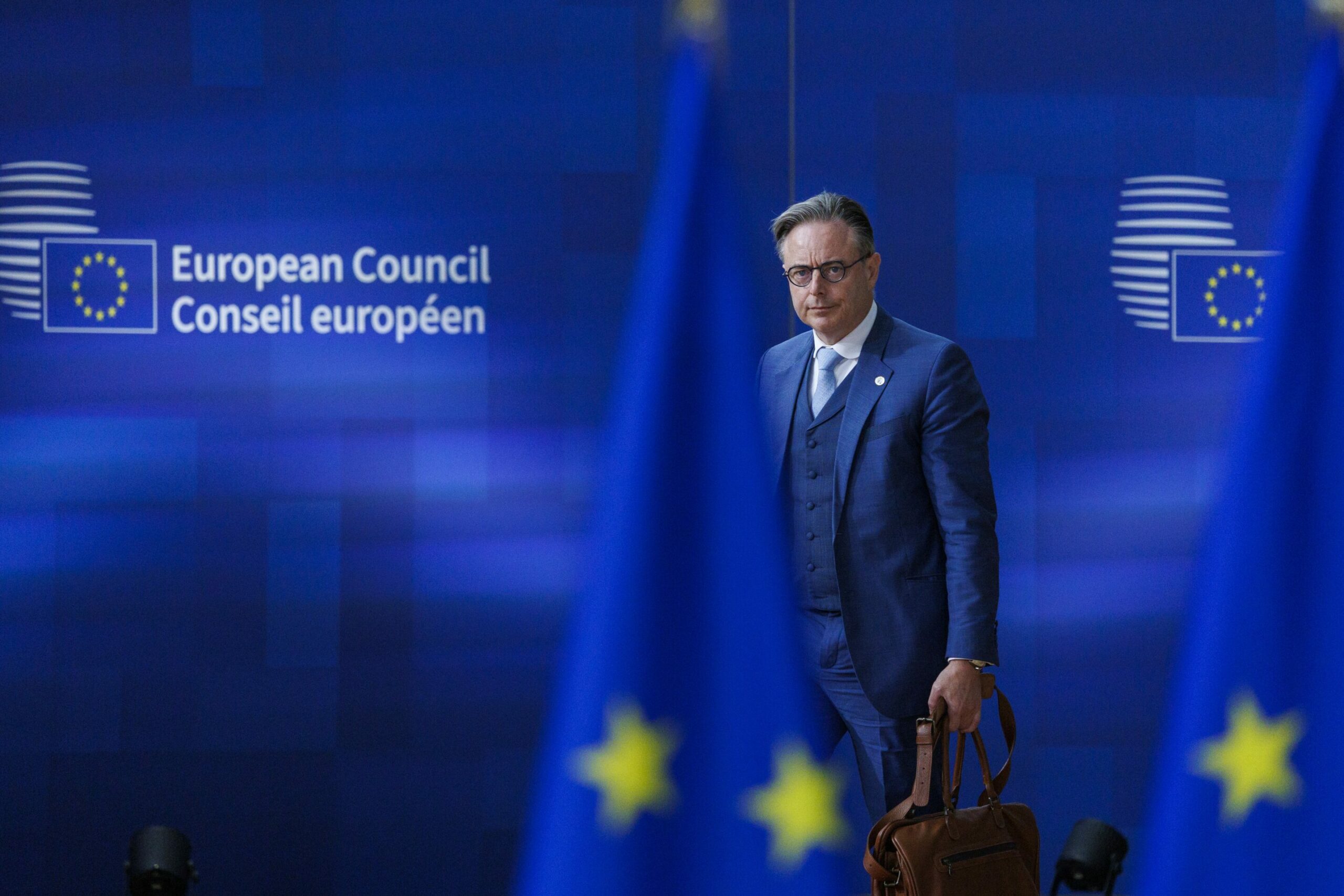
Belgian Prime Minister Bart De Wever (N-VA) arrives at a European Council summit in June. Credit: Nicolas Maeterlinck/Belga
In December, he was even treated to a standing ovation after an hour-long speech, delivered in near-perfect French, at the Grandes Conférences Catholiques at Bozar. The audience was full of French-speaking conservatives and monarchists.
Indeed, this newfound popularity on both sides of Belgium's linguistic border is a far cry from the radical Flemish nationalist who once drove a dozen trucks full of fake banknotes to Wallonia to make the point that "his" Flanders was bleeding too much money toward the poorer French-speaking region.
Yet, De Wever's international fame is not all that stays in memory of the past year; he encountered plenty of problems in his own country.
After missing deadline after deadline in search of nearly €10 billion by the end of his legislature for "an unprecedented but much-needed savings operation," De Wever was able to present his multi-year budget right before Christmas.
Silence and holiday photos
The road to that budget, however, was long and winding. It shed light on the sharp divide within his coalition: the political differences between the right-wing N-VA (Flemish nationalists) and MR (Francophone liberals) on the one hand, and left-leaning Les Engagés (Francophone centrists), CD&V (Flemish Christian Democrats) and Vooruit (Flemish socialists) on the other became hard to ignore.
De Wever did manage to keep his government together and is holding onto his popularity for now, but experts wonder what will happen once most of these measures kick in – and life will become much more expensive for many.
While he succeeded in convincing people of the importance of a balanced budget, his plans for savings and reforms are anything but popular, as is the scheme that puts around 100,000 people at risk of losing their unemployment benefits – as the numerous national strikes against his austerity measures last year indicated.
Many of the measures are wildly unpopular: the VAT increase from 6% to 12% on sports (think of gym memberships), culture (such as cinema or festival tickets) and takeaway meals (from pizzas to fries) is particularly disliked.
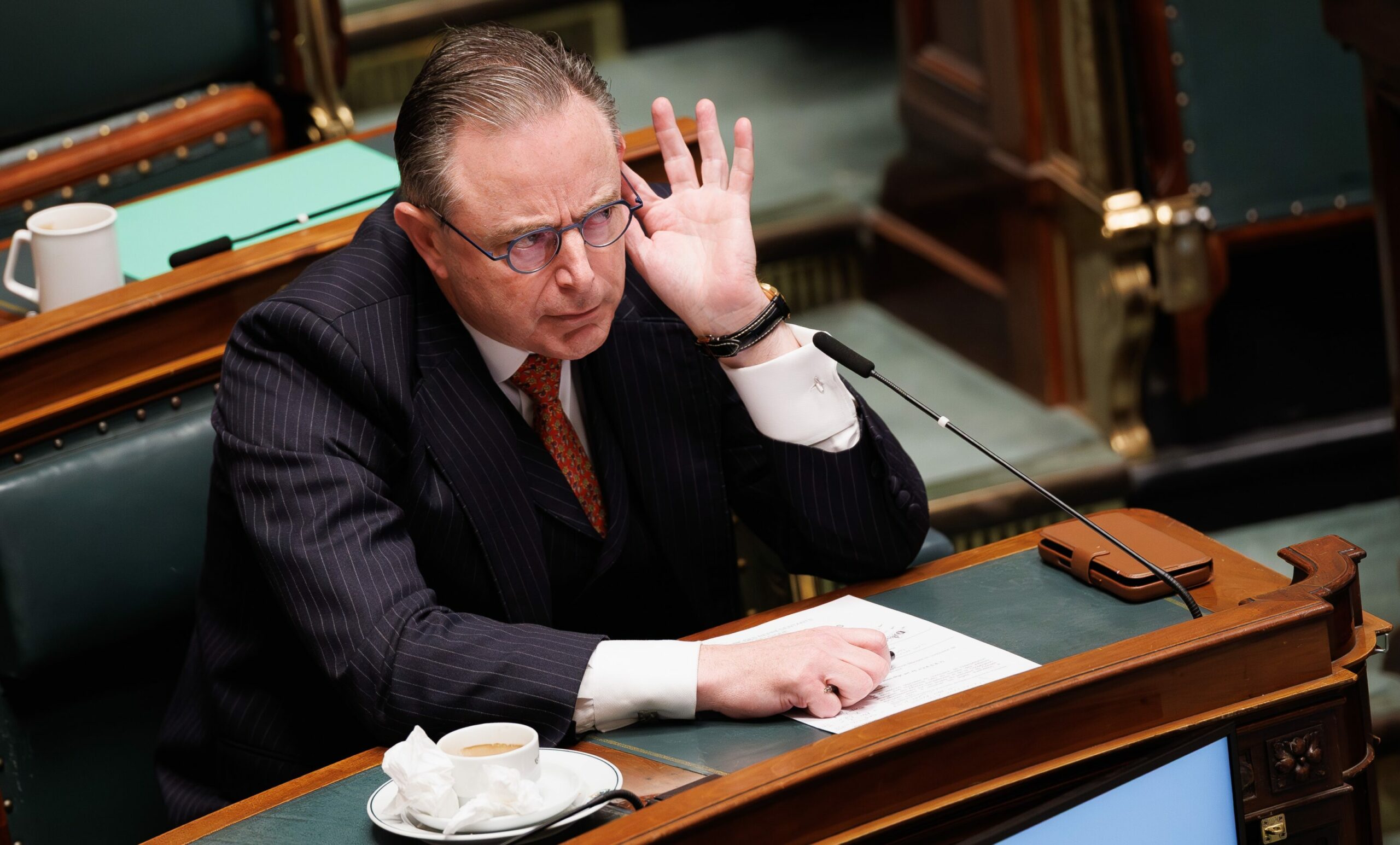
Prime Minister Bart De Wever pictured during the debate on the government's statement, at a plenary session of the Chamber at the federal parliament, in Brussels, Friday 28 November 2025. Credit Belga/Benoit Doppagne
While he is at times very present in the media, De Wever is not keen on giving interviews. He often refuses requests for sit-down interviews or television studio appearances and has remained mostly silent on Belgium's response to the situation in Gaza (when he posted vacation photos over the summer, his coalition partners even accused him of indifference on the issue).
In short, the prime minister only communicates when and how he wants to – including through the Instagram account of his cat Maximus.
Clearly, De Wever will not bend – even though we can be sure that his steadfastness (some might say stubbornness) will lead to many more long and drawn-out negotiations in the following years of his premiership.
Or, as he told the press after the long EU negotiations about releasing the frozen Euroclear assets in December: "In Europe, they call five full days and nights of talks a long negotiation. In Belgium, we call that a free weekend."
