
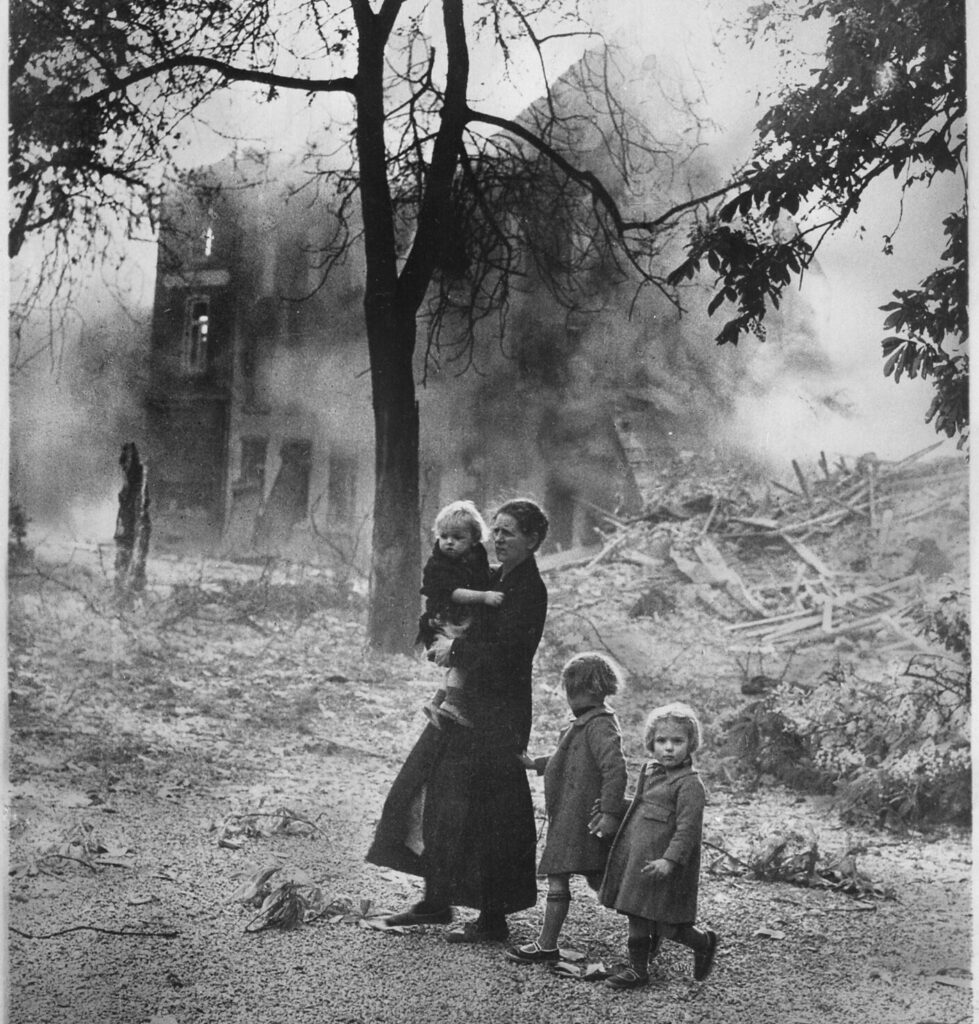
The In Flanders Fields Museum in Ypres is lining up a busy programme of events for 2026 as it seeks to build on last year’s rise in visitor numbers.
Based in the town’s iconic Cloth Hall, the First World War museum recorded 161,730 admissions in 2025 – an increase of 3.5%, with most visitors coming from Belgium (42%), followed by the UK (28%) and the Netherlands (15%).
Director Stephen Lodewyck is determined that this year will be no less successful, stressing that the museum’s focus on events of more than a century ago has many modern-day parallels.
In addition to the popular permanent collection, he says its current temporary exhibition, staged in an adjoining space, is attracting a “strong response”. Entitled ‘Displaced’, it focuses on the plight of Belgian civilians during the 1914-18 conflict.
“Military history often tends to overlook the experience of ordinary people. At the start of the war, 1.5 million Belgians fled the country out of a population of 6 million – so one in four were refugees. The numbers were simply enormous,” states Lodewyck, who has run the museum since 2021.
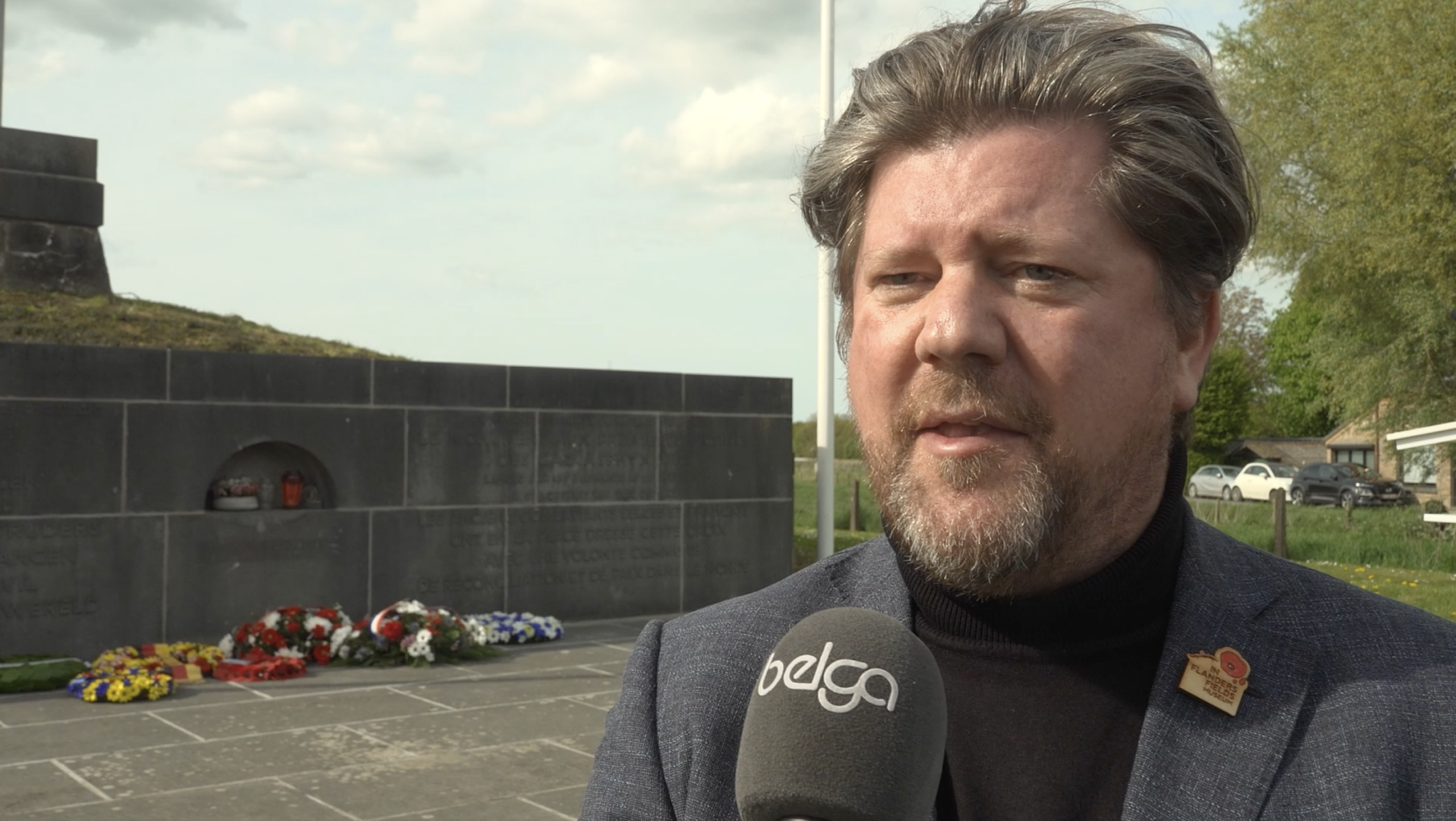
In Flanders Fields museum Director Stephen Lodewyck
After the fall of Antwerp in October 1914, a million Belgians crossed the border to the Netherlands. Others headed for France, Britain and Switzerland. While nearly two-thirds gradually returned, 600,000 stayed in neighbouring countries for the duration of the war.
Some, like Clara Thomas from Roeselare, found love in their adopted homes – she wed a police officer, Patrick Egan, in Ireland. However, others, like Emma C and Marie-Jeanne C, were traumatised by what they had witnessed and ended up in mental health institutions or committed suicide.
“Although the events happened more than 100 years ago, they still feel very relevant today. We see the same tragic impact of war in places like Gaza and Somalia,” says Lodewyck. “The idea of having to leave your home without knowing if you’ll come back, and all the emotion, uncertainty, fear and anxiety connected with that, doesn’t change.
“During school visits I see the children talking and reflecting on what they have seen. I'm very happy that is happening because we’re not just a historic museum alone. The link with the present is important.”
Destruction
Belgians caught up in the early stages of the war endured barbaric treatment at the hands of the invading forces, who often claimed they were carrying out reprisals after being targeted by civilian ‘franc-tireur’ snipers.
One of the displays in the ‘Displaced’ exhibition recalls an account by American war correspondent E. Alexander Powell, who was shocked by the sights of wanton killing and destruction in towns such as Leuven, Aarschot and Zemst during the ‘Rape of Belgium’. In his acclaimed work ‘Fighting in Flanders’, he observes how roads crowded with refugees were “constantly threatened” by enemy troops.
Civilians left behind, especially the elderly, faced starvation as food stocks were requisitioned and ran out. “The countryside was as bare of food as the Sahara is of grass,” wrote Powell. The voluntary Committee for Relief in Belgium, led by future US President Herbert Hoover, shipped nearly 6 million tons of food across the channel from Britain to avert mass deaths.
The ‘Displaced’ exhibition features numerous photographs and artefacts, many donated by the descendants of the featured individuals, as well as eye-catching panels designed by illustrators Pieter Van Eenoge, Elise Vandeplancke, Nour Hifaoui Fakhoury, Joana Estrela, Sara Yu Zeebroeck, Oh Mu, Trui Chielens, Zoë Verstraete and Bart Vliegen.
Some of the colourful panels are also on display outside at various locations around the town.
Looking to the year ahead, Lodewyck highlights a number of special events linked to the exhibition, including a lecture on 5 March by Dr Jacqueline Jenkinson, a specialist in the history of migrants and minorities, who will discuss the experience of the 19,000 Belgian refugees who left for Scotland.
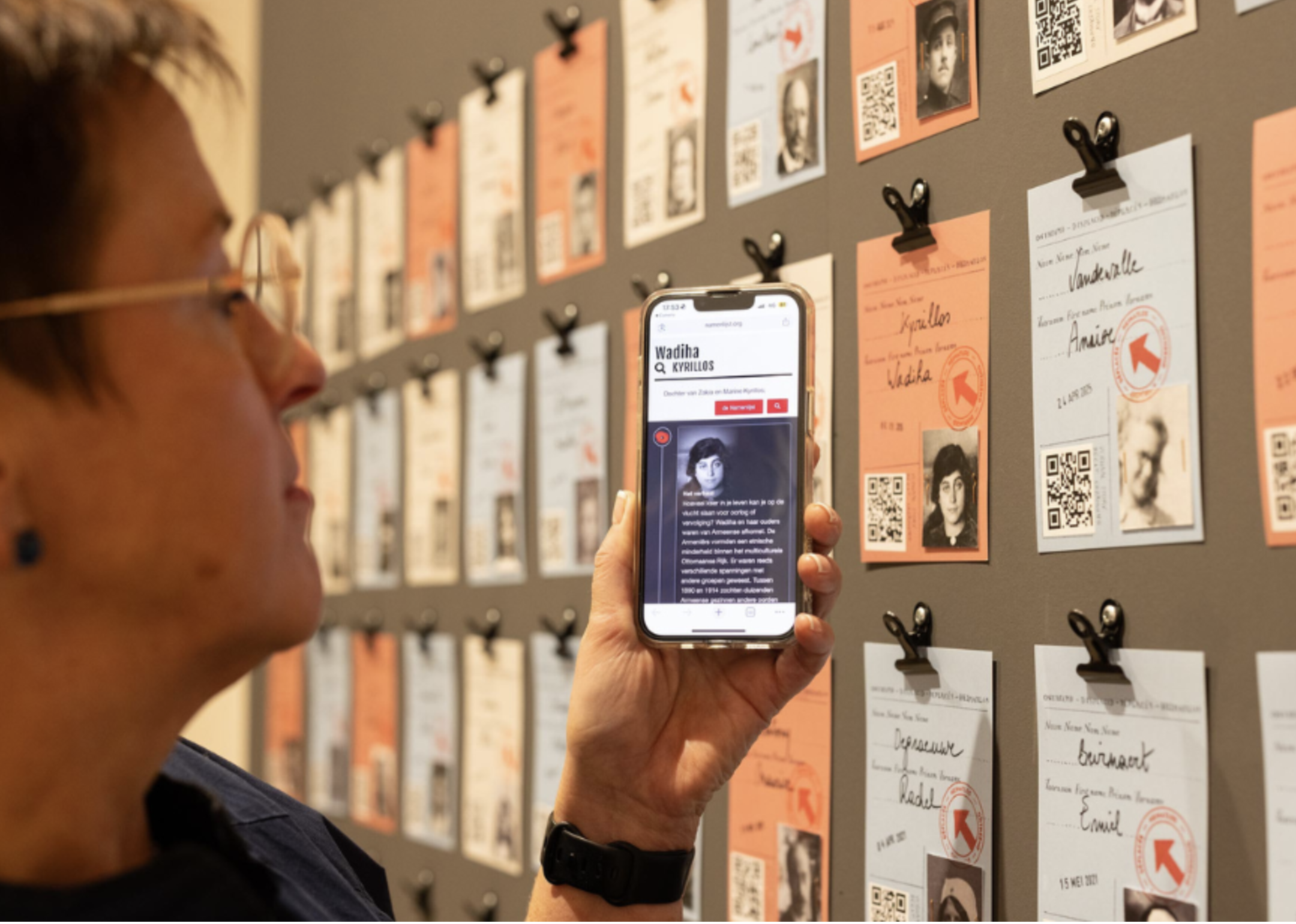
'Displaced' expo at In Flanders Fields museum.
From 26-29 March, the museum is organising an international conference on displaced people at the Vleeshuis in Ypres, in which experts and researchers from Belgium and abroad will examine aspects of flight and exile during the First World War.
A second temporary exhibition, on show in the main museum, focuses on Belgian artists forced to flee during the First World War. It features 25 works including paintings, drawings and etchings by Emile Claus, Jules De Bruycker, Rik Wouters, Alfred Ost, Henri Degroux and others. Several works are being shown in public for the first time.
Still further ahead, Lodewyck is planning for the museum to focus more on the links between the First and Second World Wars. “Barely 20 years separated the start of the Second World War from the aftermath of the Great War. We want to tell the story of a generation that experienced both conflicts," he says.
The museum will close its doors from September 2028 to April 2029 for a thorough renovation backed by €4 million in funding from Tourism Flanders and the Province of West Flanders. The goal is to transform it into a state-of-the-art attraction, ensuring the museum’s status as a key landmark for First World War heritage in Belgium.
The ‘Displaced’ exhibition runs until 14 June. The Belgian Artists in Exile exhibition ends 25 May.
