
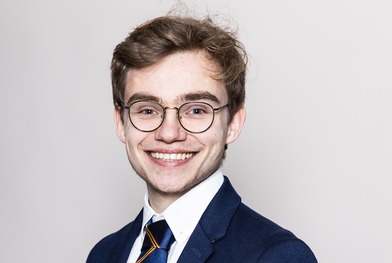
Belgium and Canada are mourning the loss of a brilliant young surgeon whose career and commitment had already left a global mark.
Dominique Vervoort died in Toronto on 16 February at the age of 31 after battling what his family called “a turbo cancer that could not be stopped". The doctor from Sint-Truiden, Limburg, had as his life mission to make surgery accessible to everyone, everywhere.
According to Het Nieuwsblad, Vervoort left behind an extraordinary academic legacy: 250 scientific publications, lectures at the World Health Organization, the United Nations and dozens of universities worldwide, a year at Harvard and a PhD focused on pediatric cardiac surgery in Canada.
Yet those close to him say his greatest ambition went far beyond personal achievement. He wanted to close the global gap in access to surgical care. “He devoted himself fanatically to paediatric heart surgery and wanted to make surgery accessible in poor countries. That was his life’s work,” his father Jozef told the newspaper.
A global mission
After studying medicine at KU Leuven, Vervoort pursued further training from Tokyo to the United States. He spent time working in a hospital for the poor in Peru and later undertook a Harvard fellowship that took him across Ghana, Tanzania, India and Pakistan to gather data on surgical access. In one year alone, his parents estimate, he flew nearly a million kilometres.
His research concluded that in many low-income countries more people die due to a lack of surgical procedures than from cancer. At just 23, he was invited to address the WHO in Geneva. “Here I am, just a snot-nosed kid,” he reportedly told his parents at the time – a remark Het Nieuwsblad says became part of family lore. He would go on to speak there annually.
He also founded InciSion in Leuven, a non-profit aimed at promoting global access to surgery. The initiative later expanded internationally under the name Global InciSion.
Over the past four years, Vervoort completed a doctorate at the University of Toronto while continuing clinical work. Professors told the newspaper that what he achieved in four years would take many academics an entire career. Despite that, his family insists he remained modest. “When he was here, it was family time. He never boasted,” they said.
A sudden and aggressive illness
A year and a half ago, Vervoort was diagnosed with an aggressive melanoma, first noticed as a small spot above his ear. Although it was removed early, the cancer returned and spread rapidly. Despite surgeries, chemotherapy, radiotherapy and experimental treatments, it did not respond.
“The oncologist didn’t understand why nothing worked. They called it turbo cancer,” his father told Het Nieuwsblad. Tumours eventually spread throughout his body, including his brain, leading to a fatal haemorrhage days before his death.
In his final months, family members took turns staying with him in Canada so he would never be alone. Two days before he died, friends from Sint-Truiden spoke to him via video call. A lifelong supporter of local football club Sint-Truidense Voetbalvereniging (STVV), he even watched a match from his hospital bed.
Recognition and legacy
While terminally ill, Vervoort received an honorary doctorate from the University of Toronto. In Canada, his father said, he was honoured “almost like a saint.” He also successfully challenged what he saw as discriminatory university admission rules favouring Canadians over foreign students, winning a legal case with the support of prominent lawyer Allan Rock.
Before his death, he ensured that the rights to his 250 scientific publications would be transferred to the Toronto hospital where he worked, safeguarding his research for the future.
Vervoort will be buried in Sint-Truiden following repatriation, in accordance with his wishes. “I don’t know if he would be happy that we are telling his story in the newspaper,” his brother-in-law told Het Nieuwsblad. “But he would be glad that his work continues.”
