
The failed police digitalisation project, i-Police, continues to be a headache for the Federal Government and national authorities. From hearings to legal proceedings, what is the latest on the case?
The i-Police project aimed to upgrade information technology (IT) tools for Belgium's Federal Police, in a bid to modernise its internal systems.
The first contract was officially awarded in 2021 to the French consultancy Sopra Steria, with Belgium earmarking a total of €299 million for the project until 2027.
The i-Police contract was signed under then Interior Minister Annelies Verlinden (CD&V). However, the public tender for the project was launched in 2017 by then Interior Minister Jan Jambon (N-VA).
In December 2025, Verlinden's successor, Bernard Quintin (MR), officially pulled the plug on the project, citing a lack of progress despite the €75.8 million paid out to the French company.
Since then, tensions have sparked between Belgian politicians, authorities, and the French consultancy, with accusations of blame and possible misuse of public funds.
Federal Police under the spotlight
Amid suspicions of conflict of interest and misuse of public funds within the i-Police project, an investigation was opened by the Brussels Public Prosecutor's Office last month.
On 18 February, the Prosecutor's Office confirmed to Belga News Agency that raids were carried out at the Federal Police Headquarters as part of the investigation.
The news came just a day after local media reported that senior Federal Police officials, including Commissioner-General Eric Snoeck, refused to attend parliamentary hearings regarding i-Police, citing the legal advice he was given not to testify.
However, Snoeck ultimately agreed to speak at the hearing before the House Committee for Interior Affairs.
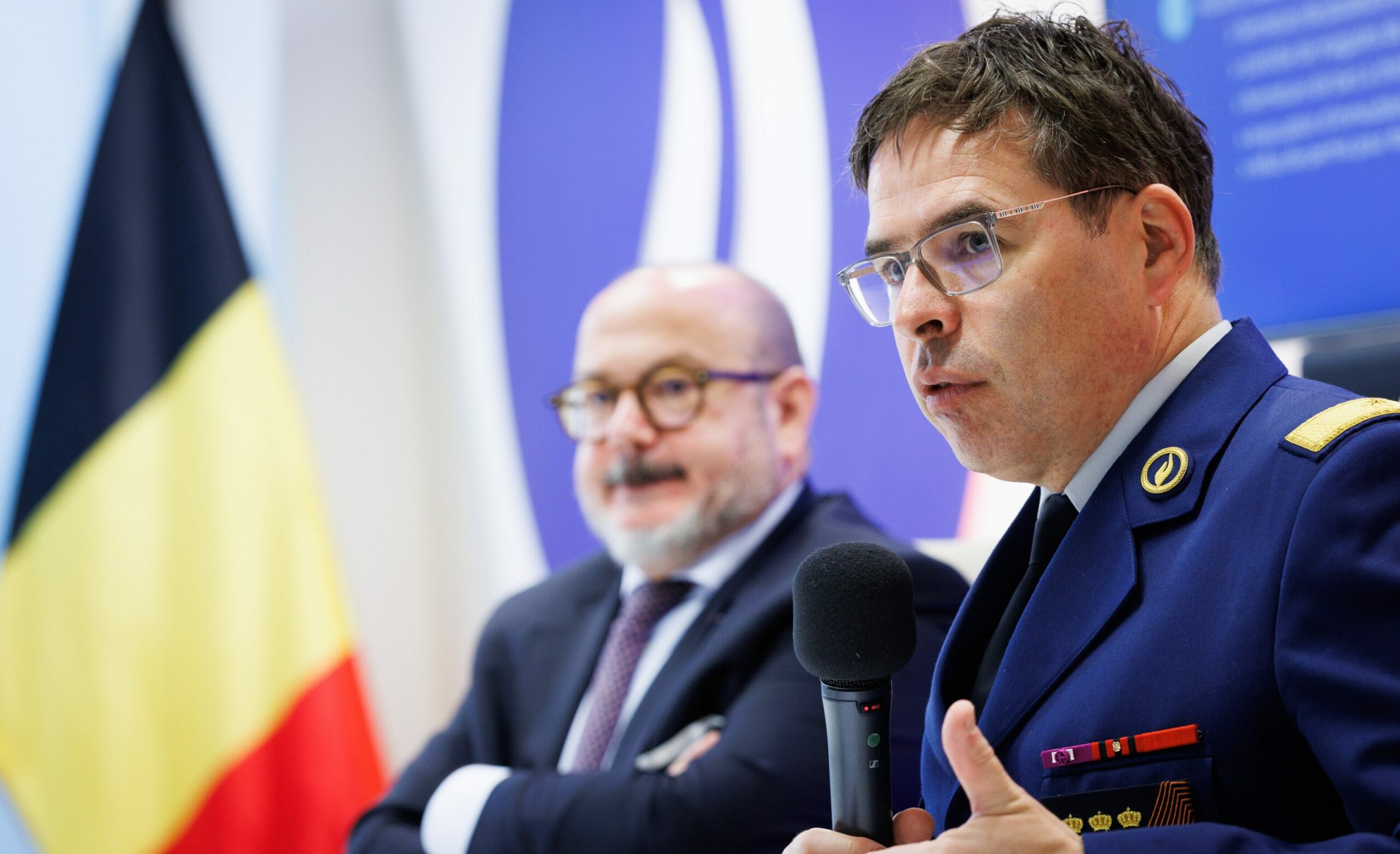
Minister of Interior Bernard Quintin and Federal police General Commissioner Eric Snoeck. Credit: Belga/Benoit Doppagne
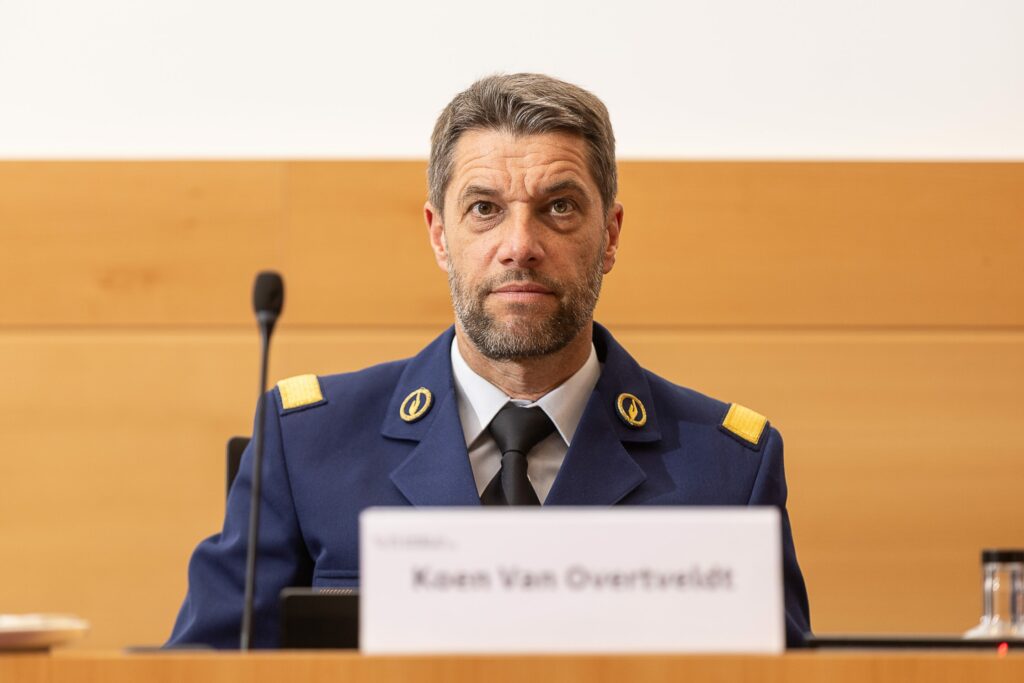
The Federal Police's Director-General, Koen Van Overtveldt, had "discreet meetings" with senior executives from Sopra Steria in late January 2026, according to a report by De Standaard and Het Nieuwsblad on 25 February, provoking further scrutiny of the case.
However, the Federal Police told Belga News Agency that it did not consider it unusual that "all possible lines of communication between the parties are kept open."
The meetings were, according to the Federal Police, "informal contact, partly to introduce the new CEO of Sopra Steria to the police."
In a hearing in the House Committee for Interior Affairs in March, Interior Minister Quintin said he did not permit this meeting, although Belga News Agency says an email sent to several news outlets at the time suggested he had "in principle" approved this type of meeting.
Sopra Steria denies blame and confirms outstanding invoices
Meanwhile, executives from the French consultancy were heard by the Belgian House Committee on 26 February.
The CEO of Sopra Steria Belux, Régis Roba, maintained that the company "acted transparently" and that "every invoice corresponded to services or software that was ordered, evaluated and delivered to the client."
Roba further noted that there was a shift in the project in early 2024, after the police revised the initial priorities for i-Police, according to Belga News Agency.
"It’s as if we’d initially been asked to build a 20-storey building, only to be told later to put up two or three small houses instead. And then, at the end, to be told: ‘You didn’t build that block of flats’," said Roba.
Sopra Steria's head of legal for the Benelux branch, Constantin Le Fevere, further revealed that Belgium still had outstanding invoices with the company – although the exact amount was not disclosed.
According to Le Fevere, Sopra Steria asked the Brussels Public Prosecutor to be recognised as an aggrieved party in the i-Police probe.
Sopra Steria takes the matter to court
Not even a week after the hearing, Sopra Steria announced in a statement on 2 March that it was initiating legal proceedings "to contest the attribution of responsibility to the company for the unilateral termination of the i-Police programme."
The French company said that it had been the target of public criticism "based on a partial and unbalanced presentation of the facts, with potential implications for its reputation."
It underscored that the "action was not intended as a confrontation" but rather to "ensure that the matter is assessed independently, fairly and in accordance with the law, with full respect for the rights of all parties involved."
Sopra Steria noted that its decision follows a summons issued by the Belgian police earlier in the day.
Police seek €179 million from Sopra Steria
The issuance of the summons was confirmed on 6 March by the Federal Police's Commissioner-General Eric Snoeck during a hearing before the Belgian House Committee.
According to Snoeck, the Belgian Police is seeking €179 million in damages and a repayment of €65 million in invoices.
During the same hearing, Snoeck said he "inherited a very unpleasant, problematic situation" when he took over as Commissioner-General in 2023.
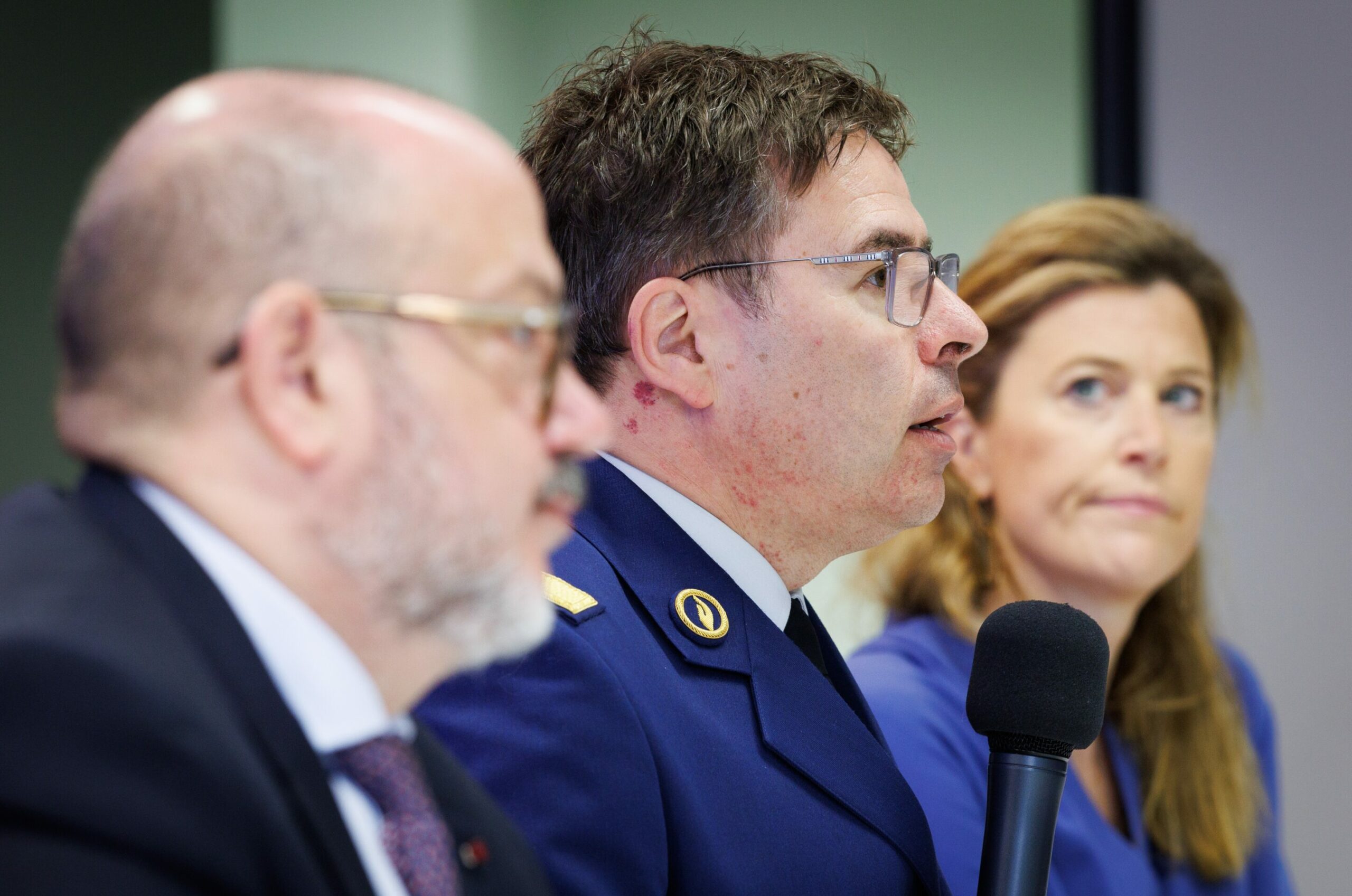
Minister of Interior Bernard Quintin, Federal Police General-Commissioner Eric Snoeck and Minister of Justice Annelies Verlinden pictured during a press conference 11 March 2026. Credit: Belga/Benoit Doppagne
Snoeck explained that signs of issues with i-Police first emerged in September 2023, alleging that "Sopra Steria was struggling to answer questions and deliver products."
It was reportedly during Snoeck's command that a crisis manager was brought in and that the scope of the project was changed, before it was ultimately terminated by Quintin in 2025.
However, Marc De Mesmaeker, who was the Commissioner-General until April 2023, said that he had "no indications to doubt the successful outcome of the project.” According to De Mesmaeker, there were only a few funding concerns.
‘Someone will have to take responsibility’
Several MPs expressed their disappointment following the hearing on 6 March. Federal green MP Matti Vandemaele (Groen) said: "Every possible excuse has been used here to say: I am not responsible. But we have lost 80 million euros, and someone will have to take responsibility for that."
His position was shared by others, including N-VA's Maaike De Vreese.
"The federal police are pointing an accusing finger at Sopra Steria, whilst last week the firm did exactly the same in the opposite direction," she said. "My conclusion, therefore: it rains a lot in Belgium, but nobody gets wet. Everyone has an umbrella.”
Verlinden’s long-awaited hearing
Since the termination of the i-Police contract, Federal Justice Minister Annelies Verlinden (CD&V) has been the target of criticism over her role in the project during her time as Interior Minister.
Verlinden's cabinet was accused of ignoring warning signs of problems with the project. The minister was further accused of a conflict of interest after it was revealed that she had worked as a lawyer for Sopra Steria in 2019.
Verlinden spoke about the project on 13 March in a hearing at the House Committee for Interior Affairs.
In response to a question over why the project was not terminated when issues were reportedly noted in 2023, Verlinden said that "all the parties involved said they wanted to continue" the project and that she "never received any indication" that it should be halted.
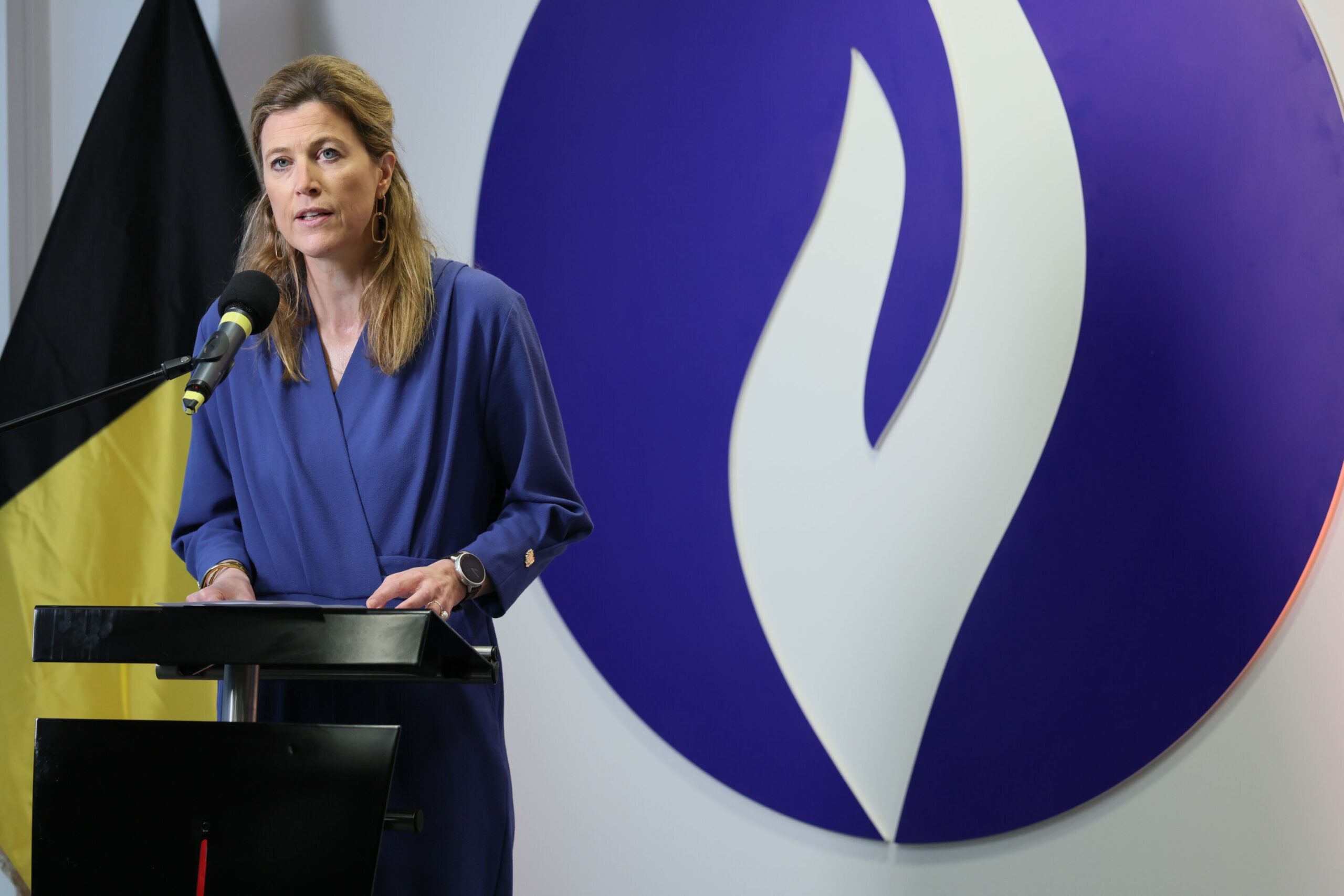
Minister of Justice Annelies Verlinden pictured during a press conference on 11 March 2026. Credit: Belga/Benoit Doppagne
She added that she intervened when there were "serious warning signs" in October 2023 by commissioning an external audit into the project and adjusting the project accordingly.
The minister further claimed that at the end of 2023, then Justice Minister Paul Van Tigchelt (Anders) wrote to the police's Commissioner-General to urge him to "do everything possible to ensure the project's success."
According to the Belga News Agency, Van Tigchelt reacted to the hearing by accusing Verlinden of being "unable to answer the questions regarding her responsibility."
Quintin faces the House Committee
On Tuesday, 17 March, Interior Minister Bernard Quintin responded to questions before the House Committee over the failed i-Police project.
Quintin said that during the handover from his predecessor, Verlinden, he received "very brief" information about i-Police. He instructed his advisers to investigate the project.
According to the Belga News Agency, the Interior Minister made it clear that the decision to terminate the project was his own responsibility.
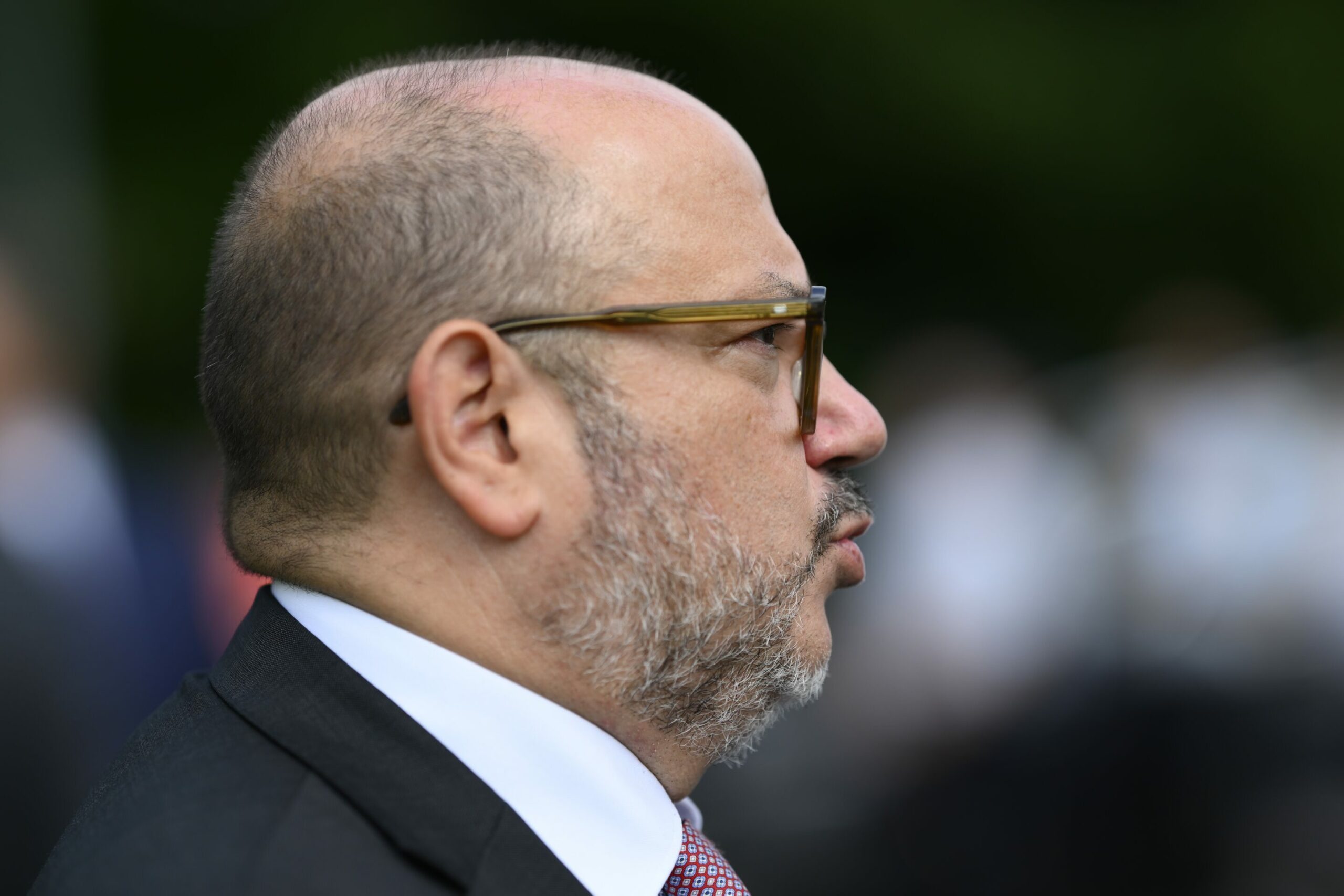
Minister of Interior Bernard Quintin. Credit: Belga/John Thys
"Pushing ahead with the programme would only have meant further public expenditure with no guarantee of success, and so I had to make a decision," he said.
He further confirmed that Commissioner-General Eric Snoeck had pushed for the project to continue, despite the warning signs. Quintin said Snoeck's reaction was "understandable" given the resources that had gone into the project.
The Interior Minister made it clear he intends to improve the IT tools of the police force. Nonetheless, he believes this cannot be achieved through a project as big as the i-Police.
"The ambition remains, but we will work in a modular way, step by step," he said.
