
Good afternoon from Avenue Louise.
Katie Westwood here with your daily dose of Belgian news for an English-speaking audience.
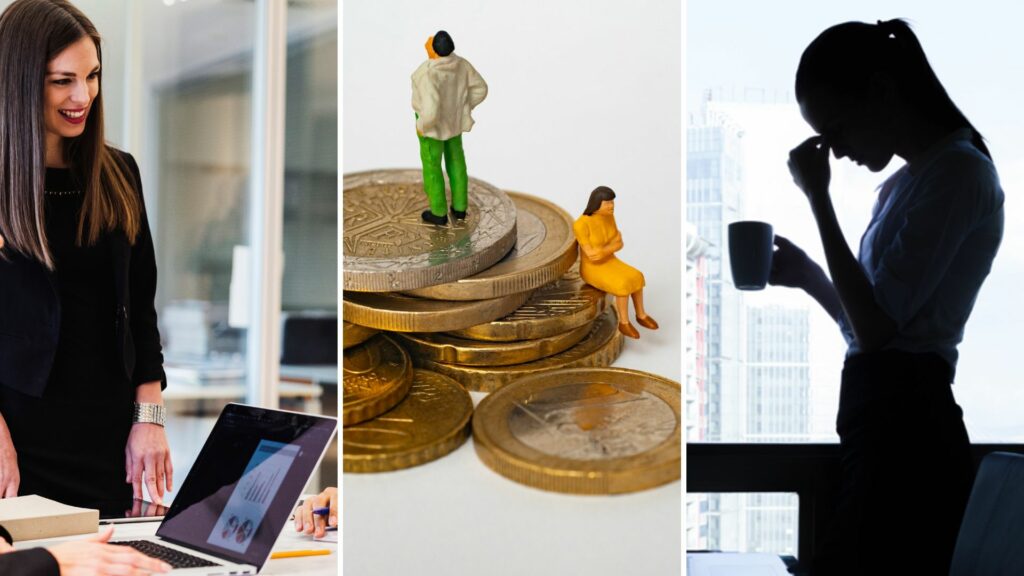
Although we are deep in the fourth wave of feminism, 21st-century feminists are still talking about an issue first raised by our 19th-century forebears during feminism’s first wave: the principle of equal pay for equal work.
According to Eurostat, women in the EU earn on average 12% less per hour than men, and many women still feel that they are not getting a fair deal in the workplace.
To address this persistent problem, the EU has decided to take bull by the horns by obliging member states to implement a pay transparency directive, which forces organisations to be transparent about salaries.
From June, companies will have to be fully transparent about their employees' wages, and employees will have the right to ask about the average salaries of colleagues in similar roles.
In theory, all employees – regardless of gender – should benefit from the breaking of the omertà that still exists in many companies around salaries.
And what of Belgium in all this? Well, the good news is that if medals were handed out for addressing gender pay gaps, Belgium would stand proudly on the podium. Between 2013 and 2023, the government succeeded in closing the pay gap by nearly seven percentage points, meaning that by 2023, women earned on average 0.7% less per hour worked than their male colleagues. In Europe, only Luxembourg has a lower gender pay gap.
In terms of implementing the EU directive, however, Belgium still has work to do. As our Political Editor Maïthé Chini reports, companies will have to get their skates on to ensure that they are legally compliant by June.
Elsewhere, reporter Rita Alves has looked into the latest developments in the i-Police scandal, a failed digitisation project which continues to be a massive headache for the Federal Government, which is facing accusations of possible misuse of public funds. Read Rita’s report here.
I will leave you with an important public service announcement: do not put your yellow and blue bin bags out for the rest of this week. Bin collectors in the entire Brussels city region are on a three-day strike which starts today and finishes on Friday.
It could be worse, though: authorities will continue to collect the (always putrid) orange bags and have provided assurances that “catch-up efforts” will also focus on white and green bags.
Happy trash dodging!
Belgium in Brief is a free daily roundup of the top stories to get you through your coffee break conversations. To receive it straight to your inbox every day, sign up below:
1. What are the EU rules on pay transparency and is Belgium implementing them?
"Pay transparency is important, and employers who refuse to provide access to this information and deliberately discriminate must be punished with fines." Read more.
2. ‘This is not Europe’s war’: EU leaders to push for diplomatic solution at Brussels summit
European leaders will meet in Brussels this week to discuss the military escalation in the Middle East and the situation in Iran. Read more.
3. Raids, conflicts and blame game: What’s the latest on Belgium’s i-Police scandal?
The saga of the failed police project that cost taxpayers over €75 million continues. Read more.
4. What are your rights as a tenant if you cannot pay your rent?
In Brussels, a tenant renting a property cannot normally be evicted overnight. In fact, there are strict rules regulating eviction procedures. Read more.
5. Goodbye WhatsApp? Why 750,000 Belgian civil servants are being moved to a new messaging app
Concerns have emerged over security risks involved in using major messaging apps, including potential access by US authorities and the threat of spyware. Read more.
6. Belgian city ranks among the best in the world, according to Time Out
The travel magazine quizzed more than 24,000 locals to rank the best cities on the planet, and one Belgian city made it in the ranking. Read more.
7. ‘There’s a life before the attacks and a life after – the life after is much less’
Ten years after the 22 March 2016 attacks in Brussels, 62-year-old Daniëlle Iwens still lives with the immense impact of the tragedy. Read more.
