
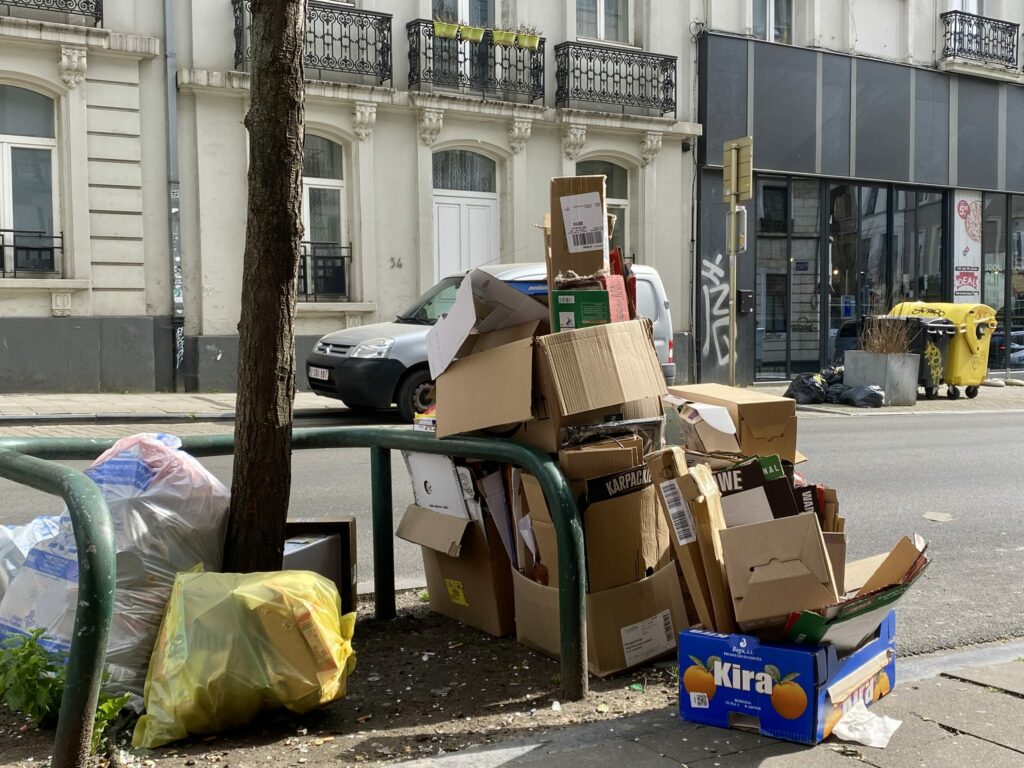
After back-to-back strikes by Brussels bin collectors, multi-coloured waste bags are accumulating on the streets of Brussels to the dismay of the Belgian capital's residents.
While the collection was disrupted in Brussels after the national strike on 12 March 2026 against the Federal Government's cuts, a second three-day strike was announced the following week by waste collection operators. This has left a considerable backlog in some communes.
Schaerbeek is among the worst affected for food waste collection, with Bruxelles-Propreté having warned residents not to leave waste bags outside on Friday.
White bag collections were also particularly adversely affected on Friday in Woluwe-Saint-Pierre, Etterbeek, Koekelberg, Molenbeek, and Woluwe-Saint-Lambert.
Bruxelles-Propreté warned on Friday that it could take "between five and ten days before a return to normal", depending on the different scenarios and the numbers available.
The teams will collect, as a priority, the white and orange bags remaining in the street, and then will remove the yellow and blue bags left. White and orange are prioritised for health reasons.
Yet the piles of rubbish in some cases are quite high, notably in Schaerbeek.
Mohamed, speaking to local media BX1, said he runs a grocery shop, in front of which crates and bags of rubbish have piled up to over a metre high. "It’s disgusting; it’s not at all good for shopkeepers."
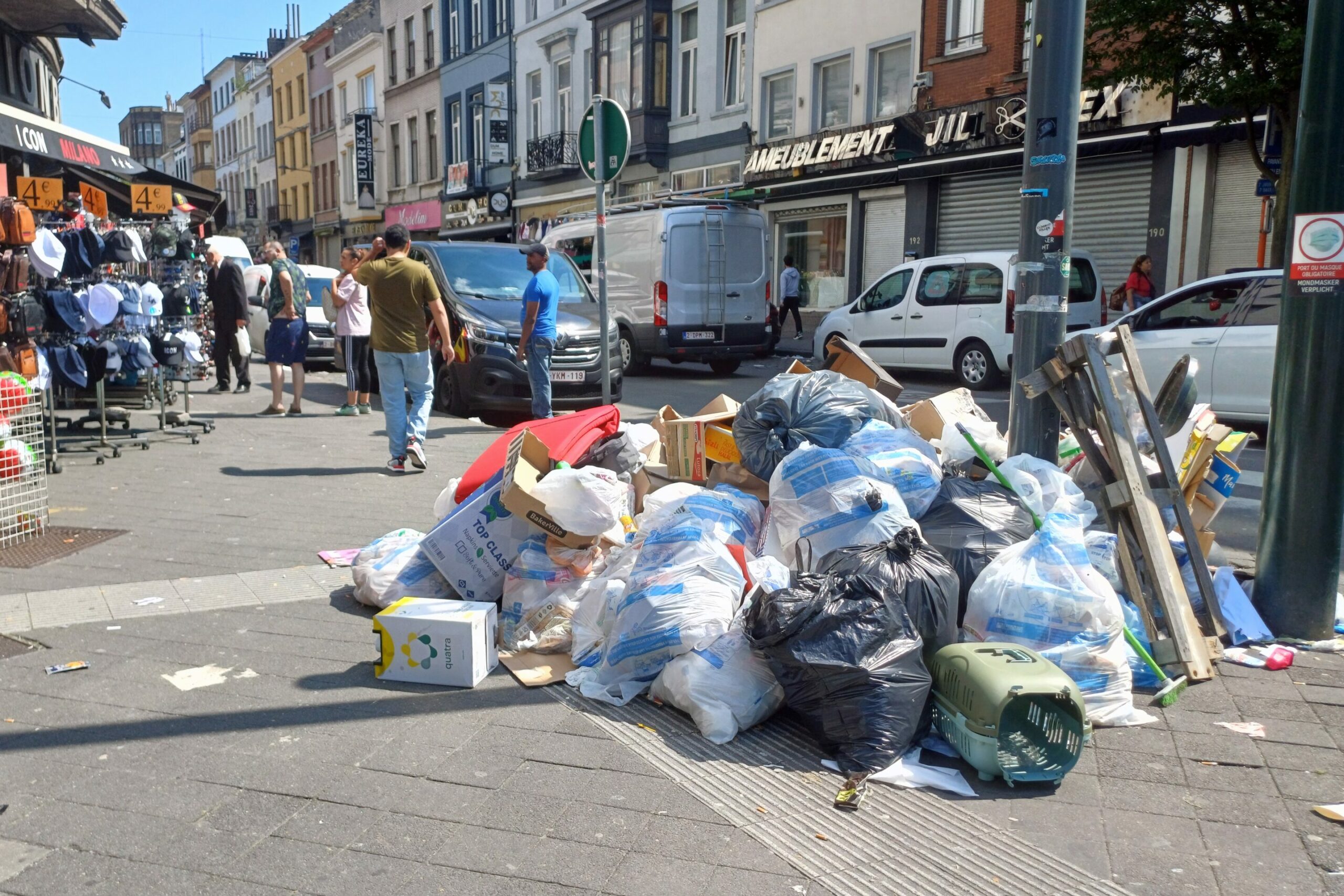
Illustration image shows trash piling up in Schaerbeek last July. Credit: Belga
To avoid this situation, Bruxelles-Propreté had asked residents to keep their blue and yellow bins at home. But for many, this is impossible. "We can’t keep them at home. Not all of us have a balcony or a terrace, or enough space," Nina, a local resident, also told BX1.
A reader of The Brussels Times also contacted the newsroom to speak out about the situation in the municipality, where back-to-back strikes have added to an ongoing cleanliness problem.
"I am a resident of Schaerbeek, and I have literally reached my limit (as have many of us) regarding cleanliness. I cannot just ignore it or find excuses for the public authorities. I want to feel respected by this city, as much as I also respect it," they told The Brussels Times.
'Brussels is being made dirty'
The situation around cleanliness in Brussels is a longstanding debate, with recent strikes by rubbish colle
On Monday, a letter by a the Brussels citizens’ collective '40 Comités', called for cleanliness is an issue that should be addressed as soon as possible.
"Brussels isn’t dirty: Brussels is being made dirty. This situation is not inevitable, but a collective failure."
The committees said that as a result of the poorly functioning waste management, streets are sometimes left dirtier after collection than before.
On Tuesday, one reader contacted us to say that he does not understand why people are not encouraged to use rubbish bins here.
"I've lived in quite a few cities, and what strikes me as weird in Brussels is that it's not mandatory to use rubbish bins," they told The Brussels Times.
"I understand there are some limits when it comes to older buildings, but even outside newly built houses, people just dump the trash in their bags directly onto the ground, which makes them an easy target for rats and birds."
Underground containers?
The new Brussels Minister-President, Boris Dilliés (MR), told The Brussels Times on Monday that penalties for fly-tipping will be strengthened, the waste collection system will be reviewed, and underground containers will be installed.
However, previous Brussels governments have looked into the option of installing an underground waste container system.
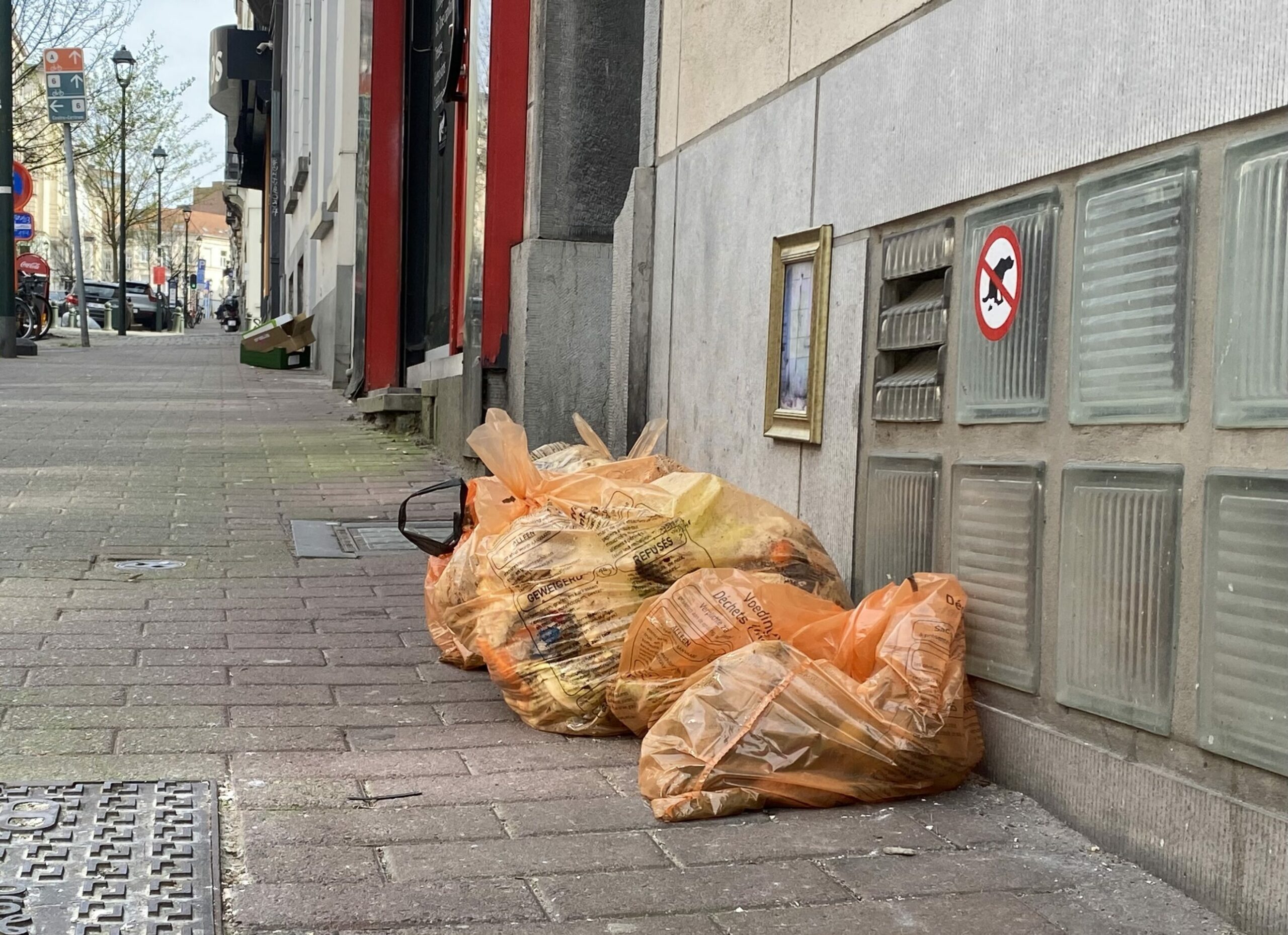
Orange bags out in the street on a Tuesday, when collection day is Thursday. Credit: The Brussels Times
Despite there being 20 projects under consideration (including in Ixelles), the widespread use of this collection method was still found not to solve the problem.
Studies carried out by NGO Fost showed that underground systems do not provide a higher quality of sorting compared to door-to-door collection, according to Bruxelles-Propreté.
It also would not solve the problem of public cleanliness, as, for example, illegal dumping is very frequently observed around underground containers, such as around bottle banks.
In some cases, an underground container could damage Brussels’ subsoil due to waste pollution, but also worsen public infrastructure cluttering.
Changes to the system
Yet the new Brussels State Secretary for Public Cleanliness, Audrey Henry (MR), wants to reduce the amount of waste collection being carried out in Brussels.
According to the proposal by the new regional government, waste collection of yellow bags (cardboard and paper) would only be collected once a fortnight, rather than once a week.
Furthermore, the new government is pushing for white bags (unsorted household waste) to be collected only once a week. In some municipalities, this is already the case, but the state secretary wants to scrap the biweekly schedule in the remaining communes.
Henry has argued that these changes are based on usage patterns and lowering costs due to the pressure to balance Brussels' budget deficit.
These are not yet implemented and will still need to be further developed in consultation with trade unions and staff at Bruxelles-Propreté.
