
The UK and EU took another small step forward on Monday after London's participation in the Erasmus+ scheme was all but confirmed, with deals expected on the UK's access to the EU's electricity market and contribution fund.
The European Council agreed on Monday to open negotiations with London on two agreements regarding the UK's access to the EU’s internal electricity market, and an appropriate UK financial contribution to the EU’s cohesion policy.
Students on both sides of the Channel will also be relieved to hear that, as part of the agreement, the Council also gave its green light for the UK to rejoin the EU’s Erasmus+ programme for 2027 – with a review planned after ten months.
"These decisions undoubtedly mark a significant step in forging a strong, mutually beneficial, and forward-looking EU-UK partnership," said Marilena Raouna, Deputy Minister for European affairs of the Republic of Cyprus, who currently holds the Presidency of the Council of the EU.
"This is the right path," added Sandro Gozi MEP, chair of the European Parliament's EU-UK Parliamentary Partnership Assembly, on Monday. "This step confirms that the political will is there to rebuilt a stable and ambitious path."
What's in the deal?
In May 2025, the UK and the EU pledged a new era of cooperation following years of tumultuous relations driven by Brexit. This included exploring ways to give London access to the EU's internal electricity market.
On Monday, a new step was taken towards the UK’s participation, which will now require it to align its laws to EU rules. This will ensure a level-playing field on the electricity market. The agreement also includes giving the UK access to the wholesale and retail market, providing further opportunities for businesses.
As part of the UK's access to the electricity market, an "appropriate" financial contribution to the EU’s cohesion policy was also agreed by EU leaders.
As a price for access to the EU's internal market, this agreement requires the UK to contribute to reducing economic, social and territorial disparities between EU regions.
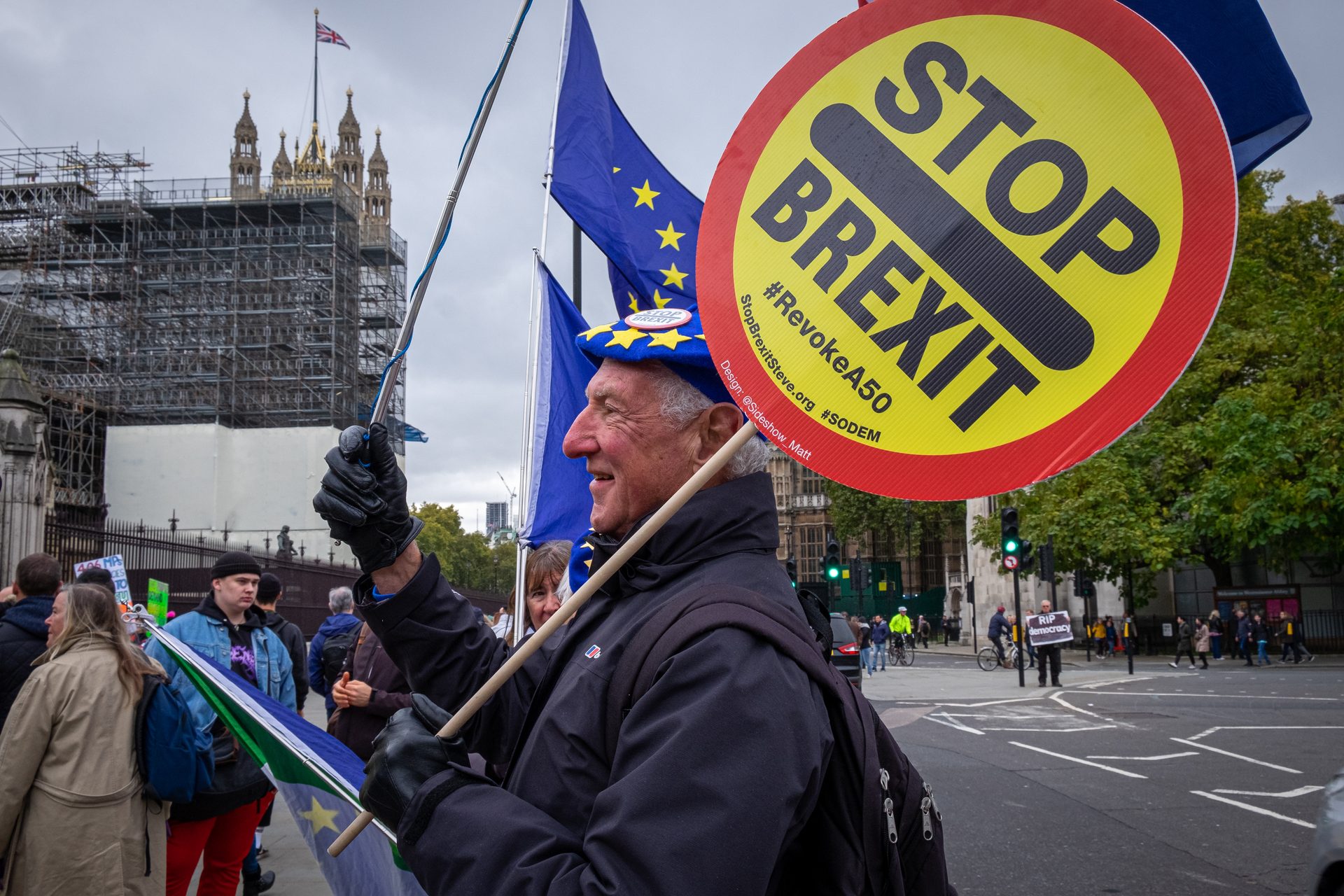
An anti-Brexit protest in London, United Kingdom, Tuesday 29 October 2019. Credit: Belga / Kurt Desplenter
This fee should "reflect the relative size of the UK’s economy, and the proportion of the internal market in which the UK aims to participate." A permanent mechanism applying to the electricity agreement and any further deal giving the UK access to the EU internal market would be established.
Going forward, the EU insists that these two agreements – the internal electricity market and cohesion contribution fund – should "follow parallel paths and enter into force simultaneously."
Erasmus is back
The European Council confirmed its approval of the UK's participation in the Erasmus student exchange, announced back in December, will now need one final approval in London before becoming official from 1 January 2027.
Monday's agreement confirmed its association with the programme in areas such as education, training, youth and sport. It also sets out terms and conditions, including financial ones, for the UK's participation.
Importantly, a review will be carried out after ten months of the UK's participation. This will inform future decision-making on the possible continued participation and establish future terms and financial contributions.
Brexit reset falters?
It comes as a relief after talks on other areas, including the youth mobility scheme, have slowed down in recent weeks, indicating a breakdown in the negotiations and a lack of progress on the so-called reset.
Earlier this month, a UK parliamentary report denounced the UK-EU reset as lacking "direction, definition and drive". These sentiments were also echoed by European Commissioner for trade Maroš Šefčovič, who has called for an "urgent reboot" in reset talks.
The UK Government has fears that the youth mobility scheme (for those aged 18-30) would be perceived as a backdoor for migration.
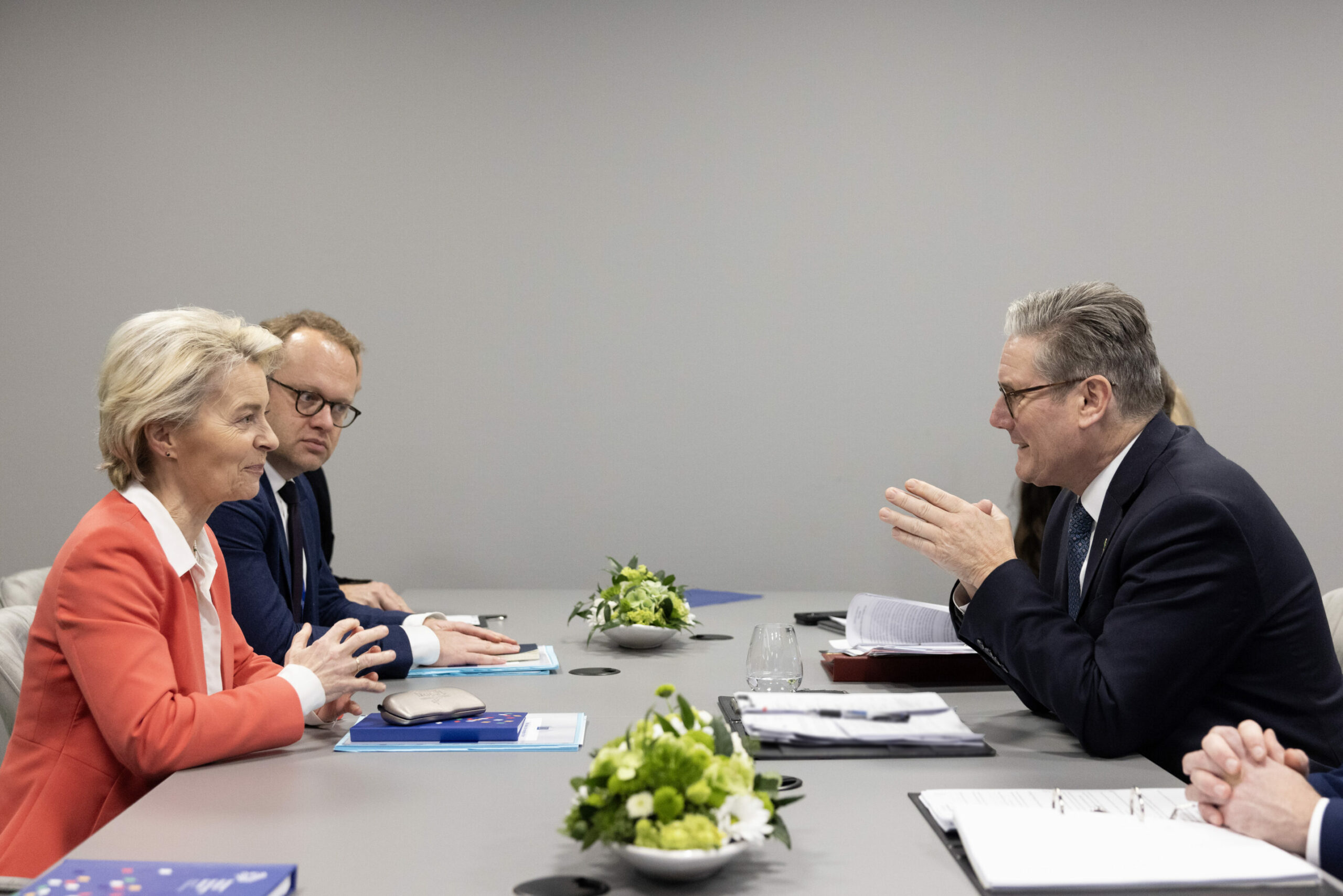
Prime Minister Keir Starmer meets Ursula Von Der Leyen, president of the European Commission, as he attends the European Political Community Summit on 07/11/2024. Budapest, Hungary. Credit: Simon Dawson / No 10 Downing Street
The EU has reportedly offered the EU an "emergency brake" that could be put on the number of people coming to the UK from Europe in the scheme, under terms being offered to Britain by EU negotiators.
This is because the UK has been calling for a cap on the number of students, which the EU rejects.
There are also disagreements over the tuition fees paid by international students in the UK. The UK has rejected EU demands for students to pay domestic fees (£9,535), with EU students currently paying higher international rates, reported at up to £38,000.
The UK's participation in a key EU defence programme, SAFE, is also at risk after talks broke down in November. However, European Council President António Costa said last week he was confident a deal would be found.
A second UK-EU summit is planned for July, with fears growing that, amid growing geopolitical turmoil, the two sides can pick up some political momentum.
Following Monday's announcement, the Commission will now open negotiations with the UK on the two agreements in question. Once negotiations are finalised, the agreements will have to be endorsed by the Council before they can enter into force.
