
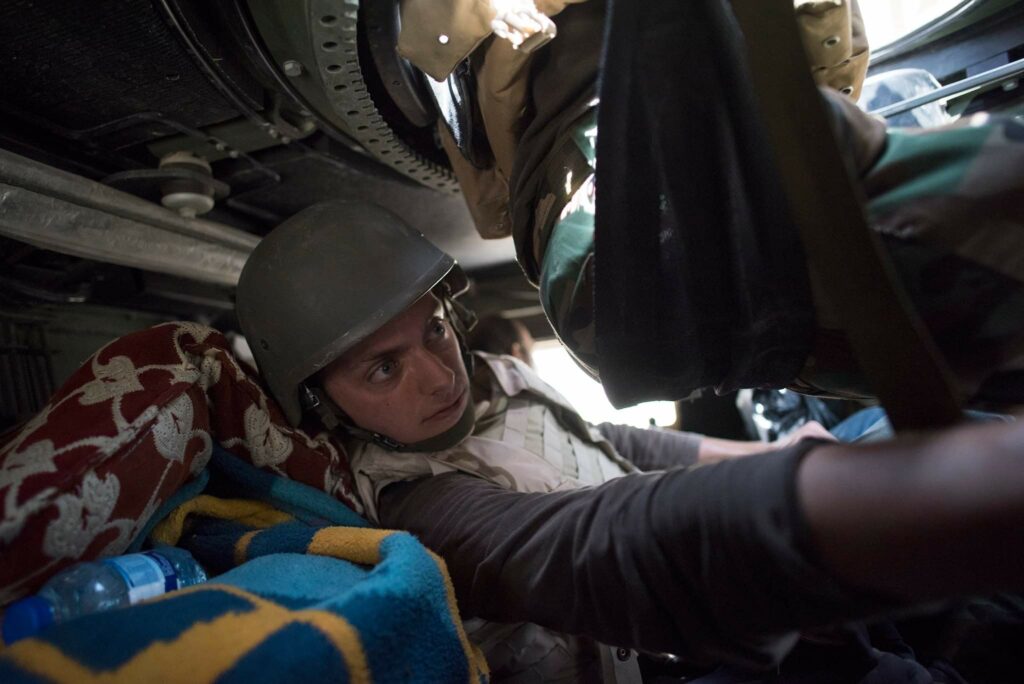
Wilson Fache, 33, is a luminary in war reporting. Today, it is becoming almost impossible for him to access certain conflict zones. "People tell me they don't trust the media anymore, but they trust reporters who are there," he tells The Brussels Times.
Which raises a question: what happens to journalism when access to the field becomes impossible?
How drones reshape war reporting
September 2025, Kherson, southern Ukraine. The Dnipro River splits an almost deserted city transformed into a drone training ground by Russian troops.
Fache and other press members are ensconced in a hospital, a few kilometres from the war-torn waterway. His fixer goes out for a smoke. He barely makes it past the threshold when someone shouts at him, "GET BACK INSIDE, NOW!"
The Russians have been using the area as a shooting range where drone pilots aim at any member of the population left, including the press.
Entering certain zones is signalled by traffic lights; red means heavy drone activity, thus no entry. Green means crossing is "safe".
Roads are covered with nets, resembling fishing nets, to prevent drones from getting through. Russians have found devious ways to infiltrate the nets by sending a drone to set them on fire.
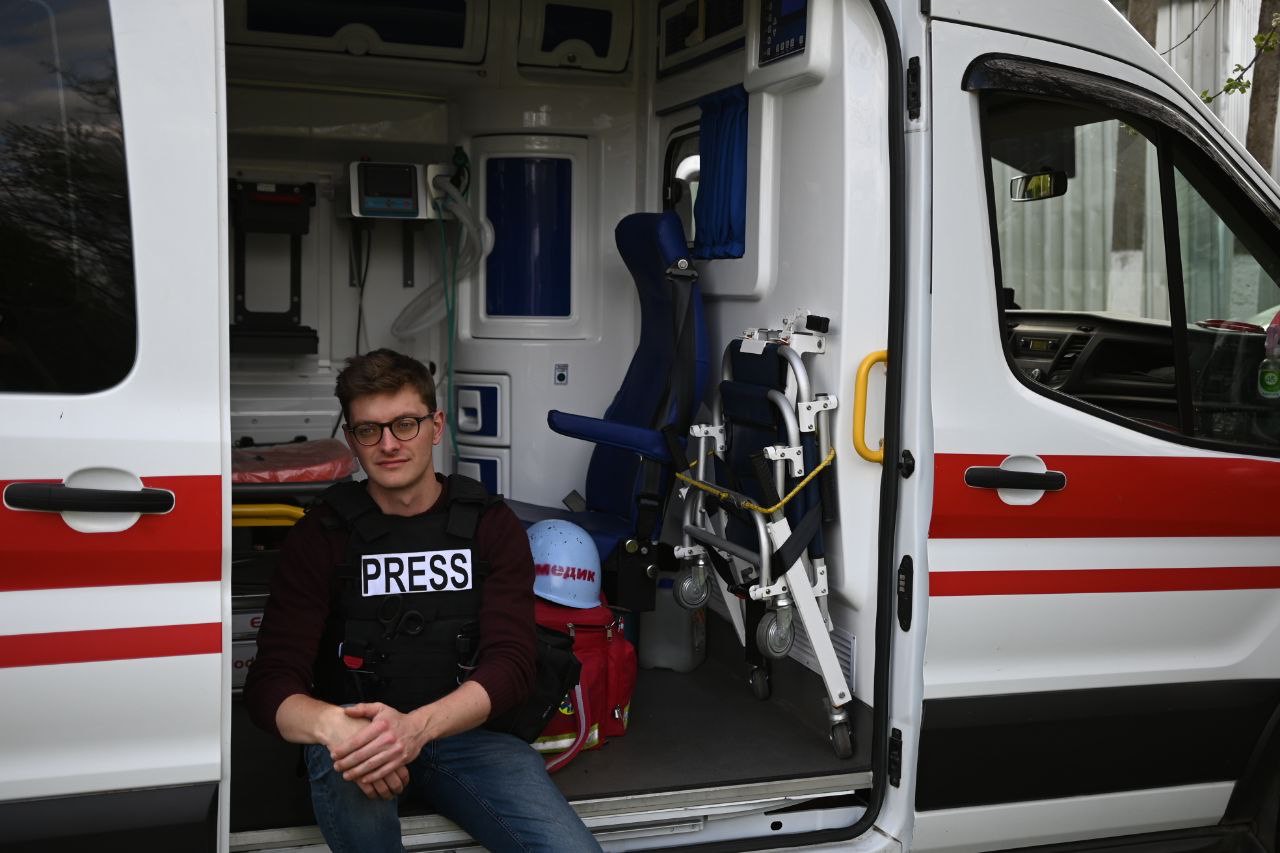
Credit : Justin Yau
Tiptoeing for 10km
First-person view drones (FPV) fly through net gaps, striking racing vehicles. Although Ukrainians have countermeasure jamming systems, Russians have developed tethered drones, a type of aerial vehicle connected by a 30km fibre-optic cable capable of being operated from afar.
Fache recalls a conversation with Toma Istomina, deputy editor-in-chief of the Kyiv Independent. She tells him a story about one of her reporters who wanted to reach a zone near the frontline. The only way to get there was to tiptoe for about 10 kilometres, while carrying a shotgun, because "it is too dangerous to go by car, as vehicles are too easily targeted by drones."
"A friend of mine, Anthoni Lallican, whom I worked with in Ukraine, was killed by a drone on 3 October 2025 while he was around 20 kilometres from the frontline," Fache says.
To this day, the Ukrainian side of the snowbound frontline is a "kill zone" stretching up to 20 kilometres wide, where drone threat is shaping war reporting.
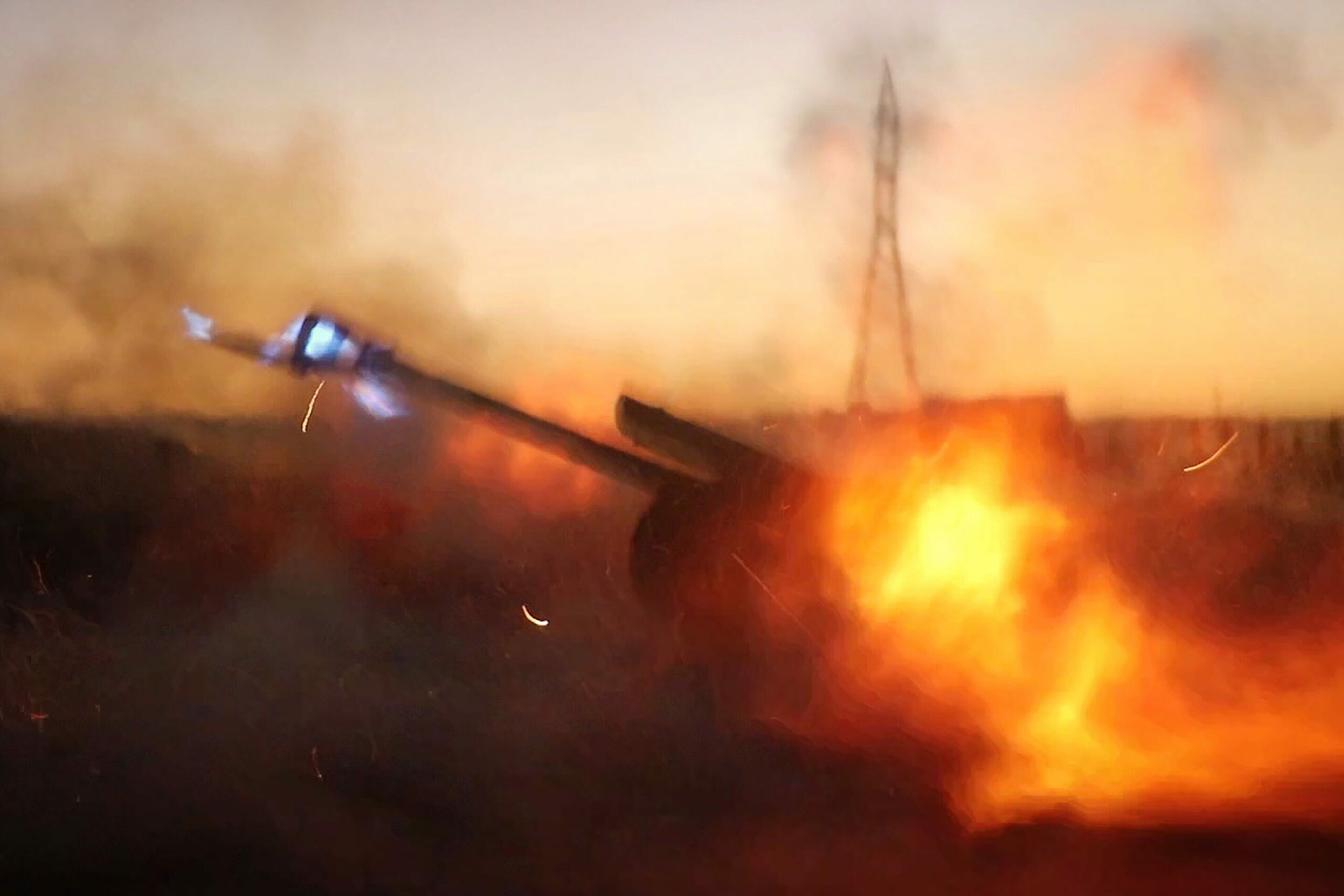
Credit : Wilson Fache
'Catastrophic reality'
During the battle of Mosul, Iraq, in 2016, and even more so in 2017, Fache was a correspondent for several international media. He explains how ISIS pioneered the militarisation of small commercial drones. Cheap and easily accessible online.
"They added explosive charges, either turning them into kamikaze drones or drones capable of dropping an explosive device, like a grenade, onto their targets."
Now, these military drones are being produced on an industrial scale, he explains. Smaller and "difficult to detect and to shoot down".
"That is the catastrophic reality of a war reporter today," Fache says.
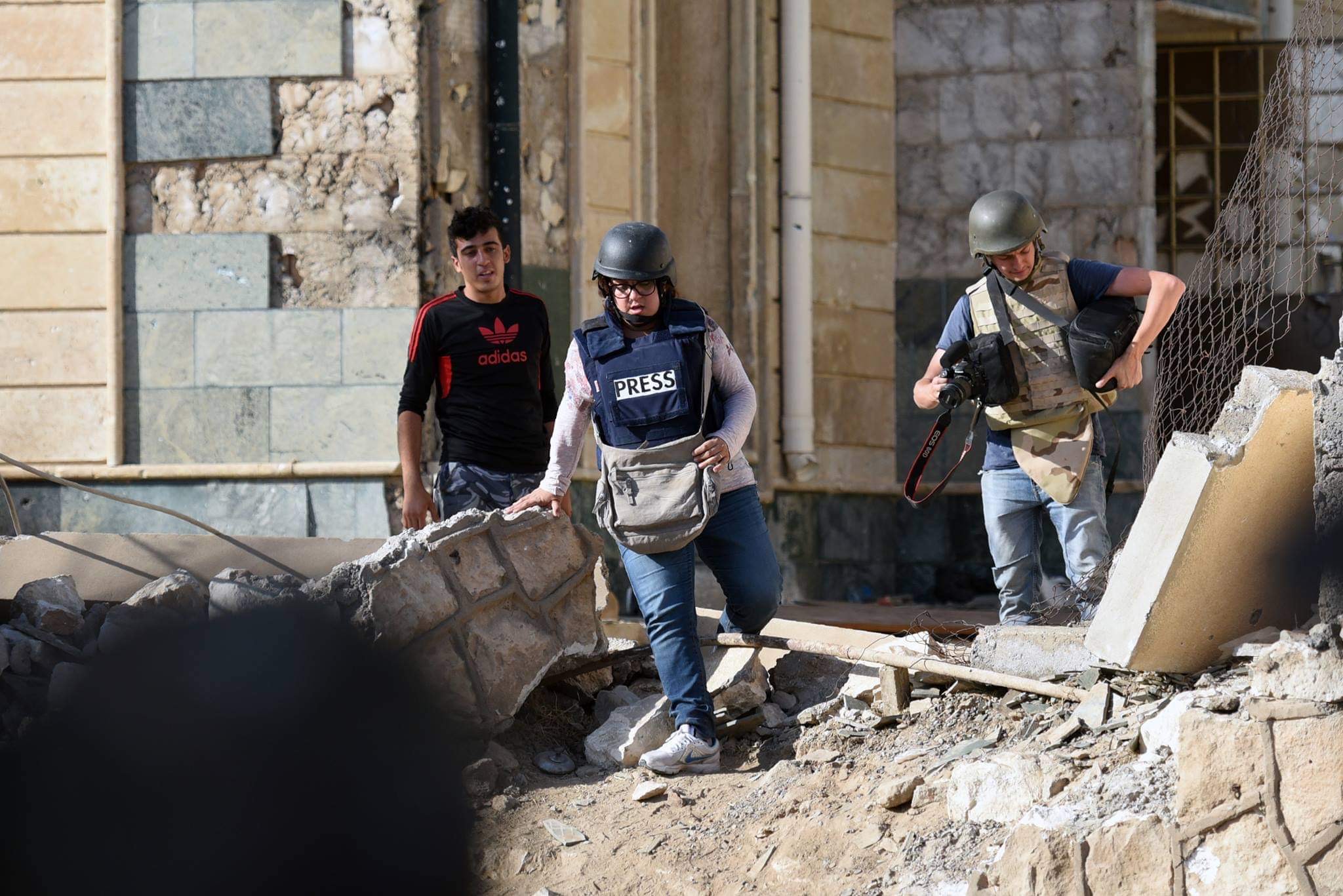
Credit: Mohamed Elshahed
Venturing into besieged areas of conflict today has become almost impossible, he explains. War zones are off-limits, which is "dangerous for freedom of press."
Before 7 October 2023, Fache claims, journalists operated freely in Gaza. "It was actually interesting to work there as a journalist because, despite what some people think, we operated with almost total freedom," he says.
"There were attempts by Hamas to control the press and foreign journalists, but they never really worked. They tried to ban me from Gaza twice."
The first time was in 2019. Fache had written an article for Vice about drug traffickers in Gaza. "Hamas did not appreciate it, so they prevented me from returning." He managed to find a good fixer when negotiation was plausible. "I was able to go back and continue working there."
After 7 October, foreign reporters have been unable to enter Gaza independently, except Clarissa Ward from CNN. "Only local Palestinian journalists have been able to do their work, but they have been targeted and killed for it."
For decades, the idea of war reporting was built on proximity. The closer you were to the frontline, the closer you were to the truth. Reporters took risks to bear witness, to document, to verify, Fache explains.
Now, in many of the world's most critical conflicts, this premise no longer holds. Because the problem is no longer just getting close, "it's getting in at all".
