

In Antwerp's diamond district, a deal can be sealed with nothing but a handshake, and a robbery can be carried out by a child. For veterans like the goldsmith and diamond vendor Yosef Degan, the business is a balance between the artistic joy of creation and the constant vigilance of operating in a "bazaar" of high-value gems.
The Antwerp diamond district has been featured in movies like Guy Ritchie's 2000 film “Snatch” or, most recently, in the 2023 Israeli-Belgian Netflix television series “Rough Diamonds.” But is it portrayed fairly?
In order to find out, the Brussels Times explored one of Belgium's oldest and most mysterious claims to fame, Antwerp's diamond district.
How the district came to be
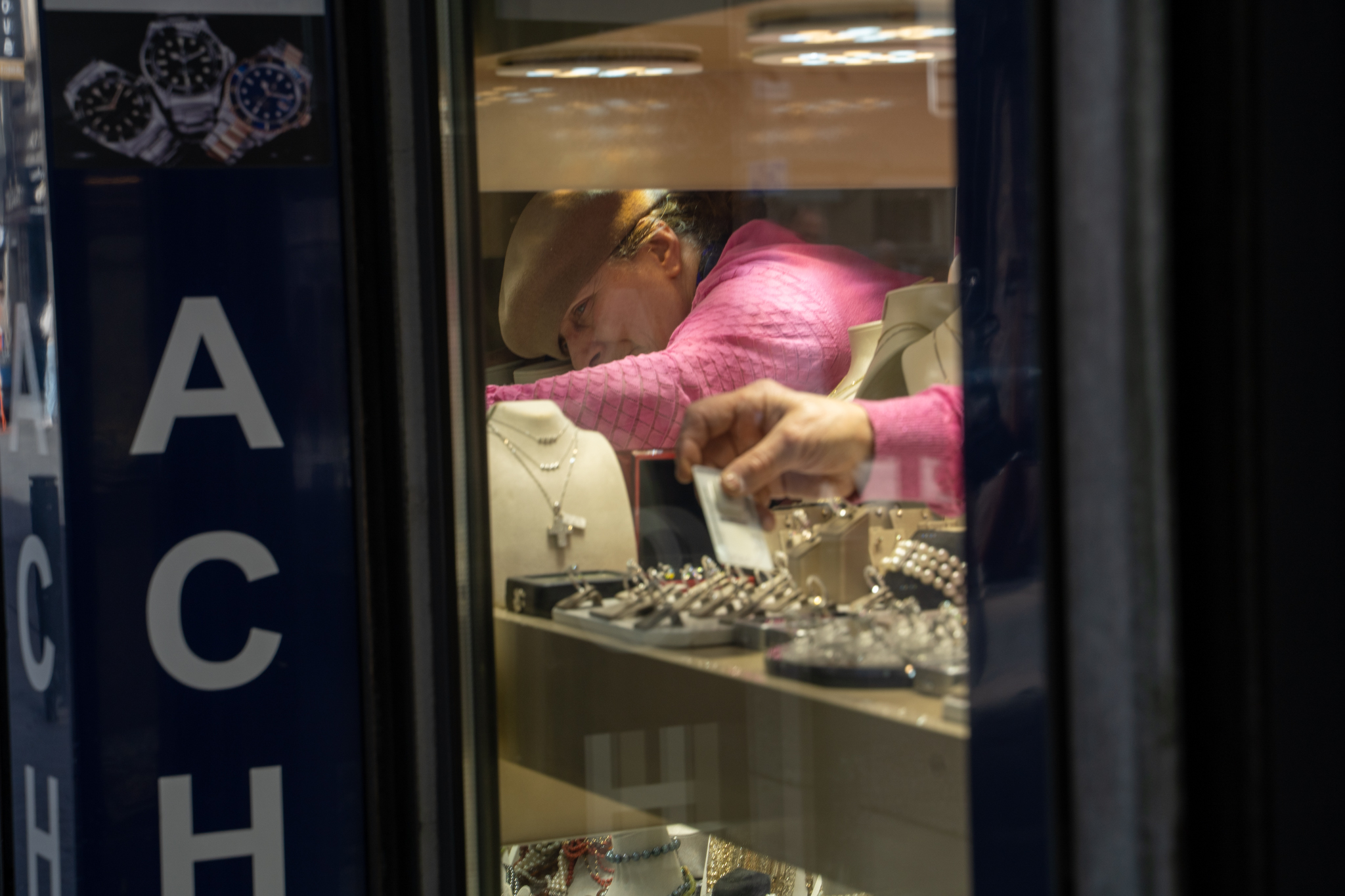
A shopkeeper adds rings to a display in Antwerp's diamond district. Credit: Vicente Torre Hovelson/ The Brussels Times.
Antwerp’s diamond legacy started in 1447 with early trade regulations and anti-counterfeiting laws. It reached a turning point in 1476 when Lodewyk van Berken invented the scaif (a polishing wheel) that enabled the ability to make multi-faceted cuts that would eventually dominate European high society.
By pairing the early legal protections, innovation, and the city's unmatched access to the North Sea via the Scheldt river, it was nearly impossible for other cities to compete.
After over 500 years, roughly 85% of the world’s rough diamonds (natural uncut diamonds), 50% of the polished diamonds (a diamond that has been cut, shaped and smoothed), and 40% of industrial diamonds (small diamonds designated for industrial use, such as cutting) end up passing through Antwerp’s diamond district.
The ups and downs of being a diamond district shop owner
Yosef Degan has been in the diamond business for 29 years and owned his own shop, “Be Very Rich,” a business which has been tucked away in a retail arcade next to Antwerp's central station for the past 20 years.
Alongside trading diamonds, Degan is a goldsmith and specialises in creating custom pieces for clientele from all over the world.
“My favourite thing about this business is creating a necklace, bracelet, or ring that gets sold right out of the window. I take it as a compliment that someone wants to buy my work. It’s also very satisfying when a client has an idea for a piece, and I can make their idea come to life.” Degan explained.
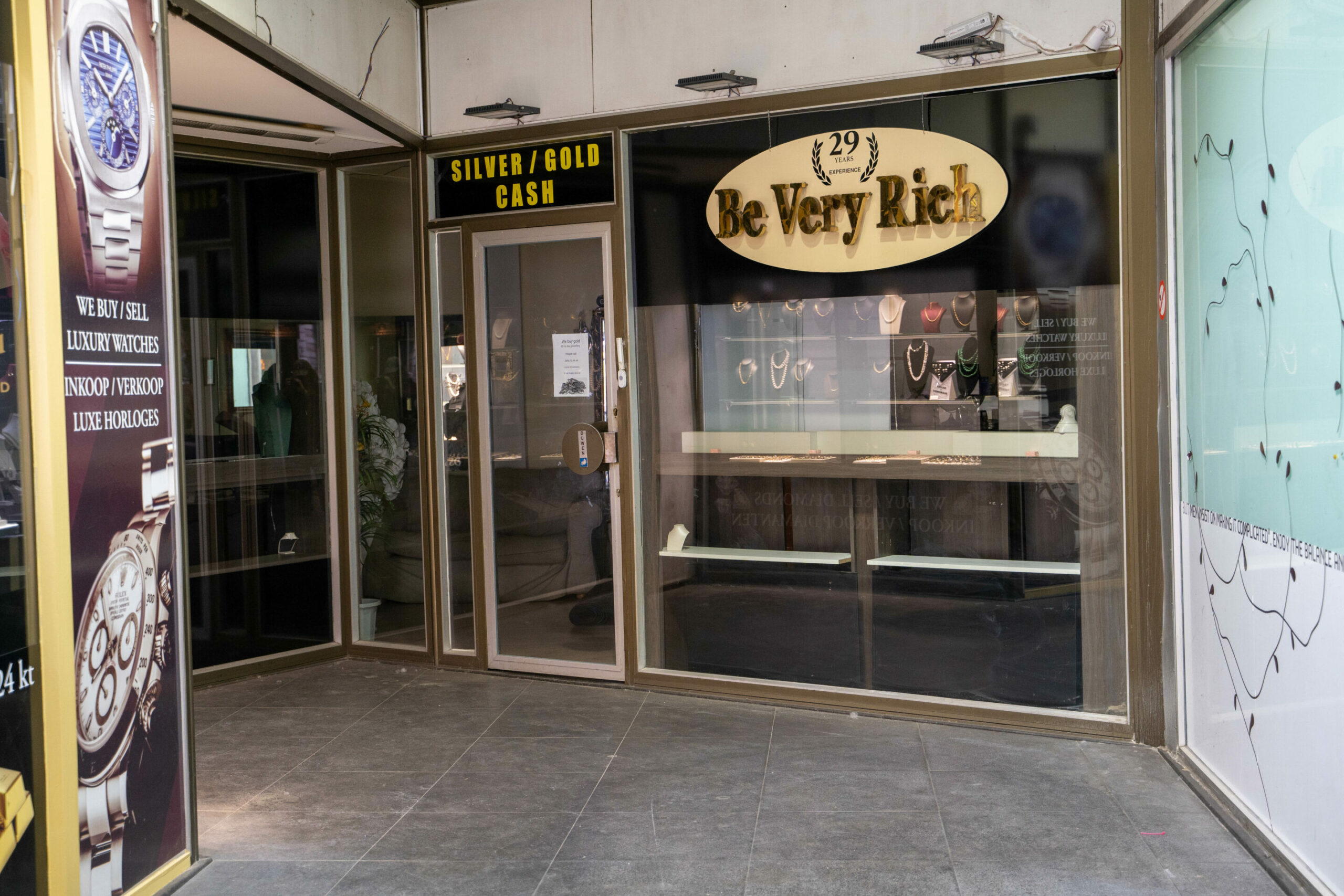
The Be Very Rich Shop in Antwerp's diamond district. Credit: Vicente Torre Hovelson/ The Brussels Times.
Although he loves his job, there are also a lot of dangers to dealing with diamonds. Degan explained that he has to take a lot of security measures when it comes to his shop.
“When you’re dealing with diamonds and gold, you have to be very careful with who you bring inside the shop. You have to be safe. Okay, there is an alarm system, there is a camera, but they don’t guarantee your safety. If I see a stranger and I don't like his face, I tell them: “I’m sorry, I’m closed.” I have to, it's dangerous not to trust your gut in this business, Degan said.
Despite all of these precautions, he explained that he has been the victim of a robbery, not a violent one, but a robbery. Degan had opened the lock on his door for a family to come into his shop, and while the parents were speaking with him, their two small children robbed his display window, stealing thousands of euros' worth of diamond jewellery.
“It happened really quickly, like magic. They took it easily from the window. It was really strange, but it was my mistake; you always have to watch.”
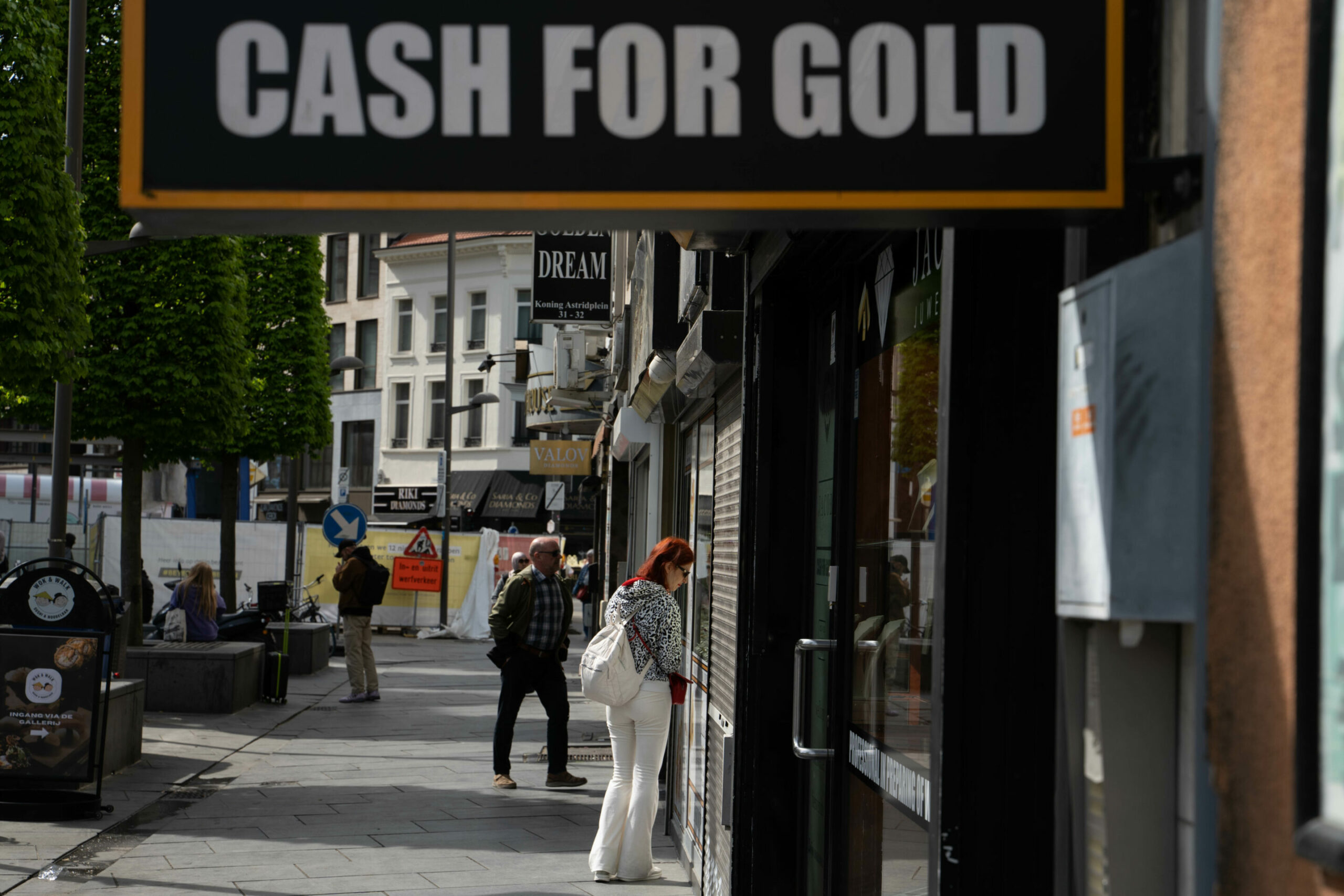
People window shopping on the street where "Be Very Rich" is located. Credit: Vicente Torre Hovelson/ The Brussels Times.
The key to success in the diamond business
“Reputation is extremely important in this business, because there are many competitors, and you have to strive to be the best. Since I’m not only a seller like other people, I stand out a bit more,” Degan said, hinting at the fact that since he creates custom pieces and is a goldsmith, he has an edge on his competition.
He described that in all of his years working in the diamond district, most of the people that he has seen go out of business have been those who either don’t give fair prices or provide low-quality products. He told me that word spreads fast, and if you employ poor business practices, you won't last long in Antwerp.
One of the reasons Degan chose to stay in Antwerp rather than going to one of the other diamond trade hubs, such as Dubai, Mumbai, New York City, or Tel-Aviv, is simply because of what a household name Antwerp is in the business.
“The reason that I opened my store in Belgium is that I’ve been here for over 30 years, and I learned the business here. Antwerp has given me both great clients and friends. Plus, there are a lot of shops, we are all together, sort of like a bazaar, that's why people come from all over the world to shop or work here, it's special," he said.
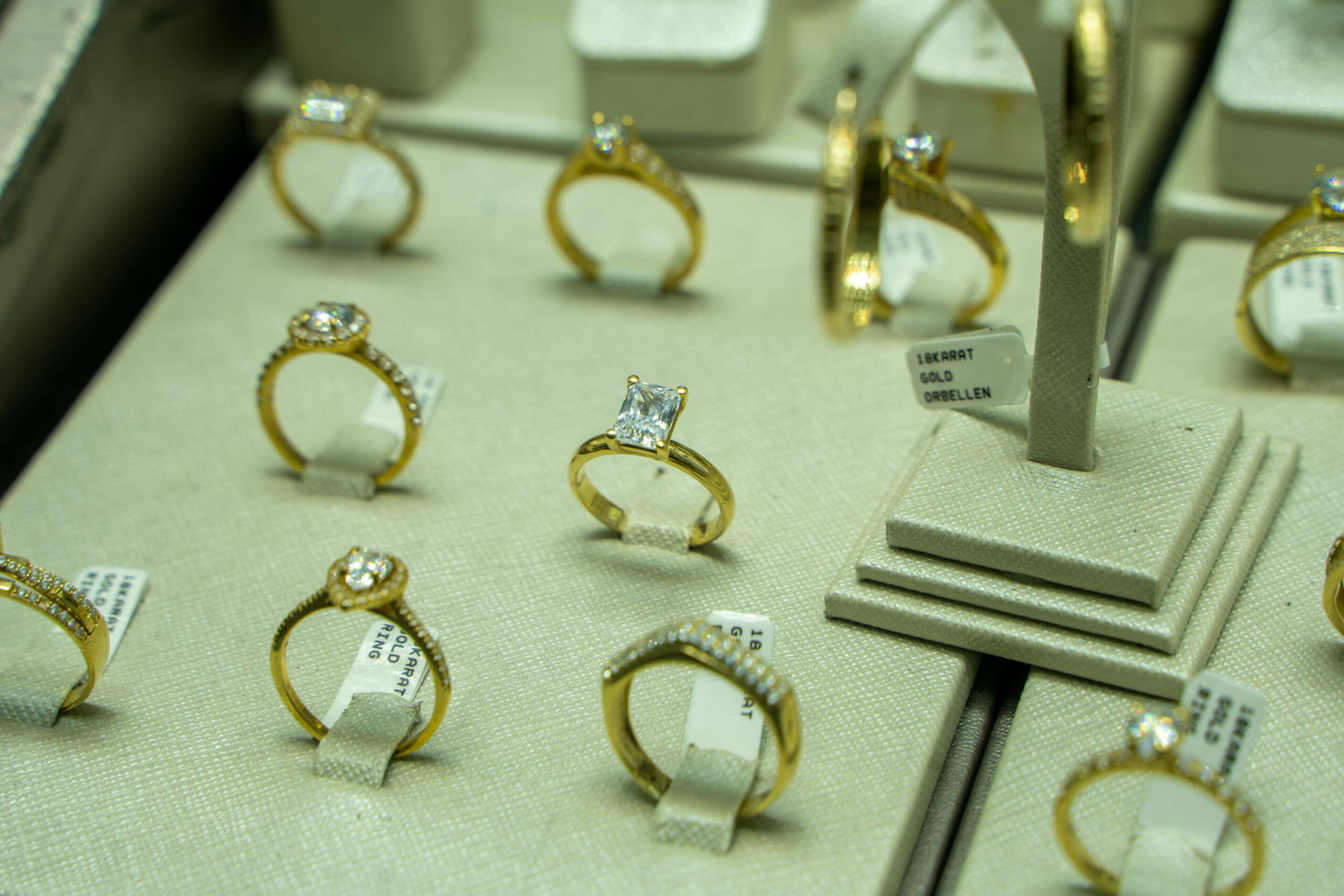
Diamond rings in a display case in Antwerp's diamond district. Credit: Vicente Torre Hovelson/ The Brussels Times.
Some methods to spot fake diamonds
Although there is a long history of diamond scams, each year the fakes get better and better; some even pass the rudimentary tests. However, Degan shared a few simple tricks to tell if the diamond is real – even as a non-expert.
All you need is a piece of paper and a pen. You draw a small line or dot on the piece of paper and place the stone on top of the line you’ve drawn.
If you can see the dot through the stone, it is most likely glass (or a synthesised material like cubic zirconia); this simple trick could save a buyer from a very expensive mistake. It is important to note that with some diamond alternatives, such as moissanite, this trick doesn’t work, so it's important to try to inspect the stone using multiple methods.
Another method to see if a diamond is real or not is the glass of water method. A real diamond is very dense, so it will sink to the bottom; a fake might float on top or hang somewhere in the middle of the glass.
If the stone is attached to a ring or some other piece of jewellery, you can shine a black light on it, and since about 30% of diamonds glow blue, if the stone is glowing green, yellow or some other colour, it might be fake.
The last notable and simple way to check a diamond's authenticity is the breath test. Breathe on the diamond, and if the perspiration from your breath clings to the stone its definitely fake since fog will dissipate off of a diamond almost instantly.
“I also teach clients or vendors how to tell the difference between fakes and real by the colour, and can even show them how to properly use a diamond loop (a special eyepiece to examine diamonds,) Degan said, explaining how he hosts workshops for people wanting to learn how to authenticate diamonds.
