
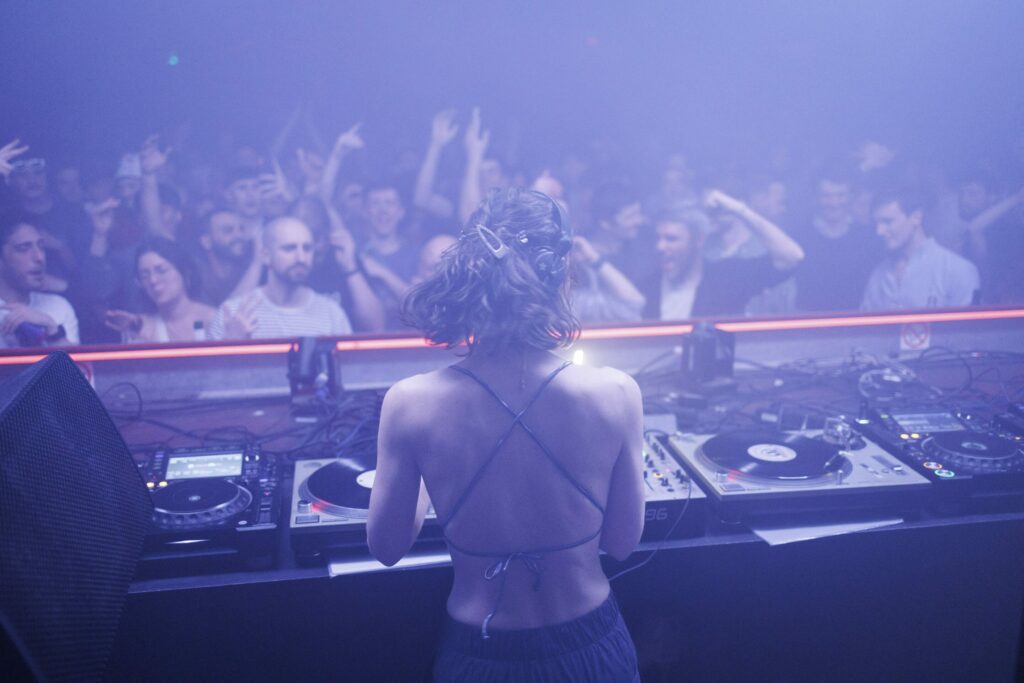
Brussels nightclubs are set to receive stronger protection from complaints by new neighbours who move in next door and then complain about the noise.
The Regional Planning Committee of the Brussels Parliament approved measures on Monday that aim to better protect disputes between nightclub establishments and new residents.
The new rules will force anyone who comes to live within 20 metres of a nightclub to take measures against noise pollution themselves. This includes either buying, building or renovating.
The law only applies to dedicated club venues and does not cover community halls or occasional events.
Once fully approved by the Brussels Parliament, it will be the owner’s responsibility to pay for insulation costs if they move next door to a club.
Developers and landlords will have to inform buyers and tenants if a property is close to a nightclub, so residents are aware of possible noise in advance. Equally, newly-opened nightclubs must also take steps not to disturb residents with noise.
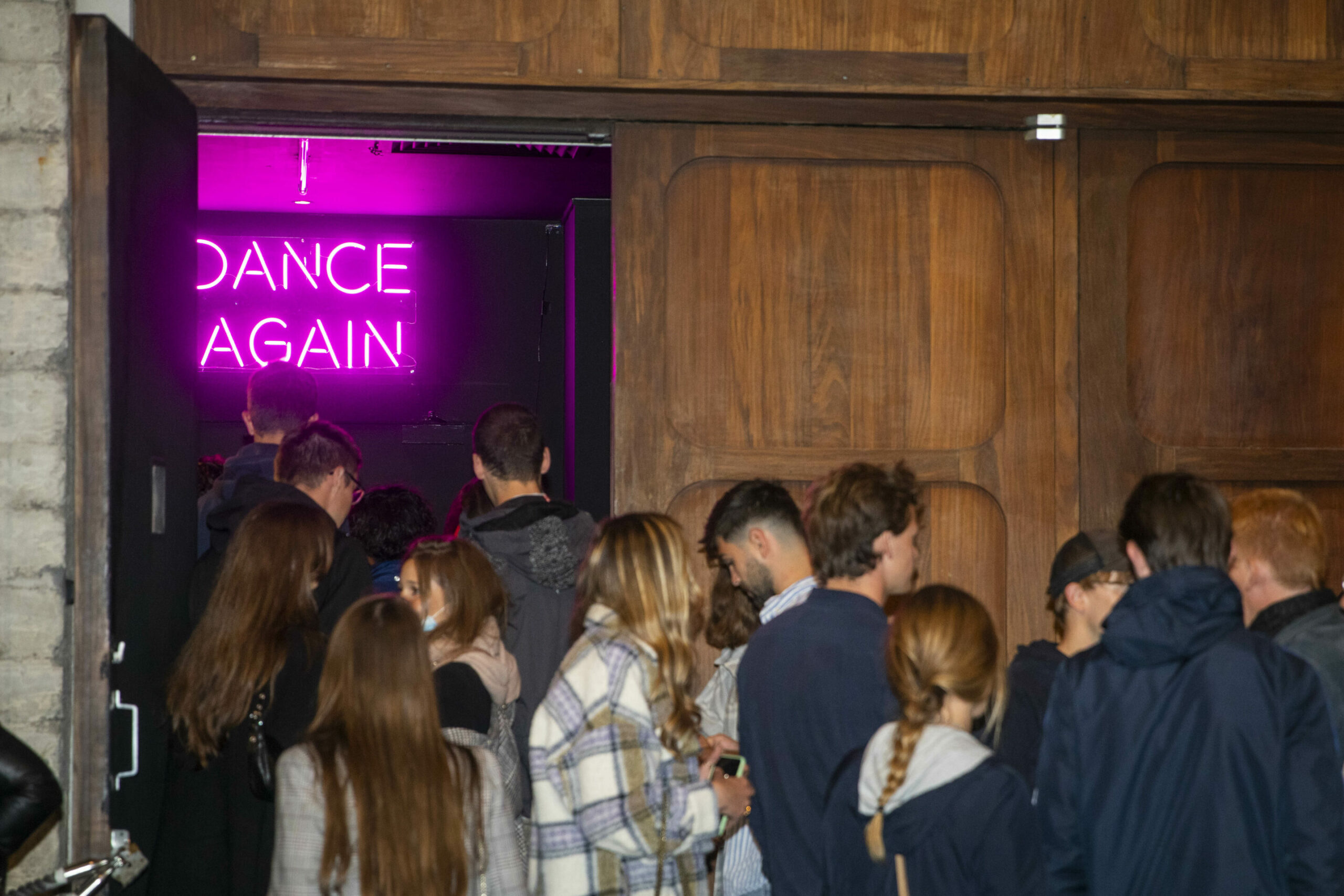
Illustration shows people queuing outside a nightclub in Brussels, Friday 01 October 2021. Credit: Belga
The policy is rooted in the agent-of-change principle, as pioneered in other cities such as London, modifying the rules on noise pollution and redistributing responsibilities between residents and nightlife establishments.
It is designed to protect existing nightlife venues (clubs, bars, live music venues) from noise complaints made by new residents in the area.
In Brussels, this has been championed in particular by regional MPs Pascal Smet (Vooruit) and Anne-Charlotte d’Ursel (MR) – although Smet insists there is more to be done.
More steps needed
"We’re not going to save the nightlife sector in Brussels here, through this measure alone," Smet told the Brussels Parliament committee on Monday.
"The first step taken was its recognition as intangible heritage. Now, we’re taking the second with the Agent of Change, but no doubt there are still other measures to be taken. It's not the definitive solution."
Clubs such as Spirito and La Cabane have regularly run into problems in recent years due to complaints of noise pollution, with the former set to close soon and the latter having recently closed.
Iconic Brussels nightclub Fuse, which turned 30 in 2024, was forced to temporarily close in 2023 after a complaint from a neighbour in the house next door. According to Bruzz, the neighbour had moved in 16 years after the club was first opened in 1994.
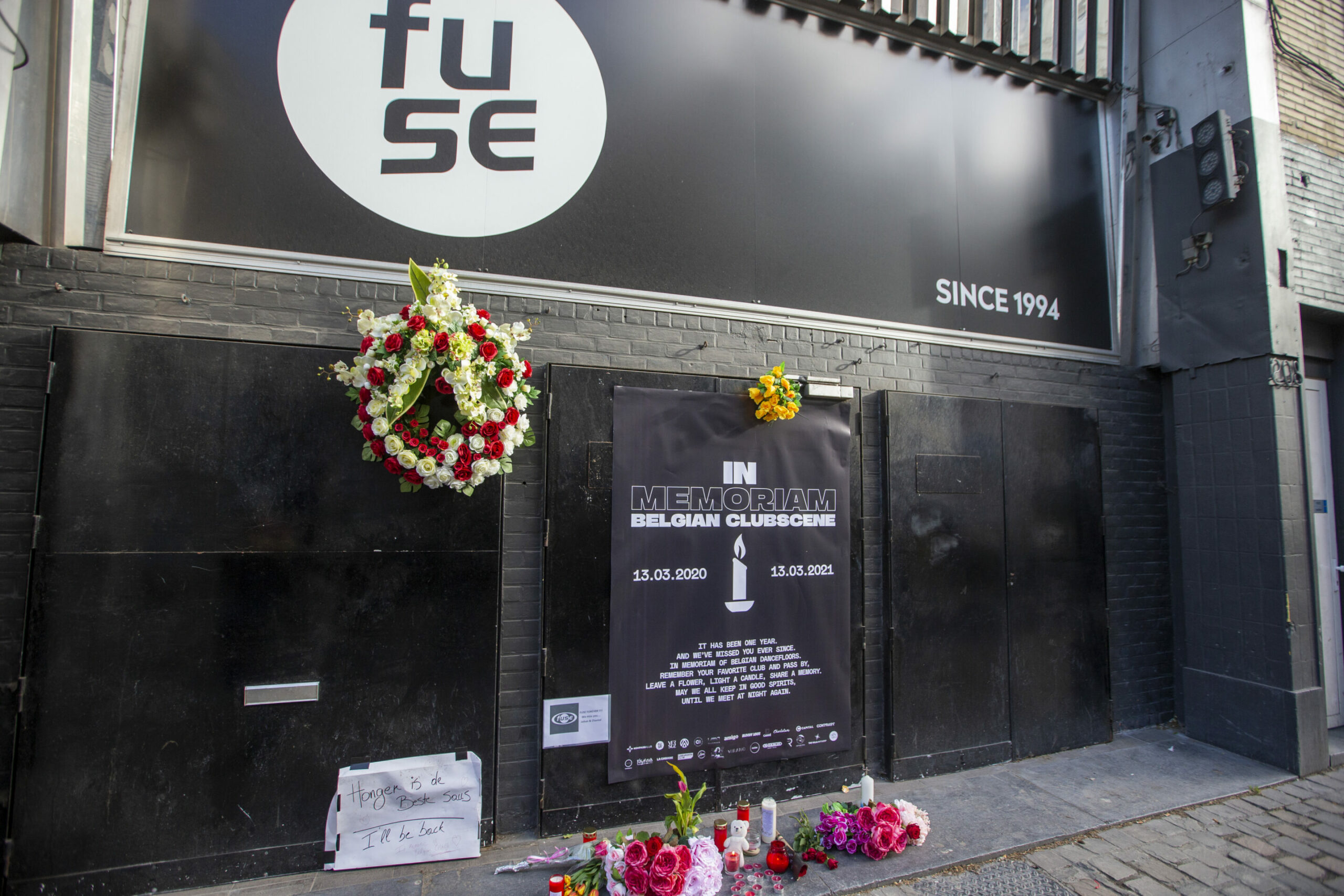
An illustration picture shows flowers and an 'In Memoriam' sign for the Belgian Clubscene at the entrance to Brussels' nightclub, during A symbolic moment of remembrance of the nightclubs one year after the closure, in Brussels, Saturday 13 March 2021. Credit: Belga / Nicolas Maeterlinck
Indeed, MP Pascal Smet wants to avoid these situations in the future, and protect an important aspect of both cultural and economic importance to the city, which has seen the recent closure of Reset, Spirito and La Cabane.
Behind the crisis, a combination of housing regulations, public subsidy cuts and challenging post-Covid economic climate are reasons widely understood to be behind the problem.
"Brussels is clearly facing a nightlife crisis," Morgan Logé, a project manager at the Brussels by Night non-profit, told The Brussels Times in December, after the spate of nightclub closures. "What we are seeing today is the result of several structural issues converging at the same time."
"If nothing changes, there is absolutely a risk of more closures. While Fuse, C12, Umi, and Mirano managed to invest heavily in compliance and community work, no venue is immune," Logé explains.
Brussels by Night, a non-profit which lobbies for favourable regulations for the nightlife sector, has been calling for the introduction of the agent-of-change for some years.
In 2023, the Brussels-Capital Region recognised the nightlight scene as living intangible heritage amid the fallout from the Fuse debacle, but many believe more needs to be done to protect this vital sector.
