
The Belgian food industry remains its largest industrial sector, but its competitiveness is under threat, the sector federation Fevia warned on Tuesday.
On the one hand, there's growth in sales and intra-European exports, and on the other, slowing job growth and fears of relocation.
Last year, the food industry's turnover rebounded, reaching €85.1 billion (+2.5%), driven by intra-European exports (+6.2%). However, this figure remains relatively low, slightly higher than in 2015.
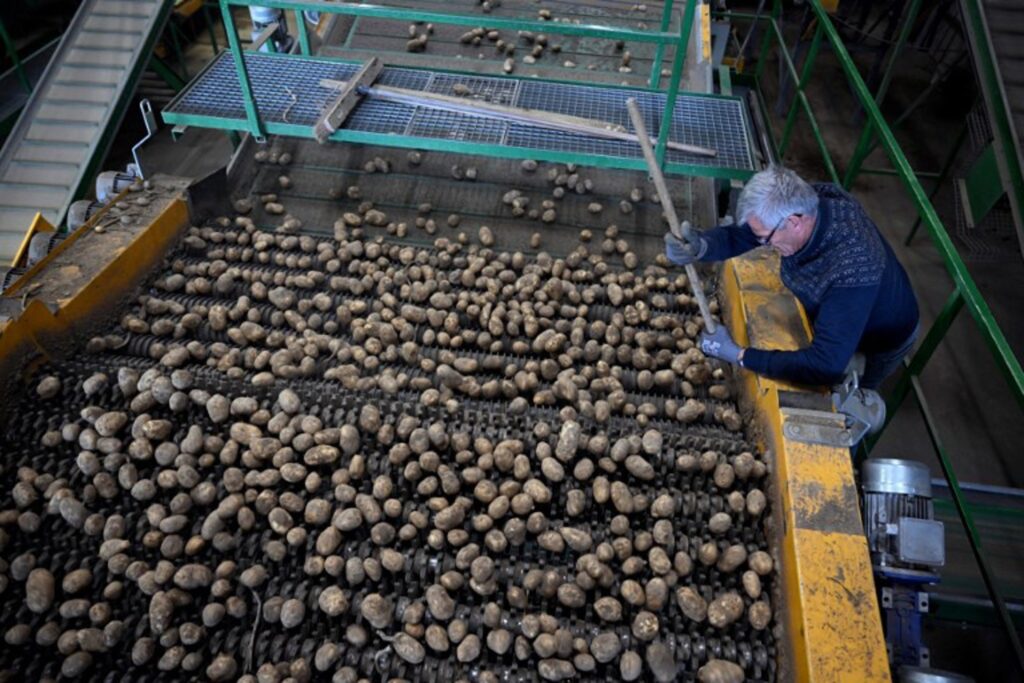
Overall, sector exports reached €42.4 billion in 2025 — a 4.7% increase year-on-year. Chocolate and dairy products performed well, while processed vegetable products, particularly potato items, struggled.
Outside of Europe, the United States remains the leading export market for the Belgian food industry, far ahead of China and Saudi Arabia.
Despite tariffs imposed by President Donald Trump, exports to the U.S. grew by 9%. However, this is slower than the 15% growth seen in 2023 and 2024, according to Fevia economist Carole Dembour. "Some businesses absorbed the tariffs, which dented their profitability," she said.
Employment in the sector reached 102,779 direct jobs at the end of the year, virtually unchanged from 2024, with a modest growth rate of 0.3%. This represents the weakest growth in employment for the sector in a decade.
Fevia warns that these overall positive figures mask troubling trends. Domestic demand has stagnated since 2022, cross-border shopping remains high, and foreign products are gaining market share in Belgian stores.
Goods from the Netherlands, for instance, accounted for 16.1% of supermarket offerings in 2023, up from 7.7% in 2010.
French competition is also increasing, with supermarket chain Leclerc now delivering to homes near Mons.
The conflict in the Middle East has further worsened the sector's profitability, adding to challenges already faced by businesses.
Ann Wurman, Fevia's CEO since late 2025, fears that declining competitiveness could push production to cheaper countries, impacting jobs, investments, and Belgium's entire agri-food supply chain.
The federation is calling for action in response to these early warning signs. It is urging against any increase in VAT on food and beverages and is advocating for a reduction in packaging taxes and excise duties.
Fevia is also raising concerns about labour costs that are 23% higher than the average in neighbouring countries and about excessively high energy prices.
The Belgian food industry is at a tipping point, warns Ann Wurman. "That's what we're hearing on the ground. Restructuring and relocations are in the works, and that worries us."
