
Belgium’s fragmented governments and responsibilities are seriously weakening the country’s response to tackling organised crime, particularly in anti-money laundering, which experts believe should be the focus to tackle drug trafficking.
Belgium remains a major hub for organised crime in Europe, thanks to the use of the Port of Antwerp as a vital cocaine smuggling point, with rival gang violence often spilling out into the streets.
Just last week, a series of explosions outside houses and a Shisha cafe in the Brussels municipality of Saint-Gilles were believed to have targeted property linked to feuding rival drug gangs. This proved to act as a reminder for the Belgian authorities that criminal networks launder money with apparent ease in Brussels and elsewhere.
Indeed, a timely new report by the London-based Royal United Services Institute (RUSI), the world's oldest defence and security think tank (set up by the Duke of Wellington in the 1830s), argues that Belgium must allocate more resources to anti-money laundering to clamp down on rampant organised crime activity.
"As a criminal, if you can avoid the bank in Belgium, you walk free without any problem of detection," said one participant in a workshop organised by RUSI on the topic.
The think tank brought together Belgian policymakers and law enforcement officials in March 2026, to research the report Strengthening Belgium’s Financial Response to Organised Crime, released on Wednesday.
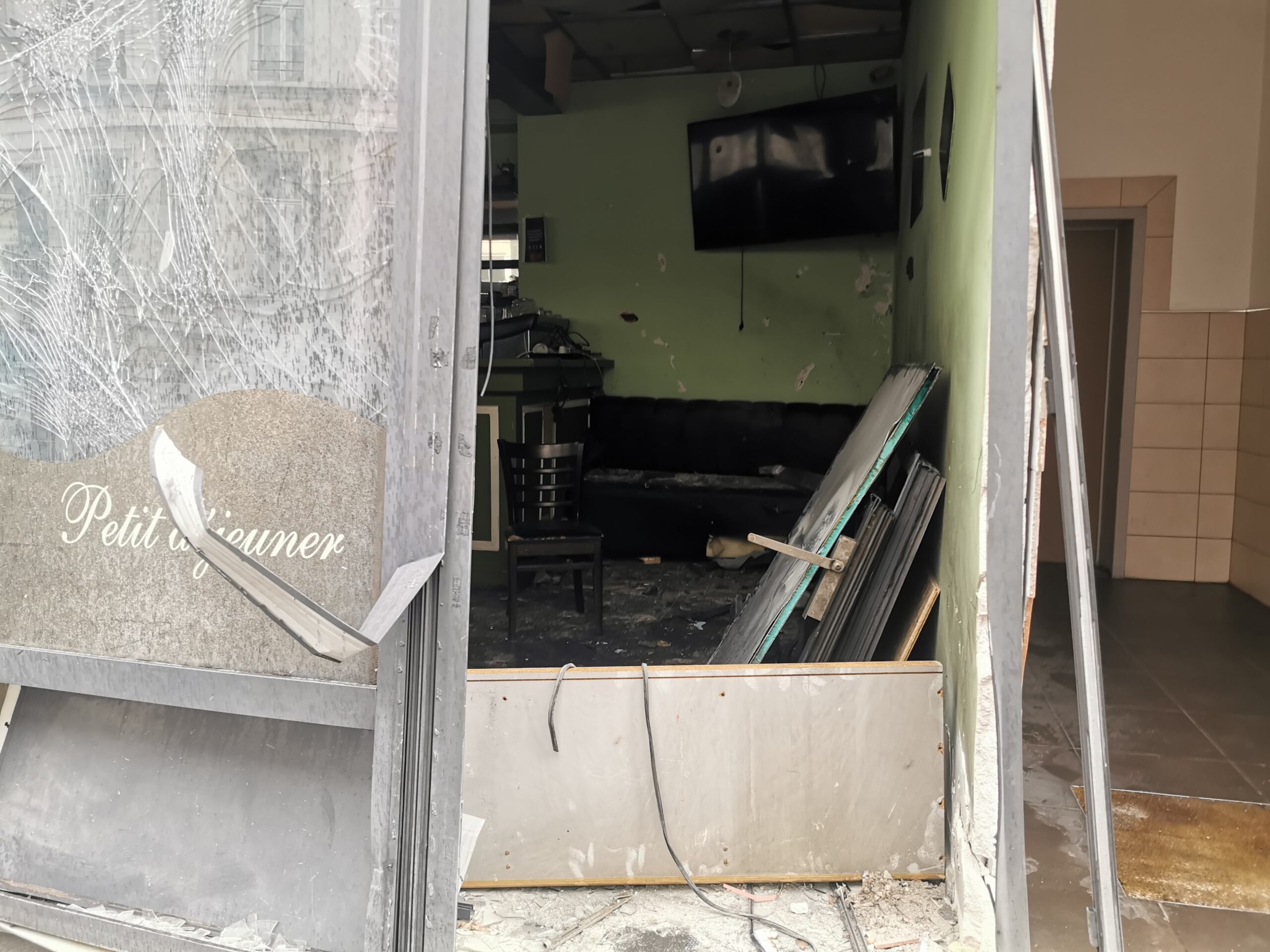
Picture of the aftermath of an explosion in front of the OKLM Shisha Lounge Bar on Rue Théodore Verhaegen in Saint-Gilles. Fifteen windows at the Institut des Filles de Marie were blown out on Saturday, 18 April 2026. Credit: Belga
Dirty money
In its analysis, it found that Belgium must prioritise tackling flows of dirty money with a finance-led strategy, which aims a direct strike on the profits that fund these criminal networks.
The report notes the split of responsibilities on tackling financial crime between municipal, regional and federal levels, as well as differing agencies and institutions – labelling it a key weakness.
"While this reflects the country’s broader governance structure, it can impede the development of a coherent, system-wide response," the RUSI report’s authors, Tom Keatinge and Kinga Redlowska, stated.
Therefore, they argue that Belgium must create a centralised mechanism that can join all of the dots and coordinate a response which can unify priorities, actions and resources across different actors.
The report identifies several systemic weaknesses intrinsic to Belgium. Here, organised crime in Belgium relies on a mix of traditional and alternative financial systems. However, much criminal activity happens outside the formal banking system, making it hard for authorities to detect, trace, and confiscate proceeds.
In the drug world, cash "remains king" – so the country's lack of a national strategy on the use of cash in underground networks is seen as a weakness.
Crypto & professional launders
The role of crypto and professional money laundering networks is also becoming essential to drug gang operations. On this, the Belgian authorities lack expertise and trained personnel to deal with this new phenomenon, the report stated.
While cash is still the preferred method, cryptoassets also add a new level to the financial infrastructure of organised crime. Belgium has low levels of cryptoasset seizure and has difficulty accessing data from service providers, many of which are based abroad.

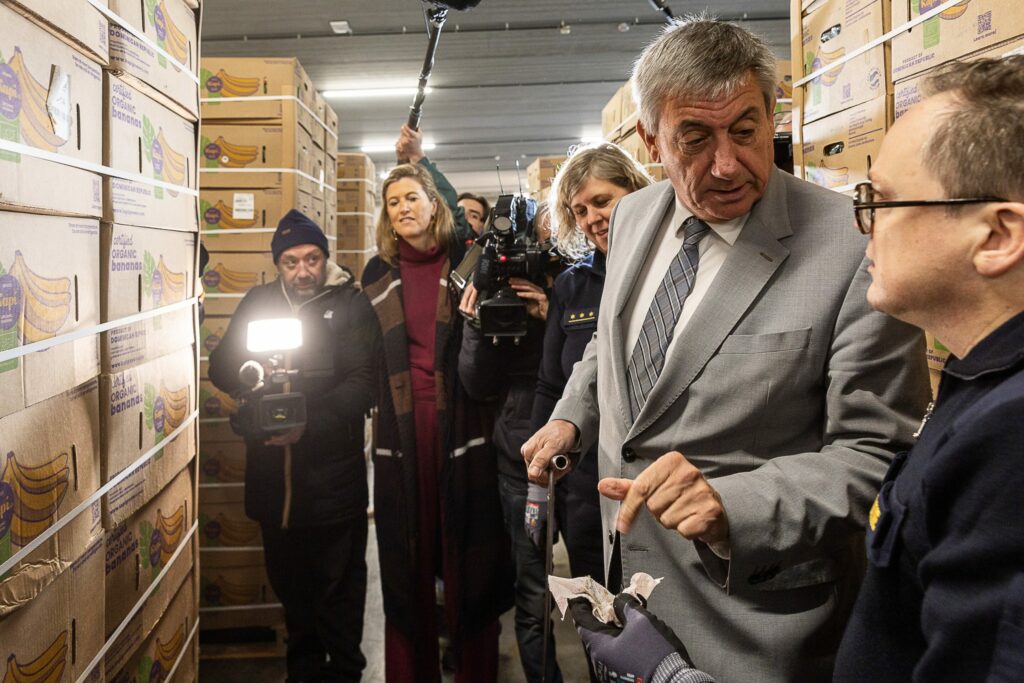
Minister of Justice Annelies Verlinden, Minister of Interior Bernard Quintin and Minister of Finance Jan Jambon pictured during a press conference at the Port of Antwerp, Wednesday 21 January 2026 in Beveren. Credit: Belga
Moreover, a new rising trend of professional money launderers is also making things harder for law enforcement. These are actors who specialise in the movement and concealment of illicit funds, providing services to multiple criminal enterprises.
‘Crime-as-a-service' professions include brokers, car dealers, real estate agents and other enablers who manage transactions, logistics or communication across networks.
However, Belgium does not yet map and target these networks systematically. "Identifying these actors can be highly valuable, as they connect otherwise separate criminal groups," the report says.
Tax havens
International cooperation with neighbouring countries is deemed positive, but legal and procedural barriers remain. This includes the curious situation where information received from neighbours (such as the United Kingdom) cannot be used directly for investigative purposes in Belgium, according to the report.
Other areas include expanding crypto investigation capacity and bolstering asset recovery tools. For example, Belgium needs better confiscation mechanisms and to work more closely with countries where illicit funds are stored, such as the Seychelles or the UAE.
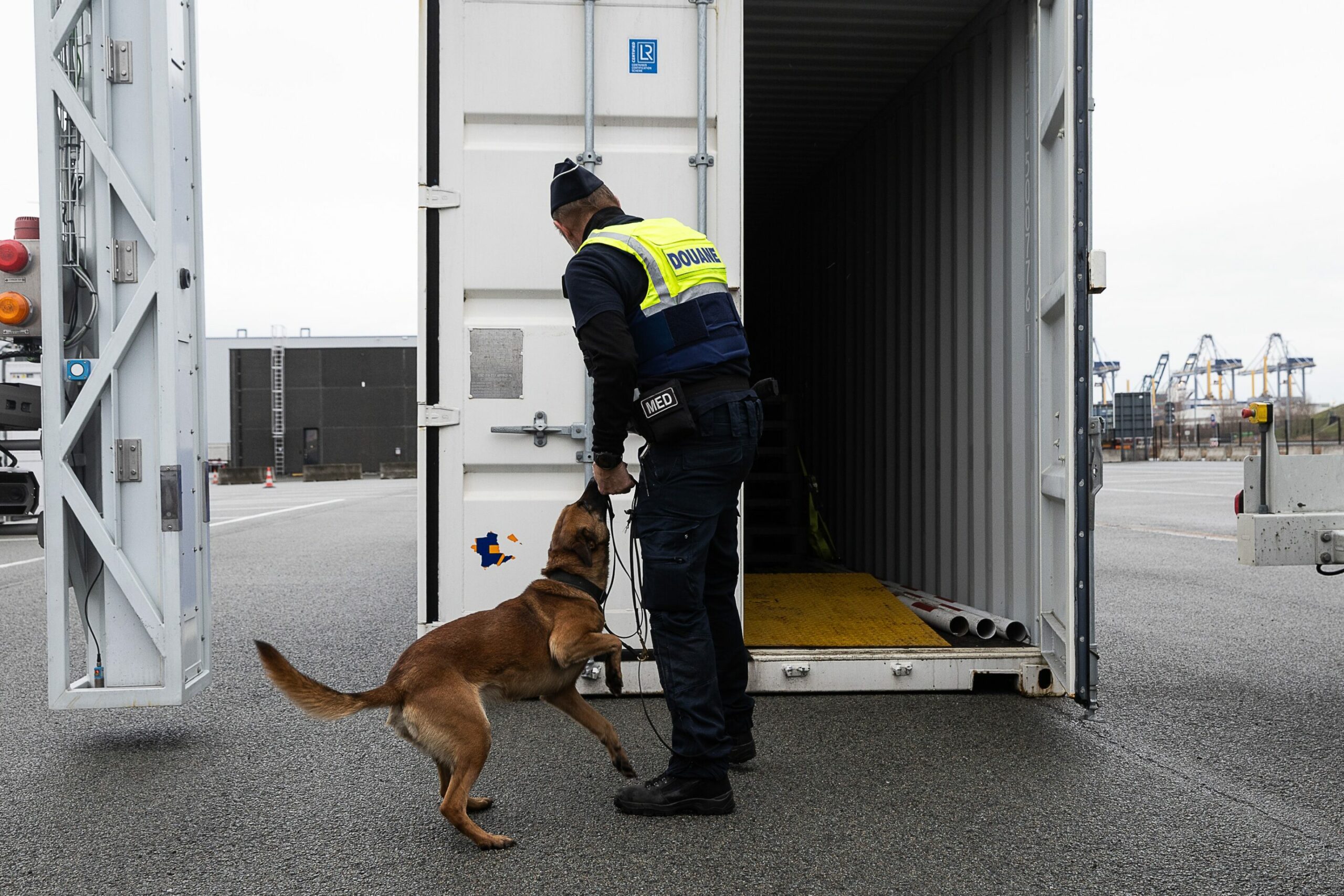
Illustration picture shows a police dog pictured during a press conference by the General Administration of Customs and Excise on the annual drug figures for 2025 at the port of Antwerp, Wednesday 21 January 2026. Credit: Belga/James Arthur Gekiere
However, cooperation with certain non-EU countries, such as the UAE, Turkey and China, remains more challenging. They are frequently identified as destinations or transit points for illicit funds connected with Belgium. However, engagement is often slow, and results are limited.
Belgium has recognised the need to break the criminal business model as a key constituent of the fight against organised crime in its new security strategy (2026-2029), but challenges remain plentiful.
Yet overall, the report urges the country to prioritise financial disruption at the centre of its strategy.
In its conclusions, RUSI appeals to Belgium's political leaders to stop viewing the financial aspects of organised crime as a supporting function, and to begin treating them as central to disrupting organised crime.
