
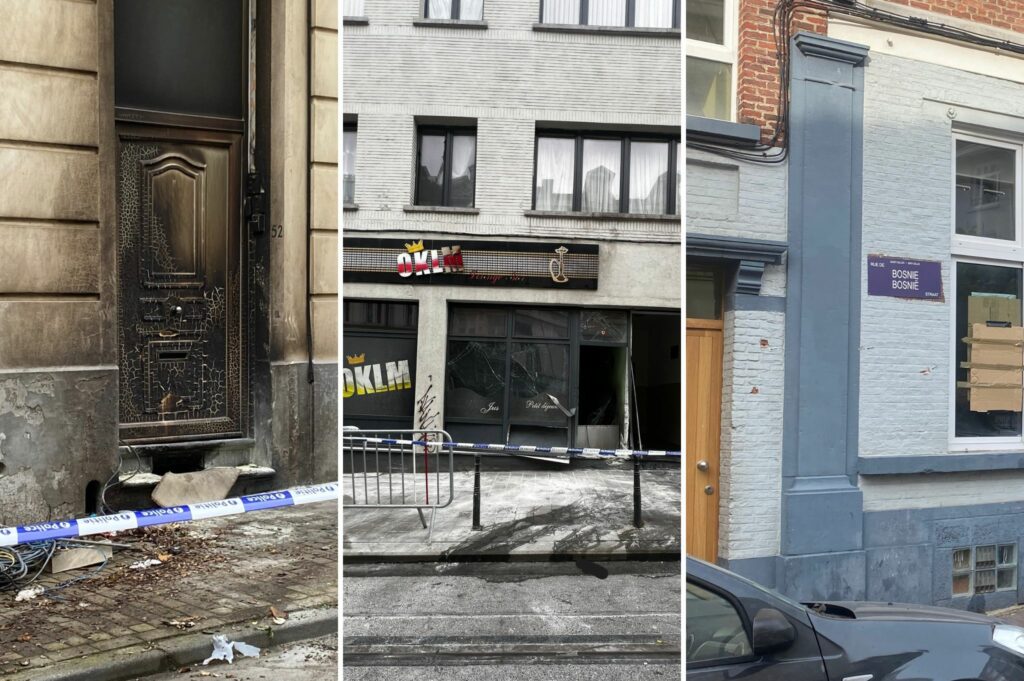
Three Brussels mayors have torn into the Belgian Interior Minister Bernard Quintin (MR) after he blamed them for drug trafficking in the area, following last week's series of explosions in the municipality of Saint-Gilles.
The socialist mayors Fabrice Cumps (Anderlecht), Charles Spapens (Forest) and Jean Spinette (Saint-Gilles) have written to Quintin to condemn his response to last week's violence.
His response is "shocking and detached from the reality" of fighting against drug trafficking in the Midi area, the mayors said.
Last Saturday morning, a fourth explosion in less than a week targeted a shisha cafe just metres from the Barrière de Saint-Gilles, on Rue Théodore Verhaegen. The blast blew out the windows of the school opposite, as well as damaging other nearby buildings and parked cars.
It marked the sixth major incident in the area in a week. So far, the violence has not resulted in any injuries but has caused damage to property. All incidents occurred between Sunday 12 April and Saturday 18 April.
The violence is suspected to be rooted in intimidation and revenge attacks between rival gangs linked to the Moroccan mafia, which has a powerful role in distributing the drugs smuggled in from the Port of Antwerp, Spinette told The Brussels Times in an interview last Thursday.
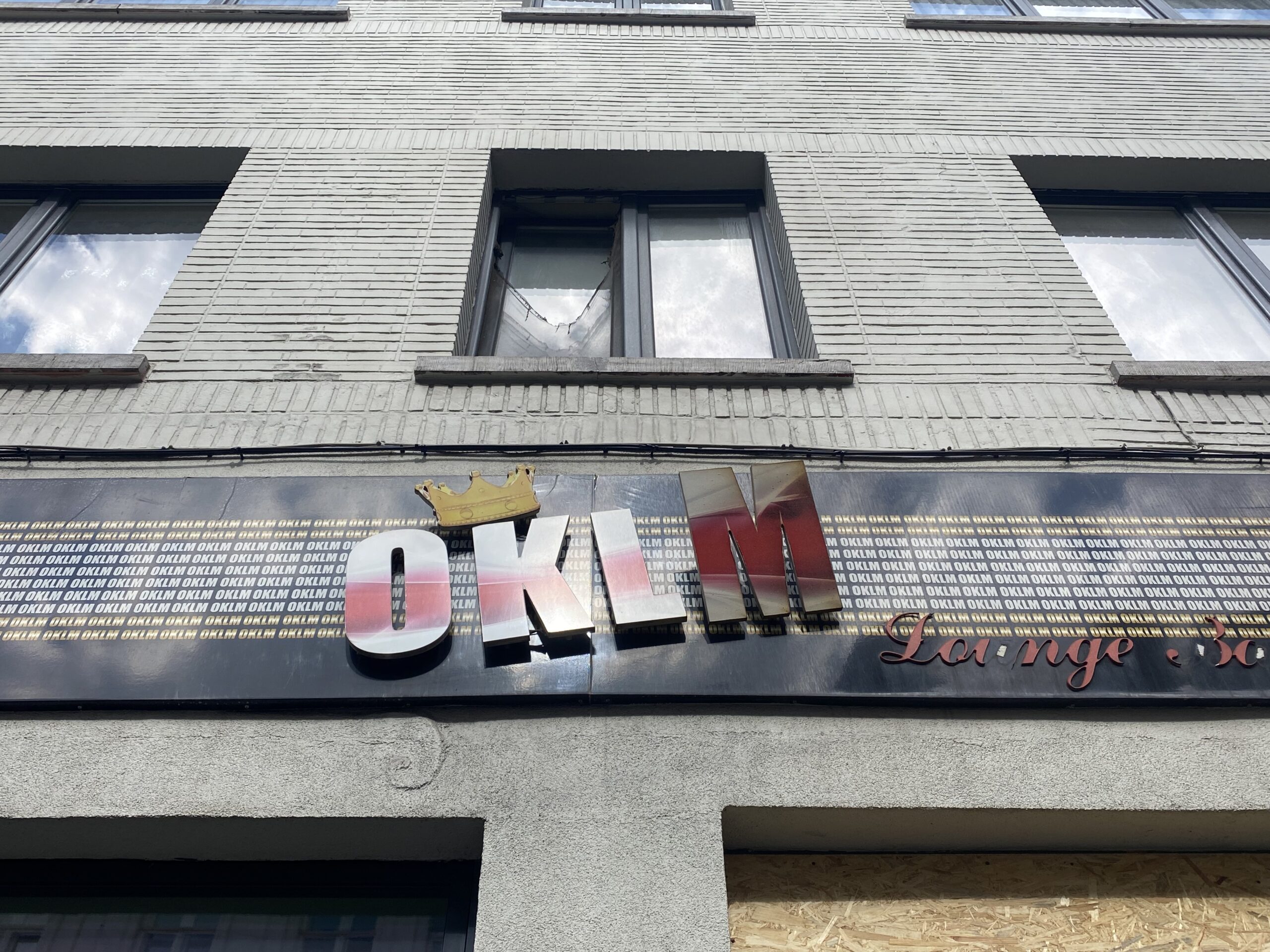
Visible bomb damage from the targeted cafe in Saint-Gilles on Sunday 19 April in Brussels. Credit: The Brussels Times
Call for reinforcements
Following the (subsequent) explosion on Saturday morning, the Mayor of Saint-Gilles issued a call for police reinforcements from the Federal Government. Notably, he asked Interior Minister Quintin to provide immediate resources and funding for the Brussels Prosecutor’s Office and Federal Judicial Police.
For years, Spinette has argued that Brussels is dealing with gang wars between powerful organised mafias that exploit poverty and precariousness. This requires an international campaign to dismantle networks and powerful drug barons, which drive this street-level violence in major cities like Brussels.
However, in his response, Minister Quintin blamed the mayors for the deterioration of the security situation in the south side of the Belgian capital due to drug trafficking.
"The municipal authorities’ decision to disband the specialist anti-drug squads has unfortunately left the field open to traffickers," he told Le Soir, accusing the mayors of having "withdrawn" from the territory.
Quintin is part of the French-speaking liberal party MR, which campaigned on improving security in Brussels for the 2024 elections. One of their key security measures since coming into power has been to deploy soldiers from the Belgian army to train stations.
Accusations of cronyism
Quintin's blame-shifting enraged mayors Spinette, Cumps and Spapens. On Tuesday, they jointly responded by emphasising that since 2012, Anderlecht, Forest and Saint-Gilles have provided additional funding to the Midi police zone, on top of their basic allocations.
They stress this was done to strengthen the police presence on the ground in neighbourhoods affected by the sale and consumption of drugs. In particular, they cite the steady increase in municipal allocations for the police and the long-standing funding of smaller police stations.
According to them, there has been no withdrawal, but an adaptation of the policing system, which was extended to the entire territory of the Midi zone. There has also been a strengthened collaboration with the Public Prosecutor’s Office and the Federal Judicial Police.
They also dispute the link drawn between a local reform and the rise in insecurity, arguing that this is part of a broader trend observed across Europe.
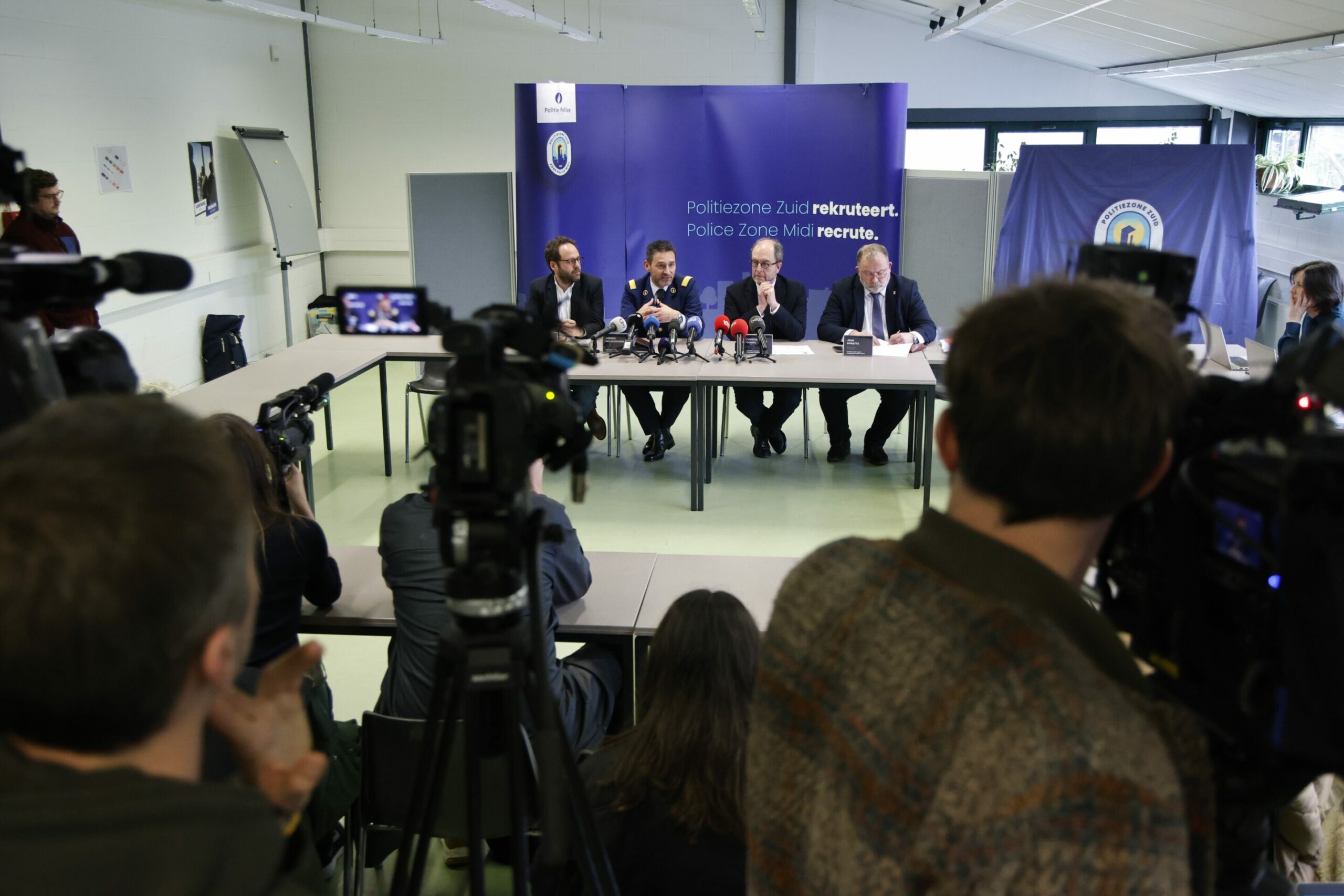
Forest mayor Charles Spapens, Jurgen De Landsheer chief of the Brussels Midi police zone, Anderlecht mayor Fabrice Cumps and Saint-Gilles mayor Jean Spinette pictured during a press briefing by the Brussels-Midi/ Zuid police Brussels, on Thursday, 20 February 2025. Credit: Belga
"We cannot allow it to be said that we are in this situation today because we decided to rein in the police. Whether driven by sectarianism or cronyism, this is shocking and does not reflect reality," said Spinette.
While Quintin has not responded to these claims, his fellow party colleague and new Brussels Minister-President, Boris Dilliès (MR), did not criticise Quintin for his comments.
While acknowledging Spinette’s concerns, the new Brussels regional leader ruled out transferring the blame to the federal level, stating he would not "pass the buck on this issue".
Instead, he renewed the request made by Brussels Chief Prosecutor Julien Moinil, who, upon taking office, sought €10 million to make Brussels "the safest city in Europe".
Chief prosecutor pleads for resources
Ironically, Moinil has repeatedly begged the Federal Government to allocate more resources to the justice system, which is badly stretched, particularly in Brussels.
This is the case in the Belgian prison system, but also for youth detention spaces in Brussels, where underage suspects of serious crimes are allowed to repeatedly walk free due to a lack of detention space – despite the repeated pleas by the prosecutor's office.
However, he has not received any additional resources since taking office. "I remain disappointed by the lack of political support," Moinil told Le Soir in a rare interview on Wednesday, where he emphasised the need to focus on financial flows when tackling drug trafficking.
"If a drug trafficker continues to manage his business from his cell, we do not weaken organised crime," he said.
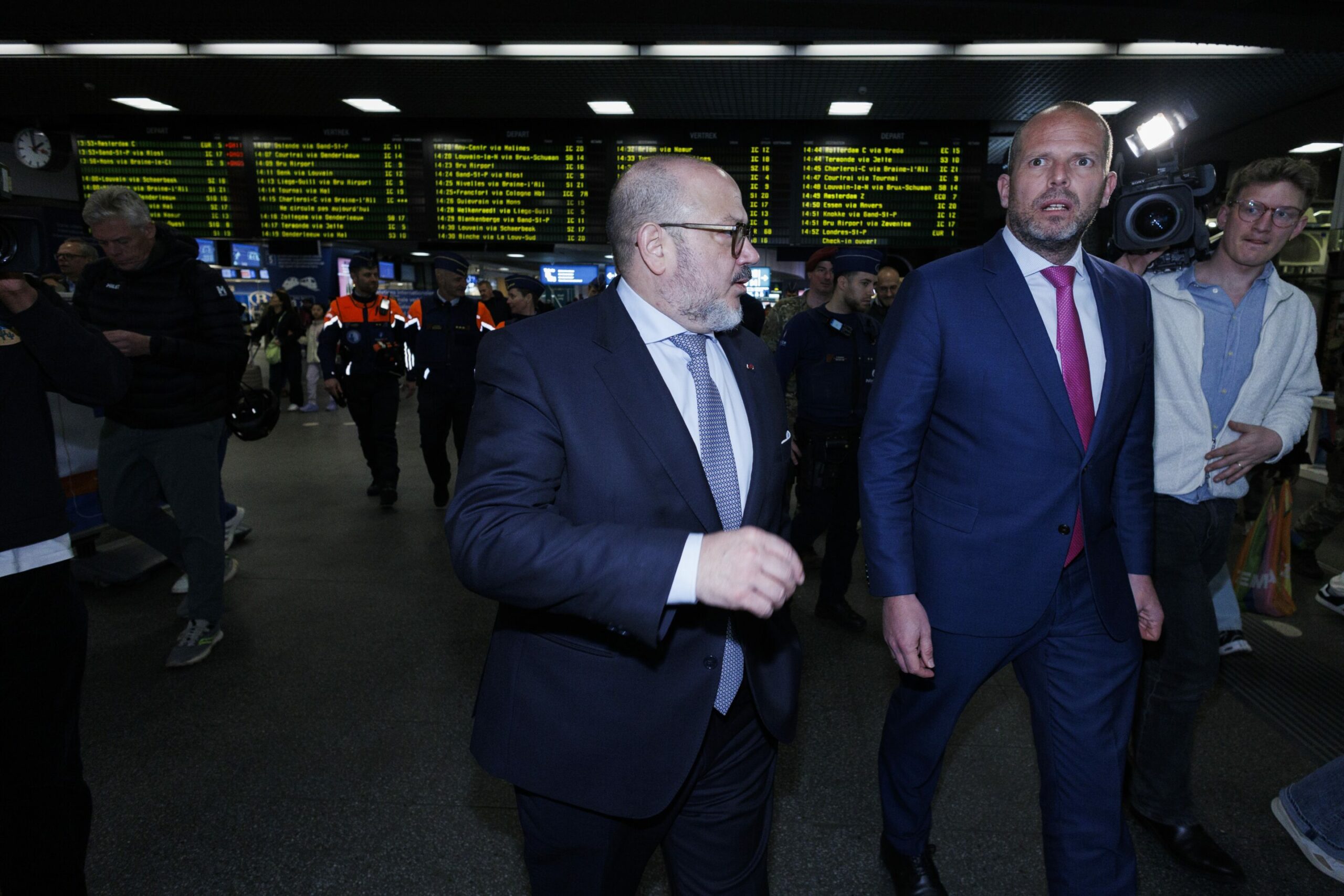
Minister of Interior Bernard Quintin (MR) and Minister of Defence Theo Francken (N-VA) pictured during a visit to the Brussels-Midi station to inspect the deployment of soldiers in stations, Friday 03 April 2026. Credit: Belga / Nicolas Maeterlinck
According to Moinil, the second important aspect is the fight against corruption, at all levels, including within the Belgian State.
"Because if the State is corrupt, it can no longer effectively neutralise criminal organisations. If we make progress on these two fronts, we will have already reached an important milestone."
This week, another key measure put forward by the Federal Government, a law which will enact the fusion of the Brussels police zones, was also passed in a second reading in a Federal Parliament committee.
Under the plans, the six current Brussels zones (Brussels-City/Ixelles; West; Midi; Uccle/W-B/Auderghem; Montgomery; Schaerbeek/SJtN/Evere) will merge into a single zone, with a one-year transition period.
The measure, which is greatly favoured by Flemish parties and the current Federal Government, has been greatly criticised by Brussels mayors, who face losing power over police. This also included the new Minister-President Dilliès, who, up until two months ago, was mayor of Uccle.
