The Federal Ethics Committee ruled on boundaries for MPs in contacting other countries for issues related to Belgian legislation, prompting questions about whether Belgian MP Michael Freilich (N-VA) may have overstepped his bounds in the religious circumcision dossier.
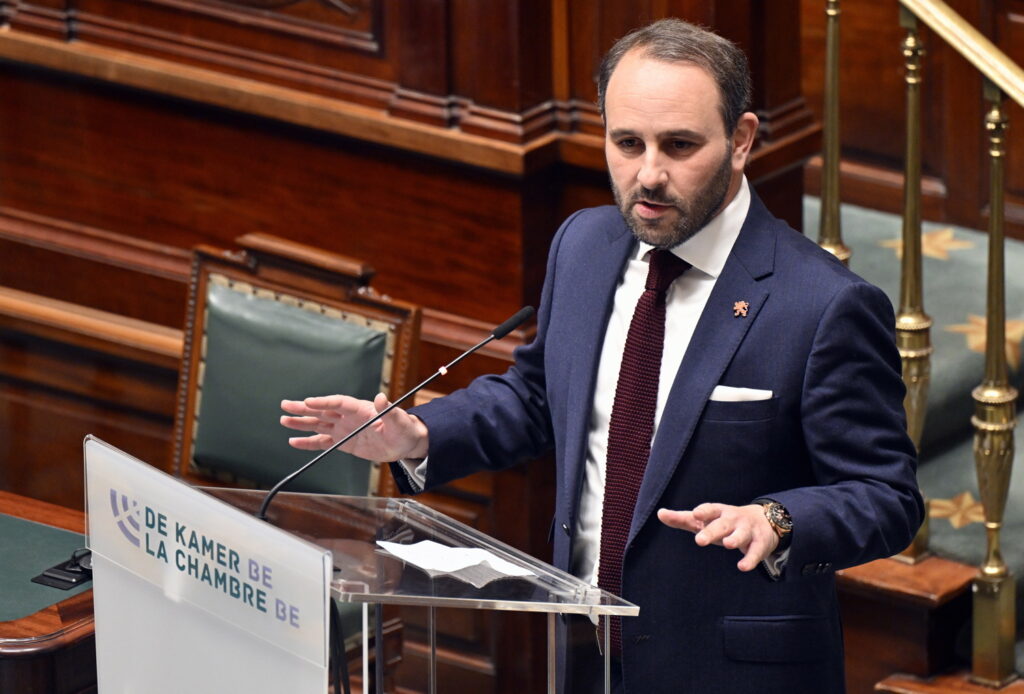
While the committee does not call him by name, the ruling is indirectly related to Freilich, a federal MP from Antwerp. In May last year, he was in Washington when police conducted searches in Antwerp related to alleged illegal medical practices involving ritual circumcisions within the Jewish community.
Freilich later stated that he had been approached about the matter, claiming he sought advice from the United States on a suitable legal framework, as circumcision is commonplace there.
Several parties in the Chamber judged that Freilich had thereby sought foreign interference and attempted to steer an ongoing judicial investigation.
Almost all Members of Parliament supported the request for advice from the ethics committee. That advice was requested in general terms, not regarding Freilich in particular, Belga News Agency later clarified.
The MP is suspected of pressuring the US to intervene in the investigation into "mohels," traditional Jewish circumcisers, which led to a diplomatic incident.
At the time, US Ambassador Bill White implied that the investigation might be motivated by antisemitism.
Now, Freilich pointed out that the Ethics Committee‘s advice has been drafted in general terms, and does not name him or his actions specifically. Still, it stressed that all MPs – which includes Freilich – must respect the separation of powers.
The Committee has publicly called into question judicial independence and objectivity by suggesting hidden motives, political interference, racism, or antisemitism. "Members of Parliament should speak out cautiously regarding such allegations and may only express such doubt on serious grounds," it wrote.
The committee further stressed that seeking foreign intervention through coercive or deceptive actions constitutes unlawful interference in legislative processes as outlined in the Belgian Constitution.
The committee reiterated its 2017 recommendation to require all foreign contacts outside the EU to be registered in a transparency log.
“Groen has formulated a number of questions here about matters that I did not do," said Freilich in a reaction. "I have also denied them from day one. What Groen is doing here is morally of the lowest order. I also asked to be heard, but that was not possible because my name does not appear in the question."
Groen has also advocated for this, said MP Meyrem Almaci in a reaction. "The Ethics Committee draws a clear line in the sand here and also points out the gaps in the current regulations," she said. "Following this advice, the majority parties can no longer continue to refuse."
Groen also asked the President of the Chamber of Representatives, Peter De Roover (N-VA), to draw the appropriate consequences based on this advice and to officially and publicly reprimand Freilich.
Vooruit has long been calling for absolute transparency regarding the business trips of parliamentarians for some time, according to group leader Oskar Seuntjens.
"We look forward to further discussion of this proposal and count on the support of our colleagues. This case demonstrates once again that transparency regarding parliamentary business trips is necessary," he said.
In response, opposition party Ecolo called for formal sanctions against Freilich. Ecolo MP Rajae Maouane asked De Roover to issue an official reprimand, arguing that Freilich's conduct significantly violated ethical rules.
"Debates about our laws must take place within our Parliament, without the influence of foreign entities," Maouane said.
Update: This article was updated to include a reaction by MP Michael Freilich (N-VA).
