
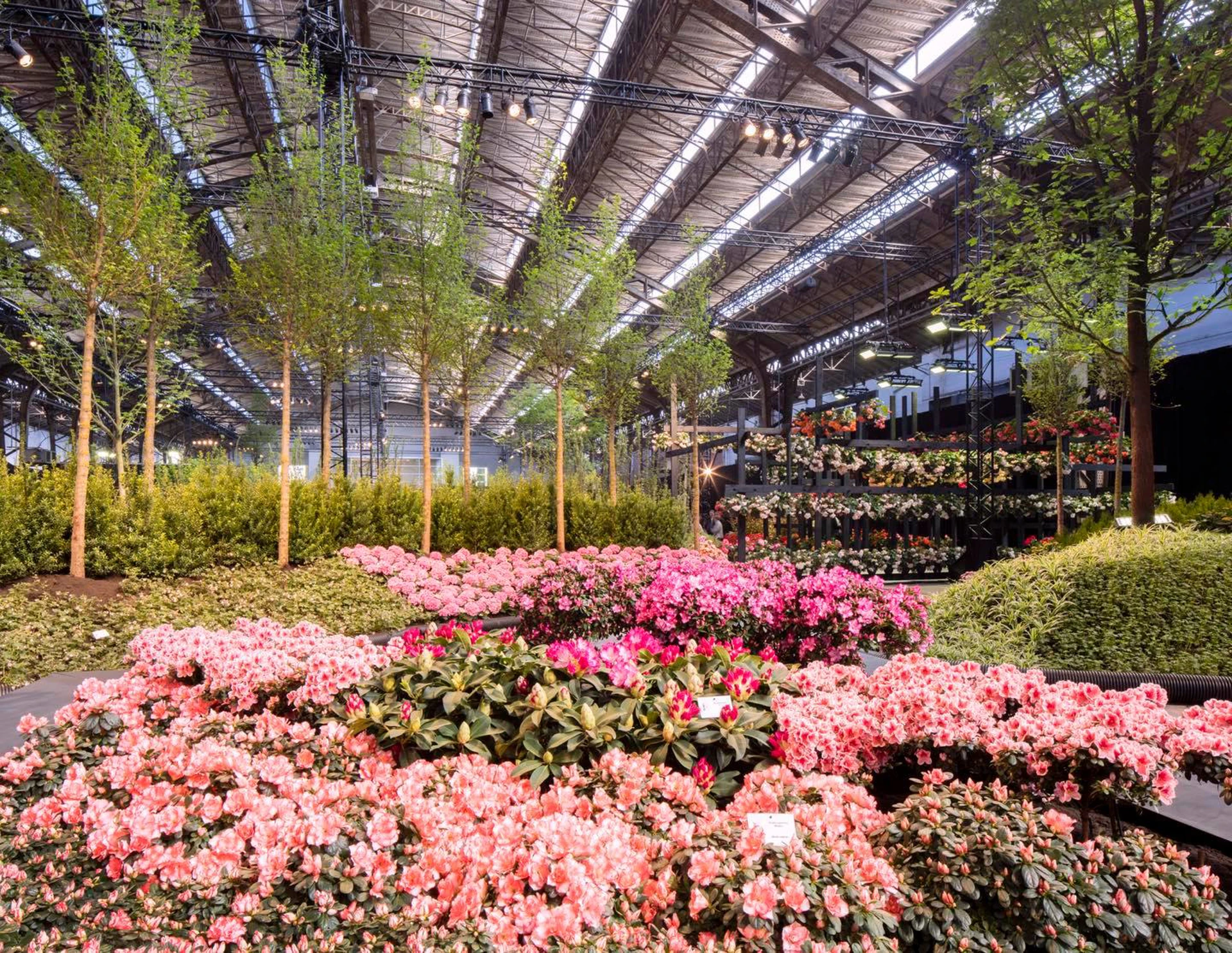
Going to a garden show may sound a little prosaic, but I’m here to tell you, people of Belgium, you’ve never seen a display quite like Floraliën.
A pride of Ghent since 1809, Floraliën – taking place from May 1-10 – has grown into a village-sized, eye-popping extravaganza of floral art and green architecture. It’s kind of hard to even describe Floraliën to someone who’s never been. But I’ll give it a go.
The first section is dedicated to installations made of flowers and plants in all their variety – a kind of organic matter art gallery, if you will. This ranges from sophisticated painting-like patterns, framed and glassed, to intricately sculptured vines and boughs to bombastic explosions of bundled blooms, sporting every colour of the rainbow.
From there, you enter the Floraliënhal, 7,000 square meters of landscaped architecture, where the sculptures get bigger and the gardens surpass your imagination. “This is what we want to instil in people,” says Pieter Toebaert. “It’s like, what is it that you dream of. These are top designers, it’s next level. No one can do this at home. But it makes you dream.”
Toebaert is the director of KMLP, the Royal Society of Agriculture and Botany, in Ghent. The organisation hosts the Floraliën every four years, emphasising its stature as the Olympiad of plant and flower festivals in Europe. KMLP also organises Flowertime in Brussels’ City Hall, Ball Floral in Antwerp’s Paleis op de Meir, Koket Koksijde in the coastal town’s City Hall and Bloemen Banket, where Laarne Castle’s historical furnishings, stairways and fireplace mantles sigh under the weight of a floral banquet.
“There are so many historical buildings that people only know by the facade; they’ve never been inside,” Toebaert laments. “So, we decorate it with flowers and say, ‘Come and look at this old castle that you’ve never seen before.’ It’s a win for all three parties: for Floraliën, for the monument and for the public.”
Though Toebaert’s main concern is not for brick and mortar. “We have a message: If you are in a green or floral environment, it feeds your soul. It’s healthy. We saw it during Covid. Everybody wanted to take to the outdoors. People without gardens started buying plants to create a green cocoon at home. People come to Floraliën because they want to disconnect a bit from the city and get into nature. This is just another kind of nature.”
What he means is, it’s indoors. This might not seem very natural, but it’s certainly practical. The one time the event happened partially outdoors, in 2016, “it rained cats and dogs,” Toebaert says. He can laugh about it now, but it reminded the organisation, which relies on ticket sales for a sizable chunk of its income, that spring weather is fickle.
Finding a venue
For several editions leading up to that fateful one, Floraliën took place in Flanders Expo, the only venue in Ghent sizeable enough to hold it. “But we wanted to re-establish the connection with the city and its people. We can’t make this connection if we are in an expo centre on the outskirts of the city.”
Needing to put it inside, KMLP decided to move it back to the Floraliënhal, which – as the name might suggest – is right where it belongs. Floraliënhal was constructed in Citadel Park to house the Floraliën ahead of the 1913 World Exhibition in Ghent. The warehouse-sized iron and steel building, with a vaulted roof formed by arched metal trusses and partially covered in glass, was meant to be dismantled and shipped to the then Belgian Congo to become a train station.
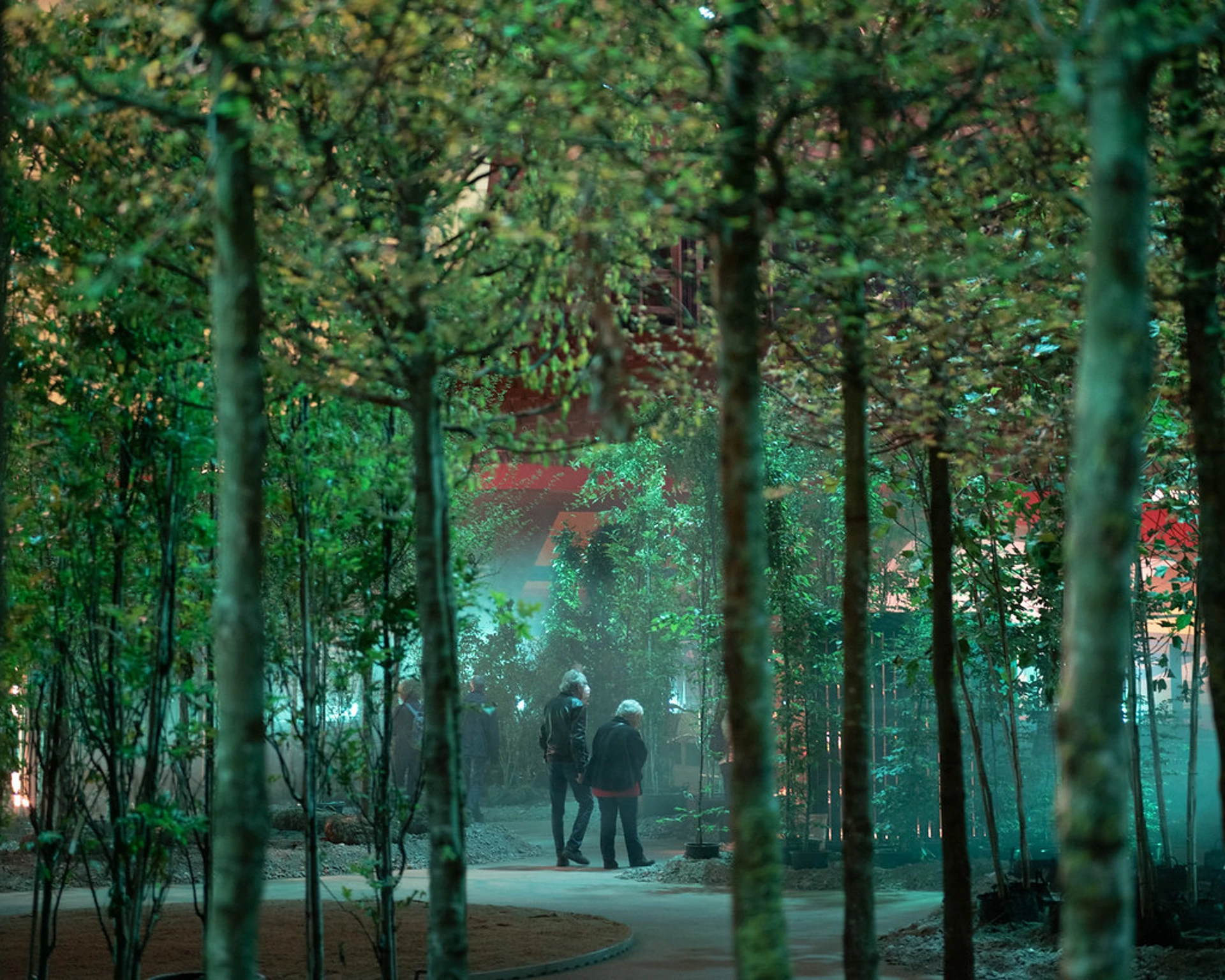
A bit more logistically complicated than originally thought, that plan was abandoned, and the Floraliënhal remained. It soon became a foundation around which other buildings would form – the International Convention Center (Gent ICC), the Kuipke velodrome and the SMAK museum of contemporary art. Floraliën moved to Flanders Expo when it outgrew the Floraliënhal, but came back for the 2022 edition when organisers linked it to these surrounding buildings via covered passageways. The velodrome is home to a misty forest, complete with its own moon.
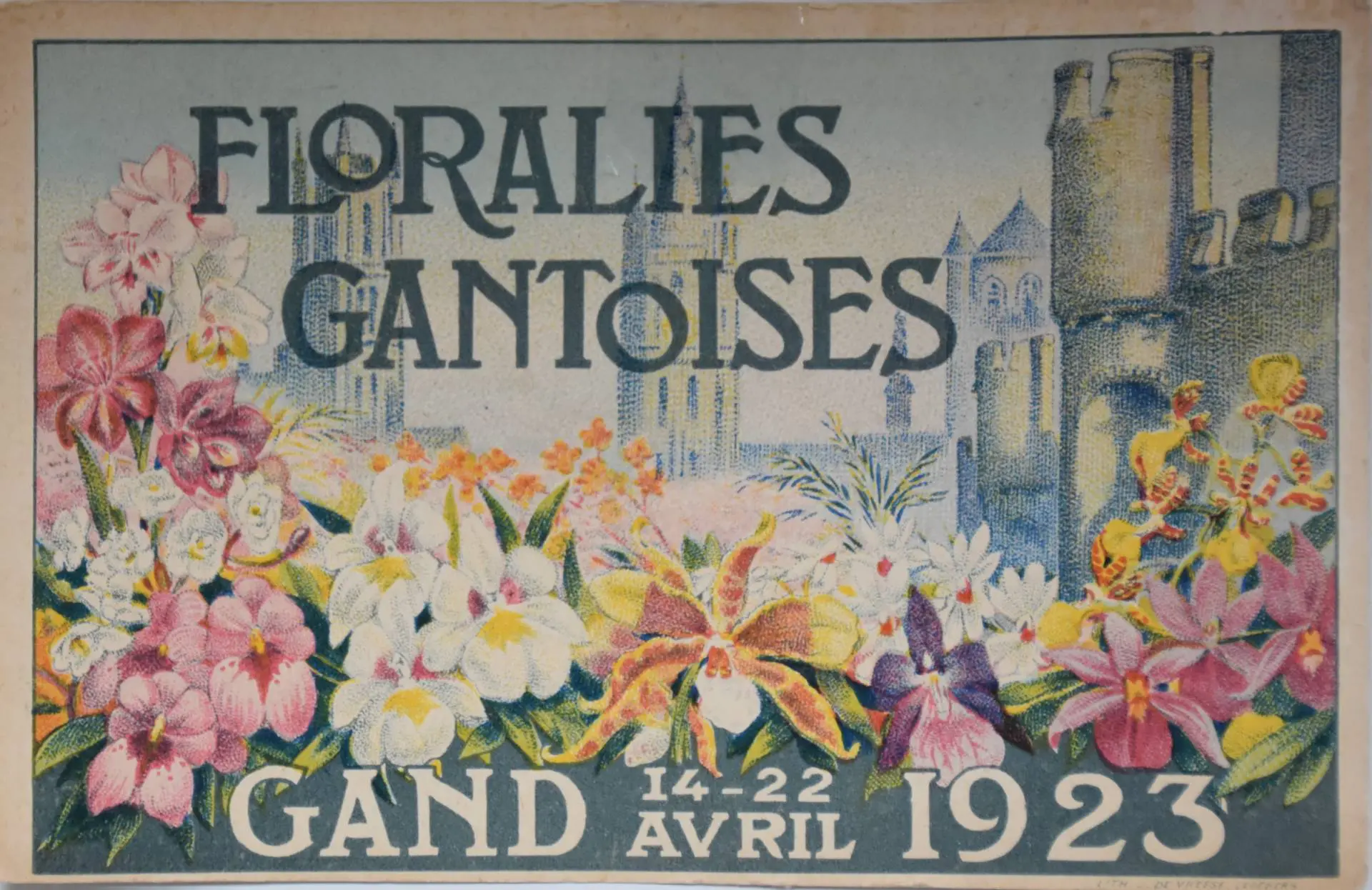
Old poster for Floraliën. A pride of Ghent since 1809.
The glass in Floraliënhal has been replaced by Plexiglas, but worse, the whole building has fallen into disrepair. A major renovation is being planned, which fortunately starts after Floraliën takes place and should be done before the next edition. It will be just another step in a cavalcade of venues and forms for the event that started with 50 plants in the back of a pub in 1809.
“Back then, growers had the same problem as they do now: We have beautiful plants, but how do we market them?” Toebaert explains. “Some of them went to England and saw the garden fairs and brought the concept back here. A bit of a small Chelsea Flower Show.” The idea was to show off the plants and flowers to buyers – generally rich people with substantial garden space.
“Where Chelsea still has a very strong commercial link, Floraliën has changed that view throughout the years,” says Toebaert. “There were a lot of aristocracy in the region, and also a lot of textile barons. They all had their greenhouses and their gardens and their gardeners. It started to become a competition between the gardeners of the aristocracy and the gardeners of the textile barons. This competition became bigger and bigger, and the commercial aspect faded a bit.”
Petal power
Though there is still a market where the 75,000 visitors to Floraliën can buy plants and flowers and everything that goes along with them – pots, vases, soil – but also all kinds of floral-inspired designs and products made from herbs, from journals to bookmarks to beer. “Most flower shows have a 50-50 split between the artistic and consumer components,” says Toebaert. “Here, we put selling you stuff at the end of the route. You’ve seen all these beautiful plants and flowers, and maybe you want to take one home. But the market is less important to us – we really focus on the artistic part.”
That extends beyond the main event – Floraliën also includes exhibitions, lectures, demonstrations, educational sessions and a concert of songs about flowers. “Because Floraliën has always been connected to all kinds of different artistic, cultural and economic issues,” says Toebaert.
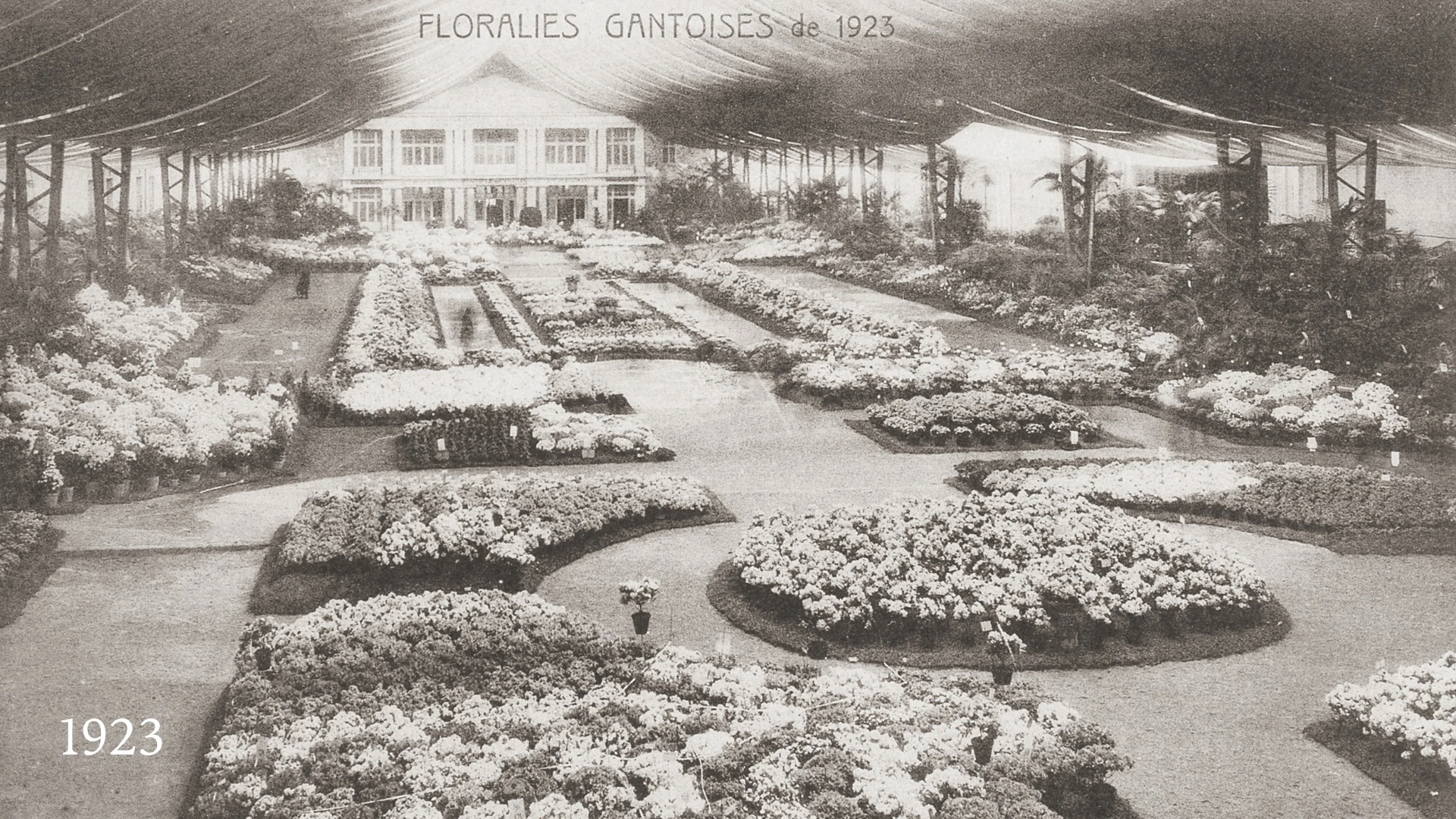
Floraliën, Ghent, in 1923
In the digital age, there is less wheeling and dealing between growers, wholesalers and retailers at events like Floraliën. Where this used to be a huge forum for connecting and selling, they all now find each other on the internet. Still, Floraliën arranges a networking evening for the growers, landscape architects, wholesalers and retailers, who have also invited their international customers. A little sign on all the garden installations lets visitors and sector professionals alike know who grew the plants and designed the display.
Some 230 local and international floral artists and growers take part in Floraliën. “The Floraliën is iconic,” says An Theunynck, whose Floreview offers a platform for floral design information and training in Belgium. “It’s really internationally renowned in the ornamental horticulture sector. It’s instrumental in showcasing our Belgian growers, landscape architects and florists to a wide audience.”
Floreview is working with Atelier Soren Van Laer of Bornem to create three large installations that include chrysanthemums and bromeliads, which will feature at the start of the route. She points to Floraliën’s theme this year, which is ‘connection’. “Flowers and plants play a very important connecting role in our society. Their emotional power should not be underestimated,” she says.
Toebaert couldn’t agree more. “Maybe when our world leaders meet in Davos or other summits, they should exchange plants and flowers,” he muses. “They would have something to talk about, and maybe some discussions would go in the right direction. A bit of flower diplomacy.”
