
For a country so small on the map, Belgium contains an almost improbable richness. It is often described in tidy terms – Dutch-speaking Flanders, French-speaking Wallonia, and a bilingual Brussels at the centre – yet such distinctions only hint at its complexity.
Look closer, and the country reveals itself as something far more intricate: a dense weave of histories, traditions and idiosyncrasies that resist easy categorisation. Its 34 UNESCO-listed sites and 151 Michelin-starred restaurants speak to a cultural weight that belies its size, but the real fascination lies in the details – in the way layers of past and present overlap within cities, neighbourhoods and even single streets.
What follows are a few glimpses from each province – small vignettes drawn from my journey across the country – that capture the spirit of places both well-known and quietly overlooked.
Brussels-Capital Region
While everyone knows the Manneken Pis (for better or for worse) as the peculiar symbol of Brussels, few realise that he has a doppelgänger in Geraardsbergen, whose bronze little boy peeing is 160 years older.
Did you know that Brussels has a still-functioning medieval crossbow guild (officially called the Grand Serment Royal et de Saint-Georges des Arbalétriers de Bruxelles)? Off Place Royale, behind the church, is a museum and bar with crossbow shooting areas. It is open to the public on Tuesday afternoons.
West Flanders
For cycling fans, Roeselare is hallowed ground. This unassuming city has produced more world champion cyclists than any other, cementing its reputation as Belgium’s epicentre of the sport. Its KOERS Museum of Cycle Racing celebrates this legacy.
In medieval times, live cats were thrown from the belfry of Ypres, likely linked to superstition and pest control. Today, this custom plays out in the triennial Kattenstoet, or Cat Parade, when toy cats are tossed instead (next on May 9, 2027).
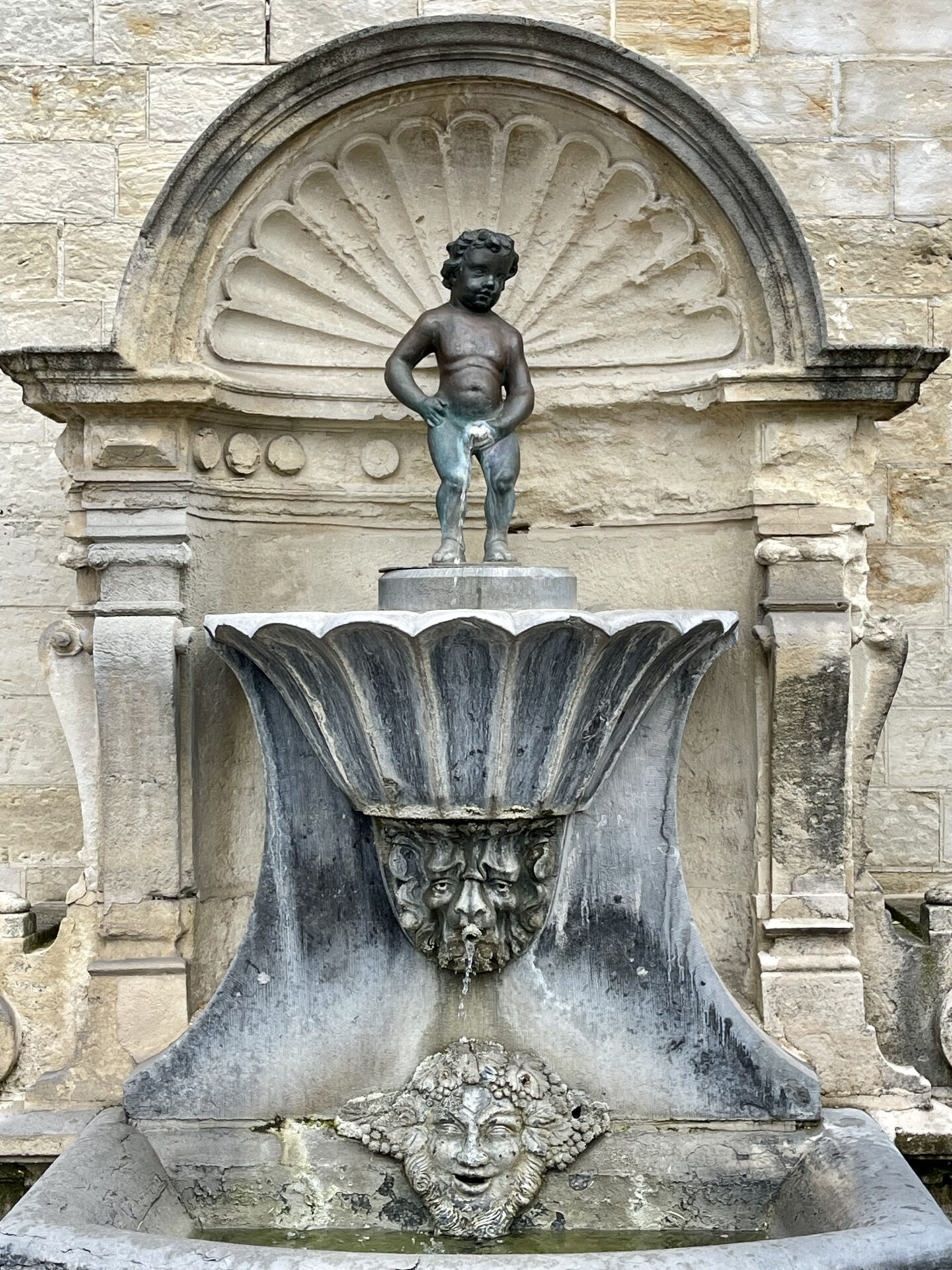
Geraardsbergen's Manneken Pis. Credit: Angela Dansby
Beneath the peaceful hills of Kemmel lies a relic of global tension: a concealed Cold War bunker built as a command centre in case of nuclear conflict. Hidden within the Kemmelberg, it is a reminder that even this quiet corner once stood on the frontline of geopolitical anxiety.
East Flanders
Ghent is known for its playfulness: along the Muntenroute, embedded pavement coins tell historical stories, while lampposts opposite the Gravensteen flash to announce the birth of local babies.
Aalst lives for carnival, including the tradition of Voil Jeanetten (Dirty Jeanettes), men dressed in flamboyant women’s clothing who push prams filled with absurd props. Rooted in working-class satire, the ritual comes from poor economic times when cross-dressing provided affordable costumes.
Once a decade, Dendermonde stages one of Belgium’s most extraordinary pageants: Ros Beiaard Ommegang. It features a human-powered wooden horse carrying four riders, real-life brothers born consecutively and aged between seven and 21. This rare requirement turns the selection into a generational honour in the UNESCO-listed spectacle.
Art takes an unorthodox turn at the Verbeke Foundation in Kemzeke, one of Europe’s largest private contemporary art spaces. Among its many provocative installations is a colossal anus in which you can spend the night.
Antwerp Province
In the quiet town of Lier stands some of Belgium’s most astonishing timepieces: Zimmer Tower’s Jubilee Clock and the adjacent Wonder Clock. Created by Louis Zimmer, these intricate mechanisms feature 13 and 93 dials, respectively, displaying everything from tides and lunar cycles to planetary movements.
Mechelen residents are nicknamed Maneblussers (‘moon extinguishers’) due to a mistaken act of heroism. On a foggy night in 1687, a drunkard saw what he thought was a fire atop the tower. Townspeople formed a bucket chain to extinguish it, only to realise it was a blood moon glowing through the fog.
What is true: Mechelen is the world capital of carillon culture – with six carillons, regular bell concerts and a prestigious carillon school – and world-renowned for tapestry restoration at De Wit, which you can tour on Saturday mornings.
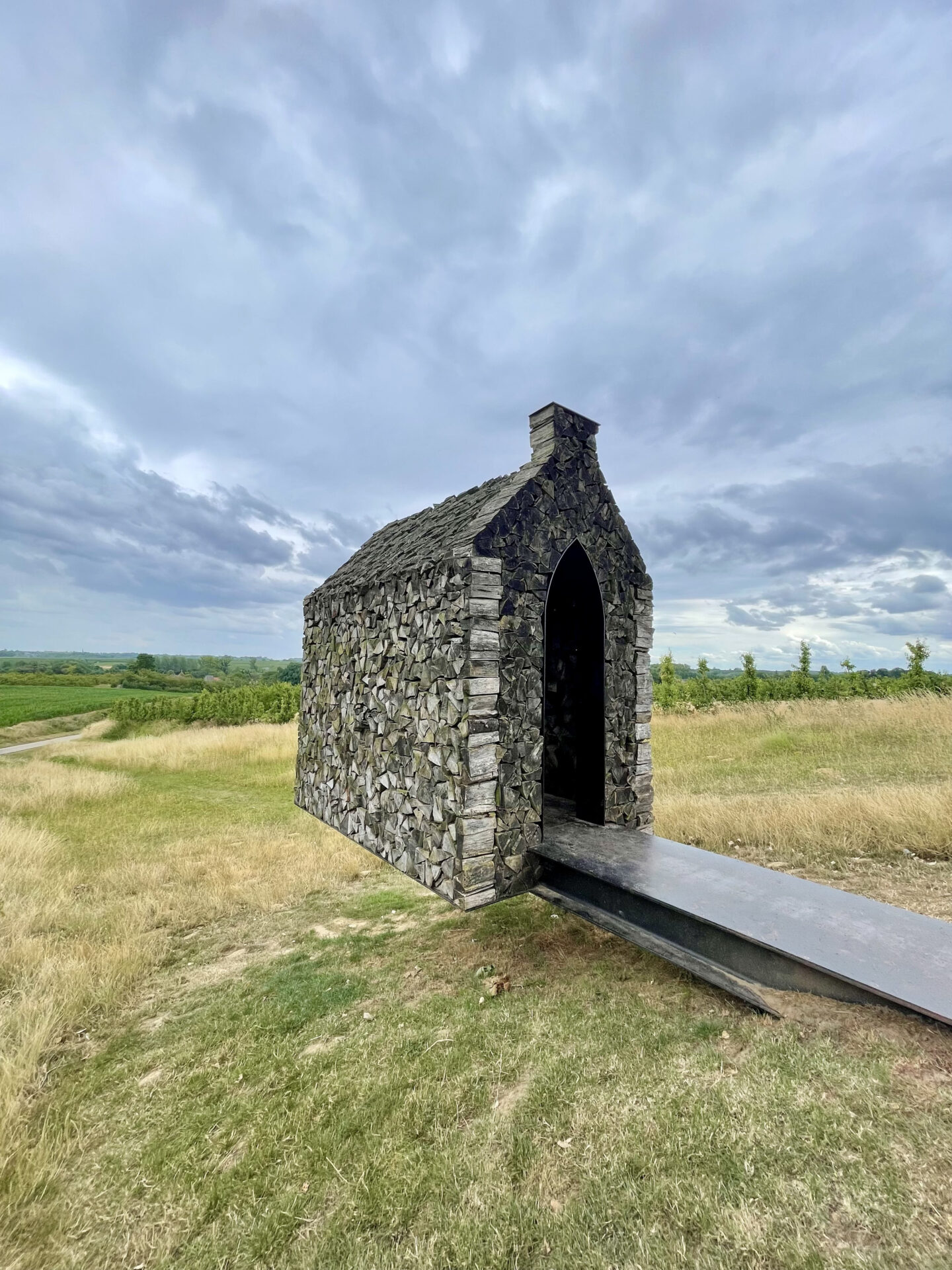
The Floating Church Borgloon
Turnhout has been synonymous with playing card manufacturing for more than three centuries, with its own Cartamundi one of the world’s leading players. From casino decks to collectable cards, chances are high that a piece of Turnhout has passed through your hands.
Flemish Brabant
During the annual Hapje-Tapje food festival in Leuven, a Barmannenrace sees waiters run through an obstacle course in the streets, balancing trays of beer. Just beyond the festive buzz lies IMEC, one of the world’s foremost nanotech research centres, where scientists are shaping the future with breakthroughs in microchips, AI and healthcare.
Limburg
In the Bokrijk park near Genk, the Cycling Through Water experience takes riders along a submerged path that cuts through a lake at water level. Similarly, in Maasmechelen, the Cycling Between Terrils route guides riders through and alongside towering slag heaps, sometimes at water level. In Bosland National Park near Hechtel-Eksel, cyclists can rise into the forest canopy itself via the Cycling Through the Trees route.
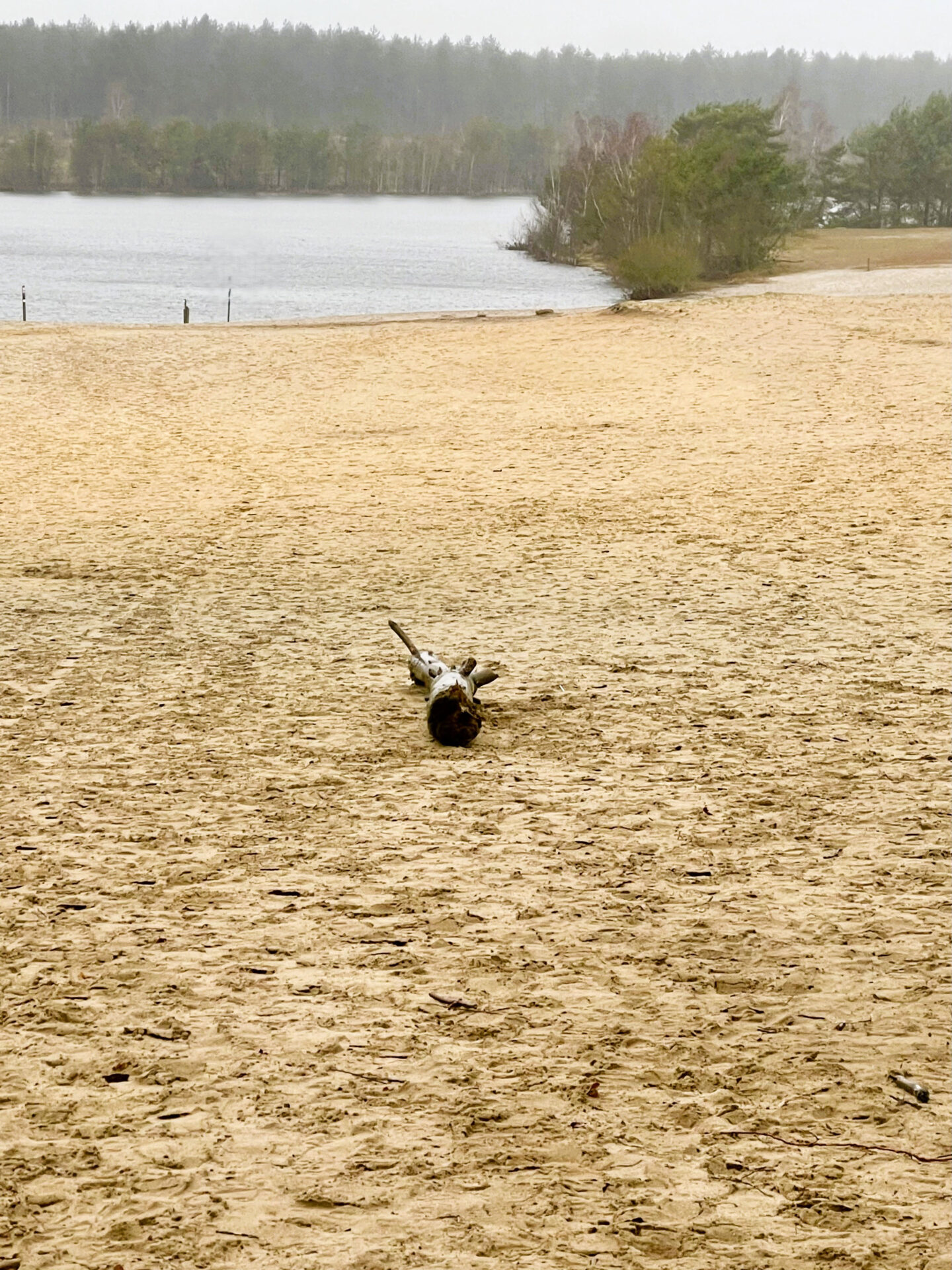
Lommel's Sahara
Renamed due to a merger in 2025, Tongeren-Borgloon bridges millennia. Tongeren is Belgium’s oldest city, but Borgloon adds a contemporary twist with striking art installations, such as a “see-through” church (Reading Between the Lines) and a “floating” chapel.
Beneath the village of Kanne lies a labyrinth of limestone caves carved over centuries. What was once a quarry now hosts unusual cultural and agricultural spaces, including a mushroom farm and ageing cellars for food, beer and wine.
Few expect to find a desert in Belgium, yet Lommel delivers just that. The Lommelse Sahara is a surreal landscape of sand dunes, pine forests and shimmering lakes. Entered via the House of Nature, this unique landscape is unlike anywhere else in the country.
Walloon Brabant
Wavre embraces humour as part of its identity; its symbol is Le Maca, a bronze boy whose bum is touched for good luck. Equally intriguing is Wavre’s role in reviving the nearly forgotten craft of fabric flower-making at Bernard Depoorter Manufacture.
Purpose-built Louvain-la-Neuve is home to the architecturally daring Musée Hergé, which celebrates the life and work of the creator of Tintin.
Hainaut
Created to support the workforce at a ceramic (faisance) factory, La Louvière is defined by water and ingenuity. Along the Canal du Centre stand a series of UNESCO-listed hydraulic boat lifts, some of the oldest still functioning in Europe.
During the Ducasse d’Ath, processional giants parade through the streets to celebrate the marriage of legendary Goliath. It begins with setting his trousers on fire.
In 1610, alleged witches were burned in Ellezelles – a history now reimagined through the Sentier de l’Étrange, a woodland trail dotted with eerie sculptures. Witchy symbols are also found throughout the village.
Namur Province
While defined by its fortress atop a rocky outcrop, Namur is also linked to another type of rock history: It hosted Brian Johnson’s first concert as replacement lead singer of AC/DC in 1980. He is commemorated in a statue on Esplanade AC/DC.
Near Nismes lies the Fondry des Chiens, Belgium’s mini-Grand Canyon: a dramatic limestone sinkhole drops into a rugged landscape of cliffs, crevices and jagged rocks.
Liège Province
Aywaille is a gateway to two natural wonders: the Ninglinspo, Belgium’s most expressive stream, and the Grottes de Remouchamps, caves that conceal the world’s longest navigable underground river. You can glide on it by boat through cathedral-like caverns.
For over a century, Kelmis was part of a strange political experiment: Neutral Moresnet. Established in 1816 when neighbouring powers could not agree on ownership of a valuable zinc mine, this tiny territory existed as a no-man’s-land. It even considered adopting Esperanto language before finally being absorbed into Belgium in 1920. In nearby Plombières, the Drielandenpunt (ThreeCountry Point) denotes the convergence of Belgium, Netherlands and Germany with a stone marker.
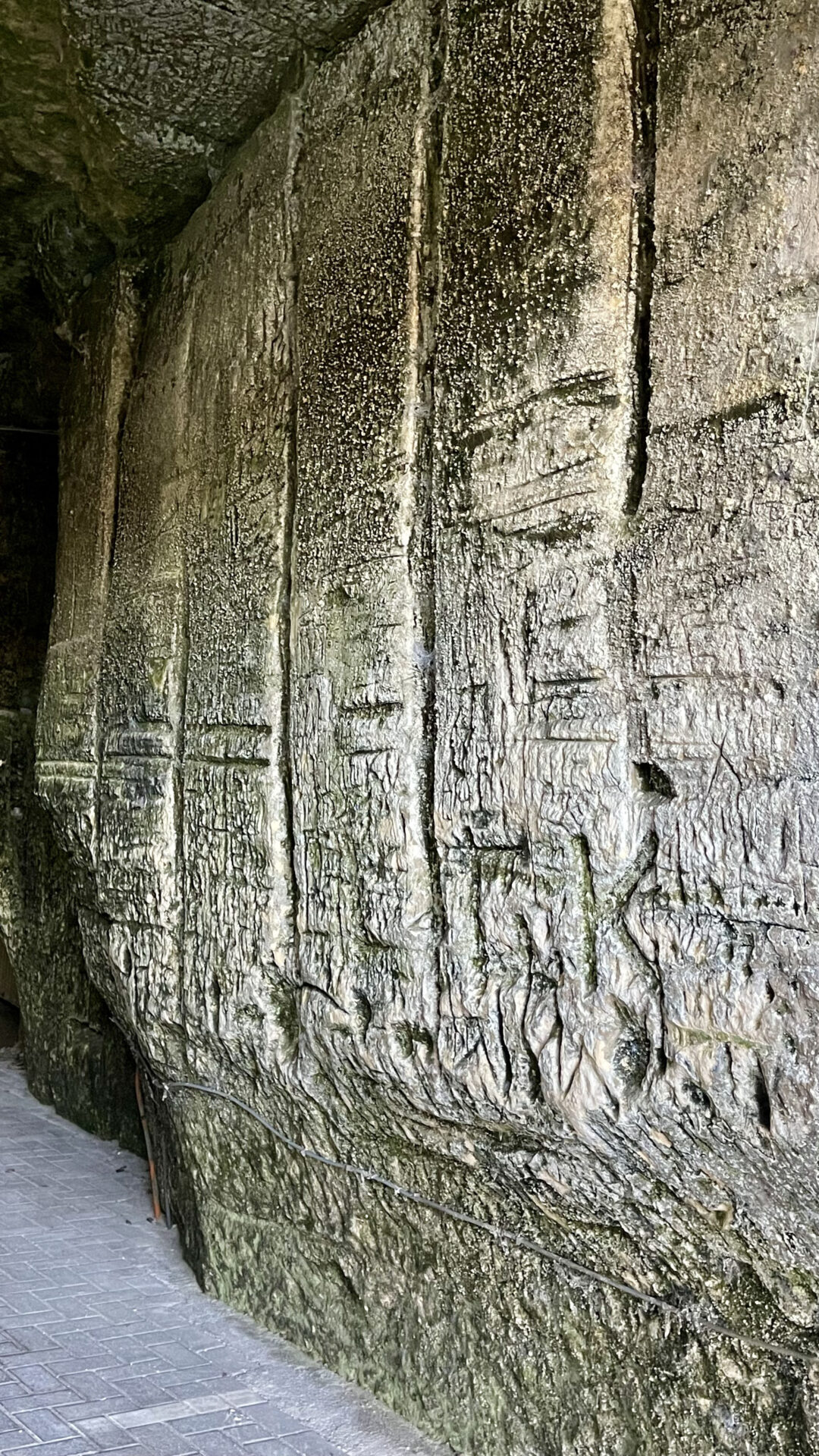
Kanne marl caves. Credit: Angela Dansby
Stavelot has a carnival with mischievous Blancs Moussis dressed in white with long red noses. Armed with dried pig bladders, they playfully swat spectators – a tradition that is as bizarre as it is beloved. Each August 15, Malmedy cooks up one of Belgium’s most unusual culinary spectacles: a giant omelette made with around 10,000 eggs. It is prepared in an enormous pan and shared among the crowd.
Luxembourg
Tucked along the winding Semois river, Chiny is often cited as the sunniest spot in Belgium. Nearby Torgny is nicknamed La Petite Provence Belge due to its warm microclimate, ochre-toned houses, vineyards and wild orchids.
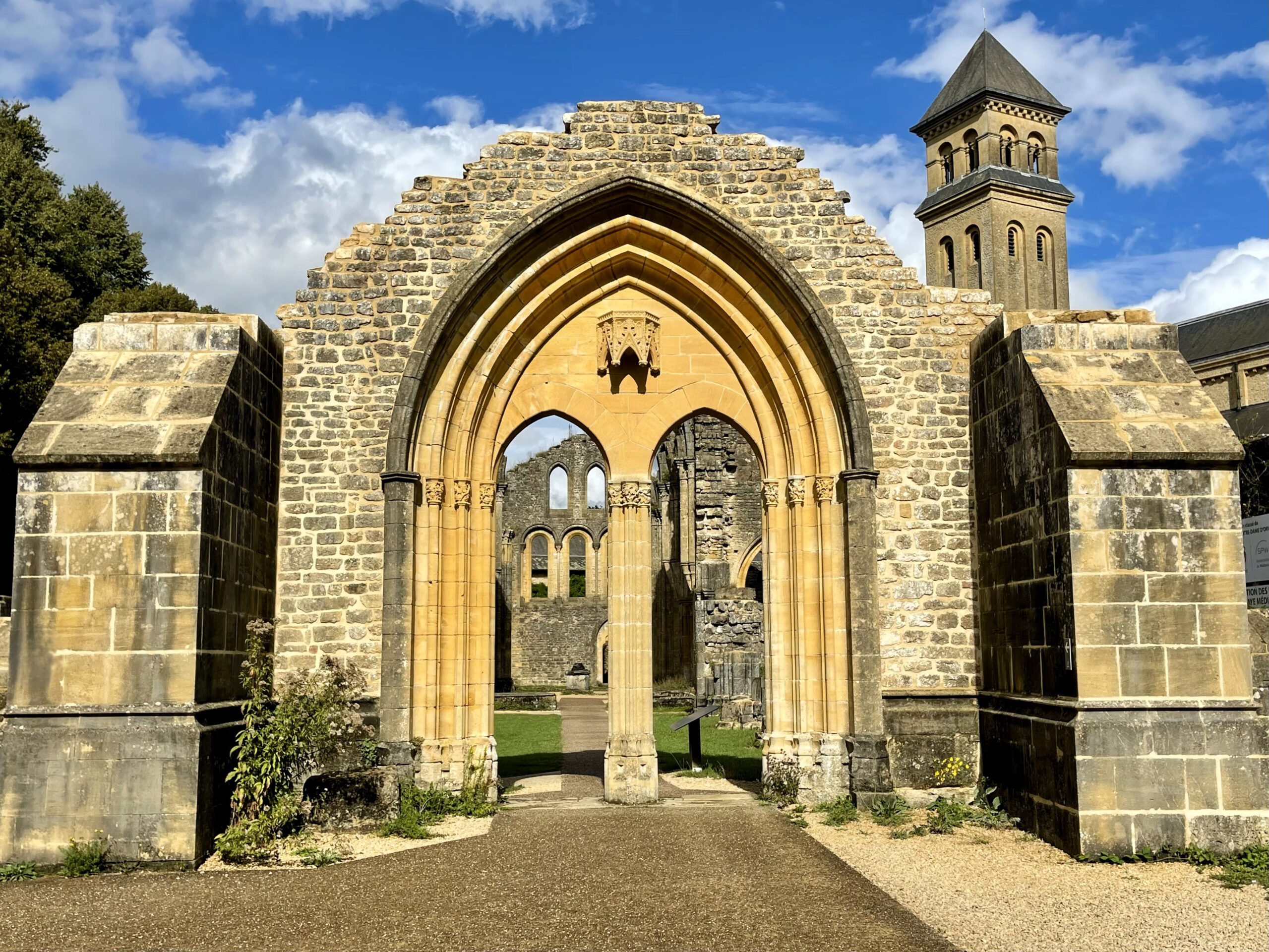
In Villers-Devant-Orval, Orval beer is steeped in a legend: a countess lost her golden ring in a spring, which a trout returned by mouth, inspiring the name Val d’Or (Golden Valley). Today, that same spring supplies water for the famed Trappist beer brewed at Orval Abbey. Down the street, À l’Ange Gardien is the only place in the world serving green Orval, a lighter, lower-alcohol version of the classic.
