
May is bringing more than just summer vibes to Belgium, as a number of new measures and rules are coming into force in the country this month.
From energy support, more mobile data, and increased museum rates to mandatory drug tests and the start of the country's tax season, the most important changes and how they will impact people can be found here.
Aligned but increased museum rates
Visitors to federal museums will now be able to benefit from harmonised concessionary rates. For a long time, the rules governing free admission and discounts varied, depending on the target groups and the museums.
These museums are now also allowed to set their own standard admission prices. As a result, many federal museums will increase their standard ticket prices on 1 May.
In practice, the aligned rates mean that from now on, all federal museums will be free of charge for children under the age of 3, people with disabilities and their carers, teachers and journalists, upon presentation of proof.
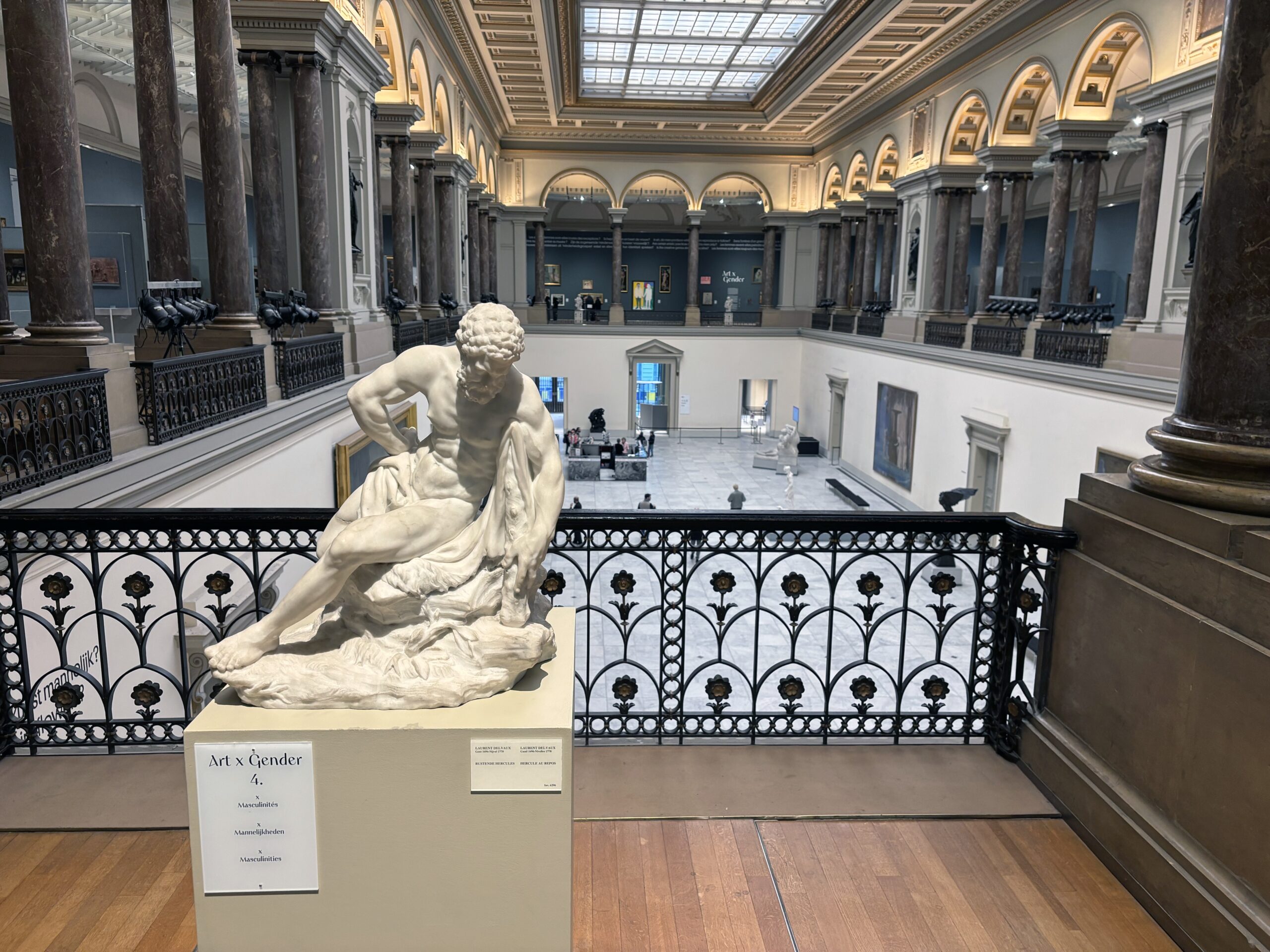
The Royal Museums of Fine Arts in Brussels on Tuesday, 18 November 2025. Credit: Belga/Morgane Berger
Additionally, a reduction rate will be granted to young people under the age of 25 (60% off), to people over the age of 65 (25% off), and to job seekers and people receiving increased social assistance (60% off).
In addition to these discounts, admission to the museums (with the exception of the Planetarium) will be free for everyone from 13:00 on the first Wednesday of every month.
The new policy applies to the Royal Museums of Fine Arts of Belgium, the Royal Belgian Institute of Natural Sciences, the Royal Library of Belgium, the Royal Museums of Art and History, the Musical Instruments Museum, the Halle Gate, the Royal Museum for Central Africa and the Planetarium of the Royal Observatory.
Proximus increases mobile data plan
Mobile telecommunications company Proximus is boosting various mobile plans with more mobile data, at no extra cost, for both residential and business customers.
Customers will automatically benefit from this data boost, without having to do anything themselves. This way, the company wants to respond to the rapidly evolving digital needs of its customers.
Proximus logo. Credit: Belga / Eric Lalmand
For private customers, the Mobile Easy package (€19.99/month incl. VAT) now includes 15GB of data per month, instead of 10GB. The Mobile Smart (€24.99/month incl. VAT) now includes 70GB, instead of 60GB. Mobile Maxi (€29.99/month incl. VAT) now includes 140GB, instead of 120GB.
The Mobile Essential and Mobile Unlimited mobile plans remain unchanged.
It's tax season
Submit your tax return
Submitting your tax return to the fiscal authorities has technically been possible since Wednesday 28 April, but most people only realise in May that Belgium's tax season has officially opened.
For those submitting a paper return, the deadline is 30 June, while people filing their taxes via Tax-on-Web have until 15 July. Taxpayers with specific income, including the self-employed, have until 16 October.
The new return now has 699 codes – 47 fewer than last year. This is the lowest number in the past 10 years.
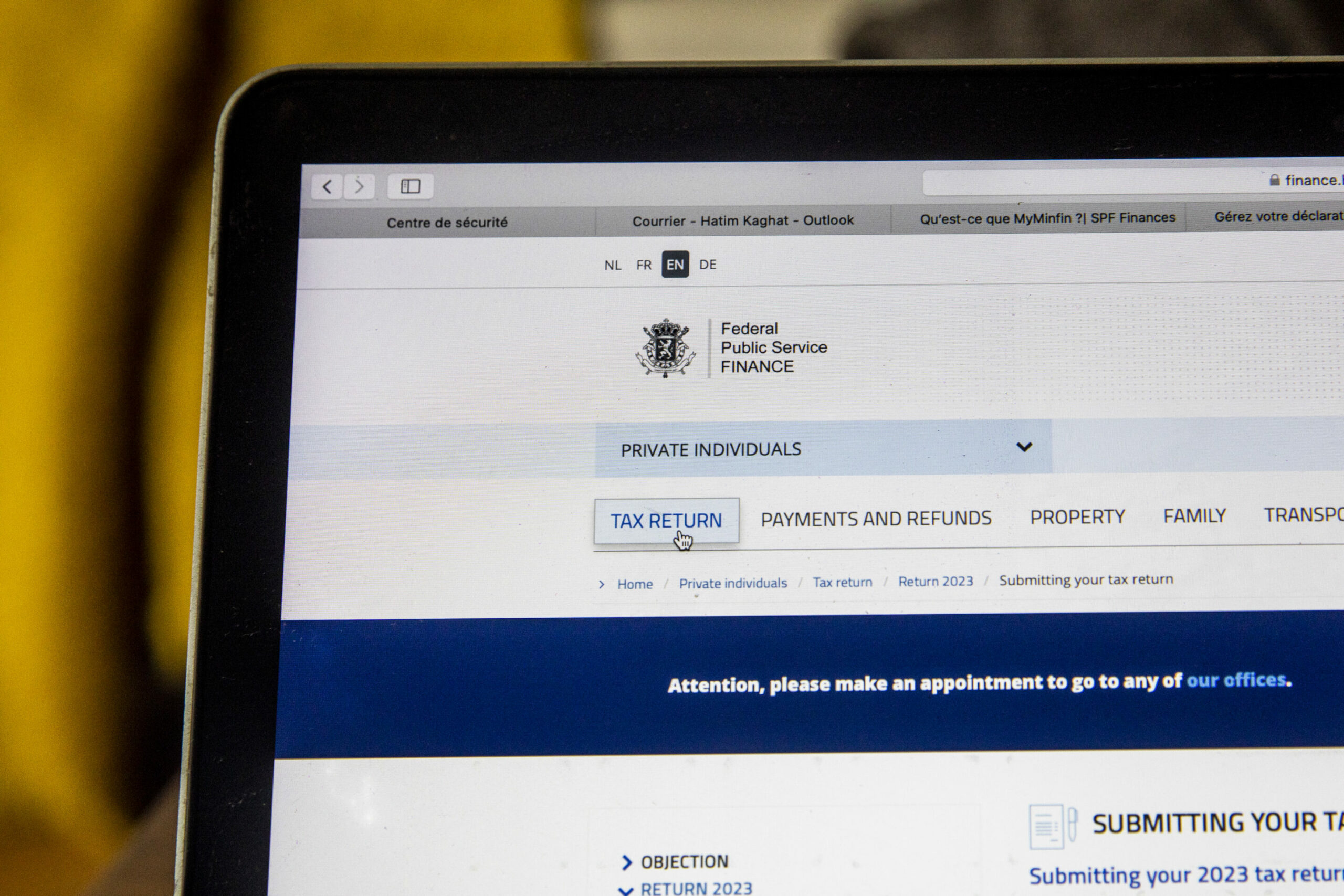
Credit: Belga / Hatim Kaghat
Final month of the capital gains tax transitional scheme
Belgium's finance committee approved the capital gains tax – which applies to all capital gains realised since the start of this year – last week.
A transitional arrangement will remain in place until the end of May, meaning people must keep track of the capital gains themselves during this month. From June, banks will be able to deduct the tax automatically on their behalf.
Many financial institutions have already sent their clients a message asking whether they should withhold the tax. In that case, the banks will collect the tax whenever shares are sold at a profit. That is the standard solution.
Importantly, banks and brokers do not take tax exemptions into account when collecting the tax, meaning people must apply for this via their tax return.
Clients can also decide to declare the capital gains tax themselves via their tax return, as is currently the case. This is known as the "opt-out scheme". In that case, the bank does not withhold the tax.
Temporary energy support
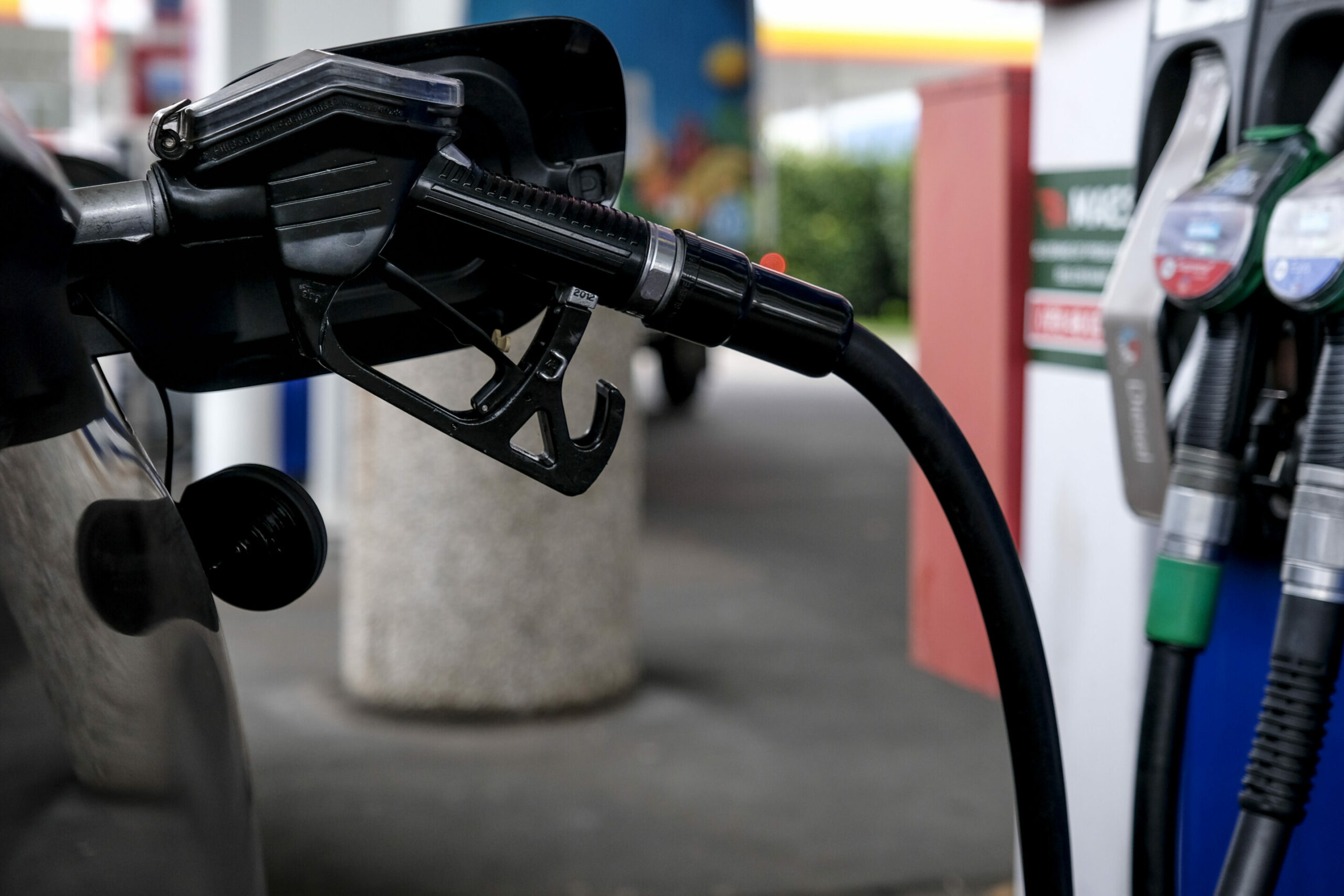
The much-discussed energy support by the Federal Government will be made available for three months, starting in May.
As a result of the skyrocketing fuel prices due to the conflict in the Middle East, the government will spend €20 million each month to compensate the commuting costs of employees without a company car.
Credit: Belga/Dirk Waem
However, the ball is mainly in the employer’s court. If they choose to increase the current mileage allowance from a maximum of €0.43 per kilometre to a maximum of €0.53/km, the Federal Government will compensate for that extra cost via a tax benefit.
An employer can therefore choose whether to add €0.10 (or less) to their employees’ mileage allowance, without having to bear extra costs.
Mandatory drug tests for prisoners
It is becoming possible to require prisoners to undergo drug testing, which will enhance "the safety, health and reintegration prospects of prisoners", says Federal Justice Minister Justice Annelies Verlinden (CD&V).
The tests will be conducted using saliva or urine samples, and may be carried out either on a targeted basis, based on individual indications, or on a random basis to create a deterrent effect. Physical coercion is ruled out, but refusal will be treated as a positive result.
If a prisoner tests positive, they are immediately referred to medical and psychosocial services for any acute care and a treatment programme. A repeat test will follow later. In the event of a positive test, fraud or refusal, a sanction may also be imposed.
Verlinden plans to extend the measure to halfway houses – where prisoners reside during the final phase of their sentence – as practical experience shows that drug use occurs there too.
Commuting chaos in Antwerp
From May until the end of March 2027, the pre-metro tunnel between the left and right banks in Antwerp will close for works – meaning there will be no tram services between the Linkeroever and Opera stations on the right bank during this period.
As some sections of the tunnel they go through are over 50 years old and contain asbestos, tram lines 3, 5, 9 and 15 will be out of service for 11 months. As a result, more than two million people per month will have to find an alternative.

Illustrative image of a tram of the De Lijn public transport network in Antwerp. Credit: Belga / Ward Vandael
Not only for crossing the Scheldt, but also for the route between Central Station and Groenplaats, as there will be no trams running there either.
However, the city is taking various measures to reduce the hindrance, ranging from shuttle buses and extra ferry services to even reopening a previously closed train station on Linkeroever.
Provisional EU-Mercosur free trade agreement
The free trade agreement between the European Union and the Mercosur countries will provisionally enter into force – creating one of the largest free trade zones in the world, accounting for 30% of global GDP and more than 700 million consumers.
Following almost 25 years of negotiations, the European Commission received the green light from the Member States to officially sign the trade agreement with Brazil, Argentina, Uruguay and Paraguay earlier this year.
The agreement is intended to enable the EU to export more cars, machinery, wine and spirits, while at the same time facilitating imports of South American beef, poultry, sugar, rice, honey and soya into Europe.
This is causing considerable concern in the agricultural sector, which fears unfair competition.
The European Parliament has not yet approved the agreement, but the European Commission did not wish to wait and decided at the end of February to allow the treaty to enter into force provisionally from May. It insists that sufficient safeguards for farmers have been built into the agreement.
