
For a brief period in the past, Belgium established a research commission on looted art, but it was not followed up by a restitution commission as in other countries that had been occupied by Nazi Germany. Now, this is going to change.
Flanders recently announced that it will establish a permanent commission in charge of returning art looted during the Second World War.
"The widespread plundering of Jewish families was a deliberate strategy of the Nazis, central to the Holocaust," said Flemish Culture Minister Caroline Gennez. "Artworks stolen or forcibly sold before and during the Second World War must be returned to their rightful owners. After all these years, Flanders can finally begin to address this historic injustice."
The commission has not yet been formally established, but according to her statement, its tasks are clear.
It will investigate claims concerning art pieces potentially stolen by the Nazi regime. It will advise the Flemish government on complaints relating to items in its collection. Local authorities, private owners, and heirs will also be able to submit cases for review. The commission will conduct provenance research and consult all involved parties.”
The development follows the pioneering work by Geert Sels, culture journalist at De Standard. In 2022, he published the book Art for the Reich: In Search of Nazi-Looted Art from Belgium. When he started his investigative study in 2014, he had to start from scratch. His book has been described as an appeal to the Federal Government to tackle the sensitive issue of Nazi-looted art in Belgium.
"Belgium had no choice but to take action regarding Nazi-looted art," he wrote recently in De Standard. "Our neighbouring countries have had a policy on this for many years. Looking the other way was no longer an option."
After the publication of his book and his series of articles in De Standard, descendants have submitted claims to recover paintings.
"It was Flanders that took the lead. With the decree approved by the Council of Ministers on Friday (24 April), there is now a legal framework and clear guidelines. A permanent restitution committee will be established to handle claims for restitution," he said.
There are currently both old and new claims which the commission will have to research at the very start.
Paintings under investigation
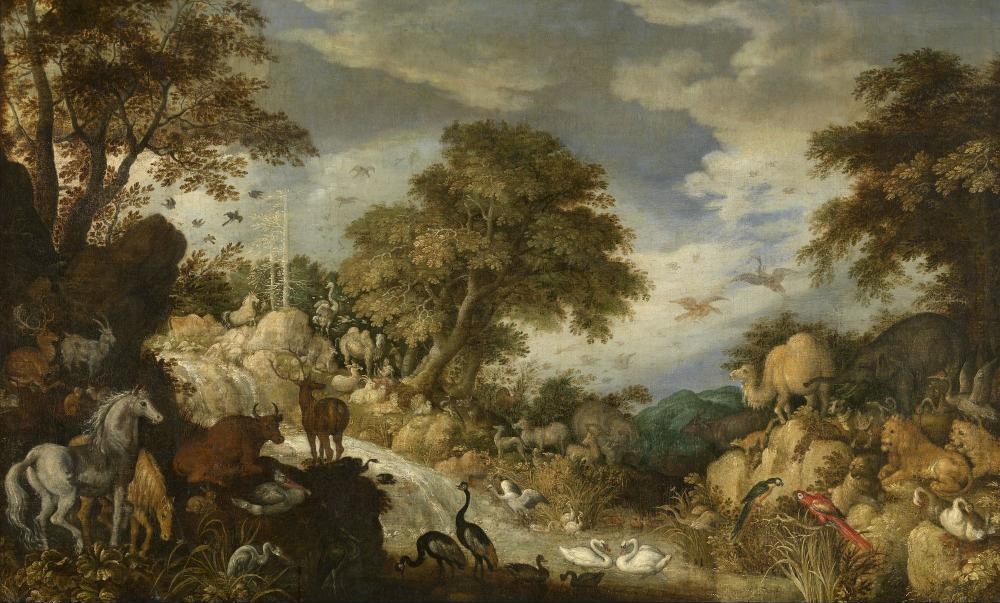
Three claims concern paintings in the Royal Museum of Fine Arts in Antwerp (KMSKA). Two of them come from the estate of Paul Rosenthal, a Jewish art dealer who died in Auschwitz. The other comes from the family of Moritz Lindemann, an art restorer who was admitted to a psychiatric institution following his time at Kazerne Dossin in Mechelen.
KMSKA has already acknowledged that the origin of the three masterworks – by Roelant Savery (from Rosenthal), Buytewech (from Rosenthal) and Cornelis van Haarlem (from Lindemann) – are under investigation, following a request for restitution.
According to Sels, there is still another claim: Oskar Kokoschka’s ‘Portrait of Ludwig Adler’ at the Museum of Fine Arts in Ghent.
An expert group appointed by the City of Ghent found in 2010 that it should not be restored to the grandchildren of Victor Klemperer von Klemenau, a German banker of Jewish origin. A study by law professor Michel Flamée questioned the decision.
A similar negative decision not to restitute a painting was taken last November by the City of Ghent as regards the painting 'Portrait of Bishop Antonius Triest' by the Flemish painter Gaspar de Crayer. The painting, which was acquired in 1948 by the city under dubious circumstances, figured in Belgian media as an example of looted art.
In the Flemish Parliament, the decision has been described as "a controversial decision". The expert group admitted that the portrait "remains connected to an unacceptable act of spoliation (the theft of goods during wartime)." The disputed painting has not been exhibited during most of the years since it was acquired by the City of Ghent and was, until recently, stored in a depot.
The City of Ghent confirmed to The Brussels Times that the Museum of Fine Arts in Ghent will display the painting in its permanent collection as a form of moral reparation. The museum wrote that it found it important to explain the history of spoliation during the Second World War.
The new policy focuses on art stolen from Jewish families – a narrow interpretation, according to Sels. Last year, the painting ‘The Return of the Holy Family from Egypt’ by Jacob Jordaens was returned to the family of the Belgian resistance hero Joseph Scheppers de Bergstein from Mechelen.
The policy extends the timeframe of the research to the period between 1933 and 1945 (before only from 1940).
Searchable digital database
The dramatic story of the looting and partial recovery of looted art has in recent years been illustrated in an exhibition in Brussels and Mechelen on 'Stolen Jewish Legacies: The Fate of the Andriesse Collection'.
The exhibition curator, Anne Uhrlandt of the Research and Documentation Officer at the Jewish Digital Cultural Recovery Project (JDCRP), welcomed the Flemish decision to establish an independent restitution commission. The new commission is expected to apply the Washington Principles and Best Practices in its research of looted art.
The JDCRP project has recently launched a first version of a searchable online research platform providing global access to archival records of Nazi-era plunder ('Legacy Explorer’). In a search on the platform, some results were found for artworks by the above artists, but not for any of the paintings mentioned in the above claims.
"We are working towards integrating more and more national archives into Legacy Explorer so that hopefully in the future there will be more information," Uhrlandt told The Brussels Times. "Altogether, the database currently covers ca 40,000 artworks, but this is only the tip of the iceberg. Our long-term endeavour is to expand the search possibilities."
In practice, the platform consists of three sets of documents: (1) those of the Nazi perpetrators who documented the looted artworks in two central collecting points in Nazi Germany, (2) documentation made by the Allied Forces at the end of the war when they retrieved the collections and (3) post-war claims by the victims and eventual recovery of them.
A search by country shows the origin of the artist linked to the artwork – not the country of the original owners or where it was looted. It is also possible to search by the family name of the original owner, the name of the artist and the name of the artwork.
Artworks could have been looted in different ways. They could have been directly looted by the Nazi occupation force and documented by them. If a claimant can identify an artwork in the platform which belonged to their family, the fact that it was documented by the Nazis is evidence that it was looted and therefore should be restored.
If the owner was forced to sell the artwork before or during the war, the looting is currently not likely to be included in the platform. Such artworks may have changed hands many times since the war and can have ended up at a museum, as happened in the Belgian cases mentioned above.
