
The 61st edition of the Venice Art Biennale officially opens to the public on Saturday, showcasing contemporary art from over 100 countries and featuring the major exhibition ‘In Minor Keys’.
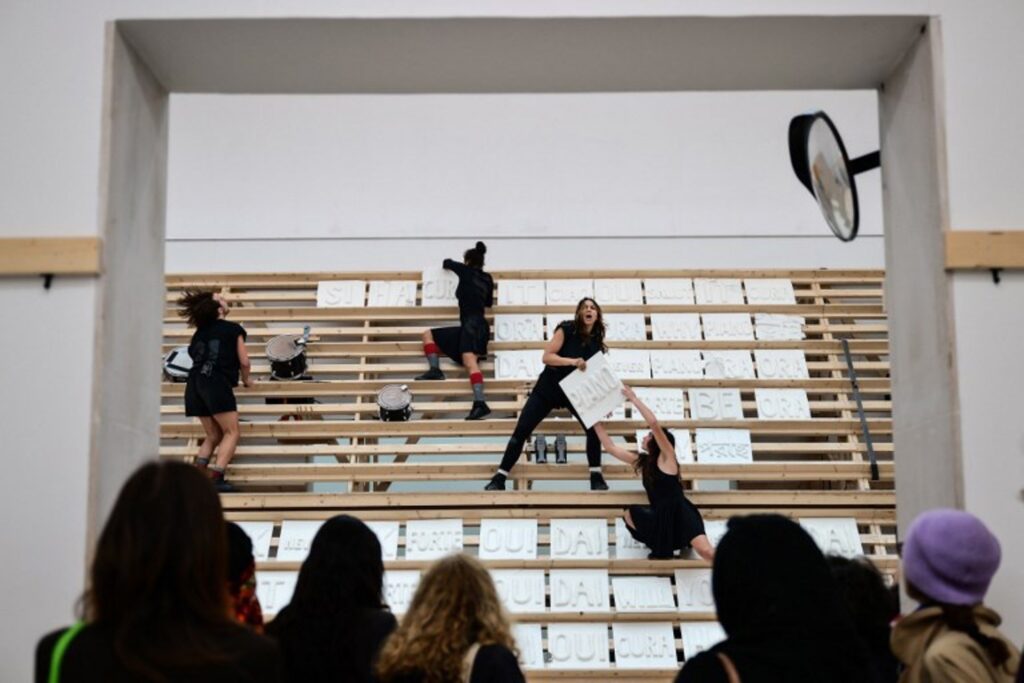
This year’s Biennale includes artworks from 110 artists, collectives, and organisations, displayed across national pavilions in Giardini, the Arsenale, and the city centre. Belgium has broken new ground by presenting performance art for the first time, with Miet Warlop’s production ‘It never ssst’, curated by Caroline Dumalin.
The Biennale faced a sudden challenge earlier this year with the unexpected death of Swiss-Cameroonian curator Koyo Kouoh in May at the age of 58. Kouoh was the first African woman entrusted with curating the event.
In her honour, her exhibition ‘In Minor Keys’ moved forward under the direction of her team, following the conceptual framework that she had already established and featuring the artists she had selected. Among these are Belgian creators Philip Aguirre y Otegui, Sammy Baloji, Otobong Nkanga, and Léonard Pongo.
Belgium’s main contribution remains its national pavilion, inaugurated earlier this week by Flemish Culture Minister Caroline Gennez. Belgium was the first foreign country to open a pavilion in Giardini in 1907, and the pavilion alternates each edition between being managed by the Flemish and French Communities.
This year, Warlop’s interdisciplinary work takes centre stage, succeeding prior representations such as Francis Alÿs’s ‘The Nature of the Game’ and the French Community’s collective Petticoat Government.
Warlop’s ‘It never ssst’ transforms Belgium’s pavilion into a dynamic arena where language and music collide. Seven performers manipulate a plaster-cast wall of words as if it were a musical instrument.
These words circulate within the space—carried, passed around, dragged, and broken. Students from the Accademia di Belle Arti di Venezia are contributing to the exhibition by crafting wall reliefs using the altorilievo technique.
Belgian art also appears elsewhere throughout Venice. Sammy Baloji and Léonard Pongo’s works are on display in the Democratic Republic of Congo’s pavilion, while Otobong Nkanga’s creations appear in the Vatican’s pavilion, which explores themes related to German mystic Hildegard of Bingen. A separate film by Aline Bouvy features in Luxembourg’s pavilion.
In addition, Anna Mancuso takes her art to the city’s public squares, incorporating live pigeons, and Koen Vanmechelen’s inaugural sculpture exhibition ‘We Thought We Were Alone’ is housed at the Palazzo Rota Ivancich.
Meanwhile, ‘The Only True Protest Is Beauty’ gathers over 200 pieces at Venice’s Fondazione Dries Van Noten—a collaborative effort spearheaded by Belgian designer Dries Van Noten and his partner Patrick Vangheluwe.
The Venice Art Biennale will run until 22 November, at which point prizes will be awarded. However, the Golden Lions for Lifetime Achievement will not be presented this year, as Kouoh had not yet selected the recipients before her passing.
Marred by political controversies
This year's 61st Venice Biennale, the world’s largest art exhibition, has been overshadowed by political controversy, including the resignation of the jury, boycotts, and protests over the participation of Israel and Russia.
Last week, the entire five-member jury stepped down following backlash to its announcement that prizes would not be awarded to artists from countries whose leaders are accused of crimes against humanity by the International Criminal Court (ICC).
While no countries were named, the ICC has issued arrest warrants for Israeli Prime Minister Benjamin Netanyahu and former Defence Minister Yoav Gallant over alleged war crimes in Gaza, as well as Russian President Vladimir Putin for alleged war crimes in Ukraine.
Israel’s participation drew criticism from the arts community, with 182 artists, curators, writers, and staff from various countries signing a petition demanding Israel’s exclusion.
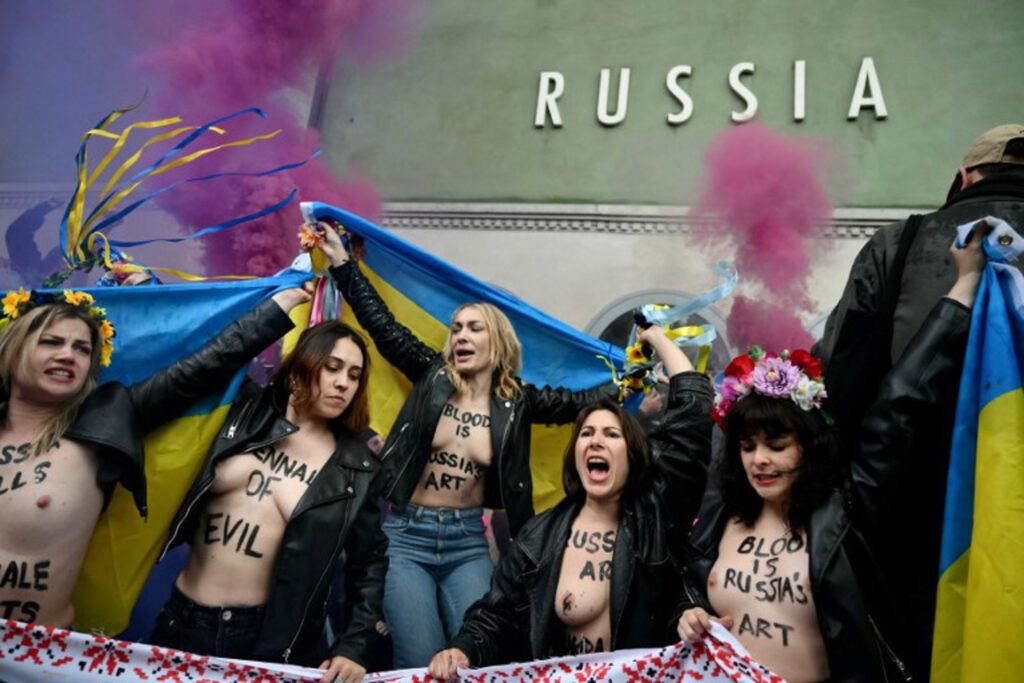
Ukrainian feminist activist Inna Shevchenko (C), leader of international women's movement FEMEN and Pussy Riot activists stage a protest against the participation of Russia in the Venice Biennale art show, on 6 May 2026 in Venice. Credit: Belga / AFP
The jury’s decision to withhold certain prizes also faced opposition, particularly from Israeli circles. Italy’s Culture Minister Alessandro Giuli opposed the jury’s stance and announced he would boycott the Biennale’s opening in protest against Russia’s inclusion, adding to pressure on the jury, which decided to resign.
Russia’s presence has sparked widespread disapproval since the country is absent from the Biennale by choice after withdrawing in 2022.
However, it retains a permanent exhibition space in the Giardini, leaving doubts about the Biennale Foundation’s ability to block its use. Russia's return to the Biennale has been met with disbelief and outrage.
On Wednesday, during the press preview, Ukrainian feminist collective Femen and Russian protest group Pussy Riot joined forces for their first-ever joint demonstration at the entrance to the Russian pavilion. Wearing pink balaclavas, wielding smoke bombs, and baring their chests, they delivered their message.
"We are here to remind everyone that the only Russian culture, the only Russian art today, is blood," said Femen activist Inna Shevchenko, adding, "This pavilion stands on Ukrainian mass graves."
Last month, the European Union withdrew a €2 million subsidy for the Biennale due to Russia’s return to the event.
Traditionally, prizes are awarded by the jury on the official opening day. This year, however, it has been decided that awards will instead be handed out on the exhibition’s final day in November after voting by visitors.
