

Political pressure is once again mounting over the dispensation of long-term sickness benefits in Belgium,
This week, the National Institute for Healthcare and Disability Insurance (NIHDI) released two new surveys, which claim that a quarter of long-term illnesses within two specific groups were receiving welfare incorrectly.
NIHDI is responsible for overseeing the budget allocated to reimbursements of costs for health services through health insurance funds and inspects the correct application of the reimbursement rules.
Various Belgian media were sent previews of the two surveys conducted by NIHDI in 2025.
These examined a sample of 1,000-2,000 people, according to different sources, with participants from two groups: young people under 28 and recipients under 40 with debilitating mental health conditions.
The results of these surveys are interpreted to reflect that about a quarter of long-term sickness benefit cases had to either be reduced or terminated entirely.
In the majority of cases associated with incorrect payments, the recipients should have been able, in principle, to return to work as usual. The socialist insurance fund Solidaris was overrepresented in alleged wrongful allocations of benefits, according to the report.
The health insurance funds responsible for the evaluations, however, are concerned with potential misinterpretations of the figures. They warn that the selected groups constitute complex conditions like mental health issues, which are hard to assess. Therefore, these should not be held as representative of all people with disabilities, according to the funds.
Previously, Het Laatste Nieuws analysed an unpublished 2020 report from NIHDI, concluding that about half of long-term sickness benefits recipients were fit to work. This interpretation was, once again, dismissed by the insurance funds due to serious sampling and methodology issues.
Accusations on all fronts
Long-term sickness benefits are under immense pressure from the ruling coalition, which is being touted as a key budget-balancing measure.
To get the federal finances back on track, Prime Minister Bart De Wever (N-VA) must find at least €5 billion to get the budget back on track, and is pushing ahead with cutting public spending. Critics argue there are other ways of raising capital, such as clamping down on tax avoidance or fighting against money laundering.
Health Minister Frank Vandenbroucke (Vooruit), who is tasked with initiating reforms in the sector, previously promised that he would save €1.9 billion by stemming the influx of people on long-term sick leave.
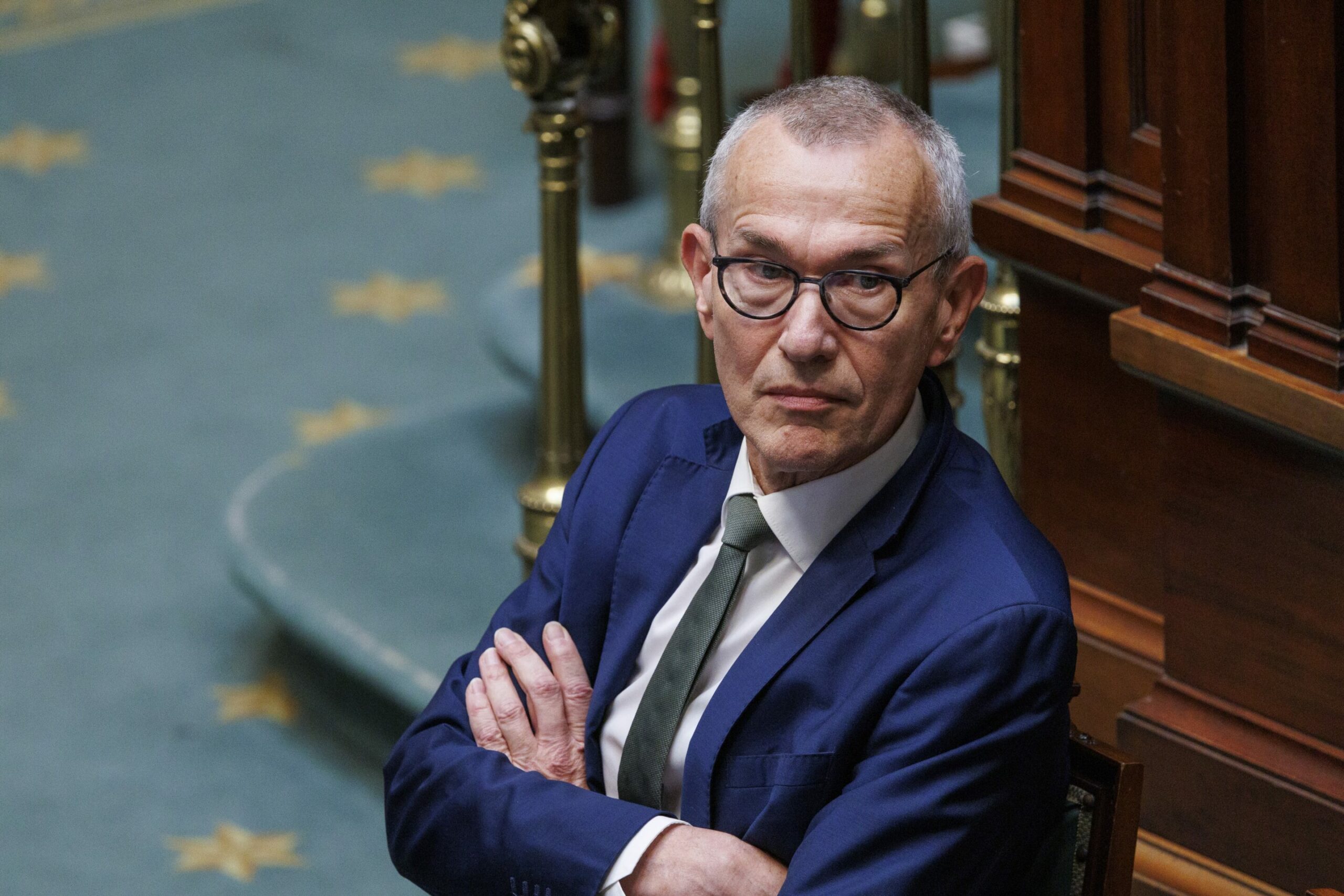
Minister of Public Health and Social Affairs Frank Vandenbroucke. Credit: Belga/Nicolas Maeterlinck
By the end of 2025, a record number of 576,643 people were receiving these benefits. Belgium is an outlier when compared to its neighbours’ policies, with only the UK exhibiting the same problematic patterns of high numbers of subsidised long-term sick leaves.
If not for the retirement age increase, the general trend is a slowdown of new applicants. At the same time, young people and women specifically are overrepresented, grappling with mental health conditions like burnout and depression more than anyone else.
This week, a parliamentary hearing is expected to discuss the issue once again. Right-wing coalition parties N-VA and MR are spearheading the offensive on the benefits, but even the centre-left of the coalition Les Engages and CD&V, as well as Flemish socialists, Vooruit, are becoming more open to scrutinising their use as well.
Indeed, Minister Vandenbroucke has changed his stance from a previously defensive one. Commenting on the findings of the 2025 surveys, his office issued a statement.
"The health insurance funds have some explaining to do. Based on these figures, we can only conclude that they are not taking sufficient steps to improve their assessment of long-term sickness."
