
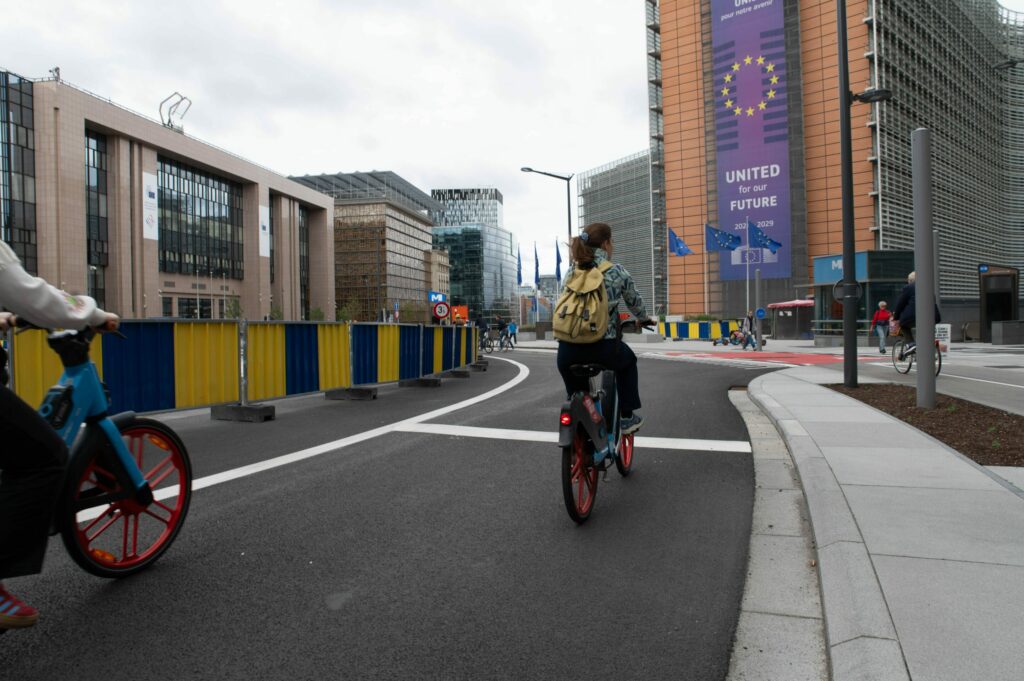
Researchers at the Vrije Universiteit Brussel (VUB) developed a new method to identify missing cycling infrastructure in Brussels by using the sports application Strava.
The research group Mobilise and the Data Analytics Laboratory combined anonymised Strava data with existing government data to determine where the need for safe cycle paths was greatest, the university announced on Friday.
Researchers Sara Tori and Floriano Tori worked with a team to develop a machine learning model that translated Strava activity into realistic cycling volumes on Brussels roads.
This allowed researchers to map heavily used routes that lacked bike paths. By combining static government data with anonymised Strava data, they identified locations where the need for safe, separated infrastructure was highest. The results offer a concrete tool for policymakers to deploy limited budgets more effectively.
The research revealed that over 30 critical locations in Brussels Capital-Region lack cycling infrastructure despite traffic levels matching the Region's busiest bike routes.
The analysis highlighted two types of priority zones. The first included places where the infrastructure was suddenly interrupted, such as sections along the canal. In these areas, cyclists continued to use the route even after the bike path ended.
The second included streets such as Rue Antoine Dansaert or Rue du Trône, which saw high cycling volumes but lacked safe, separated infrastructure on crucial segments.
With this study, mobility planners have an objective instrument to maximise the return on investment for new bicycle paths.
"Based on the results, the government can now invest further in those places where cyclists are already present in large numbers, but where their safety is not yet guaranteed," the researchers said.
"With limited resources, you need to know where infrastructure can have the greatest impact," Tori concluded. "This method makes that visible on a large scale for the first time".
