
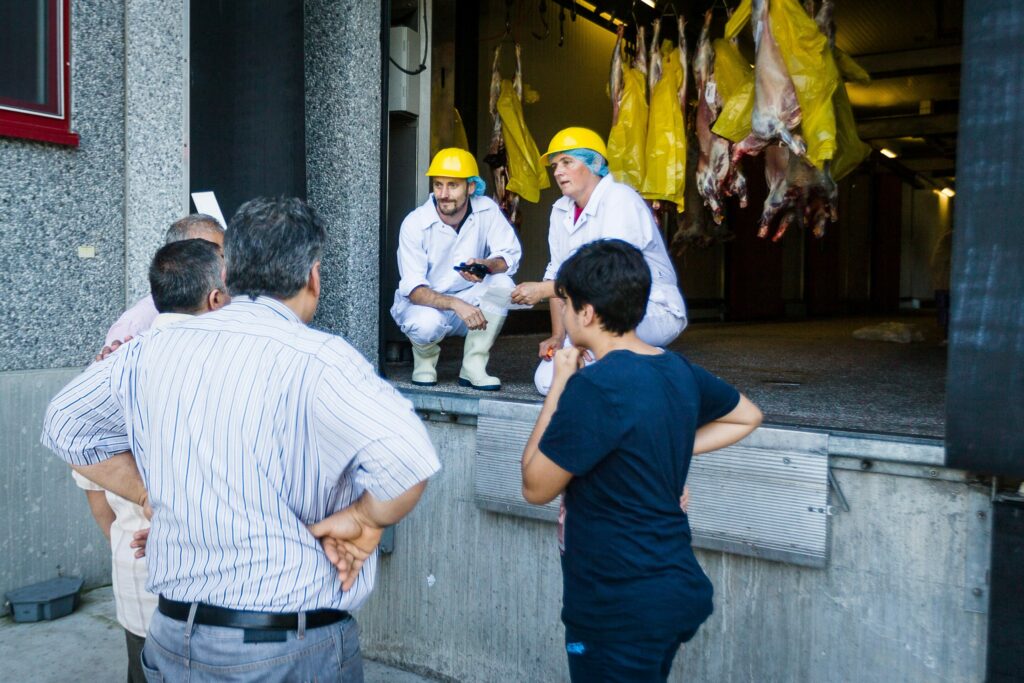
Feast of sacrifice, also known in Arabic as Eid al-Adha, is by far the most important feast celebrated throughout the Muslim world.
Calf, goat and sheep are traditionally slaughtered on this day. Meat is also shared as a form of charity.
The day marks Abraham's willingness to sacrifice his son for Allah, in the Quran, which has parallels across the other Abrahamic religions (Judaism and Christianity).
On Eid al-Adha, Muslims across Belgium are required to sacrifice either a sheep, lamb, goat, cow, calf, bull or camel. This act of worship is named "Qurbani" or "Qurban".
In the Quran, Ibrahim was commanded by Allah in a dream to sacrifice his son, Isma'il, and he was willing to do so, but Allah gave him a sheep to sacrifice instead of his cherished progeny.
The feast falls on the 10 Dhu'l-Hijja, the 12th and final month of the Islamic calendar. This year, Eid al-Adha falls on 26 May. Observances are generally carried forward to the three days following, known as the Tashreeq days.
As with Eid al-Fitr, a prayer is performed on the morning after, and the ritual sacrifice of a livestock animal takes place.
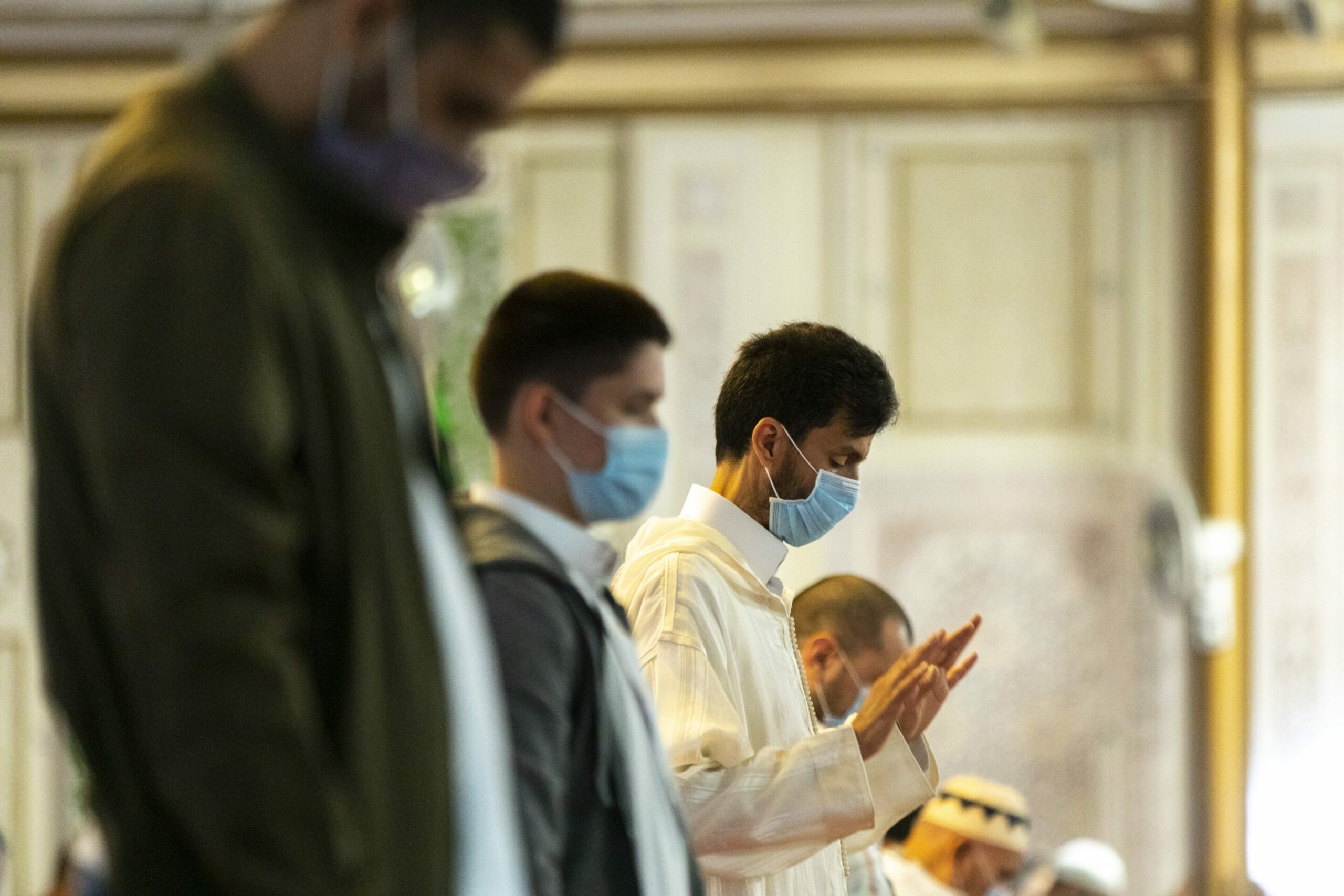
Muslims gather for prayer during celebrations marking Eid al-Adha, the Islamic Feast of Sacrifice, Friday 31 July 2020 in Brussels. Credit : Belga / Hatim Kaghat.
In many majority-Muslim countries, people themselves slaughter the animal. The meat is generally split into three portions: one for the family, one for relatives and friends, and one to be shared with the disadvantaged.
Many people tend to volunteer their entire "Qurban" to those who are less fortunate and do not have access to meat to feed themselves or their families.
Rules in Brussels-Capital Region
Belgian law on animal welfare strictly bans the slaughter of sheep, goats, pigs and farmed game for private consumption outside a licensed slaughterhouse or an approved facility.
Since 2022, Muslims transporting their soon-to-be sacrificed live farm animals have had to carry an animal welfare transport document and follow strict rules regarding vehicles and transport crates.
Only professional breeders and licensed transporters are authorised to move animals from farms to slaughterhouses, and police closely monitor compliance during Eid al-Adha.
Since 2018, Muslim residents in Brussels wishing to carry out the animal slaughter must first go to the town hall and register at their municipality. This registration means that they are authorised to declare a private slaughter of the animal.
A declaration paper, previously handed out by municipalities before 2018, is now provided by the licensed slaughterhouse chosen by the individual.
Once the animal has been slaughtered, the approved and licensed slaughterhouse issues a slaughter certificate (declaration) allowing the owner to recover the meat.
Local mosques often hold lists of licensed and "religiously" approved slaughterhouses and breeders. Butchers are also available during the Eid period to help cut parts of the sacrificed animal.
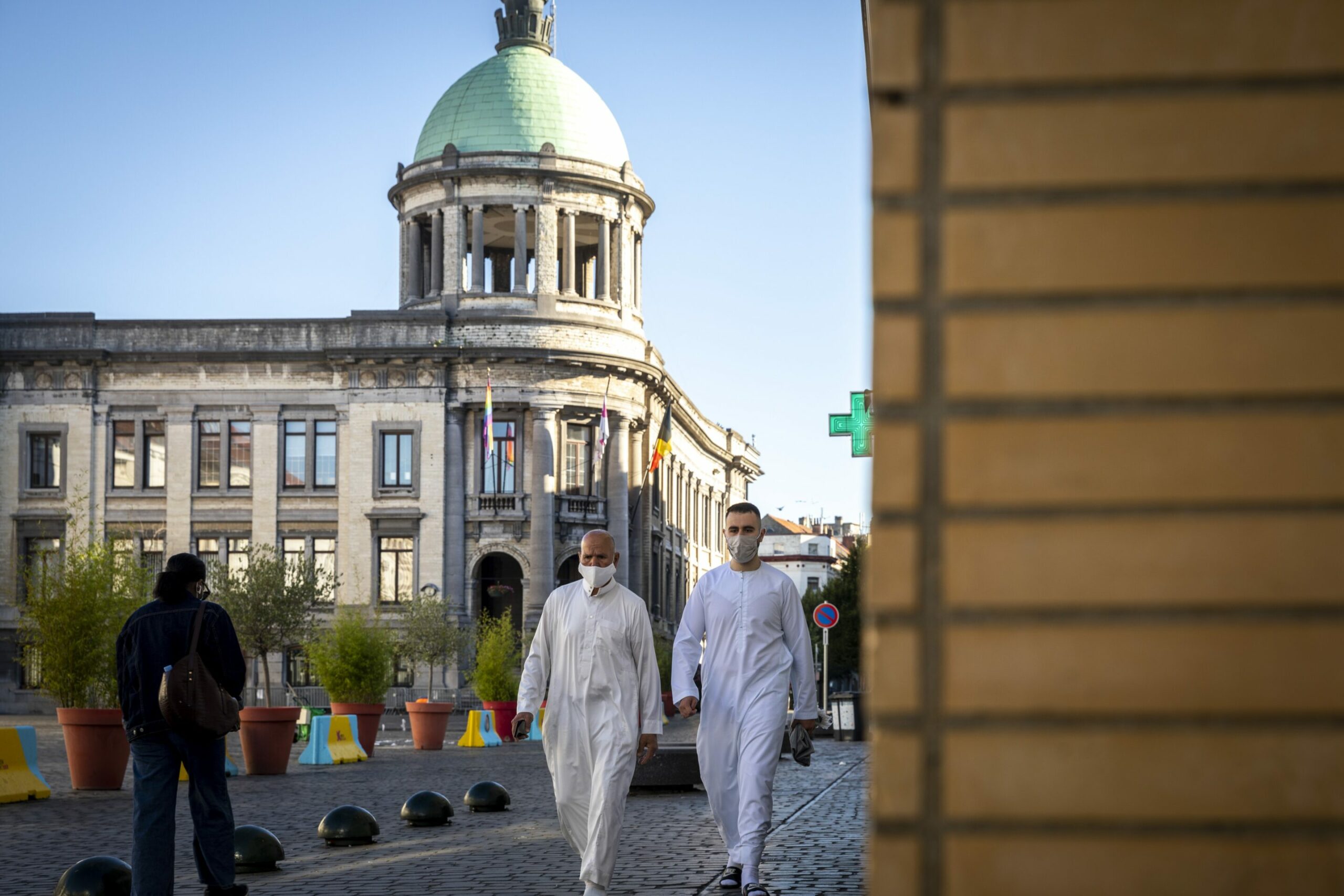
Muslims leave a mosque following Eid al-Adha prayers during celebrations marking the Islamic Feast of Sacrifice in Brussels, Friday 31 July 2020. Credit : Belga / Hatim Kaghat
Charitable causes
Between sunset on the last day of Ramadan and the Eid prayer the next morning, Muslims who can afford it are expected to give a charity donation called Zakat al-Fitr. The idea is to help cover the cost of a meal for someone in need.
Giving to poorer people is a huge part of Islam, and this donation is meant to make sure everyone gets the chance to celebrate Eid properly.
Many mosques collect donations during Eid prayers and pass them directly to those struggling, while others donate through charities and non-profit groups.
