
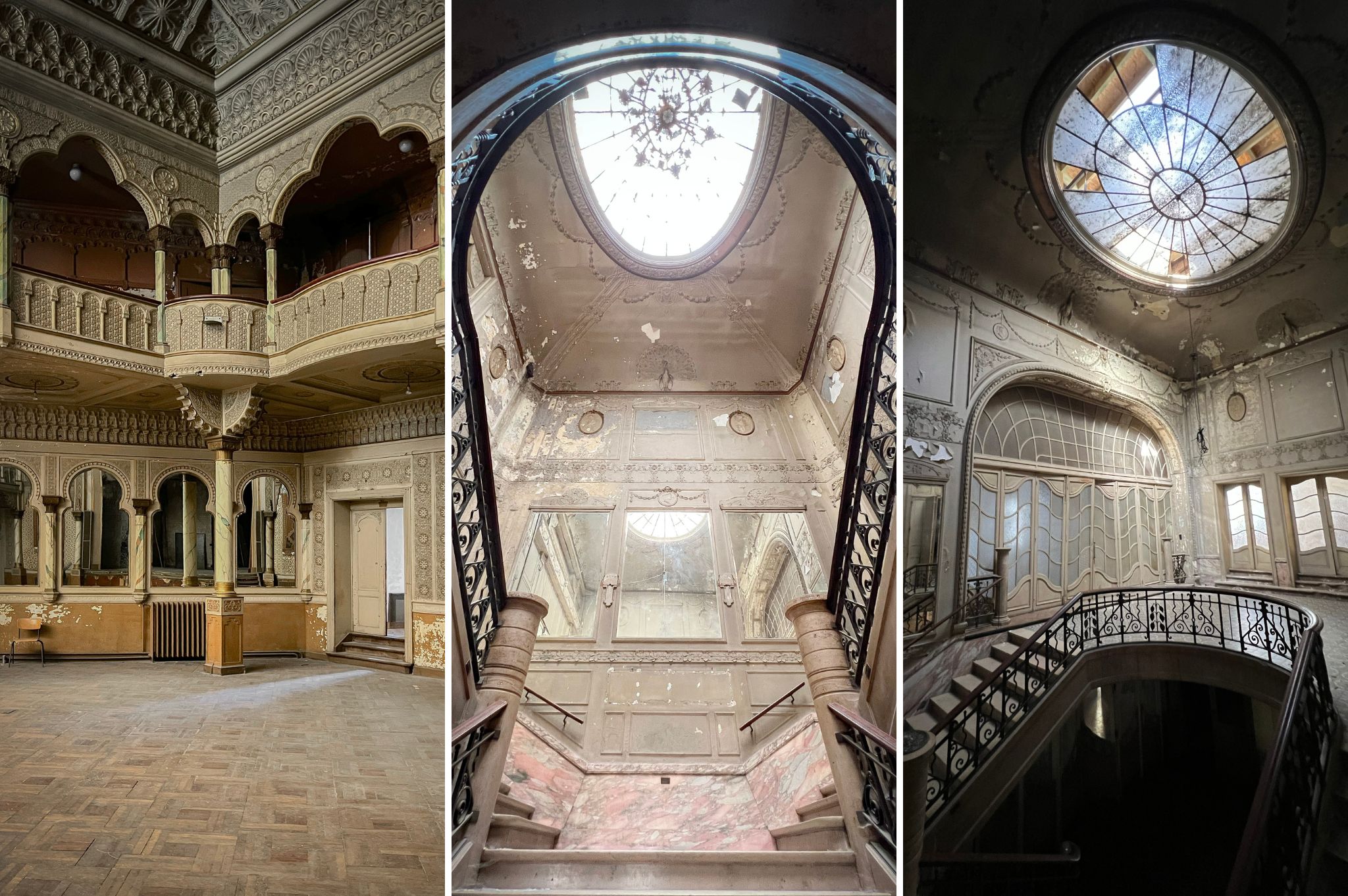
Hidden in plain sight on the Parvis de Saint-Gilles, the historic Aegidium palace-like hall in Brussels was recently saved after being bought by a leading Georgian opposition politician.
At the end of last month, its previous owner, Belgian housing developer Cohabs, announced it was selling the building and abandoning the renovation project, which began with its acquisition in 2018.
In its heyday last century, the Aegidium was known as the Diamond Palace (Diamant Palace), and was completed in 1908. The interior's decoration and architectural style fuse Art Nouveau, Art Deco and Moorish influences, while looking like something out of a Titanic film set.
While needing urgent renovation, it remains a time capsule from the 20th century, equipped with an entrance hall of mirrors, a monumental stairwell lit by an oval skylight, a foyer, a smoking room and two large halls on the first floor, decorated with both Louis XIV-style and Moorish motifs.
Unfortunately, the iconic Saint-Gilles building has been abandoned since 1985, and despite receiving protected heritage status from the Brussels-Capital Region in 2006, it has fallen into disrepair.
Georgian family steps in
Now, to the surprise of locals, the Aegidium has finally been bought by the Khazaradze family's foundation, which is linked to Mamouka Khazaradze, a Georgian opposition politician, businessman and founder of one of the country's largest banks.
"This hidden treasure of Brussels’ heritage has just been acquired by the Khazaradze family and is now entering a new phase in its history," a joint press release by the involved parties, reported by L’Echo.
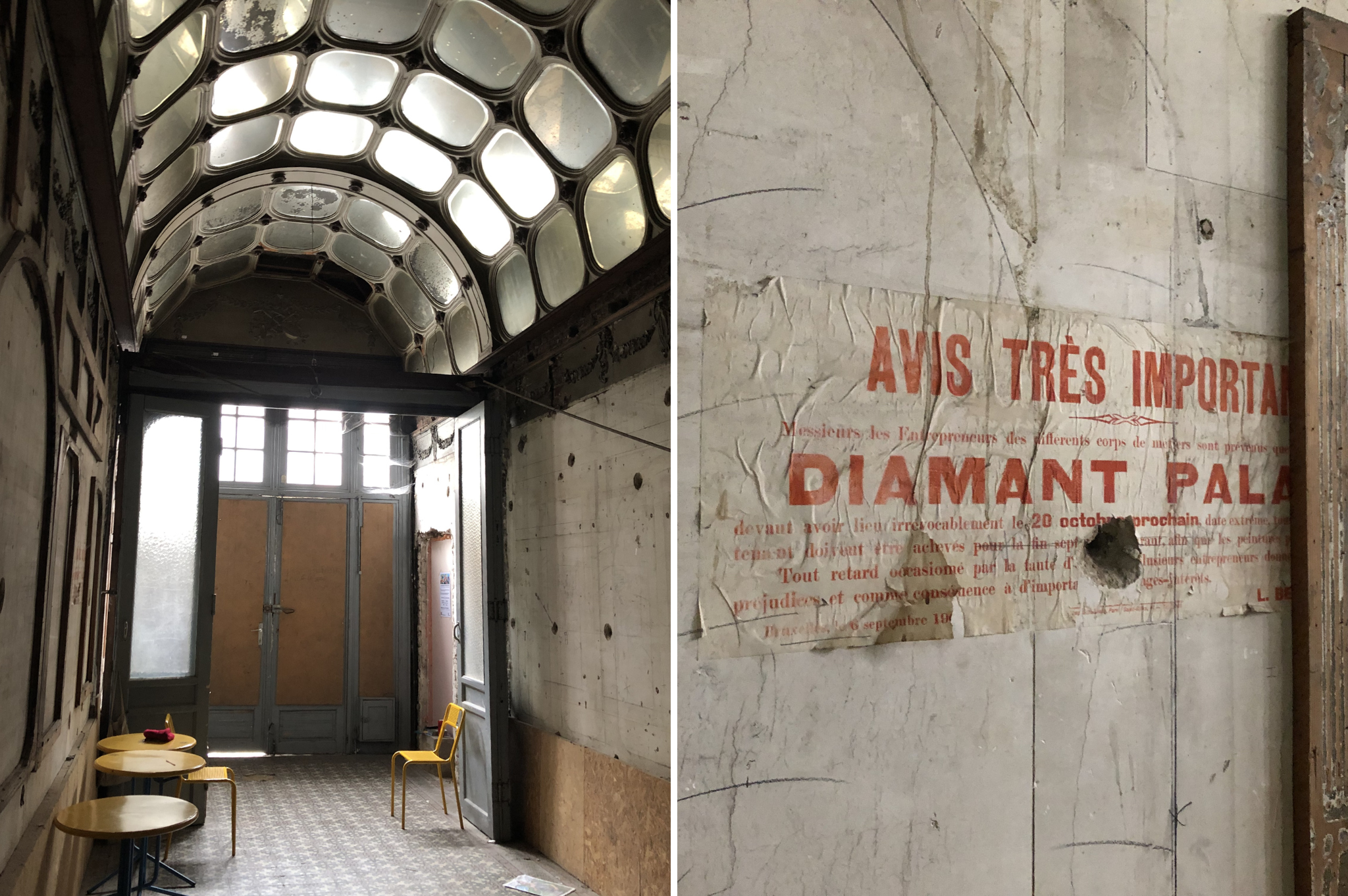
The entrance hall of mirrors and an old poster from when the palace was being built. Credit: Ugo Realfonzo / The Brussels Times
"The Aegidium is a place steeped in history and emotion. Our goal is to restore it while preserving its soul, and at the same time give it a vibrant cultural role that is open to Brussels and Europe," says owner Mamuka Khazaradze in the press release, with no sale price mentioned.
In 2019, Khazaradze entered politics and co-founded the liberal, pro-European party Lelo for Georgia. However, he was prosecuted for money laundering by the pro-Russian regime, which intensified its crackdown on the opposition.
The release also notes that the new owner intends to make the Aegidium a place for "dialogue between Brussels’ heritage, Georgian culture, and European culture", as part of a long-term initiative.
Its previous owner, Cohabs, had been searching for a buyer for the palace part of the building for some time. After completing the conversion of the space above the Cafe Flora into flats, plans to transform the old Aegidium into a cultural centre fell through – hit by Covid-19, extended renovation costs and the lack of a Brussels Government.
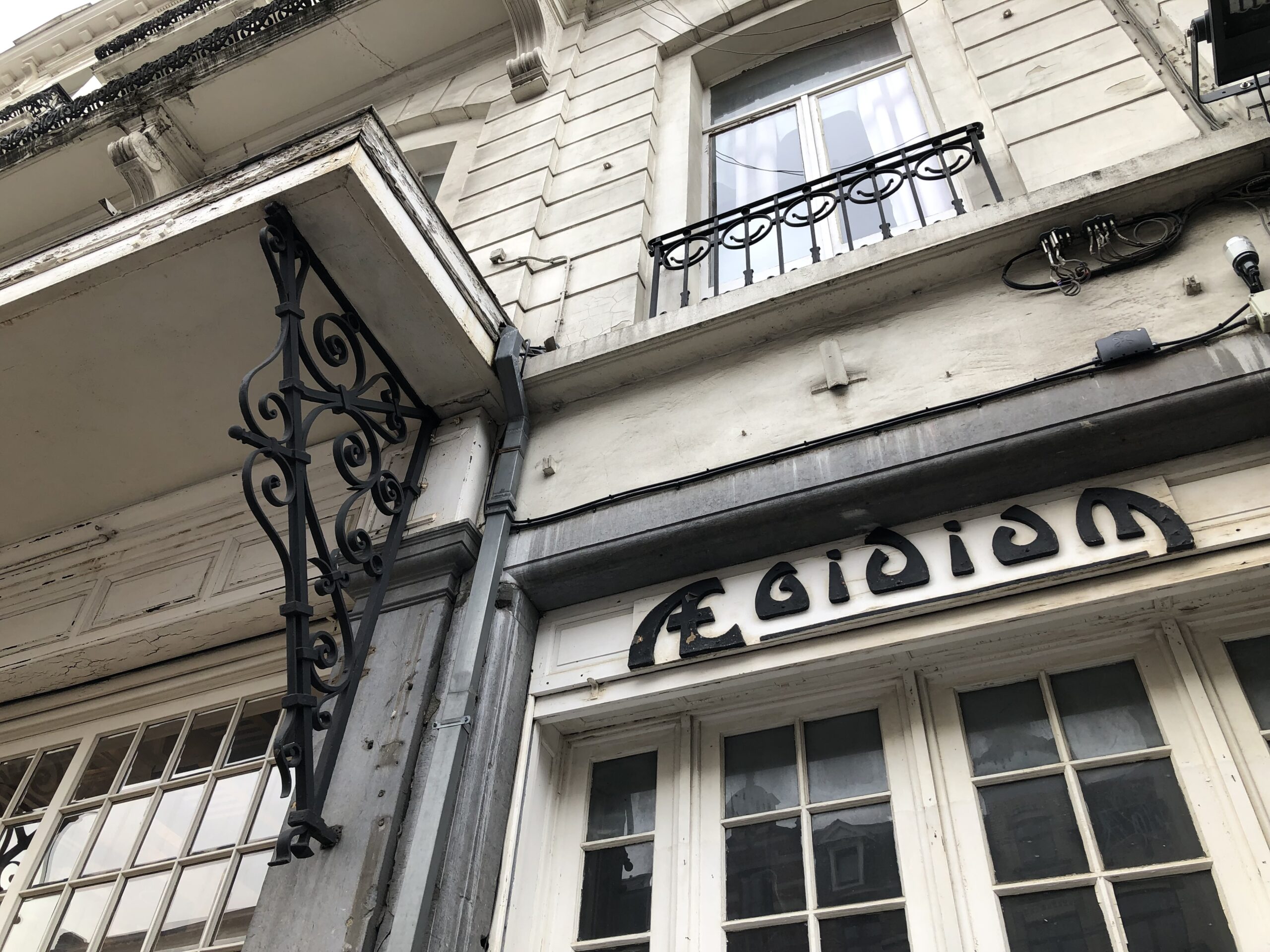
Aegidium's facade on the Parvis de Saint-Gilles, with Cafe Flora on the left, in 2021. Credit: Ugo Realfonzo / The Brussels Times
The necessary bank loan was also contingent on them finding an operator, which they struggled to do. Renovation costs had been estimated at €17.5 million, of which €4 million would come from Brussels subsidies.
After a long search, the wealthy Georgian family has stepped in and will now continue the expressed desire of turning the space into a cultural and community centre, spanning from Saint-Gilles to Tbilisi.
Aegidium and Georgia
So, what is the connection between the Eastern European country and this iconic yet forgotten palace hall, and why did this family acquire it?
"There is actually a historical connection between the Aegidium and Georgia, notably through the remarkable figure of Varia Kipiani, a Georgian pioneer of medicine and performer who appeared there in 1909," historian and RTBF contributor Gaspard Melville tells The Brussels Times.
Melville is an expert on all things Aegidium and used to organise immersive tours inside the old palace, as part of his Les Visites de Mon Voisin walking tours project.
Kipiani came from a wealthy Georgian family and joined her father in Brussels after graduating from school. He was the head of the Russian studies department at the Free University of Brussels (ULB), while she enrolled as a medical student and was also a dancer.
She performed at the Diamond Palace (as it was known at the time) in March 1909, as part of a fundraiser for Georgian political émigrés, just a few years after it first opened. The night celebrated different aspects of Georgian culture, music and dance.
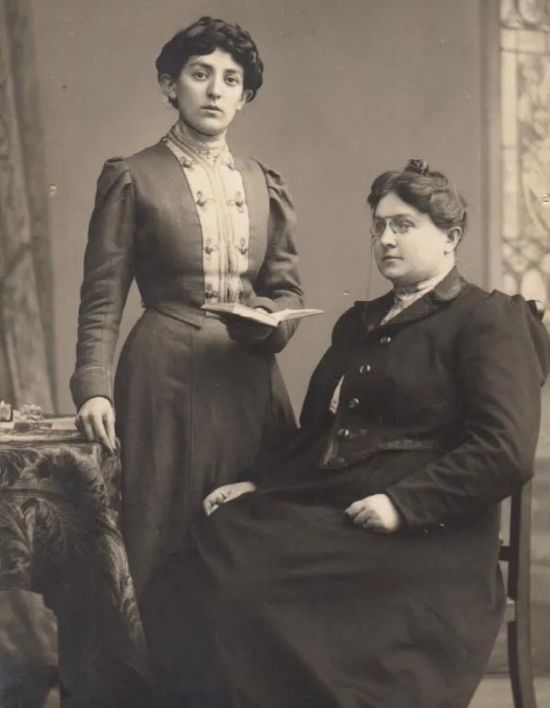
Georgian pioneer Varia Kipiani is standing on the left, while sitting on the right is
Polish scientist Józefa Joteyko, with whom she often worked.
In a report in the newspaper Le Petit Bleu de Demain, Kipiani was praised for her performance of the drama 'Search', which "evoked painful eras of the revolutions" – referring to the 1905 Russian revolution, which had profound effects on Georgian culture.
This historic link with Kipiani, a figure credited with having promoted and protected Georgian culture against Tsarist Russification, drew the Khazaradze family to the Aegidium.
Yet Kipiani is better known for her academic achievements in medicine, including an award-winning study on the effects of sugar to alleviate fatigue and sensory studies examining the power of muscle memory.
‘Saviours’
For Belgian historian Melville, the Aegidium's recent acquisition is "obviously an excellent thing".
"The Khazaradze family is arriving with a serious and open project, with the necessary funds and a genuine interest in the place," he explains.
"After several decades of abandonment and failed projects, I think we can truly consider them the saviours of the Aegidium — that’s what they are."
Given Brussels' checkered history with demolishing or reconverting historic buildings, the Brussels-based historian had feared that the venue would become private, with "extremely" limited public access – "but that will not be the case."
"As for its future purpose, Brussels also has a vocation as a city that welcomes international actors, and I think this should be seen as an opportunity," Melville further explains.
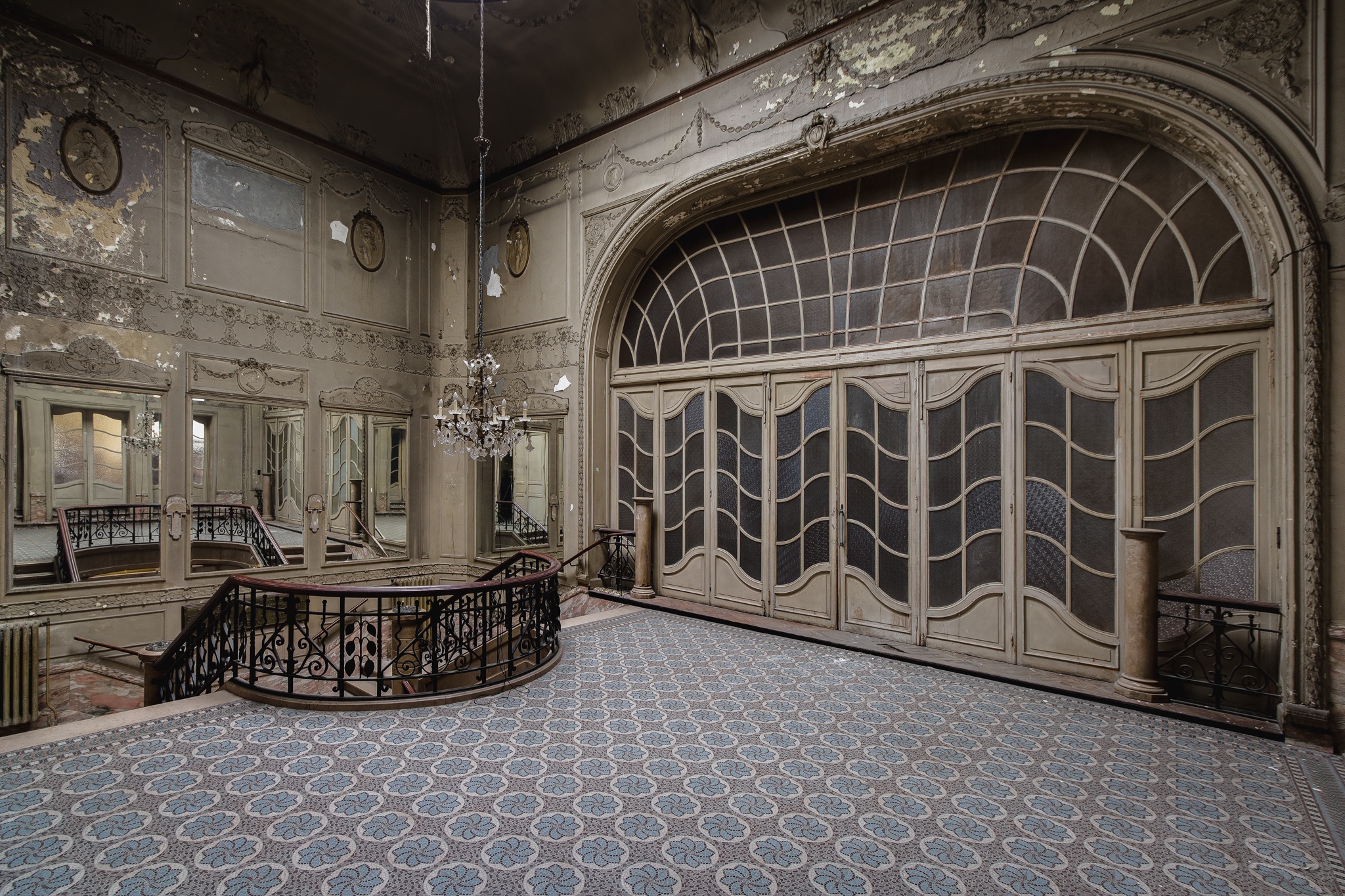
Aegidium in Brussels
The collapse of the Cohabs renovation project is a reminder that restoring a building with such high heritage value is always "extremely" complex, full of constraints, and difficult to finance, Melville explains.
Another positive factor is that the Khazaradzes chose the Aegidium because "they genuinely understood" its beauty and significance.
"I have complete confidence in their approach to the restoration," the historian says. "Personally, I am relieved that this long saga is finally reaching a positive ending, and that the Aegidium is now definitively out of danger."
Melville has also co-written a documentary about the palace’s glorious past, with filmed reenactments, which is set to be completed by the end of the year, after a successful fundraiser.
"It is both a docu-fiction that immerses viewers in the thousand lives of the Aegidium, but also a way of capturing the spectacular beauty of the place in its current state: a silent and decaying former temple of celebration, a Belle Époque Titanic."
A brief history
The building opened as Diamant Palace on the night of 27 December 1908, soon becoming a fashionable nightlife hotspot. It was a symbol of Brussels’ roaring 1920s and an entertainment hotspot for the southern Brussels bourgeoisie.
For 20 years, the festive and recreational complex hosted balls and dances, theatrical performances and comedy revues, concerts and operettas, as well as Pathé Frères film screenings in its two magnificent halls.
It was briefly renamed to Panthéon Palace after a couple bought the building in 1924, where it reached its peak as a popular dancing venue.
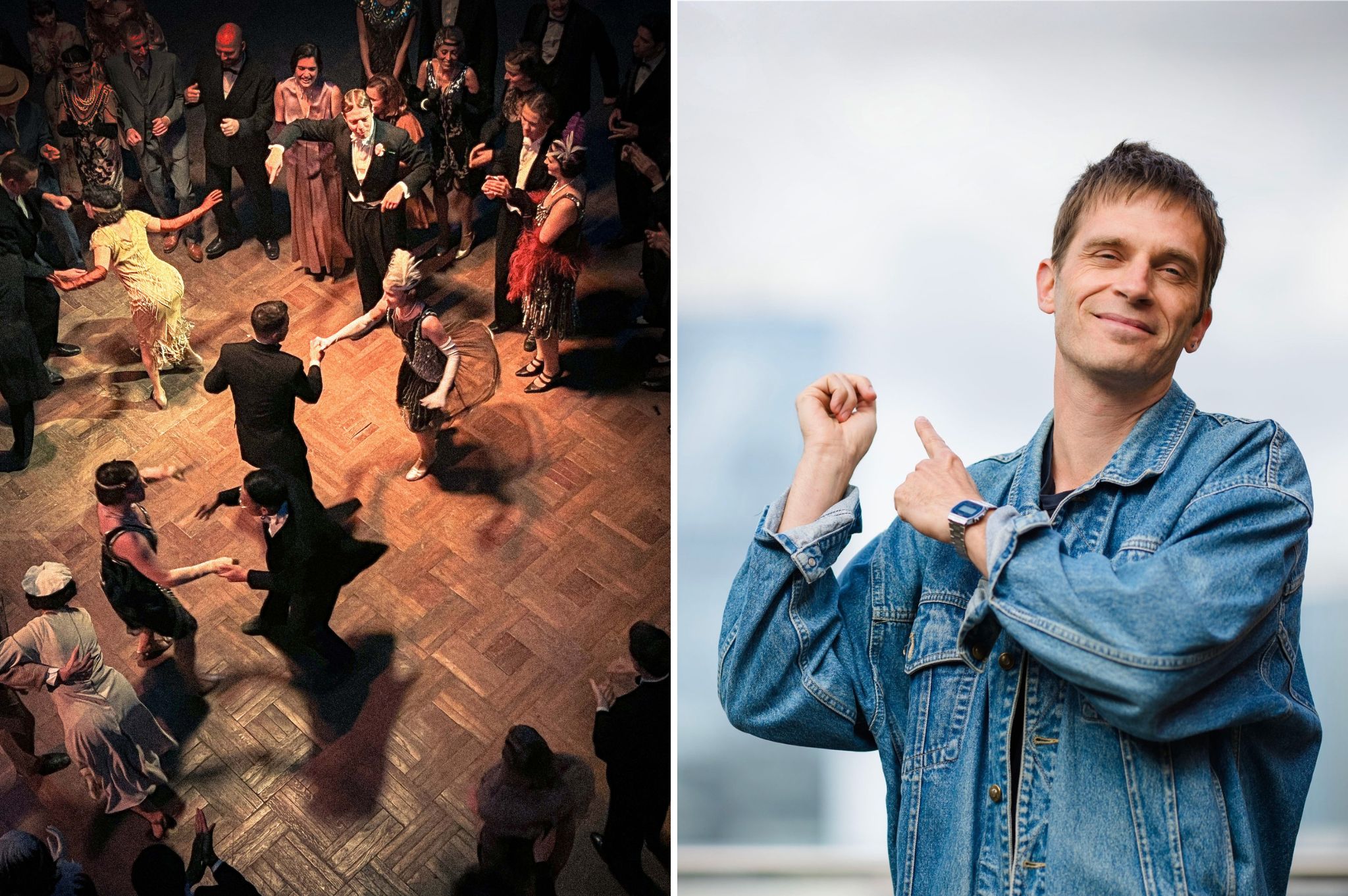
Left, a still from the upcoming documentary on the Aegidium in Brussels, on the right, Belgian historian and co-writer, Gaspard Melville. Credit: Gaspard Melville
Years of frivolity and fêtes would all slowly end after the building was bought in 1929 by the local religious organisation, Association of Parish Works of Saint-Gilles.
They transformed it into a place open "to all initiatives favourable to religious, social, patriotic, and genuinely recreational works." It was renamed Aegidium, in homage to Aegidius, the patron saint of Saint-Gilles.
In one of his old tours, Melville explained that the acquisition was also due to the local Catholic church wanting to counteract the strong presence of socialism at the Maison du Peuple, still situated opposite it today.
Not to be confused with the ill-fated eponymous Maison in the Marolles, the Saint-Gilles version also acted as a centre for workers' and socialist groups, even briefly hosting a speech by an exiled Vladimir Lenin in 1914.
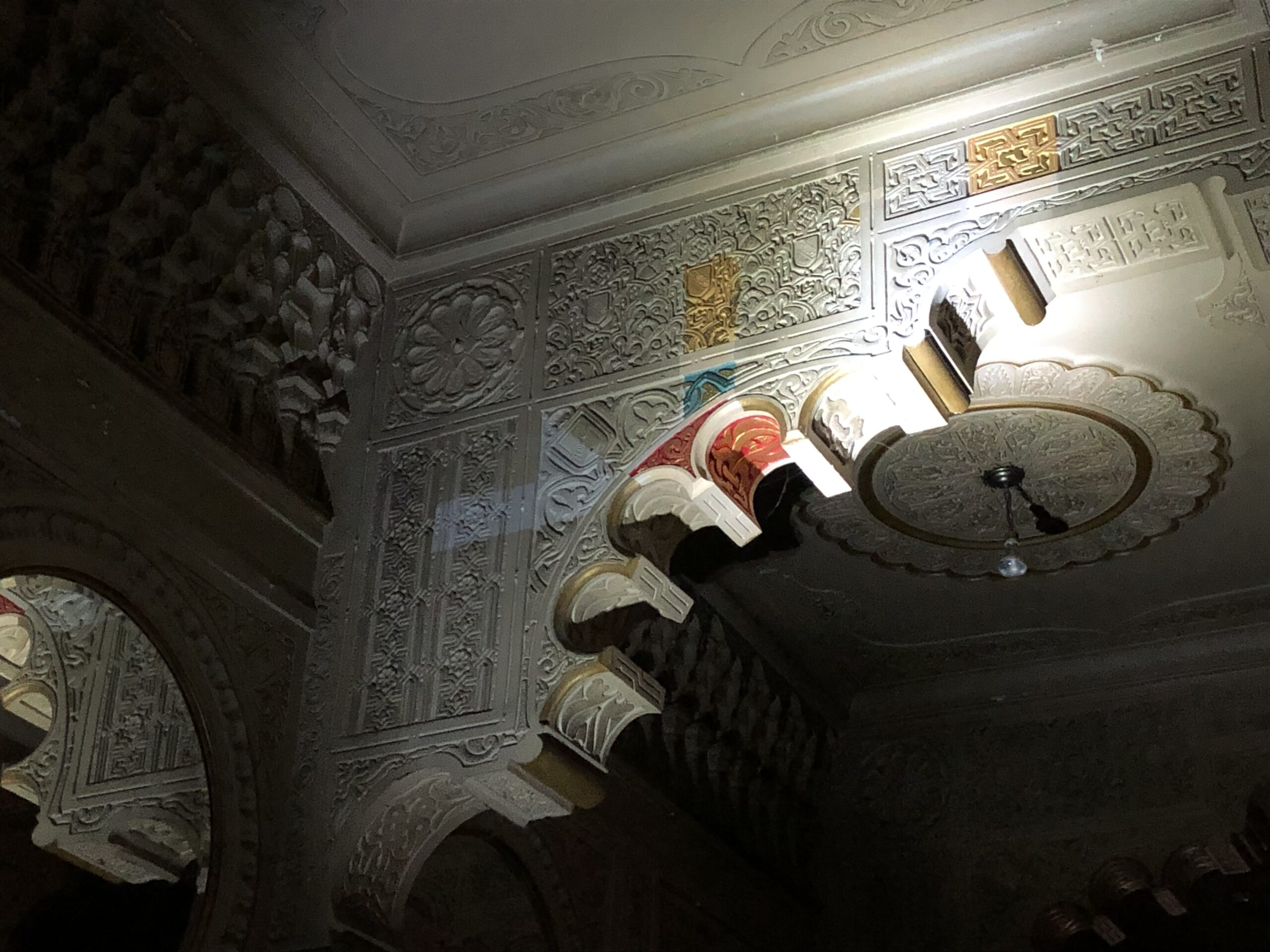
The Aegidium's colourful wall was painted over in a more sober white after it was bought by the Catholic church, after it was a roaring 1920s hotspot. Credit: Ugo Realfonzo / The Brussels Times
Between 1978 and 1985, the ground floor of the Aegidium was occupied by a day centre for the elderly.
It was at this point that the public life of the flamboyant Diamond Palace and the more "respectable" Aegidium came to an end for fire safety reasons. According to Brussels Heritage, the opportunities to enjoy this unique place were rare thereafter.
While the day centre moved out due to fire hazards in 1985, the building then fell into disrepair, not helped by the several architectural modifications over the years, which buried the flamboyant decorations from the glory years of the palace, for a more sober look, still visible today.
Having been saved by real estate developer Cohabs in 2018, the future of the dormant Diamond Palace will now lie with the Khazaradzes.
