
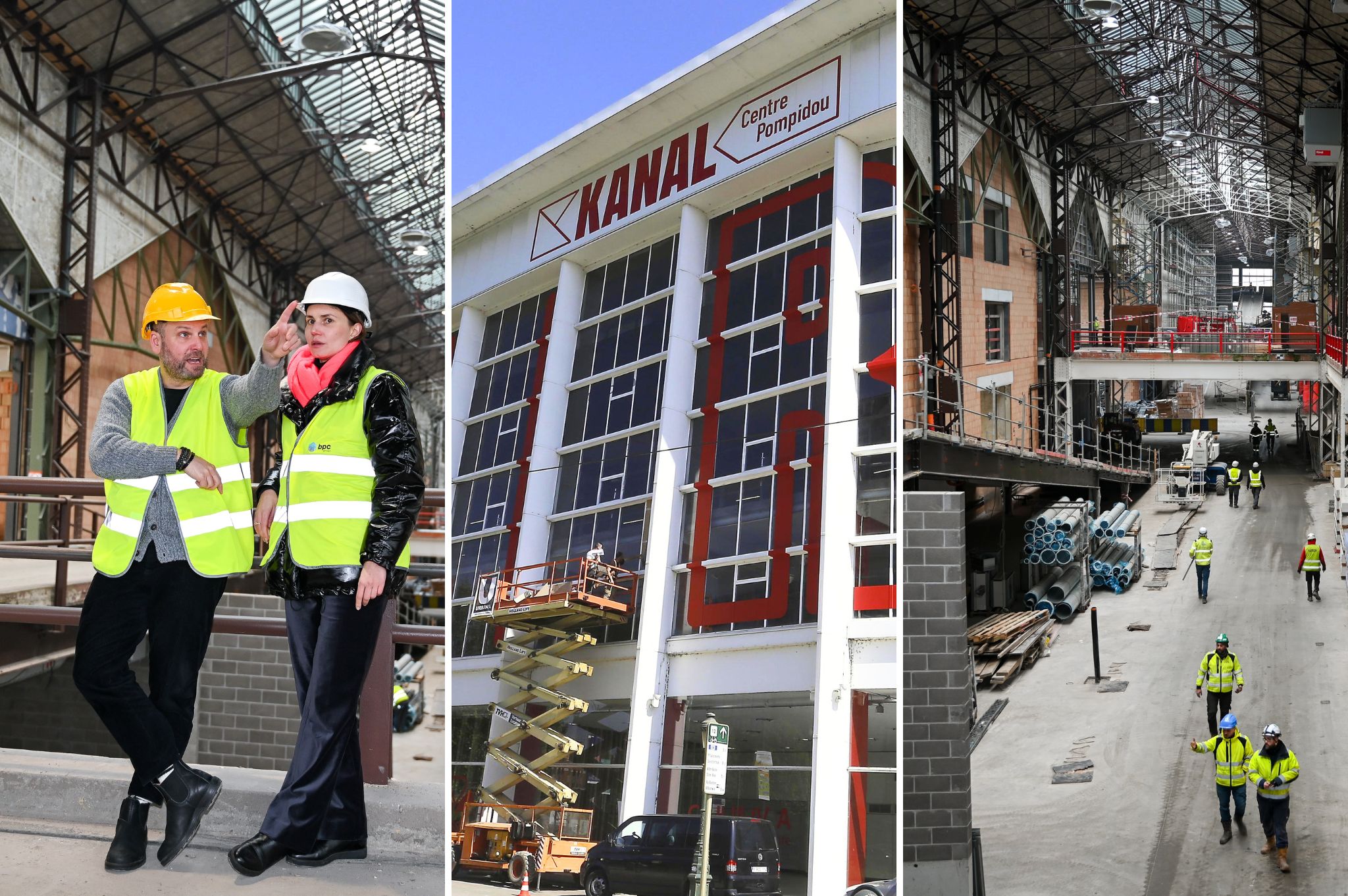
"Nobody believed that it would be possible. But I did it."
Brussels’ new and much-anticipated flagship Kanal-Centre Pompidou museum has faced many criticisms for its ambitious size – it is set to be one of the biggest in Europe with a surface area of 40,000 m2.
The publicly-funded project has faced delays, budgetary issues and now the recent announcement that its director, Yves Goldstein, would leave his post, just months before its opening.
The man who drove the project announced he would be stepping down as director of the Kanal-Centre Pompidou project after 10 years at the helm. He will stay on until a replacement is found, with his official departure date set for January 2027.
"I had a mission from the government given more or less 10 years ago to transform this huge garage into a museum, to create a team and a project," Goldstein tells The Brussels Times.
"The building will be, the reception will be on the 31 of August. The opening of Kanal will be on the 28th of November. So I did my job. I fulfilled my mission. But for me, it’s also the end of a cycle," he explains, saying he wants to move onto "other dreams".
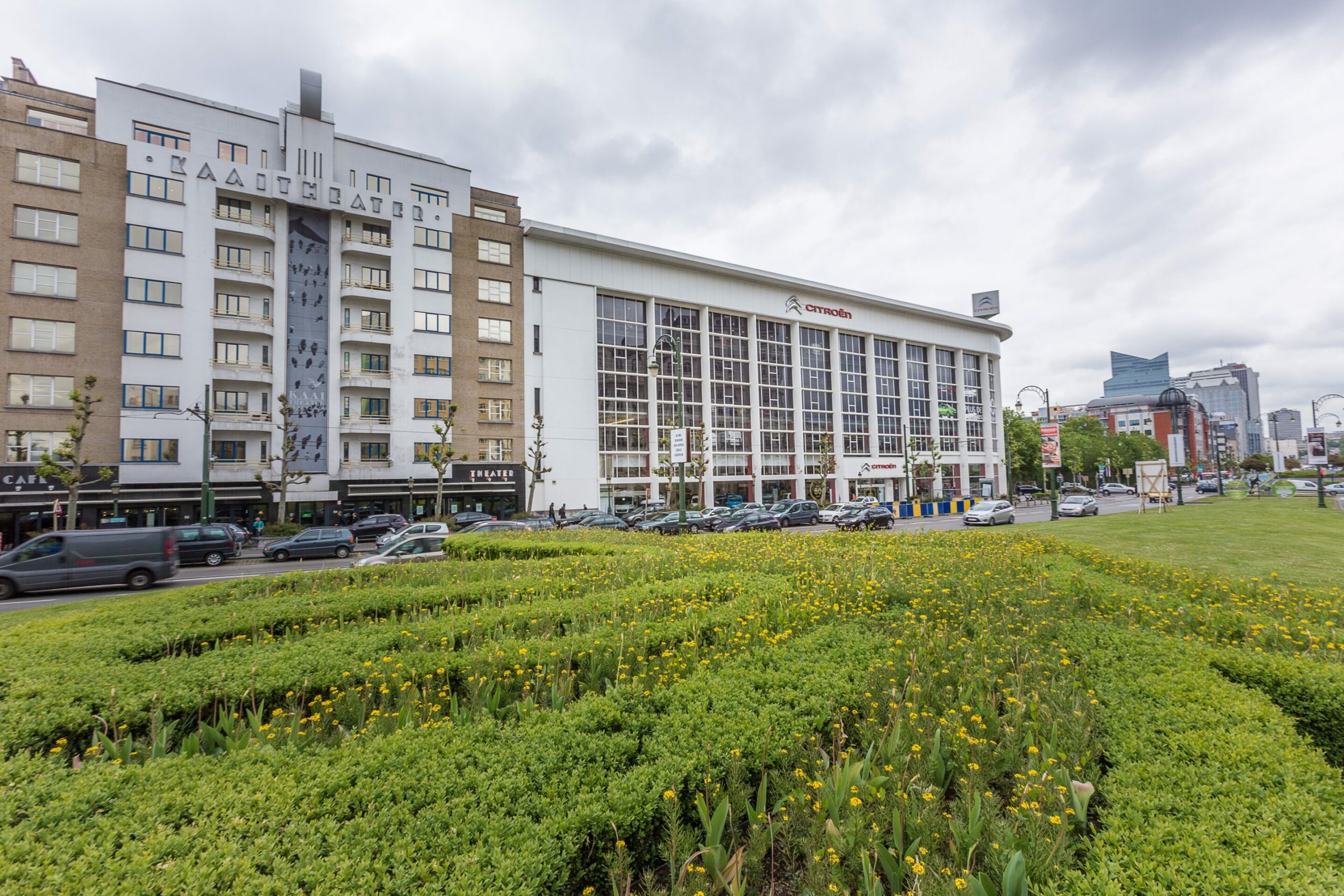
The Citroen factory building in Brussels on Thursday, 08 May 2014. The Brussels Government made a deal with French car manufacturer PSA Peugeot-Citroen to transform it into an art museum. Credit: Belga / Siska Gremmelprez
The conversion of the former Citroën factory, located on the Brussels canal, was the result of a partnership between the Brussels-Capital Region, Kanal Museum and Paris' Centre Pompidou in 2017, with the building having been sold by the car manufacturer in 2014.
Goldstein is a former socialist official and cabinet chief of Brussels Minister-President Rudi Vervoort (PS). He was appointed as general director by the previous Brussels Government, led by his former boss, that same year. He also holds several other roles on the boards of other key public institutions.
When asked about his departure, he stresses that he is not quitting, rejecting financial issues or political disagreements over the museum’s future operations as the reason for the decision.
According to the Schaerbeek-born 49-year-old, the museum’s foundational charter states that the director’s term must be five years, renewable once, giving a maximum term of 10 years.
No iceberg ahead
"It’s a fully personal decision that I've taken. I think cultural institutions have to regenerate themselves," he says. "So I also apply to myself what the rule is for the people who succeed me."
Far from jumping off a sinking ship, Goldstein maintains he wants to help guide his successor once they have been selected and ease them into their new role. He stresses that Kanal’s imminent opening is the beginning of a new journey for his staff and team, but the end of the road for him.
Reflecting on his time at the helm, he says: "It’s not easy to fulfil such a project of this scale in Brussels. It will be the biggest museum to open in Brussels in more than a century. Nobody believed that it would be possible. But I did it."
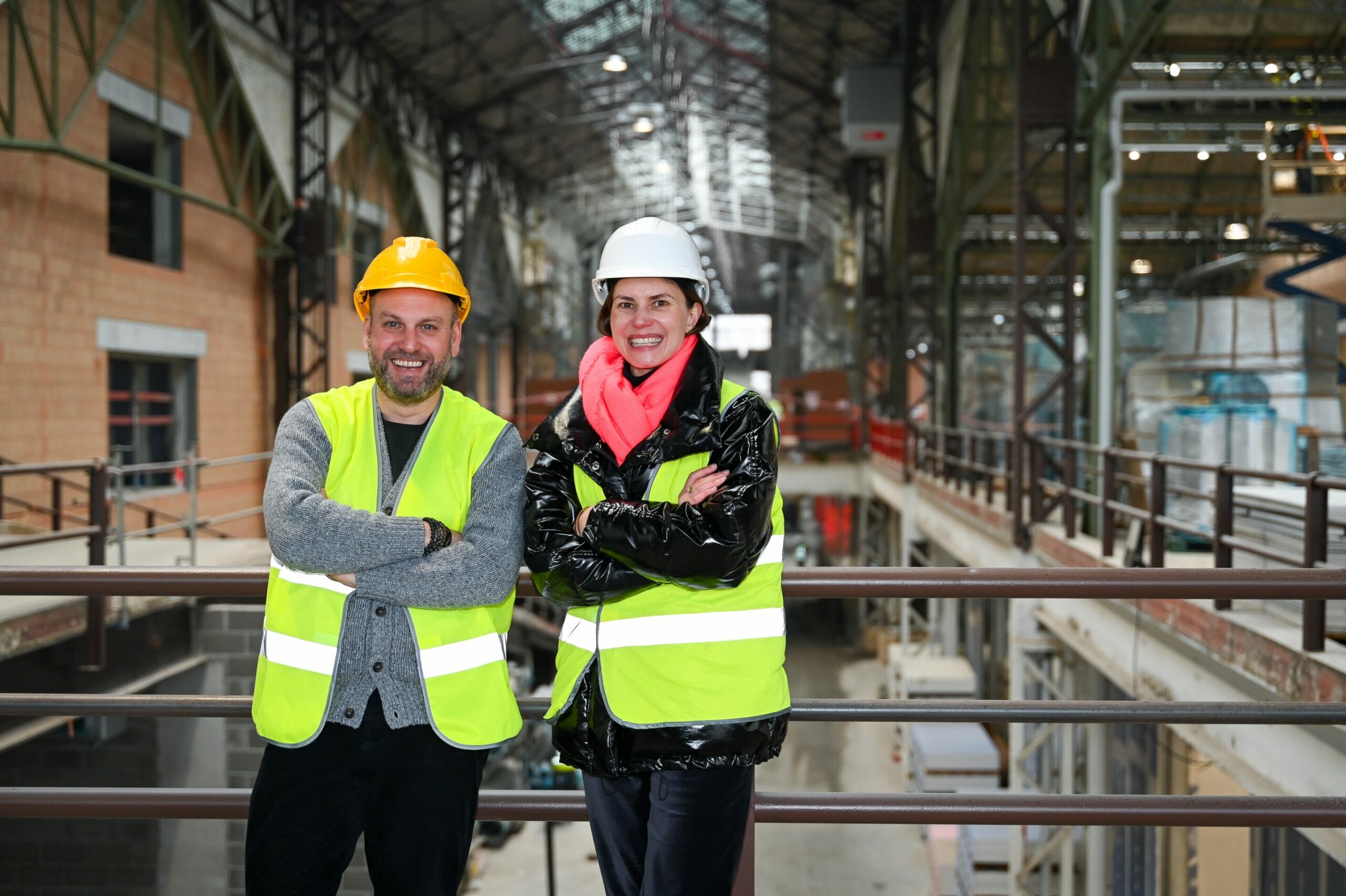
Managing director at Kanal Yves Goldstein and Artistic director Kasia Redzisz, during the tour and press conference to present the opening program for the future Kanal-Centre Pompidou museum, in Brussels, on 28 January 2026. Credit: Belga / Elias Rom
Indeed, his time in charge has been described in the media as "quirky and obscure". However, Goldstein does not understand where comments about him or his management style come from, stressing that one of his biggest achievements is the "dream team" he built around him.
"I built everything here, the project and the team with magnificent people, which is one of my biggest prides," Goldstein says. He adds that his role is one of three director roles, alongside artistic director Kasia Redzisz and chief operating officer, Baptiste Delhauteur.
"Normally, the big museums of Belgium and Europe have one director, mainly men. But I wanted to have this system with better checks and balances and three people in charge," he says.
"The project is so ambitious, so great, so big, with such a great scale, that for Brussels, the capital of Europe, I think that we really need a balance between all the different interests."
Reduced operations
Yet the project, which was due to open in 2023, has also been criticised for its scale, location and ambitions at a time when the Brussels Region’s finances are under severe strain.
When asked about how budget issues are going, he says that the investing stage is almost over, "so now the question is how the operational costs will be covered by grants from the Brussels Region."
The Kanal museum was due to run with an average €35 million per year subsidy for its operations, but owing to the region's financial issues, they have reduced this by €6 million, down to €29 million per year. He further stresses that €29 million per year is less than 0.3% of the regional budget, making it a good investment.
This is where Goldstein becomes most passionate about the museum’s potential knock-on effects, which appear to have driven his vision for the museum.
"Given all the win-win dimensions of this kind of project, socially, culturally, economically…while pushing forward an international vision of Brussels and its territorial development, it’s not a lot of money," Goldstein says.
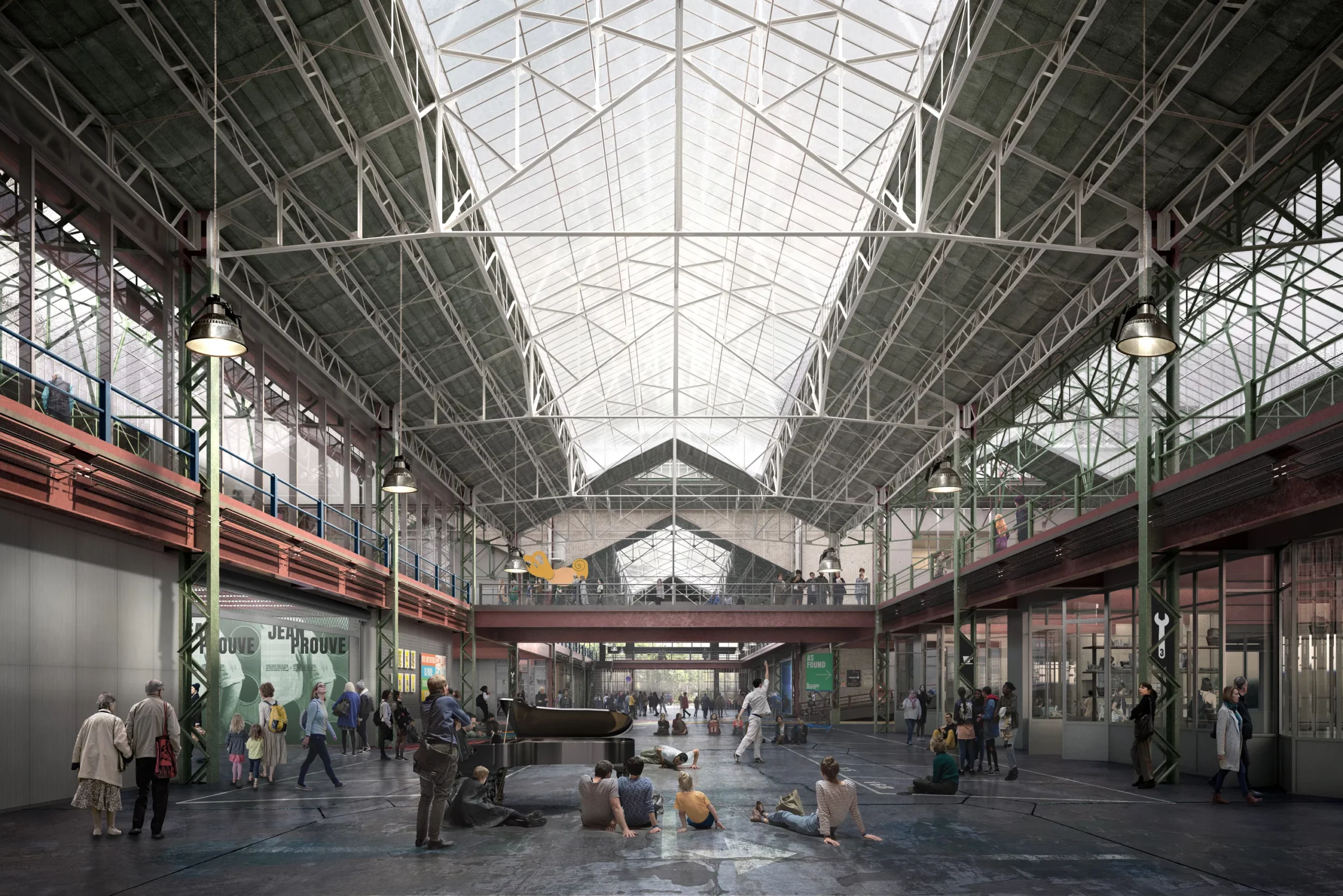
Vision for the future of Kanal Centre Pompidou Credit: Atelier Kanal
"I’m afraid that, in Brussels, for so many years now, we are a bit afraid of being ambitious," Goldstein says.
"To invest less than 0.3% of the budget each year to have a place where local schools can create cultural links and where people can meet and create spaces for dialogue, particularly the international community of Brussels, is a no-brainer," he argues.
Kanal will soon receive a €60 million loan from the Brussels Government, which will need to pay this back within a year, as agreed with the Brussels Budget Minister, Dirk De Smedt (Open VLD), nine months ago.
They have also been working well with the new Brussels Government led by Minister-President Boris Dilliès, with Goldstein confident that the museum will be able to pay back this loan. He says the board has created an entity that will "put all the pieces of the puzzle together" for budgeting its operations.
He concedes Kanal is not the only answer for the many challenges in Brussels, "but it is one of the answers for the future of the city in so many ways: tourism, new economies, job creation, urban development, new apartments and new neighbourhoods."
Culture is Europe's DNA
Indeed, Goldstein laments the current political moment in Belgium (but also Europe), where public funding for culture is on the chopping block. At both the federal and regional levels, many cultural grants have been axed since the 2024 elections.
Many politicians, particularly on the right and far-right, Goldstein underlines, insist that public spending savings must be made in this sector. This is despite the fact that one in ten jobs in the Brussels Region are linked to culture, which contributes 3.6% to the regional GDP.
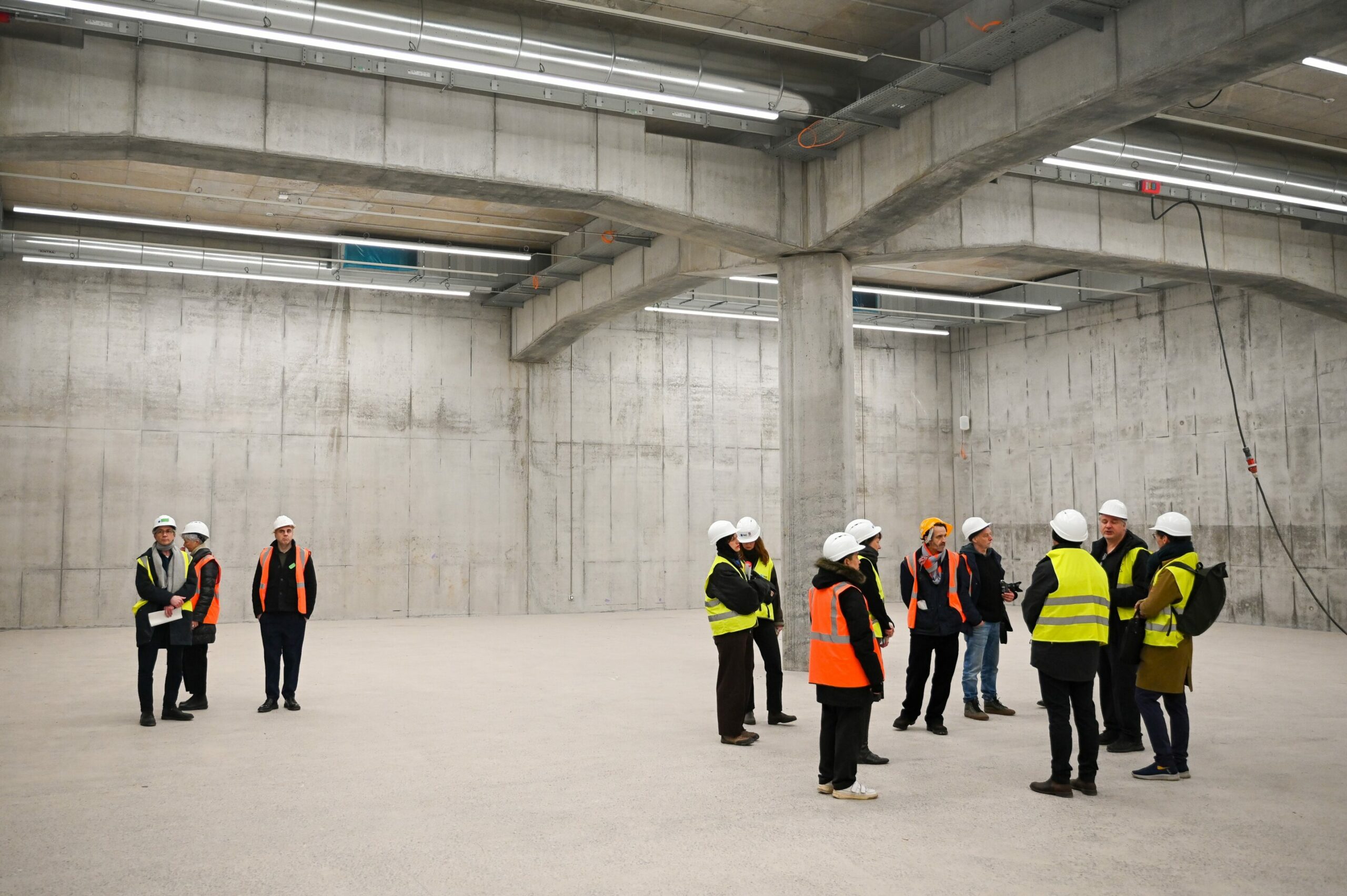
The Kanal Museum site pictured during the tour and press conference to present the opening program for the future Kanal-Centre Pompidou museum, in Brussels, on Wednesday, 28 January 2026. Credit: Belga / Elias Rom
"I’m convinced that it’s impossible to build the future of Europe only with technology, only with wealth and money. We need art and culture. It’s fully part of the European DNA," Goldstein underlines, with an eye to the European Quarter's institutions.
He believes that Brussels's richness in this sector can show Europe how to be ambitious and invest in culture, particularly as he says Kanal is the only major European museum to open this year.
Gentrification?
Accessibility for local communities and schools is also central to the museum's vision, Goldstein stresses. Its location on the Brussels canal – wedged between poorer parts of Molenbeek-Saint-Jean and the city centre – is part of the reason the project was born there.
"This neighbourhood, with its diversity, is the lab for the future of Brussels. And for me, Brussels has to keep this social mix, which is one of the richest aspects of the city," he says. "We need everybody. We don’t need ghettos, neither ghettos of poor people, nor ghettos of the rich."
While Kanal is not responsible for nearby urbanism project permits, he urges the Brussels authorities to take up their responsibility by guaranteeing residents of the Belgian capital’s capacity for affordable housing in the nearby areas.
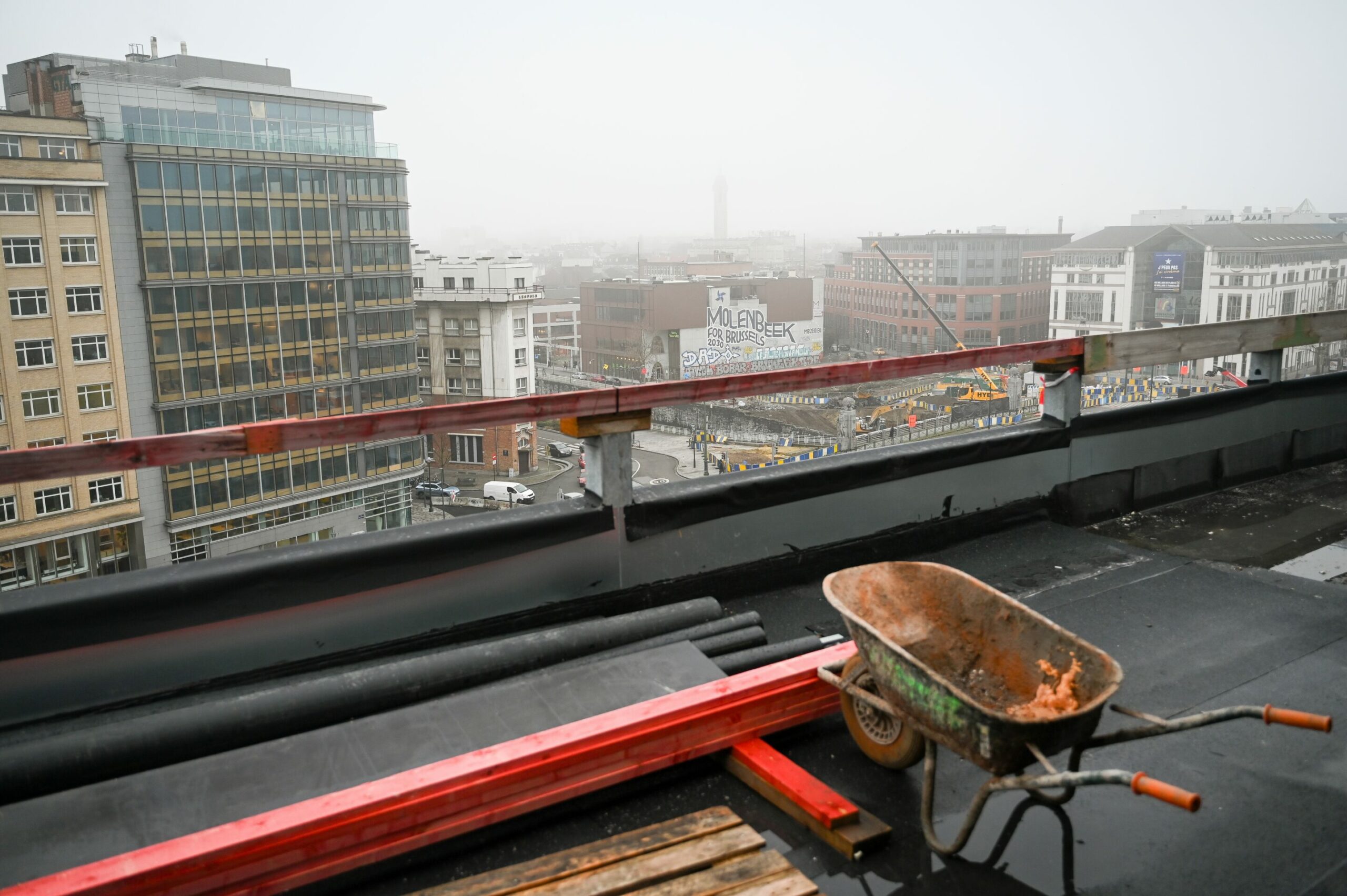
The Kanal Museum site overlooks the canal and Molenbeek-Saint-Jean. Credit: Belga / Elias Rom
"As Kanal, we will do everything in terms of programming, accessibility and mediation to be accessible to everybody, which is at the cornerstone of our DNA," says Goldstein.
At the start of the year, Kanal announced its first exhibitions for when the museum opens in November, as well as the relocation of the Brussels architecture museum CIVA to inside its premises, with Goldstein telling journalists: "This time, there is no way back.'
Whether the soon-to-be former director is worried that the museum’s future will depart from his vision of being "a city within a city", he believes he and his team have created the basis for Kanal in terms of values and ethos, but "we can never say never".
When asked if he has any advice for his future successor, he answers quickly: "Do it well, ok?"
