
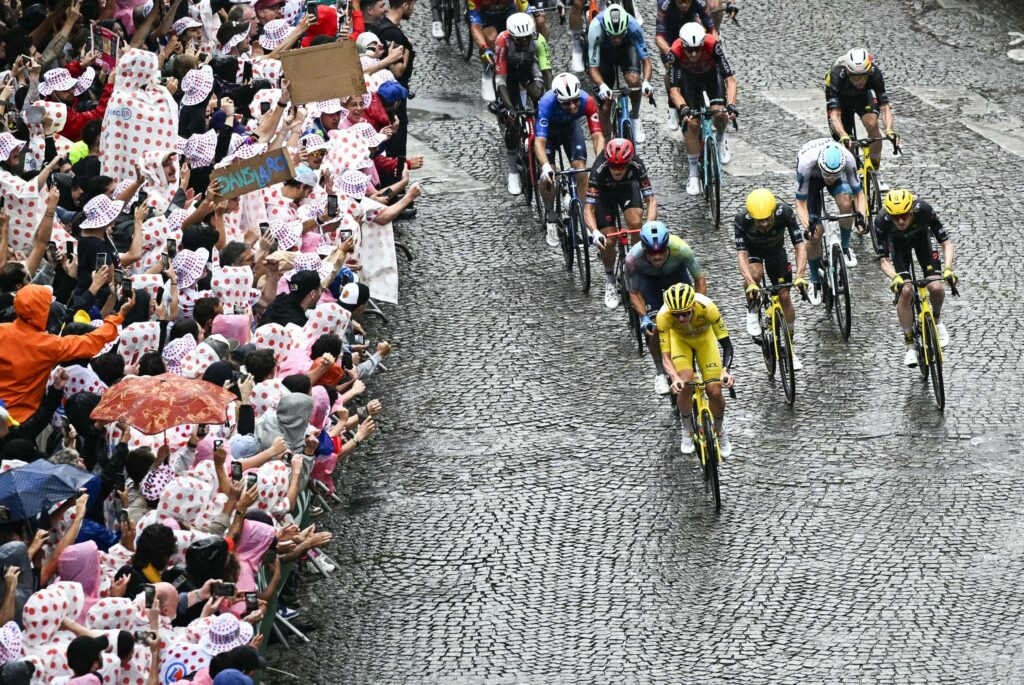
July can be a tough month to be in Brussels if you are not a cycling-loving Belgian.
With the Tour de France starting on Saturday, you might feel a little lost amid discussions about who to put in your Wielermanager and endless debates about whether Pogi is the GOAT. As the month goes on, you'll notice friends cancelling plans to spend an afternoon behind their televisions.
But the most difficult hurdle to overcome during July is the shift in vocabulary. If you're feeling left out, help is at hand with this A to Z glossary which explains what your colleagues and friends are actually saying when discussing the Tour.
Autobus
Also known by the Italian term Grupetto, the autobus forms during mountain stages. Heavier set riders, helpers and the sick and injured will form a large group during the first climb of the day. Their only objective is to finish within the time limit and avoid being sent home. An autobus will always have a bus driver, an experienced rider who knows exactly how fast they need to ride to finish.
Breakaway
No, we're not talking about newly independent countries. A breakaway forms when a group of riders accelerate and rides ahead of the main group. The group tries to stay ahead for the whole race, but will often be caught before the finish and only win prizes along the route. A specialist in breakaways is called a Baroudeur, a French term for adventurer.
Chasse Patate
A chasse patate happens when a rider tries to catch up to a group ahead of him without any support. The wasted energy will often cost him dearly. The literal translation of chasse patate is hunting potatoes.
Domestique
Domestiques are servants to the leader and favourite of the team. They'll bring him food, water and their bike if needed. Larger domestiques will block the wind for their leader on the flat, while climbers will sacrifice their chances of winning to pace on the climbs. In return, the leader shares his prize money with each domestique.
Echelon
Known in Flanders as a waaier (blower), echelons will form during windy days. Using aerodynamics, riders will line up across the road to create a trap for riders left out of the formation. While it relies on the wind conditions being just right, echelons can turn a flat and boring stage on its head.
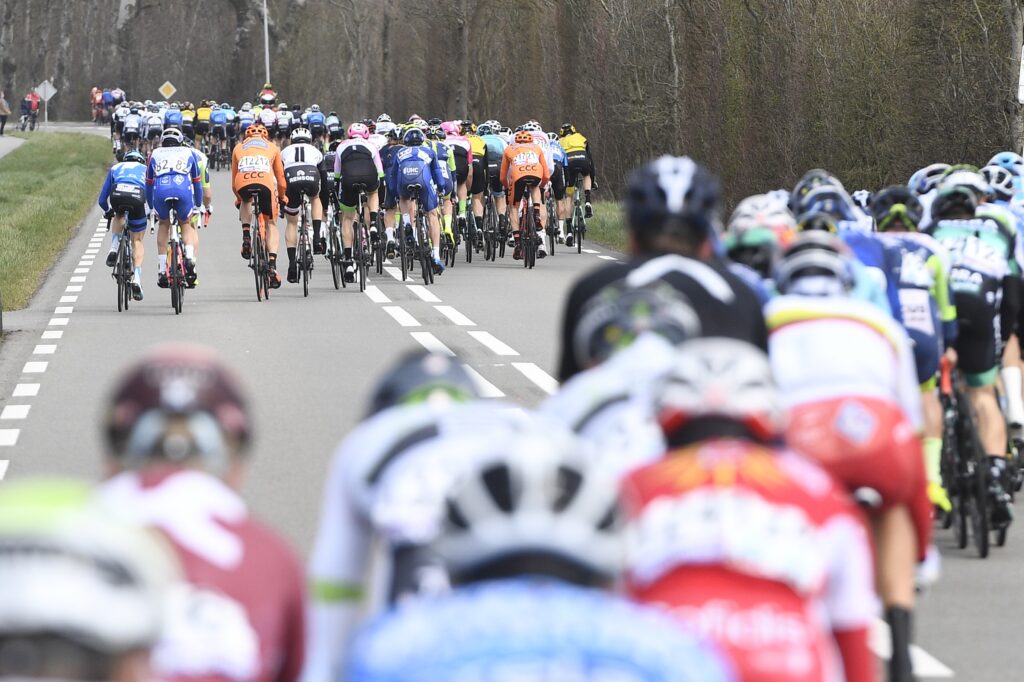
A pack of riders in a 'waaier' formation. Credit: Yorick Jansens/Belga
False flat
Climbs have a mythical status in cycling. Mountains like the Tourmalet, Mont Ventoux and Galibier are as much the attraction as the rider. But what if a climb isn't quite as impressive and not worthy of a name? These uphill sections are called false flats.
Green Jersey
The green jersey is the leader for the points classification. While the general classification works with time, the green jersey is earned by finishing in high positions and scoring points. They are often won by sprinters or hybrid riders.
Hors Catégorie
As mentioned above, mountains have a mythical status and reputation in the Tour de France. From alpine giants to the steep hills in the north, every uphill stretch with enough gradient gets a name and a category. The category corresponds with the value for the climbing classification, but that's a conversation we will have later. The absolute elite mountains are so tough, the organisers consider them beyond category, or hors catégorie in French.
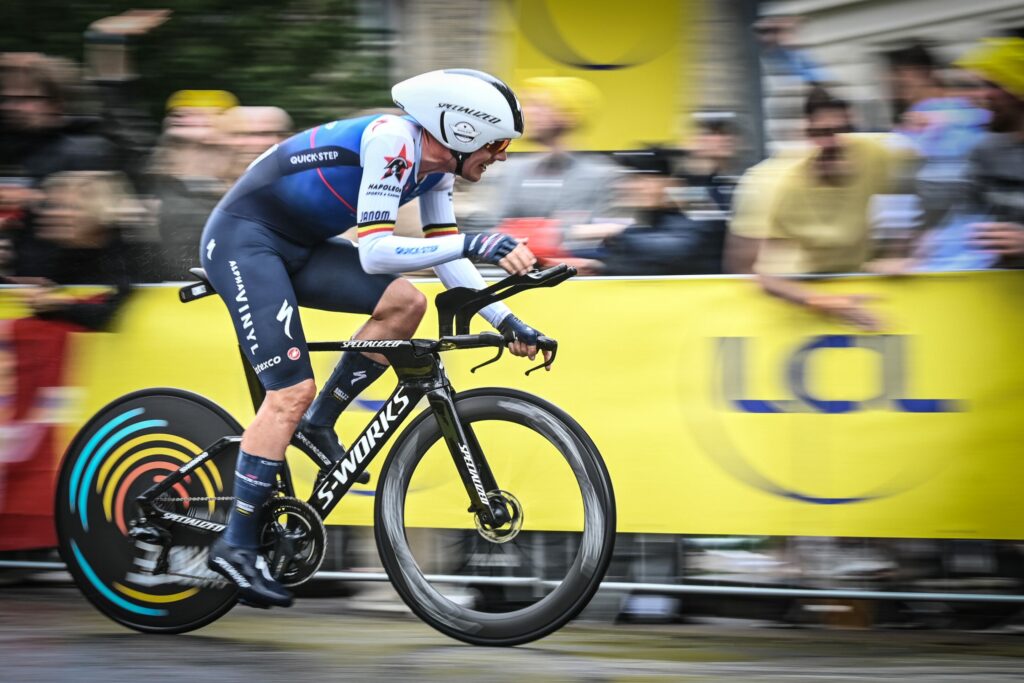
Yves Lampaert during an individual time trial in and around Copenhagen, Credit: BELGA/DAVID STOCKMAN
Individual Time Trial (ITT)
Individual Time Trials are relatively straightforward. You start at point A and ride to point B by yourself. The fastest wins. No special tactics, no domestiques helping you out. It's man and machine against the road. Riders start at intervals and finish the stage all by themselves. And with an unlimited budget for research and development to optimise your position and equipment.
Jour Sans/Avec
A simple way of saying whether someone has a good or a bad day.
King of the Mountains (KOM)
A jersey for the most consistent climber. On top of each categorised climb, riders can earn points, with the amount of points increasing along with the increased category. In the Tour de France, the leader of the King of the Mountains classification wears the red and white polka-dot jersey.
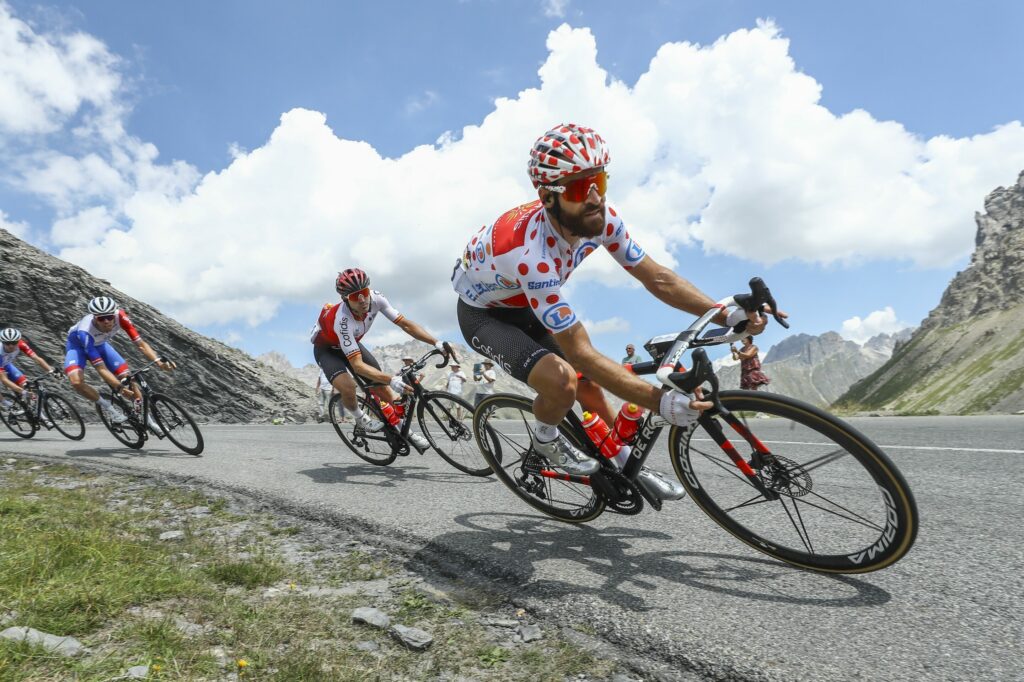
Simon Geschke pictured in action wearing the polkadot jersey during the Tour de France Credit: David Pintens/Belga
Lantern Rouge
The lantern rouge is, aside from the most uninspired name for a cycling podcast, a fictional prize awarded to the slowest competitor in a race. A lantern rouge will often spend several additional hours completing the 21 stages of the Tour de France. Historically, the prize was considered a negative, but in recent years it has been adopted as a mark of pride.
Merckxian
Being compared to Belgian legend Eddy Merckx is arguably the greatest compliment a cyclist can get. Merckx won the Tour de France and Giro D'Italia five times each and the world championship three times in the sixties and seventies. Whenever Merckx is mentioned today, it is to describe a victory that will be etched in the history of the sport for its grandeur.
Neutral Zone
A stage in the Tour de France will generally start in a city and end either in a different city or on top of a mountain. As the start of a stage can be quite hectic, with plenty of riders fighting for a spot in the breakaway, the first couple of kilometres are neutralised, meaning no attacks are allowed. Once the riders have left the starting place, neutralisation ends, and the breakaway can be formed.
Off the Back
Whenever the pace in a group is too fast for a rider, they will have to drop off the back and form an autobus with other unfortunates.
Peloton
The peloton is the main group of riders. A French term for little ball, the peloton gives riders a chance to draft in the wheel of domestiques and conserve their energy. While usually used to indicate the main group with the leaders in the various classifications, multiple pelotons can be formed if a great number of riders are in a breakaway and/or dropped off the back.
Queen Stage
The queen stage of a Tour is the hardest, most challenging stage. For the leaders, it provides a great chance to take time on their opponents. For sprinters and heavier riders, the queen stage is a fight for survival, as they can only lose a set amount of time in a single stage before being taken out of the competition.
Road Rash
Crashing is as much part of cycling as the wheels on the bikes. When moving in a peloton, a single mistake can cause dozens of riders to fall from their bikes and slide on the road. A crash can result in lost time, broken bones and severe skin abrasions. As the abrasions pick up asphalt and dirt from the road, riders get what is called a road rash.
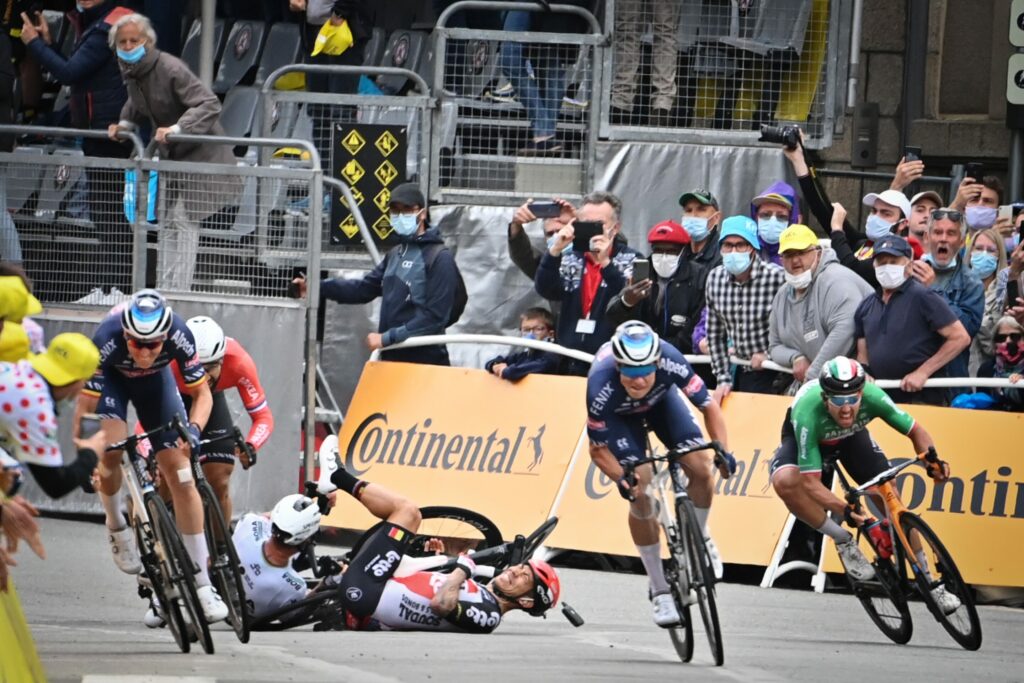
Riders crash during the sprint in a stage at the Tour de France. Credit: David Stockman/Belga
Sticky Bottle
Cycling is all about conserving your energy and deploying it at the right time. This race for getting as far as you can using the least amount of energy leads riders to bend the rules wherever they can. One example is a sticky bottle. A rider will fall back to the support car driving behind the peloton and ask for a water bottle. As the rider grabs the bottle, the driver of the car will accelerate for a couple of seconds to give a little boost. While the race directors will tolerate hanging on for a couple of seconds, it is technically an illegal move and can lead to a disqualification.
Team Time Trial (TTT)
Similar to an individual time trial, a TTT sees teams take on a stage by themselves. While the individual version focuses on aerodynamics and power, a TTT is more strategic and requires a high level of coordination.
UCI
The Union Cycliste International is the international federation organising the rules and structures of professional cycling.
Voiture Balai (Broom Wagon)
The broom wagon is the final support car and will never pass the last rider still racing. If a rider is dropped and wants to give up, he can take a seat in the broom wagon and get dropped off at the finish.
Wheelsucking
A technique where a rider will stay behind a competitor to draft and avoid having to do a lot of effort. Often frowned upon, wheelsucking allows you to profit from the effort of a stronger rider and can give you a better chance at victory.
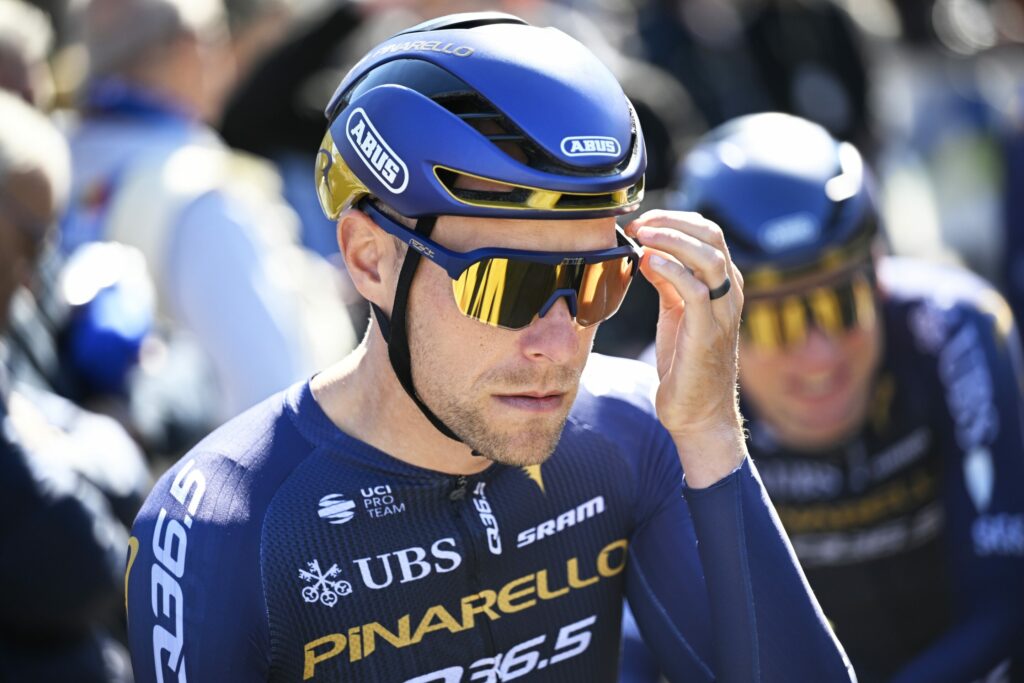
Xandro Meurisse. Credit: Jasper Jacobs/Belga
Xandro Meurisse
Whenever someone asks you who your favourite rider is, tell them it's Xandro Meurisse. The Belgian riders will start at the upcoming Tour de France for the Suisse team Pinnarello - Q36.5. That's all we can tell you; there aren't a lot of options for the letter X.
Yellow Jersey
The leader of the general classification will wear the Yellow Jersey. Even wearing it for just a day is a career goal for most riders. The Yellow Jersey is handed out a final time at the Champs Elysee is Paris after the final stage of the Tour de France.
Zigzags
Due to the steep gradients of mountains in the Alps, a lot of climbs will feature switchbacks, also known as zigzags. The famous Tourclimb Alpe d'Huez features a whopping 21 switchbacks, but the champion of the zigzag competition is the Passo dello Stelvio in the Italian Alps. It has 48 tight switchbacks over its 28-kilometre climb.
