

For internationals – particularly non-EU citizens – who have been living in Belgium for some time, obtaining the right of permanent residence is often very important.
Permanent residency is a good option for non-Belgians who have lived in the country for a while and want to stay for a longer period, but do not want Belgian citizenship.
It comes with several benefits, such as buying property and getting a mortgage without restrictions and access to Belgium's social security benefits.
Importantly, the procedure to apply for permanent residence should not be confused with the one to obtain Belgian nationality. More information on how to become Belgian here.
What are the requirements?
Whether you are an EU resident, a post-Brexit UK national or a third-country citizen, the key requirements to apply for permanent residency in Belgium are the same.
The main condition is time spent in the country: you must have legally lived in Belgium for five years. (If you have an EU Blue Card, you can include the time you spend in other EU Member States.)
Importantly, this five-year period should be uninterrupted: you can only leave the country for up to six months at a time, but no more than 12 months during the entire five-year span.
(Longer absences to fulfil military obligations, or an absence of maximum 12 consecutive months for important reasons such as pregnancy and childbirth, serious illness, study or vocational training, or secondment to carry out work outside Belgium are allowed.)

Man with the Belgian flag painted on his face. Credit: Belga/Bruno Fahy
In addition to having lived in Belgium for five years, you must also provide proof that you still meet the conditions of an existing visa or permit (for example, if you are in Belgium on a work visa, you need to be able to show that you are currently employed).
You also need to provide proof that you have a stable and regular monthly income to support yourself (and any dependents, if applicable). In practice, this means sharing bank statements that show consistent income, typically for the past three to six months.
You must have a valid health insurance policy.
You have no serious criminal convictions that make you a risk to public safety.
How do you apply?
Although applications are processed by Belgium's Immigration Office, they must be submitted through your local commune.
Some municipalities allow you to apply online and hand in electronic copies of documents, but most of them will require you to apply in person. In most cases, you will need to schedule an appointment.
The exact process will depend on your local area, but the key documents required are the same everywhere. Depending on your specific situation, some extra documents might be needed.
To file an application, you will need:
- a valid passport (and also a copy of that passport),
- proof of legal residence in Belgium for the last five years (for example, previous residence permits, rental contracts or even utility bills),
- proof of valid health insurance,
- details of your income,
- two recent passport photos.

Smurfs in the colours of the Belgian flag. Credit: Belga/Benoit Doppagne
Your municipality will forward your file to the Immigration Office, which then has five months to process your application and make a decision. If your application is approved, you will be invited to collect your permanent residence card from the municipal counter.
The cost of the process varies across municipalities in Belgium, but is typically around €10 to €25. The cards themselves cost around €25 to €30. In municipalities in the Brussels-Capital Region, it is generally €20 for the application processing fee and €20 for the card itself.
Payment methods vary by municipality and may include bank transfers, debit cards, or cash. You will be able to find more information about the payment method on your commune's website.
For EU citizens
While every EU citizen has the right to move and reside freely within the territory of EU Member States, this right – and more specifically the right to stay in Belgium for more than three months – is subject to conditions.
Generally, however, EU citizens (or citizens of Switzerland, Norway, Iceland or Liechtenstein) will qualify automatically for Belgian permanent residence as soon as they have lived in the country for five years.
That said, you will still need to apply for the EU+ card (residence card for EU citizens with permanent residence) or an F card (residence permit for a third-country family member of an EU citizen or Belgian national for family reunification).
If all conditions are met and you receive your EU+ card, you will be registered in the population register instead of the aliens' register. This gives you the right to social integration.

A Belgian flag flies at the Royal Palace in Brussels on Friday 20 December 2024. Credit: Belga / Eric Lalmand
For non-EU citizens
There are different types of permanent stay for non-EU citizens in Belgium.
B card – an unlimited stay
This card is called 'séjour illimité/verblijf van onbeperkte duur' and constitutes a certificate of registration in the Register of Foreigners for an indefinite period. This is mandatory to have access to a K card (more on that below).
The B card allows any non-EU citizen to work without a work permit or professional card, but still keeps them registered in the Register of Foreigners. This card is valid for five years.
The main condition to qualify is having been a legal resident in Belgium for an uninterrupted period of 5 years. The other conditions vary depending on the reason for your stay. Contact your municipality to find out if you are eligible.
K card – a settlement authorisation
This card is called 'autorisation d’établissement / machtiging tot vestiging' and is technically an identity card for non-Belgians. It is granted after five years of residence once you are the holder of a B card.
This K card allows any non-EU citizen to work without a work permit or professional card and registers them in the population register. This gives you the right to social integration and is valid for 10 years.
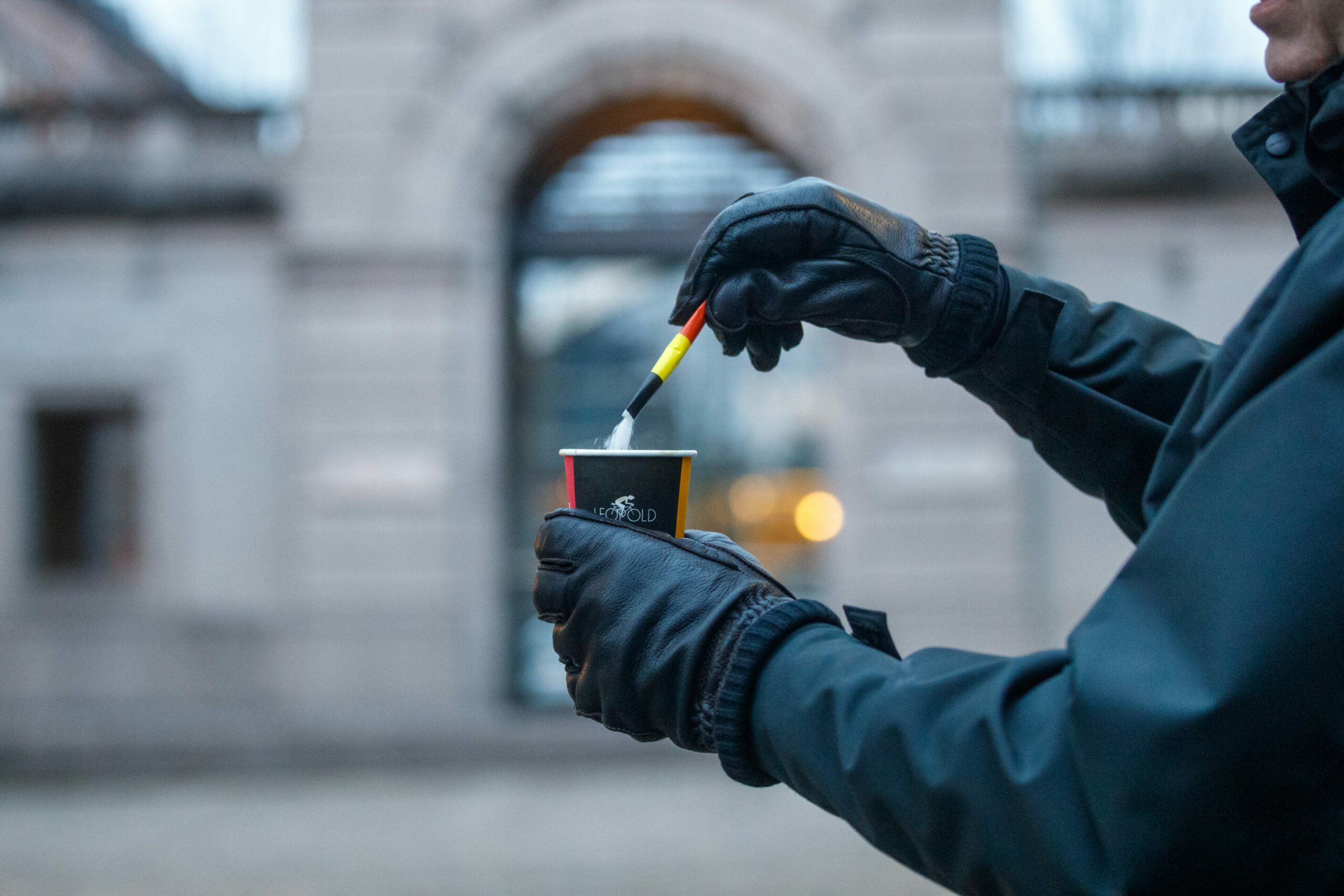
A coffee and sugar stick in the colors of the Belgian flag. Credit: Belga/Hatim Kaghat
L card – status of long-term resident
Called the statut resident longue durée / status langdurig ingezetene, this card is granted to non-EU citizens if they have stable livelihoods, regular and sufficient means to support themselves and their family, health insurance covering risks in Belgium, and can demonstrate a regular and uninterrupted stay of five years in Belgium.
UK nationals
As part of the post-Brexit Withdrawal Agreement, UK citizens who were already living in Belgium before 1 January 2021 could apply for an M card with the Belgian Immigration Office.
This card would effectively give them the same rights as they had before as EU citizens. The M card is a temporary residence card, valid for five years.
UK nationals without an M card have to follow the same procedures as other non-EU citizens.
Can you lose your permanent residency?
Like many things in Belgium, the procedure to get something can be quite difficult and time-consuming, but once you have succeeded, life becomes much easier.
The same is true for permanent residency. Once you have it, losing it is fairly difficult.
Your status can be terminated if you:
- commit a serious crime that makes the authorities consider you a threat to public or national security,
- leave Belgium for more than two consecutive years,
- commit fraud, or use false or misleading information or documents during the application process.
Those who lose their permanent residency rights can reapply as soon as they become eligible again (meaning, after five years in Belgium).
