
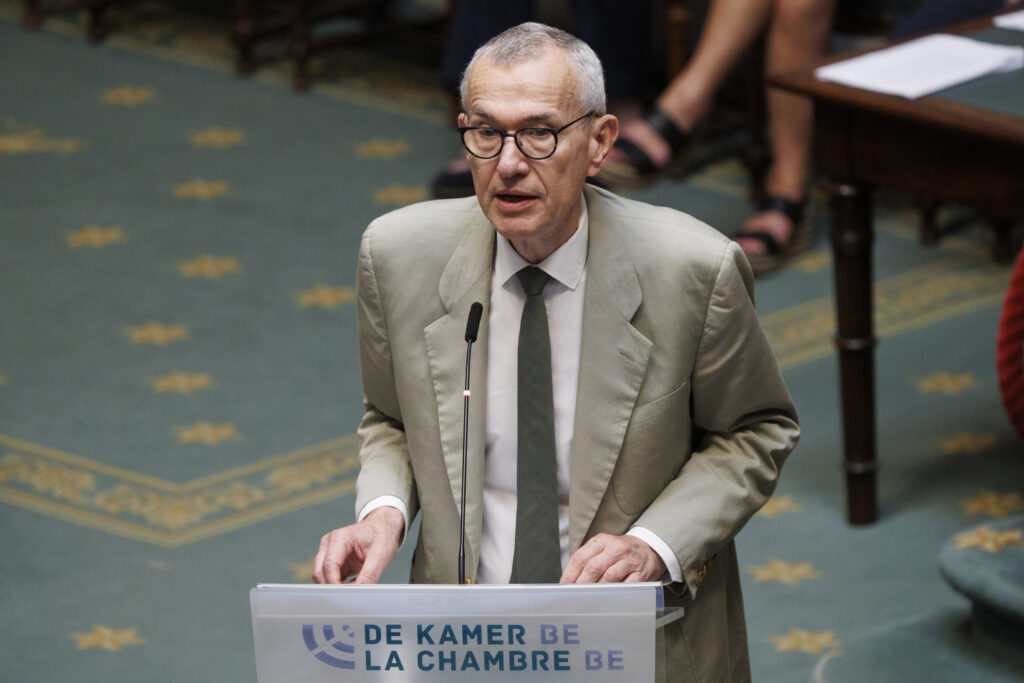
Vooruit will not approve the annualisation of working time unless workers who lose purchasing power under the new system receive compensation, Deputy Prime Minister Frank Vandenbroucke said on Saturday.
The federal government agreed overnight from Friday to Saturday to introduce annualised working time, meaning hours would be calculated over a year rather than per week.
The reform is intended to help employers cope better with seasonal fluctuations without necessarily relying on temporary unemployment. For workers, it is meant to offer more flexibility to adjust their working pattern to their private lives.
Vooruit had long opposed the measure because it could reduce workers’ purchasing power, for example if paid overtime disappears. Under the agreement, any such loss must be compensated.
Vandenbroucke said, however, that there is still no agreement on the form that compensation should take. Speaking on Radio 1 programme De Ochtend, he said the government had made it a binding principle that a purchasing power measure must be included, but that there had been tough discussions about how the premium should be designed.
He said the details still need to be worked out before the measure can be finally approved. “My colleagues know very well that, for Vooruit, this annualisation will not happen without a purchasing power premium,” he said.
The party has no objection to the text already being sent to the social partners, but it will not give final approval until there is an agreement on compensation. According to Vandenbroucke, that demand is also supported by the coalition agreement.
The annualisation file was linked by the francophone liberal party MR to a ban on imports of products from illegal Israeli settlements, which was also approved.
Vandenbroucke acknowledged that checking the origin of such products would not be simple, although he said the authorities could require declarations of origin and knew which areas were under illegal occupation.
He said the political signal was important, because Belgium wanted to show it did not support the policy of the current Israeli government, and in particular the settlers, whom he said were making the situation worse, increasing suffering and making the war harder to resolve.
There is still no agreement within the government on recognising Palestine, although Vooruit believes the time is ripe for such a move, Vandenbroucke said.
