
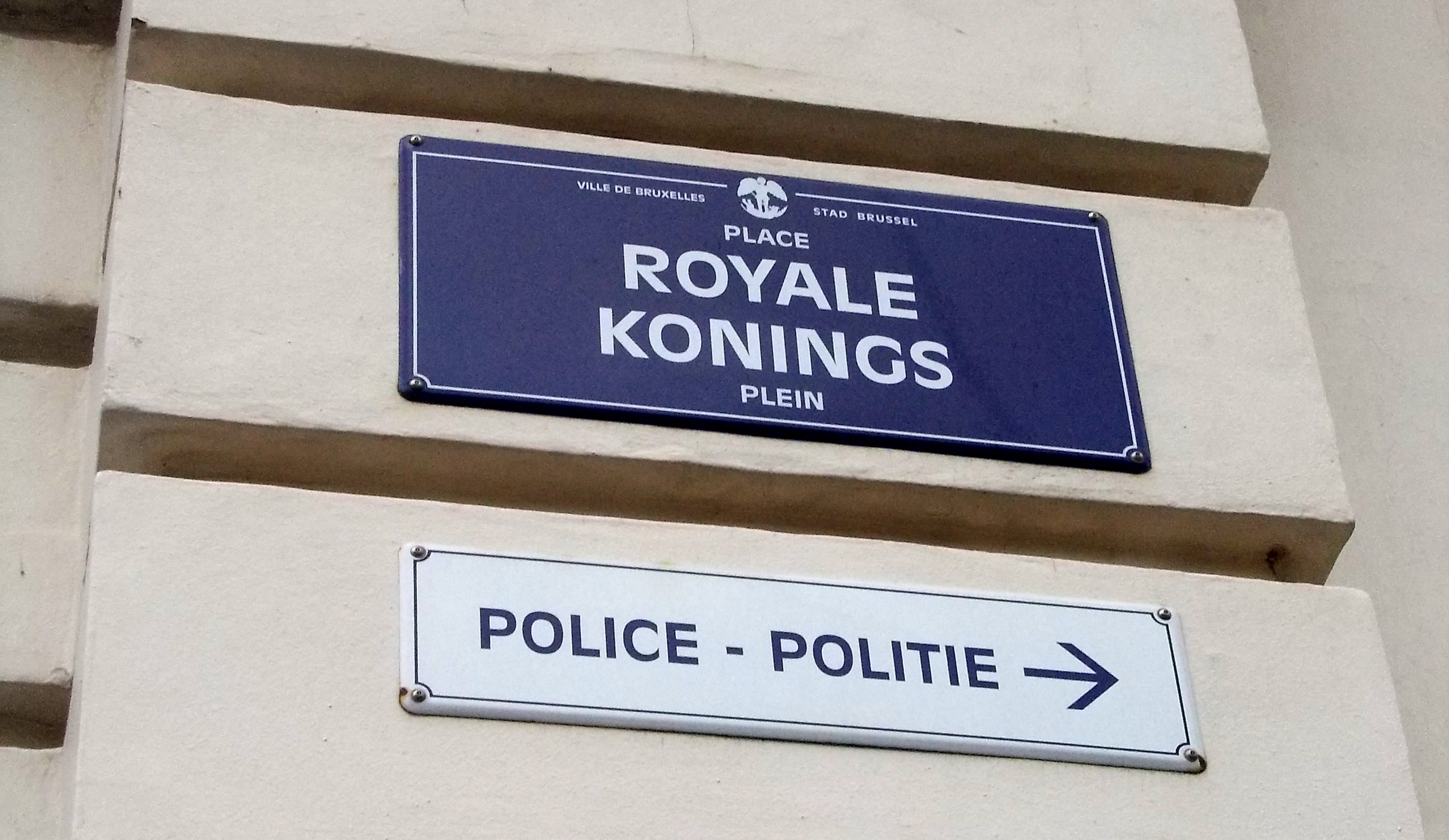
Brussel or Bruxelles? Well, for centuries, it was Brussel, with daily life conducted in Brabantian Dutch. Yet, in just 100 years, it underwent a process which transformed a Dutch-speaking stronghold into a predominantly French-speaking city.
Undoubtedly, the Francisation or Frenchification of Brussels remains a sensitive issue for many Belgians from both Flemish (or Dutch-speaking) and Francophone communities.
Today, the Belgian capital holds official bilingual status owing to its Dutch-speaking heritage. It has also served as the capital of the Flemish Community since 1980, and of independent Belgium since 1830.
These Dutch-speaking roots of Brussels can be found in the city’s traditional working-class dialect, Brusseleir, which derives from South Brabantine Dutch, spoken in the straats of Brussels for centuries.
Yet the creeping presence of French in Brussels can also be witnessed in its other dialect – Marollian or Marols.
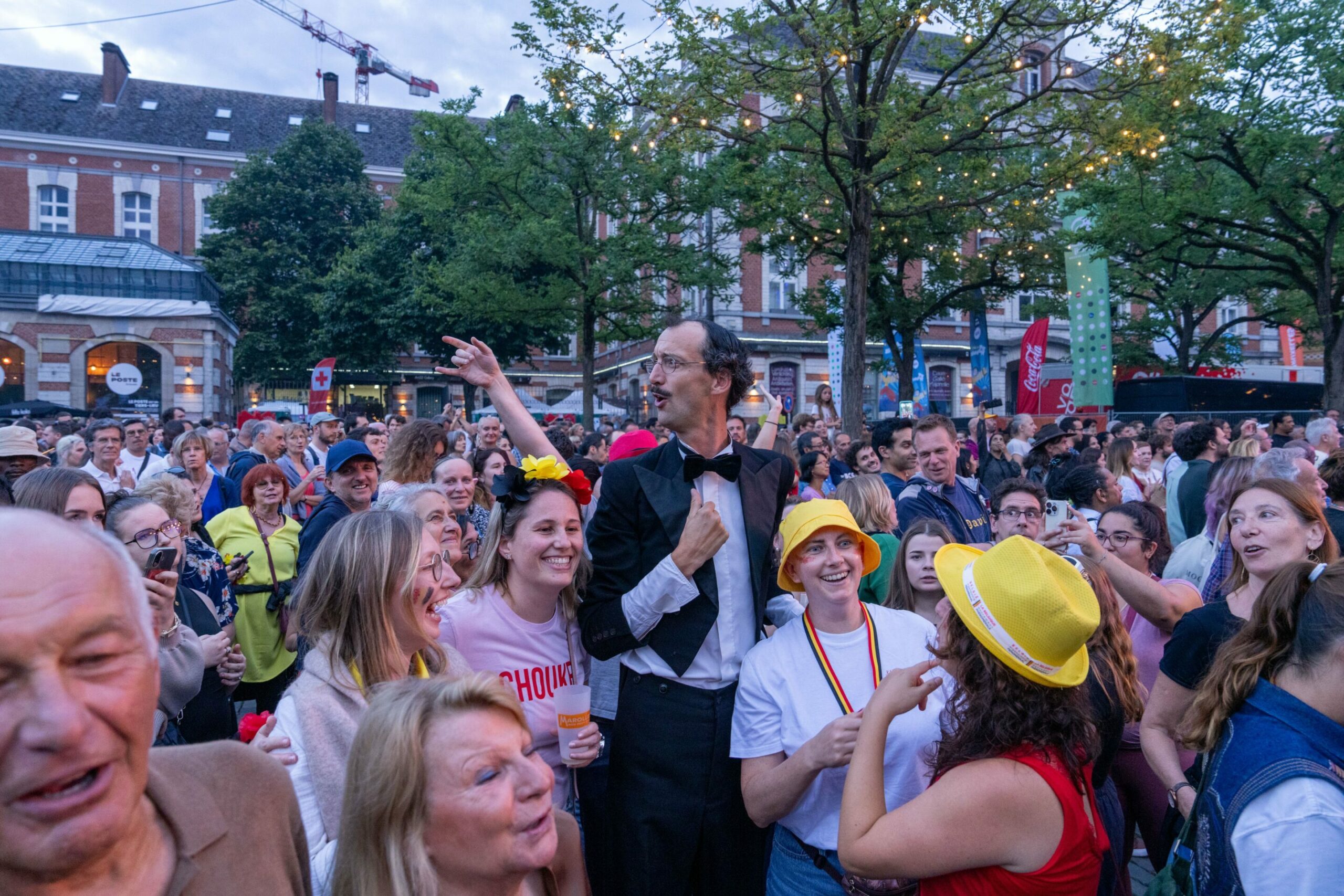
The 'Bal National' festivities, an evening of concerts on the eve of Belgium's National Day in the Marolles neighbourhood in Brussels, Sunday 20 July 2025. Credit: Belga / Marius Burgelman
With its roots in the working-class Marolles district in Brussels city centre, the dialect is described as a heavily Frenchified Brabant-Dutch dialect, adding some Spanish dating back to Habsburg rule.
The characteristic Marolles bastardised its own version of French with Dutch grammar and syntax, while also being tinged with a heavy dose of humour and skewering of the powerful classes.
These two Brussels dialects can arguably attest to the language shift which occurred: Marollian became popular in the 19th and 20th centuries, alongside the proliferation of French in the city.
Dutch-speaking past
So how did Brussel also become Bruxelles? How does a city change its language, and what are the effects today?
In the nineteenth century, the 19 municipalities which today make up the Brussels-Capital Region still had a predominantly Dutch-speaking citizenry.
In the 1846 language census, 67% of the Brussels population spoke Dutch predominantly. In Flanders, only 3.2% of the population spoke French, even though it was the official administrative language of independent Belgium.
In the following 100 years, Brussels underwent a socio-linguistic revolution. By the 1947 language census, the number of monolingual Dutch speakers in Brussels had dropped to only 9.4%. However, 45% of the Brussels population declared that they spoke both Dutch and French.
The results of the 1947 language census were controversial, and it was the last census of its kind after controversies owing to allegations of language pressure exerted by the Belgian authorities via the phrasing of the questions.
Yet, despite the disputed results, the change is undeniable. In the 19 municipalities of the Brussels periphery (Vlaamse Rand), 98% of the population spoke Dutch in 1846. One century later, 14% declared that they spoke French mostly or exclusively, according to the 1946 census.
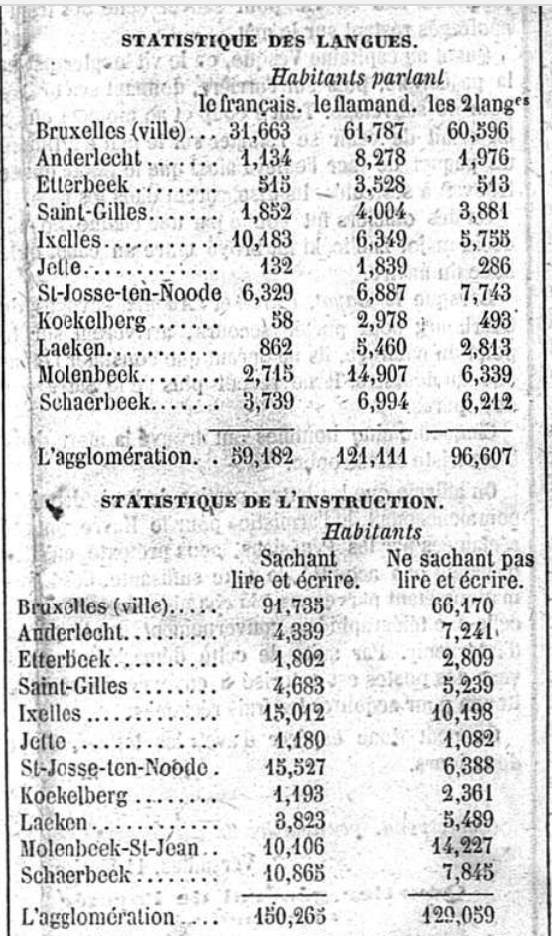
Language statistics per municipality taken from the L'Indépendance Belge newspaper, 18 February 1871. Credit: KBR
How Brussels Frenchified
So when did the French language actually enter Brussels?
The earliest references to a Romance-language presence in Brussels date to the 13th century, with the arrival of Walloon labourers (who spoke Walloon) employed in the construction industry, according to professor Michel Francard of UCLouvain.
Yet many sources point to the French revolutionary invasion and annexation of Belgium in October 1795, following the French Revolutionary Wars, as a key moment.
However, the French language's presence in Brussels can be traced back centuries.
During Burgundian rule in the 13th century, French became the prestigious language of the ducal court, administration, and upper classes throughout the Low Countries, slowly displacing Latin in Flanders and Wallonia.
Brussels and its population notably resisted these for years to maintain their administrative documents in Dutch. Working-class residents, too, continued speaking in their Brabantian Dutch dialect.
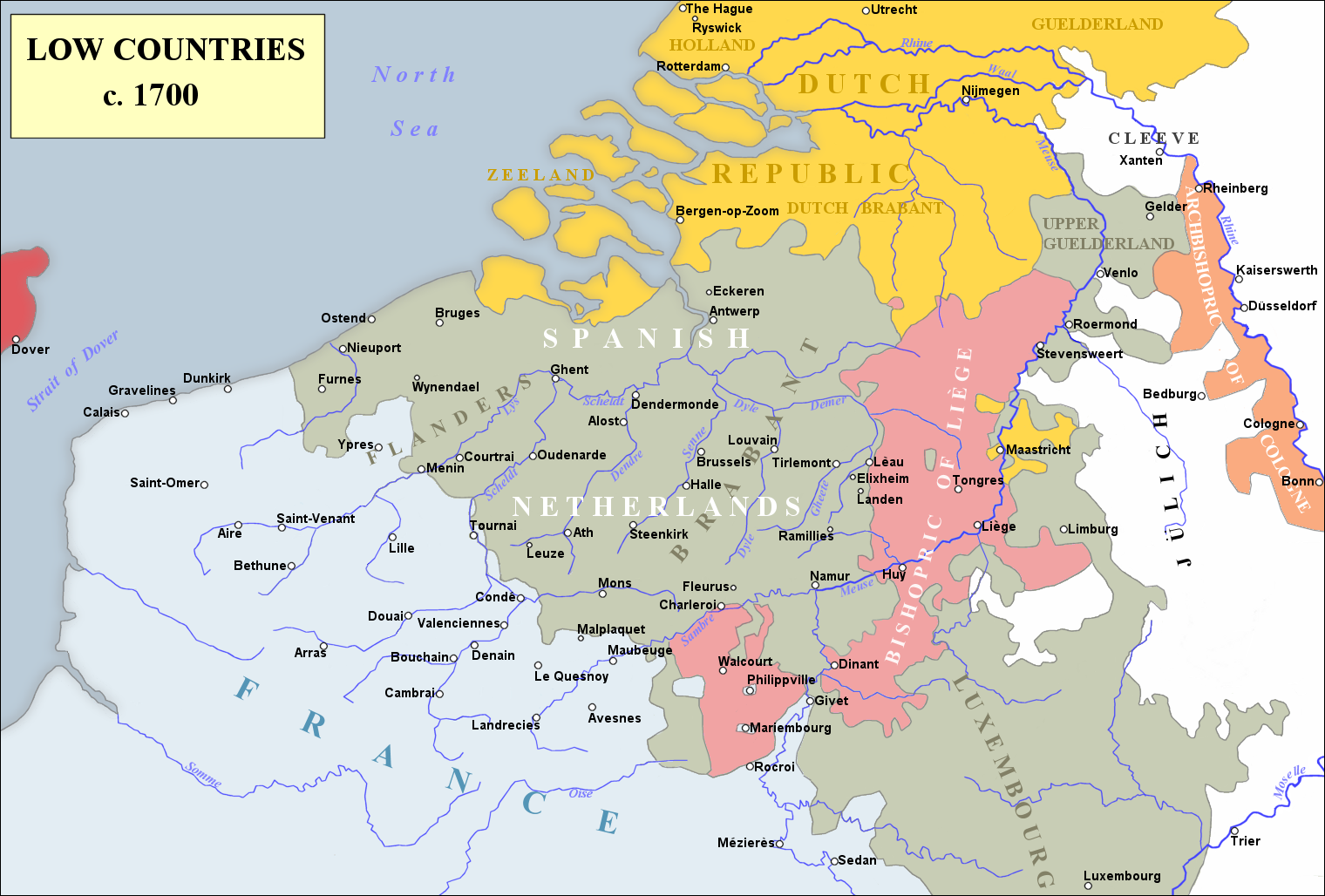
The Low Countries in 1700
Under Habsburg rule from 1482 to 1795, both the Spanish Netherlands and Austrian Netherlands – former names for Belgium – were ruled in French. Charles V too, who ruled the empire between 1519 and 1556 from Brussels, made French the language of central administration.
Yet Brussels’ resistance to using French in administration was so widespread that the local government’s administrative language remained almost entirely in Dutch up until the late 18th century, according to researcher Ann Mares.
With revolutionary fever gripping Europe, in 1795 Belgium was annexed by France, remaining under its rule until the Battle of Waterloo in 1815.
During this period, French was taught in all primary schools, with the occupying authorities restricting the Dutch language by abolishing its official status, removing it from government use, and banning it from the Brussels city hall for the first time.
The French justified this policy under Revolutionary ideals of promoting a single language to unify the republic, giving democratic access to citizens to contribute to public debates and political life. At the time, French was widely seen as the universal vector of liberty and human rights, a view not always shared by Dutch-speakers in Belgium.
Creeping effects
However, with 60% of the Brussels population still being illiterate, the effects of this policy of Francisation were still generally limited – restricted to the more privileged echelons of Brussels society.
Yet, the effect on the streets was not insignificant: street names, locations, and all public signs were suddenly changed into French by law overnight. But the Francophone presence had already been there.
Even before the French invasion, French noble families had settled on the Sablon and Coudenberg hills of Brussels, heavily investing in the city. They brought with them mainly Walloon and Picard-speaking court staff, whose languages come from the same Romance family as French.
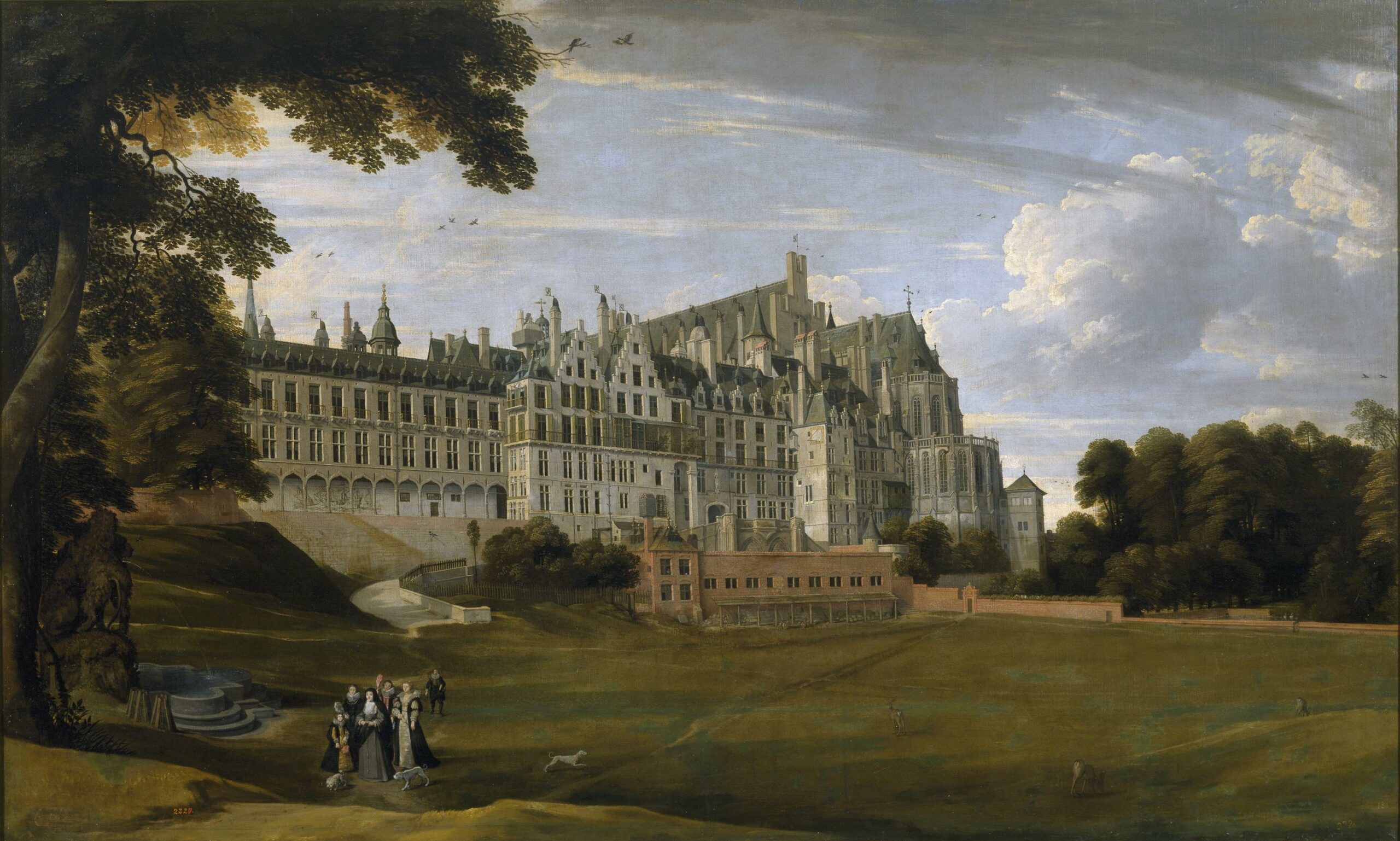
Coudenberg Palace in Brussels, by Jan Brueghel the Younger, c. 1627
These areas of Brussels saw a rapid urbanisation around the Royal Park following the infamous fire of 1733, which destroyed the magnificent Coudenberg Palace. The capital’s wealth led to an influx of people from all over the Netherlands (including its Walloon and Picard-speaking regions) looking for work.
This Walloon presence contributed to the adoption of Walloon and Picard terms into the Brusseleir dialect. However, these migrants also rapidly assimilated into the local population and very soon began speaking Dutch.
While Dutch speakers made up about 90% of the population inside Brussels in 1784, the trend towards Frenchification appears to have gained greater momentum throughout the Southern Netherlands, including Brussels, starting from 1780.
This can explain why, during the people-led Brabant Revolution (1789–1790), a popular uprising against Austrian rule in Brussels, the city council issued several regulations concerning public order in both Dutch and French – five years before the French invasion.
A key figure in this revolution, Jan-Baptist Verlooy, wrote a clandestine "Essay on the disregard of the native language in the Netherlands" in 1788, debating the worrisome situation of Dutch culture and literature in Brussels.
He noted how it struggled to keep up with cultural matters with the French, Italians or the English, because the upper class and the intellectuals, while adopting French, neglected the language of the people, Dutch.
What’s more, Dutch literature was declining in the 18th century after a golden period, which helped the spread of French culture among the Brussels upper middle classes, according to professor Paul De Ridder.
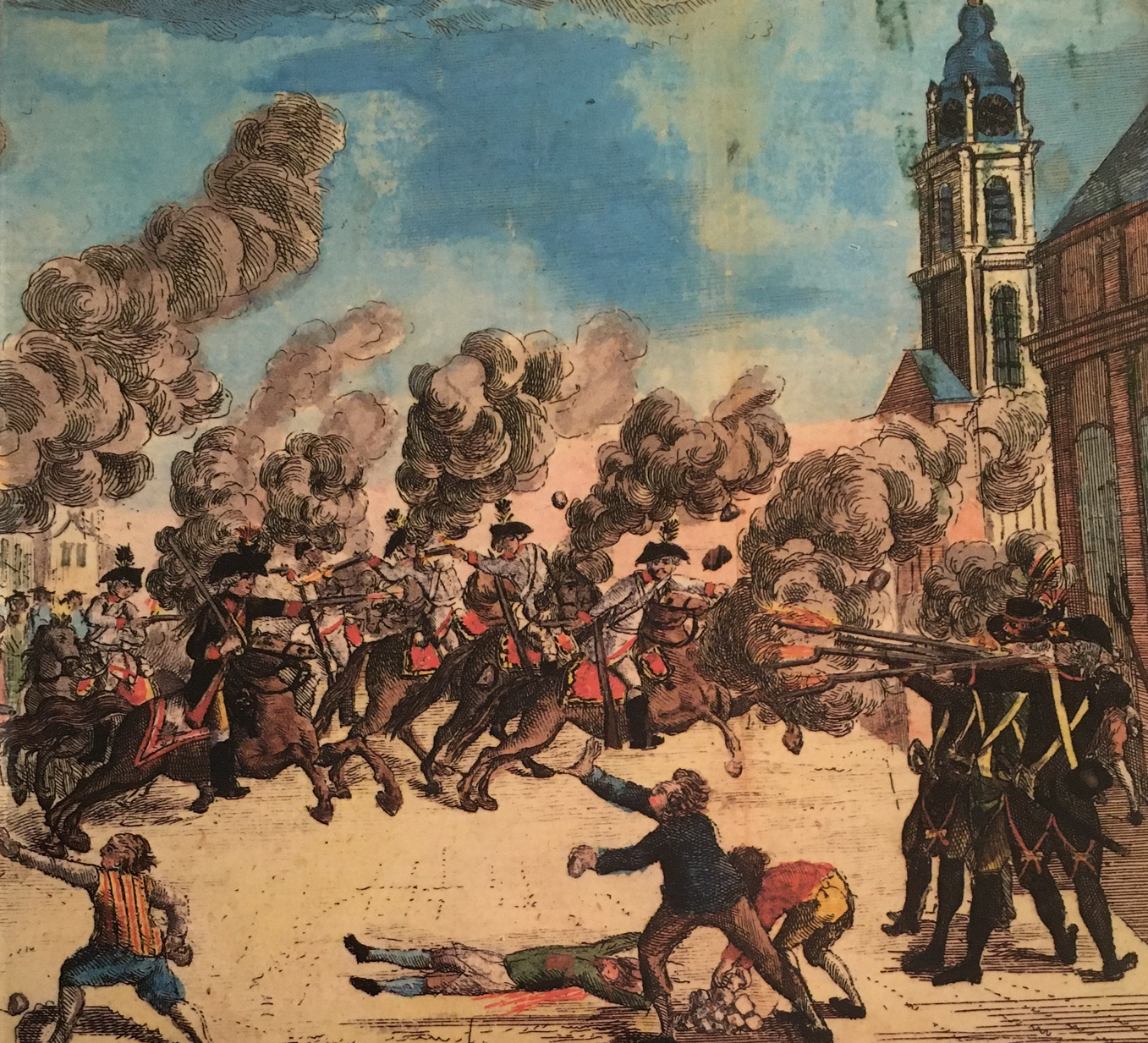
Fighting in the Marché aux Poissons in Brussels during the Brabant Revolution in 1789, an ill-fated revolution against Austrian rule
As revolutionary fever further gripped Europe at the end of the 18th century, Brussels was also home to many French revolutionaries who moved to the city in pursuit of their beliefs or to flee political persecution. This further boosted French among the Brussels intelligentsia.
While Dutch remained the language of choice among the working classes, much of the Flemish bourgeoisie had, over the centuries, also gradually switched to French, to differentiate itself from the lower classes. French also enjoyed European cultural dominance in this era. For instance, the Theatre of La Monnaie showed 95% of plays in French by the mid-18th century, illustrating French's cultural dominance.
Belgian revolution
The Belgian revolution of 1830 was another seminal moment for French-speaking in Brussels and the rest of the country.
Under Dutch rule since the defeat of Napoleon at Waterloo in 1815, the intellectual insurrection was predominantly executed in French, while on the street, the uprising was driven mainly by Dutch-speakers.
This was also thanks to the upper and middle classes across both Flanders and Wallonia having now largely switched to French – the same process was to happen with Walloon and French. These classes were the driving force behind the uprising and the calls for the creation of the new government.
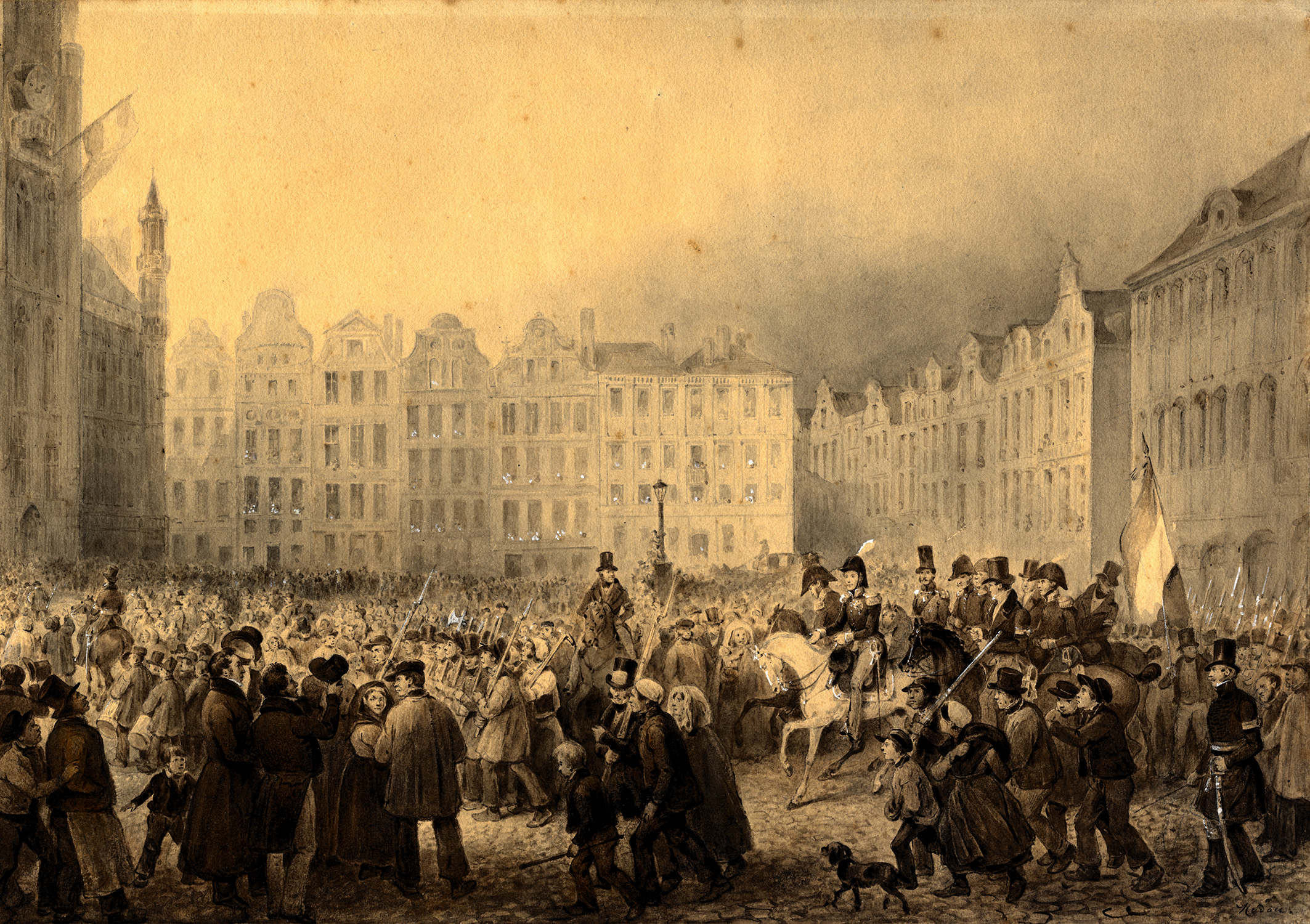
Dutch Crown Prince William of Orange arriving at the Grand-Place in Brussels on 1 September 1830 in an attempt to quell the Belgian Revolution. Credit: City of Brussels Museum
Following the defeat of Napoleon in 1815 at the Battle of Waterloo, the territory of what would become Belgium was placed under Dutch rule.
Until the revolution in 1830, Brussels was subjected to a 'Dutchification' policy, which reinserted the use of standard Dutch into administrative life following two decades under French revolutionary rule.
This, not unironically, posited Dutch as the language of the foreign ruler, driven by the French-speaking elites, who rejected the mandatory language laws. Furthermore, many of the Belgian revolutionaries had also come up to Brussels from Wallonia, notably Liège, led by lawyer and journalist Charles Rogier.
After the defeat of Dutch forces and the creation of a new Belgian kingdom, French became the unitary language of the new administration. However, the new Belgian constitution also established the "freedom of languages", allowing citizens to use any language in their daily life.
After 1830, the French replaced the Dutch in courts for the first time, and the Belgian military command and higher education were all carried out in French.
Into the 20th century
Over the next 100 years, Belgium underwent profound economic, demographic and social changes. As the second country to industrialise, many migrants from France and Wallonia (but also Italy, Spain, and Morocco) moved to the city for work.
This, added to the authorities' promotion of French, transformed Brussels into a bilingual city, with language also acting as a way to divide the city by class.
For example, French was spoken among the bourgeoisie in the upper parts of the city like Ixelles, while traditional Brabantian Dutch dialects like Brusseleir persisted among the lower working-class neighbourhoods like Molenbeek.
French was regarded as the aspirational language of status, vital for the professional and economic development of Brussels residents. Many Flemish immigrants also moved to Brussels to work in the city’s burgeoning new industries, and those who sought to climb the social ladder quickly adopted French.
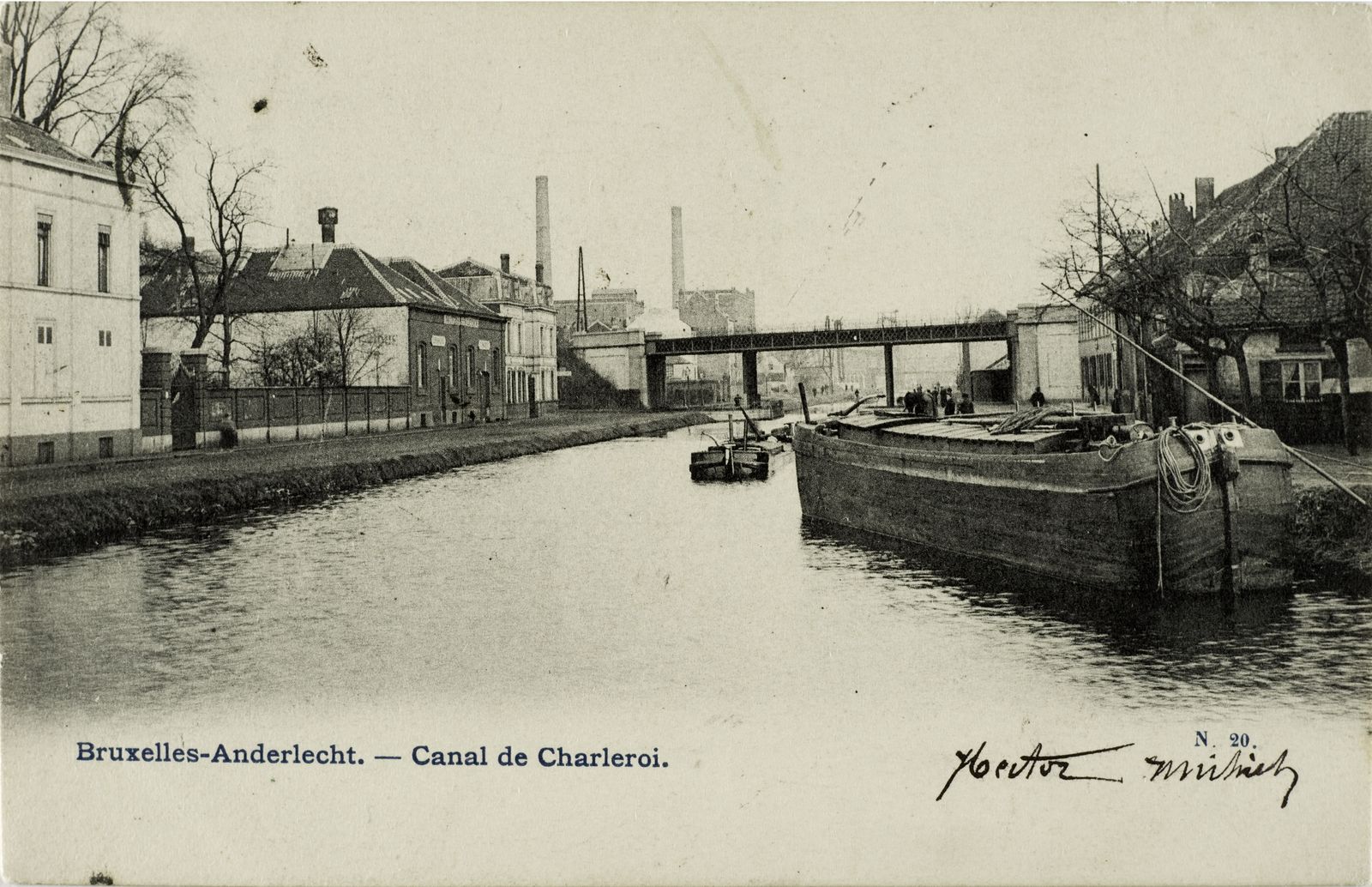
View of the railway bridge spanning the Charleroi Canal from the end of the Fernand Demets and Industrie quays. Credit: Belfius Bank collection, Royal Academy of Belgium, urban.brussels,
Yet Dutch would never disappear from daily life, particularly thanks to the emergence of the Flemish Movement that sought to preserve the use of the Dutch language and culture.
It culminated in the historic Coremans-De Vriendt Law (or Equality Law), which was passed on April 18, 1898, giving both French and Dutch legal linguistic equality.
Furthermore, the impact of male universal suffrage in 1921 and the growing economic clout of Flanders were seen as primarily responsible for the status of Dutch being upgraded in the central institutions and in Brussels, according to researcher Karla Goetvinck.
Dutch in Brussels today
Finally, Brussels first became an official bilingual city with the language laws of 1962–1963, in a context where the traditional Brusseleir dialect was not being passed on from generation to generation – speeding up the grip of French.
These laws also set the first language border, with Brussels becoming an officially bilingual enclave inside the Dutch language area.
After it was established, some municipalities on the border of Brussels were forced to change their administrative languages. This meant setting up facilities for French-speaking citizens in cases where a commune found itself situated inside the Flemish language border, an arrangement which survives today in places like Wezembeek-Oppem and Sint-Genesius-Rode.
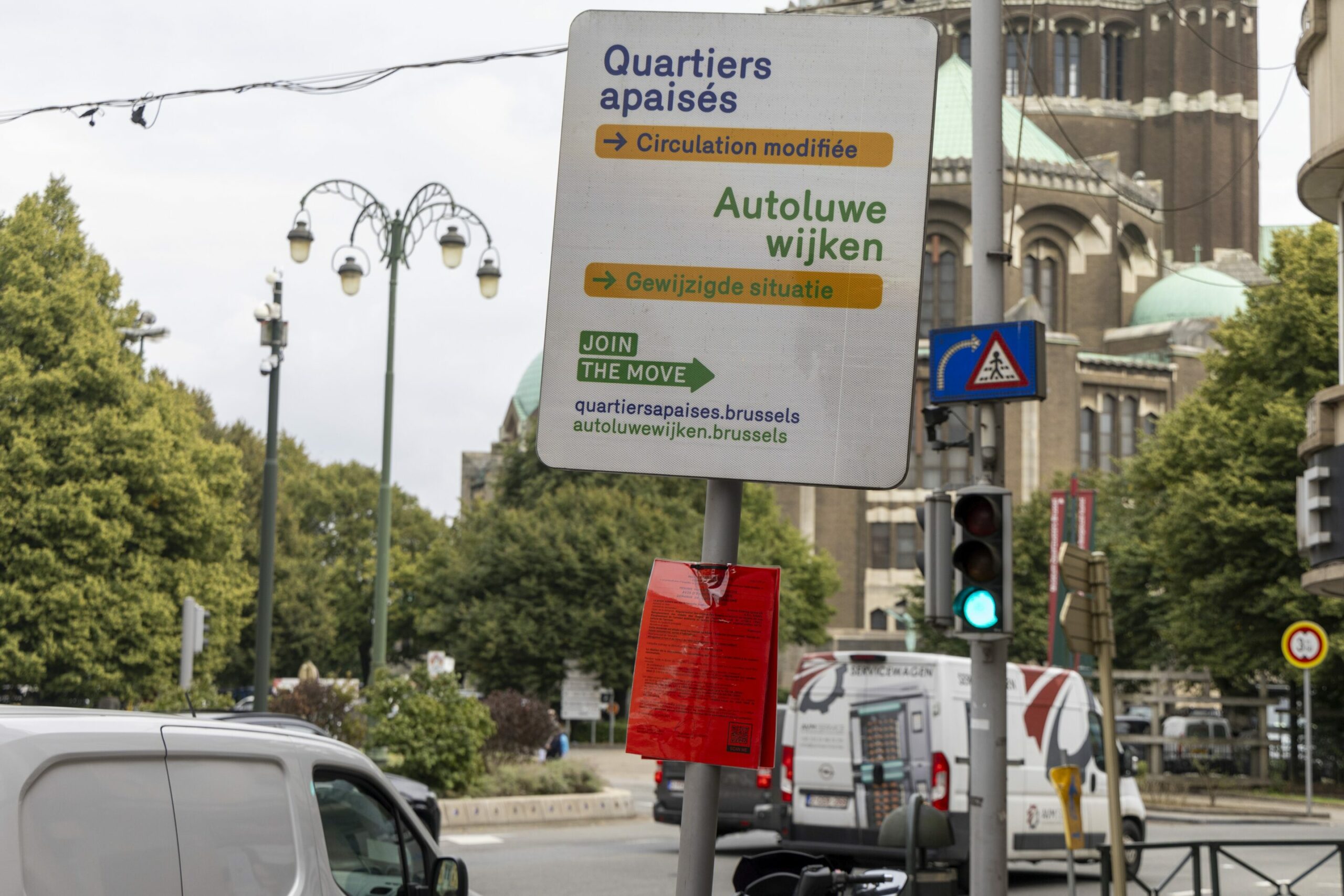
A sign introduces the Quartiers Apaises/Autolowe Wijken, part of the Join The Move traffic campaign in Koekelberg, Brussels on Wednesday 04 September 2024. Credit: Belga
In the 1960s, many French speakers living around Brussels complained that the language border did not correspond to the social reality. They argued that the language border was based on the results of the 1947 language census and not that of 1960, which had changed demographics in favour of more Francophones.
On the other side, Flemish politicians and nationalist groups still use an "oil slick" analogy to describe the Francisation of Brussels and the surrounding areas. They see Brussels' negative influence "spilling over" into the Brussels periphery (the Vlaamse Rand).
The arrival of foreign immigration also further tipped the balance towards French, particularly among Moroccan, Italian, Spanish or Portuguese migrants, who chose to speak French.
Today, while the use of unofficial languages such as English and Arabic has also boomed, the Flemish Region continues to push for monolingualism and promotion of Dutch as a driving policy, which aims to reverse years of Frenchification.
Strikingly, French in Brussels was, for the first time, declining – thanks in part to the city’s large international character, according to a study from the Dutch-speaking Free University of Brussels (VUB) in 2024.
Like in the past, Brussels continues to be driven by a dynamic, multilingual character. Whether it's Dutch, French, Brusseleir, Arabic or English, the city, with its unquestionable Dutch-speaking roots, has shown it knows how to adapt to change. Alléi.
Related News
- Belgium’s forbidden language 'at the point of no return'
- What is Brussels 'zwanze'?
- Brussels in 1918: Occupation, revolution and the Armistice
- Today in History: Fire at the Palais de Justice - Liberation of Brussels
- More than a dialect: Why Brusseleir remains the soul of Brussels
- Why so many Brussels residents are moving to the Flemish periphery
