
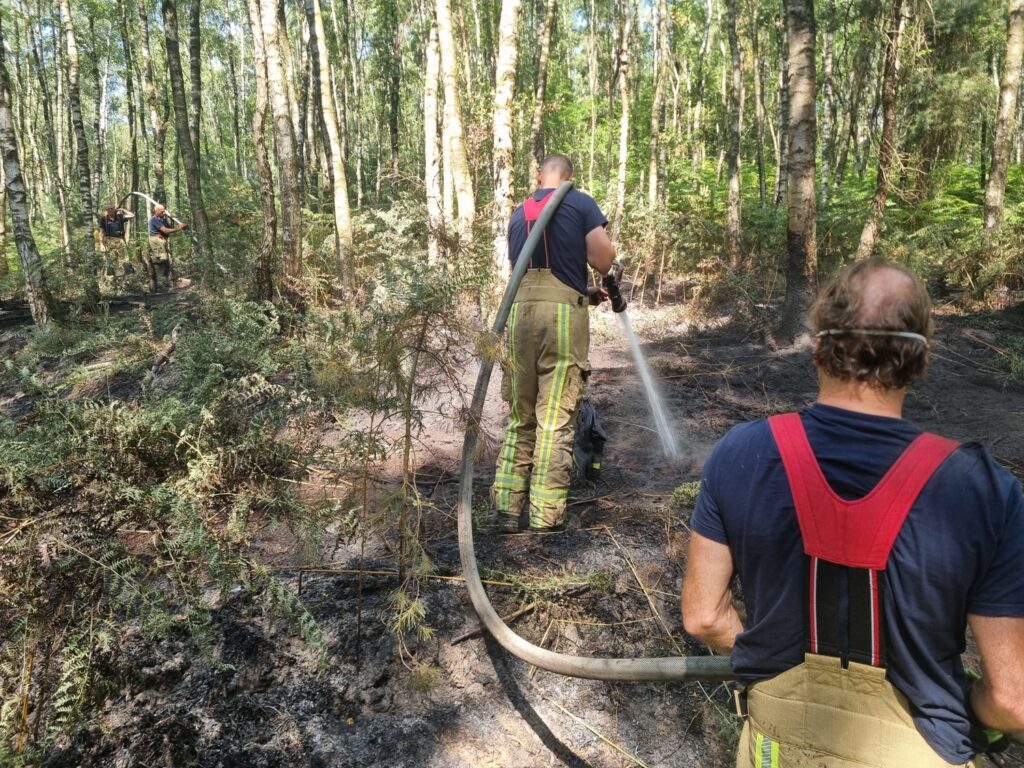
Belgium has recorded 117 wildfires so far in 2026, already two more than in the whole of last year.
Researchers at Ghent University warn that climate change is increasing the number of days with a high risk of such fires.
In a press release, the university’s Faculty of Bioscience Engineering said the sharp rise in wildfires in Belgium and across Europe is no coincidence.
According to the researchers, hotter and drier conditions are making fires more likely.
Belgium has so far avoided the devastating forest fires seen near Bordeaux and Madrid, but drought is also taking hold here. The researchers say this is clear from their mapping of all wildfires in the country.
The figures cover uncontrolled fires in natural environments, including forests, heathland, dunes and marshes.
The annual average is 62 wildfires, but after just seven months the total for 2026 has already reached 117. Four in five of those fires occur in Flanders.
Limburg has the highest share, accounting for 20 per cent of cases. It is followed by Namur with 17 per cent, and both West Flanders and Antwerp with 13 per cent each.
More than 95 per cent of wildfires are caused by people, whether accidentally or deliberately.
Professor Jan Baetens said reversing the trend will require a stronger focus not only on tackling fires, but on preventing them. He said fires can never be avoided entirely, but their impact can be reduced significantly.
He stressed that systematic data collection is essential. While Belgium has the necessary expertise, he said much more work is needed.
Baetens called for an integrated approach in which science, policy and practice reinforce one another.
He said that was the only way for Belgium to prepare better for a future in which wildfires are likely to become more common in the region.
