
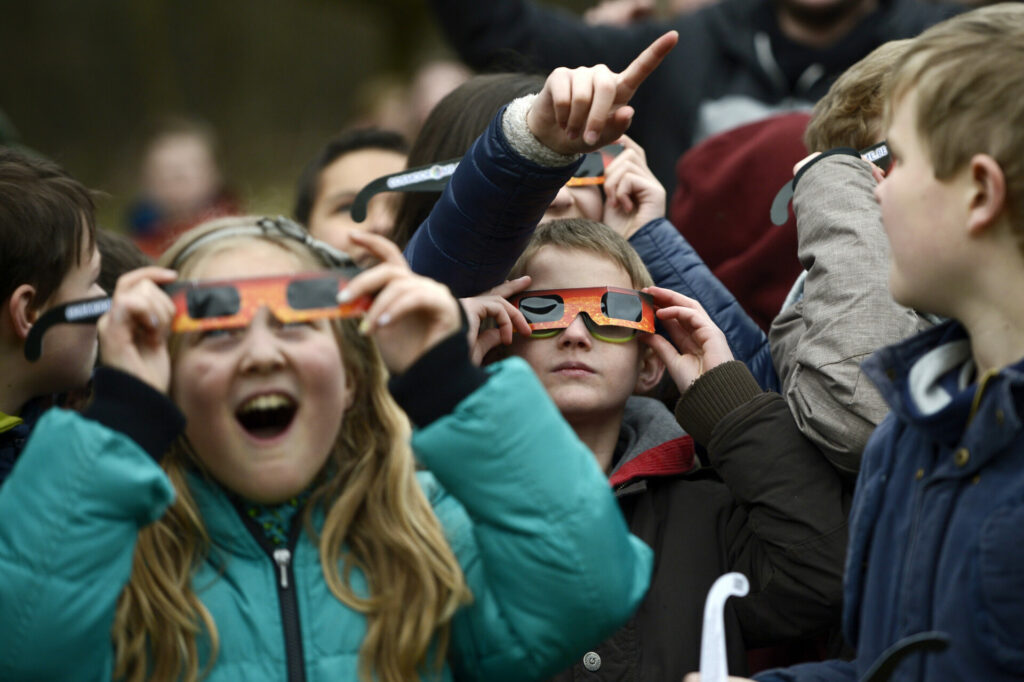
On Wednesday, 12 August, the most complete solar eclipses in decades will be visible from Belgium. A similar eclipse won't be visible in the country until 2081.
In Belgium, the eclipse begins at 19:18. It will peak at around 20:13 when the moon passes directly between the Earth and the sun and will end at 21:05.
"A solar eclipse happens when the moon, in its daily rotation around the Earth, moves in front of the sun as seen from Earth," says Hans Coeckelberghs, educator at the Planetarium of the Royal Observatory of Belgium. "The moon blocks the sunlight and casts a shadow onto the surface of the Earth."
"A lunar eclipse happens the other way around; the Earth moves in between the sun and the moon," he explains.
"Both happen multiple times a year, but it's rare to see a solar eclipse. The Moon only casts a small strip of shadow on the surface of the Earth during a solar eclipse, called the path of totality. But during a lunar eclipse, the entire part of the Earth where the Moon is visible can witness it.
"Globally, both happen just as frequently. But from a single location, you will see lunar eclipses more often."
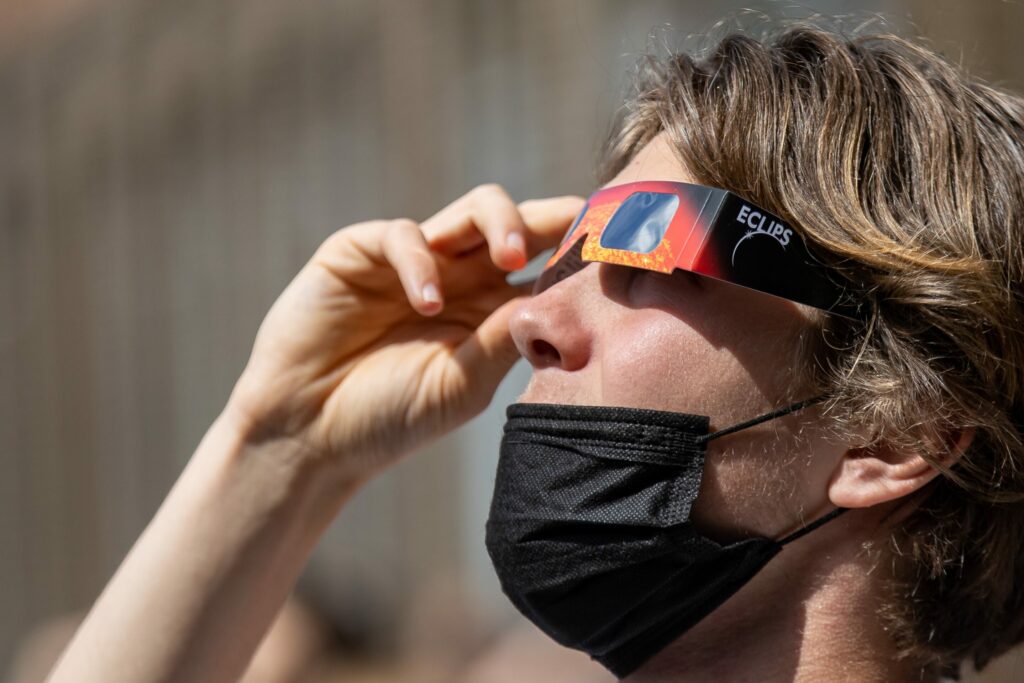
Illustrative images. Credit: Belga/Kurt Desplenter
A partial eclipse in Belgium
Belgium is not in the path of totality, meaning we will only see a partial eclipse. The moon will cover roughly 91% of the surface of the sun. According to Coeckelberghs, you will have to go further afield to catch a total eclipse.
"The majority of the path of totality runs over the (Atlantic) Ocean, as it often does," he says. "The area where the eclipse will last longest is west of Iceland, from where the path runs south before heading to northern Spain. While going to Iceland is statistically the best option, you need clear skies to see an eclipse. Spain is the better option in that regard."
As the eclipse will happen while the sun is setting, viewing it will not be easy, says Coeckelberghs. "The sun will only be slightly above the horizon, at a 7 per cent angle. If you want to see the eclipse, you need to be high up and have a clear view of the western horizon. A lot of people will go to the coast to see it.
Coeckelberghs thinks it will be difficult to see the eclipse from Brussels. "If you want to make sure you can see the eclipse, go to the place you have in mind a day or two ahead, around the same time as the eclipse and check if you can see the sun," he advises.
"But don't underestimate just how low the sun will be. It will be tough to see from Brussels, but the observatory in Grimbergen has a viewing deck which should provide a perfect view."
Watching the eclipse safely
Another concern is safety and the equipment used to look at the sun. Despite most of the sunlight being blocked during the eclipse, the sun still radiates UV and infrared light. "These can really damage your retina," Coeckelberghs warns. "And as your retina is numb, you won't feel it burning until it is too late. You only have two eyes; it's not worth losing them."
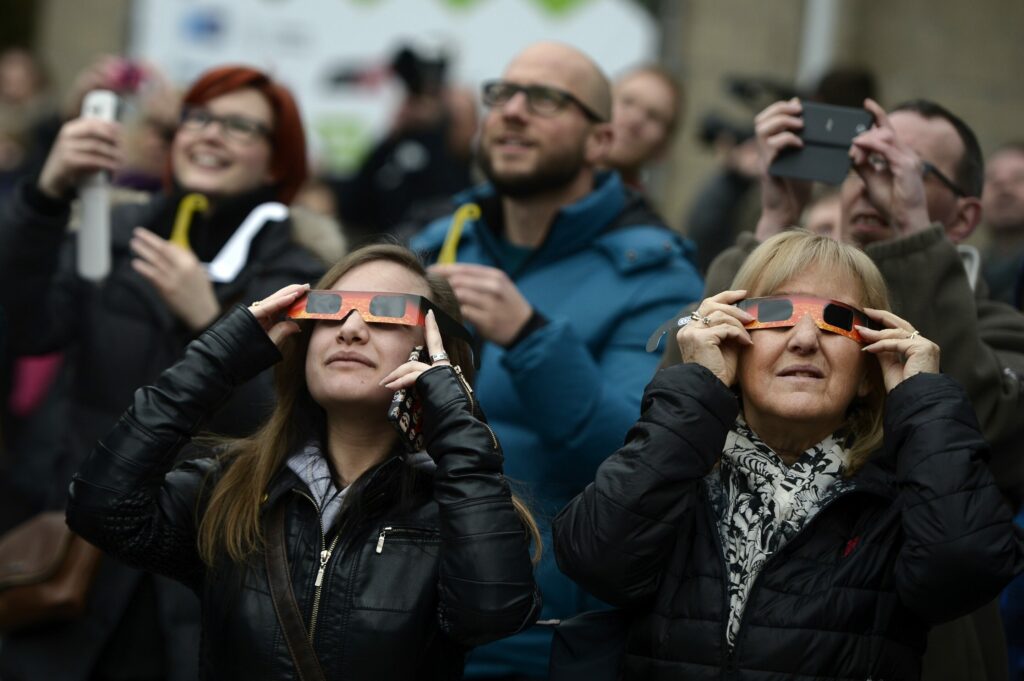
Illustrative image showing an example of how to view the eclipse (front) and how not to view it (back). Credit: Belga/Yorick Jansens
There are a lot of solar glasses available, he says. "You can buy them at the Planetarium or in one of the observatories, and they should be sold in many stores across the city. Just make sure it has an ISO 12312-2 certificate.
"Don't trust sunglasses, tricks with CDs, or any other DIY methods to watch it. And even if you're wearing solar glasses, don't look through binoculars or a telescope without a proper filter. The light gets amplified and burns right through your glasses."
