
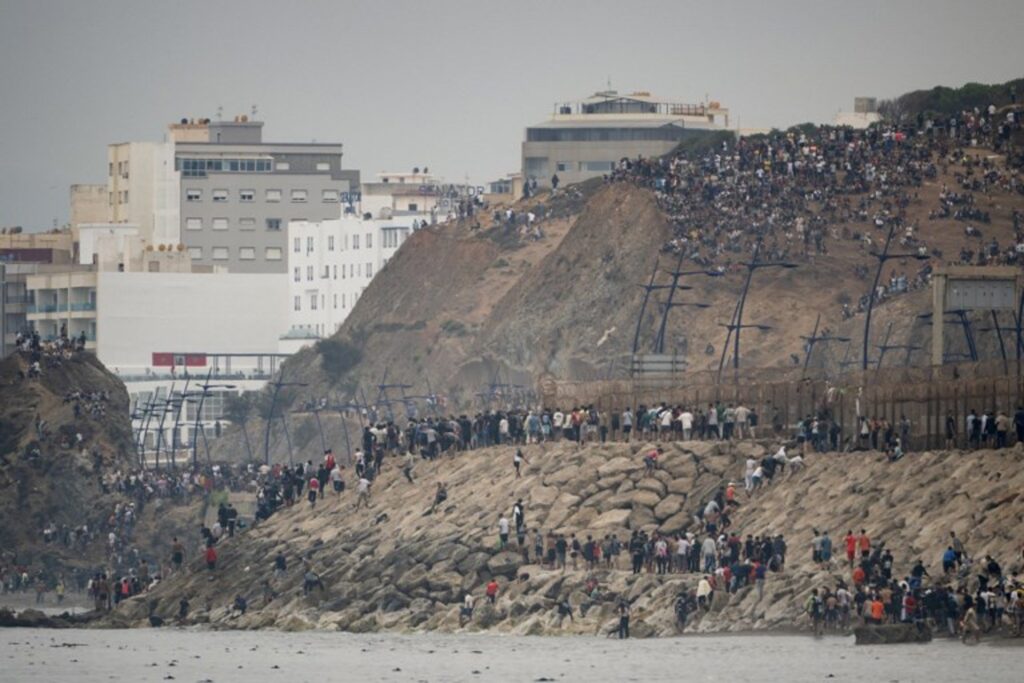
EU interior and migration ministers held talks on Tuesday in what Spain described as a constructive atmosphere after a surge of irregular migrant arrivals in the Spanish exclave of Ceuta.
After the meeting, Spanish Interior Minister Fernando Grande-Marlaska said the Schengen area had not been compromised by the crisis.
He was responding to criticism from several European countries, led by Italy and Denmark, which had questioned Spain’s handling of the situation and had even called for the country to be suspended from the Schengen zone. Madrid had openly rejected those demands, calling out.
"Schengen was never in danger, not even slightly," Grande-Marlaska said.
Irish Migration Minister Jim O’Callaghan, who chaired the meeting, said all EU Member States had expressed their solidarity.
Denmark said it was "very satisfied" with Spain’s swift response. However, Danish Migration Minister Morten Bødskov said the events showed it was "absolutely essential" for the EU to maintain control of its external borders.
According to the figures cited, around 72,000 migrants arrived irregularly in Ceuta on Thursday and Friday. Of those, about 70,000 have since voluntarily returned to Ceuta.
At least 83 people died during the attempted crossings, including 72 in Spain and 11 in Morocco.
EU officials said social media appeared to have played an important role in the events, and the bloc now wants to monitor those platforms more closely in future.
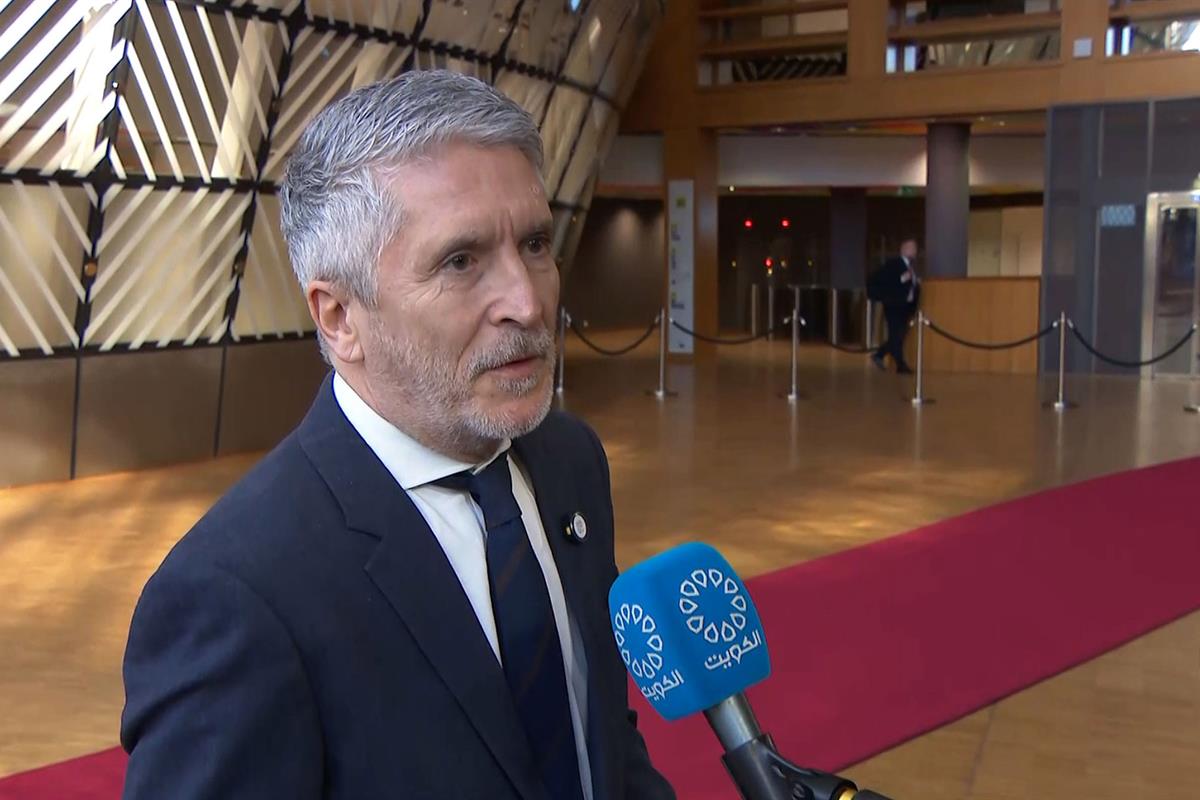
Spanish Interior Minister Fernando Grande-Marlaska. Credit: Moncloa Gubierno de España
EU Migration Commissioner Magnus Brunner also praised that solidarity and said the bloc had passed the “test” without damaging the integrity of Schengen.
Brunner said the EU had offered Spain financial support to strengthen border protection. He also said migrant arrivals and asylum applications across the EU had fallen in recent years.
"We have not had this much control over our borders in decades," Brunner said. "But as we saw this week, dramatic images can outweigh even the best statistics."
Geopolitical weapon
Over the weekend, Spain condemned the "selfish, polarising and unlawful" reaction of some EU countries following the influx of migrants from Morocco.
Speaking before the meeting, Belgian Prime Minister called for the EU to get to the bottom of what happened.
He said the events in Ceuta gave the impression that migration could be used as a geopolitical weapon by anyone seeking to put pressure on Europe.
"That is particularly frustrating," he said, arguing that the meeting of EU leaders was needed to establish exactly what had happened.
He also expressed understanding for calls from several countries to exclude Spain from the Schengen area, where people and goods can move freely.
"At the same time, it is clear that Europe must close its borders," he said.
De Wever also said his Spanish counterpart, Pedro Sánchez, who has often taken a more pro-migration stance, still had the right to pursue the policies on which he had been democratically elected.
